
0 Intr oduction
The global shift toward decarbonization of the transport and power sectors has positioned electric veh icles(EVs) as a central component of future mobility [1,2].Government policies, technological advances in batteries,and increasing consumer awareness of sustainability are accelerating EV adoption worldwide [3]. However, the rapid penetration of EVs into existing power systems introduces several operational challenges. Large-scale EV charging, if unmanaged, can create peak demand surges,reduce grid stabili ty,and compromise the economic viability of energy distribution networks [4-6]. In parallel,renewable energy sources such as solar and wi nd are being increasingly integrated into microgrids [7]. While renewables support sustainability, their inherent intermittency complicates the alignment of supply and demand,particularly under stochastic EV charging patterns[8]. This rapid transition places new technical and economic burdens on distribution networks that were not originally designed for such dynamic and bidirectional power flows (Table 1).
Existing research has investigated multiple facets of this problem [9]. Some studies have focused on optimalcharging scheduling using heuristic algorithms, reinforcement learning, or convex optimization methods [10,11].Others have considered charging station placement through clustering techniques, geographic informat ion systems, and meta-heuristic optimization [12,13]. A third stream of literature has addressed energy-trading mechanisms for EVs within smart grids, including vehicle-togrid (V2G) and peer-to-peer (P2P) energy exchange[14,15]. Despite their progress, these approaches remain fragmented, with most frameworks concentrating on a single aspect—charging, placement, or trading—while neglecting the interdependencies among them [16]. For example, an optimized charging strategy without considering station placement may reduce waiting times but still lead to grid congestion. Similarly, tradi ng strategies may improve profitability but undermine grid stability when renewables fluctuate (Table 2).
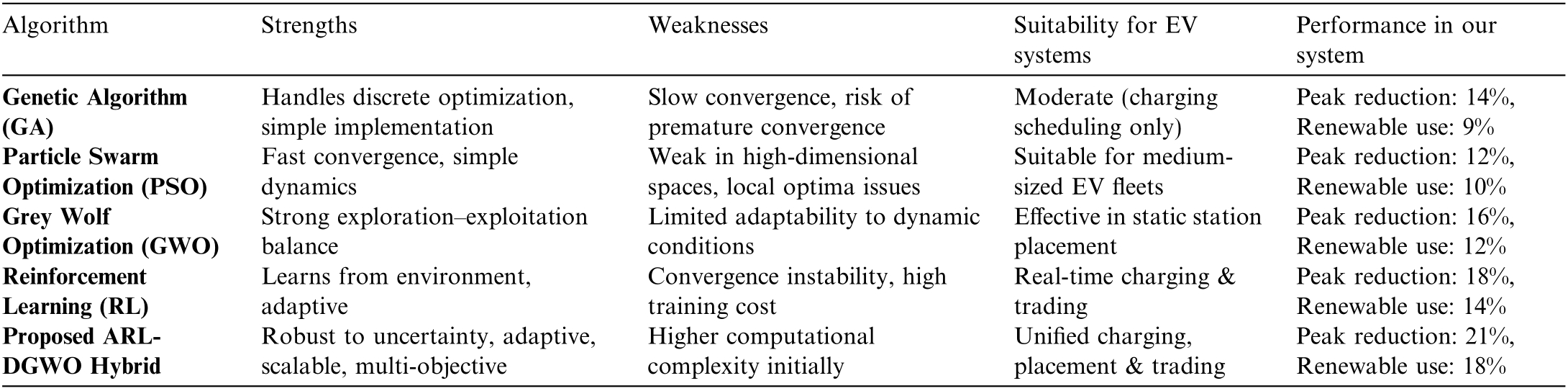
Table 1 Comparison of proposed algorith m with benchmark methods.
The convergence of artificial intelligence (AI) with power-system optimization provides new opportunities to address these challenges [17,18]. Reinforcement learning has demonstrated its capacity for dynamic decisionmaking in uncertain environments, while evolutionary algorithms excel at global search and parameter tuning[19,20]. Deep learning further enhances the ability to model spatial-temporal dependencies within EV networks[21]. However, AI-driven methods also face challenges such as convergence stability, scalability in large-scale systems, and robustness against demand uncertainty [22].This creates a strong motivation for hybrid approaches that combine the strengths of multiple AI paradigms[23,24].
To address these gaps, this paper introduces a Hybrid AI-Driven Multi-Agent Optimization Framework that jointly optimizes EV charging scheduli ng, chargingstation placement, and energy trading in renewableintegrated smart grids [25]. The framework employs a multi-agent system (MAS), where EVs, charging stations,and grid operators act as intelligent agents capable of learning, negotiation, and adaptive behavior [26]. At its core, a hybrid optimization algori thm is proposed by integrating Adversarial Reinforcement Learning (ARL) and Dynamic Grey Wolf Optimization (DGWO), enhancing robustness under uncertain and adversarial conditions[27-29]. The adversarial reinforcement learning component ensures robustness under uncertain and adversarial demand conditions, while the grey wolf optimizer dynamically tunes learning parameters for faster convergence and avoidance of local minima.
The growing integration of electric vehicles into modern power systems has stimulated a diverse body of research spanning multiple dimensions such as charging optimization, energy trading, and station placement. This section critically reviews prior work and highlights the gaps that motivate the proposed hybrid multi-agent framework.
a) Electric vehicle charging optimization
Uncontrolled EV charging is one of the primary causes of peak demand escalation in distribution networks. Traditional methods, such as rule-based demand response and model predictive control (MPC), were among the earliest approaches to manage charging loads. Although MPC can provide near-optimal decisions, its performance deteriorates in large-scale networks due to computational complexity.
Meta-heuristic algorithms, such as Particle Swarm Optimization (PSO), Genetic Algorithms (GA), and Grey Wolf Optimization (GWO), have been widely applied to address non-convex and high-dimensional charging problems. For example, GA-based scheduling methods demonstrated efficiency in reducing peak load, while PSO provided faster convergence under moderate EV penetration. More recent studies introduced reinforcement learning (RL), including Q-learning and Deep Reinforcement Learning (DRL), to enable real-time adaptability. RL methods outperform static heuristics in uncertain and dynamic conditions, but their convergence and stability remain problematic when EV fleet size grows.
b) Energy trading and vehicle-to-grid integration
Another important research area is energy trading within microgrids. Vehicle-to-grid (V2G) concepts allow EVs to discharge stored energy back to the grid, enhancing reliability and smoothing renewable intermittency.Auction-based and game-theoretic models have been proposed to design pricing and trading mechanisms.Peer-to-peer (P2P) frameworks have further extended these mechanisms by enabling EVs and prosumers to directly exchange energy using block chain-based platforms.
Although these models improve grid economics, they often fail to account for user-centric objectives such as waiting time minimization and fair energy allocation. Moreover,they rarely integrate charging station placement or dynamic scheduling decisions into trading frameworks. This creates a disjointed optimizati on environment where trading effi-ciency may undermine technical reliability.
c) Charging station placem ent
The strategic placement of charging stations is crucial for minimizing user inconvenience and ensuring network efficiency. Early works used Geographic Information Systems (GIS) and clustering algorithms (e.g., K-means,DBSCAN) to identify high-de mand locations. More advanced methods employed integer linear programming and dynamic programming to optimize placement under grid constraints.
Meta-heuristic algorithms such as Ant Colony Optimization (ACO), Artificial Bee Colony (ABC), and Grey Wolf Optimization (GWO) have also been explored to handle non-linear and large-scale placement problems.Recent works attempted to incorporate traffic flow patterns an d renewable availability into placement decisions.Nevertheless, most of these studies treat placement as a static optimization task, failing to adapt dynamically to shifting demand patterns.
d)Hybrid AI app roaches
The rise of AI has motivated hybrid approaches that combine the strengths of different algorithms. For example, Reinforcement Learning has been integrated with evolutionary optimization to improve convergence, while neural networks have been embedded in heuristic search frameworks to enhance solution quality. Hybrid models have demonst rated superior performance in uncertain and multi-objective scenarios. However, their applications remain limited to either charging scheduling or trading;few works have attempted to unify these domains into a comprehensive strategy.
e)Research gap
The review highlights three critical gaps:
Fragmented optimization - most existing studies address charging , placement, or trading separately.
Limited robustness - reinforcement-learning models often struggle with large-scale convergence, while metaheuristics lack real-time adaptability.
Underdeveloped multi-agent modeling - few frameworks explicitly treat EVs, stations, and the grid as cooperative decision-making agents.
To address these gaps, this paper proposes a hybrid AIdriven multi-agent optimization framework that jointly tackles charging scheduling, station placem ent,and energy trading, thereby bridging technical, economic, and usercentric objectives.
The contributions of this paper are summarized as follows:
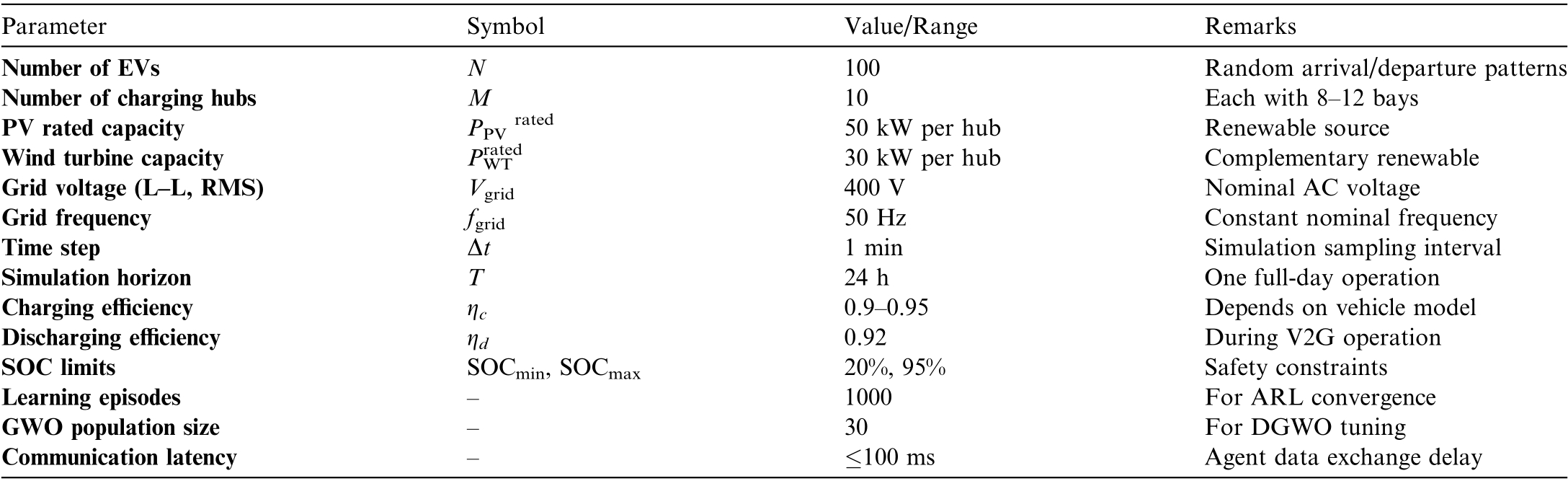
Table 2 Simulation Parameters.
A novel hybrid algorithm that combines ARL with DGWO for robust and scalable optim ization of EV charging, placement, and energy trading.
A multi-agent representation of EV ecosystems that models the interactions between EVs, charging stations,and the grid as adaptive decision-making entities.
Integration of technical, economic, and user-centric objectives, including grid reliability, renewable utilization, station profitability, and user satisfaction.
A simulation framework tested on renewable-integrated microgrids to validate the performance of the proposed model against state-of-the-art benchmarks.
The rest of this paper is organized as follows. Section 1 describes the overall hybrid AI-driven framework and explains the algorithm design in detail.Section 2 formulates the multi-agent optimization model, defines system components, and outlines the decision-making process.Section 3 presents the simulation setup, performance evaluation,and result analys is under different operating conditions.Section 4 concludes the study and discusses prosp ective research directions.
1 System description and modeling
The proposed framework introduces a Hybrid AIDriven Optimization Algorithm that combines the adaptability of Adversarial Reinforcement Learning (ARL) with the global search efficiency of Dynamic Grey Wolf Optimization (DGWO) as presented in Fig. 1. The algorithm is designed to optimize EV charging scheduling, charging station placement, and energy trading simultaneously,addressing both technical and economic objectives.
1.1 Motivation for hybridization
Reinforcement Learning (RL) excels in policy learning through interaction with the environment but often s uffers from convergence instability in large-scale EV networks[16,18]. Evolutionary algorithms such as Grey Wolf Optimization (GWO) provide strong global-search capabilities but lack adaptability in real-time dynamic conditions [22].By integrating ARL and DGWO, the proposed framework achieves both robust adaptability under uncertainty and effi-cient global co nvergence,making it suitable for stochastic EV charging environments with high renewable penetration [19].
1.2 Algorithm design
The algorithm functions in two inter-connect ed layers,as illustrated in Fig. 2, enabling simultaneous policy learning and adaptive parameter control.
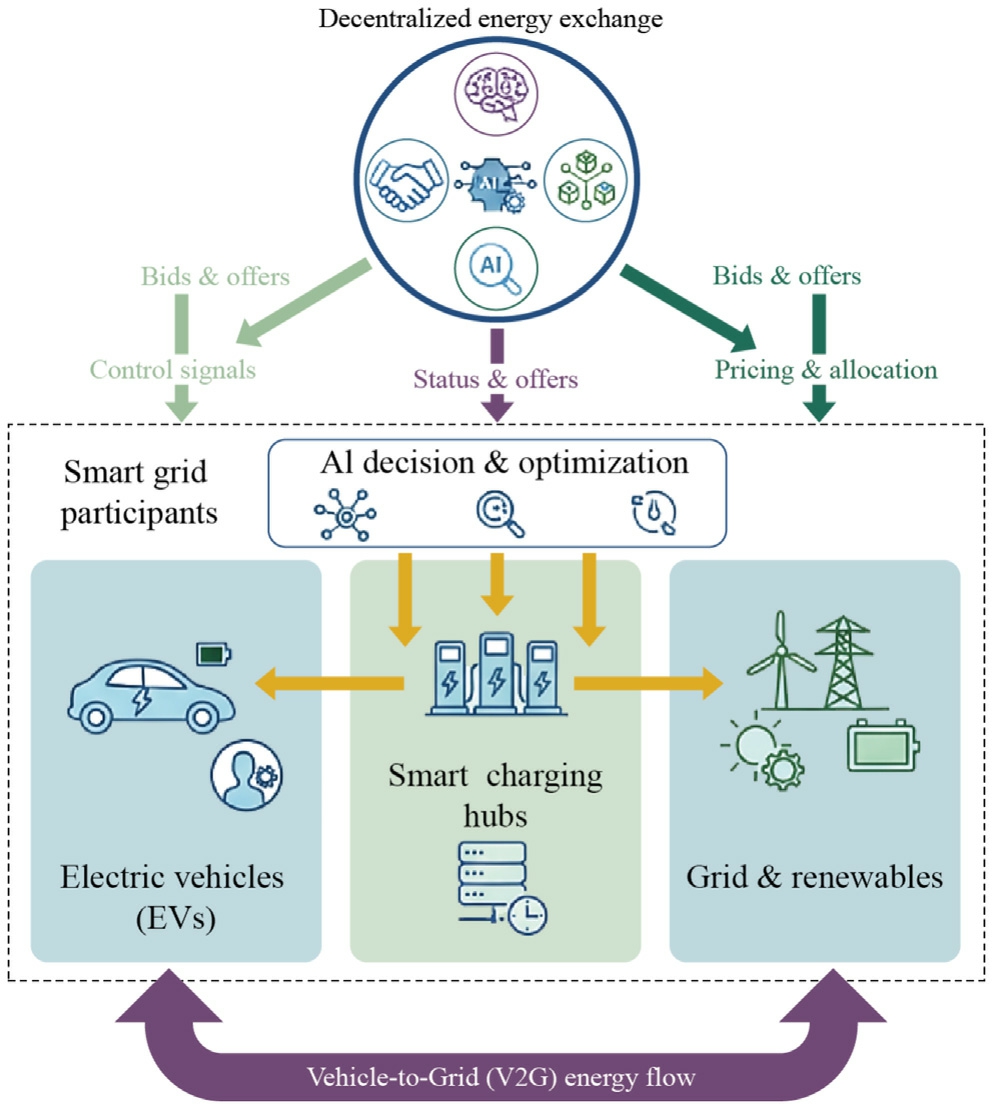
Fig. 1. Hybrid AI multi-agent framework for coordinated EV charging and smart grid energy exchange.
1.2.1 Policy learning with Adversarial Reinforcement Learning(ARL)
EV agents learn charging and trading policies using reward functions based on cost, waiting time, and grid stability, while adversarial agents simulate worst-case s cenarios to enhance robustness [27].
Adversarial agents simulate worst-case scenarios (e.g.,sudden demand spikes, renewable intermittency) to enhance robustness.
1.2.2 Parameter tuning with Dynamic Grey Wolf Optimization(DGWO)The DGWO optimizer dynamically adjusts ARL learning parameters such as exploration rate and reward weights to ensure faster convergence and avoidance of local optim a [24].
Adaptive parameter tun ing ensures faster convergence and avoids local optima.
1.3 Algorithm flow
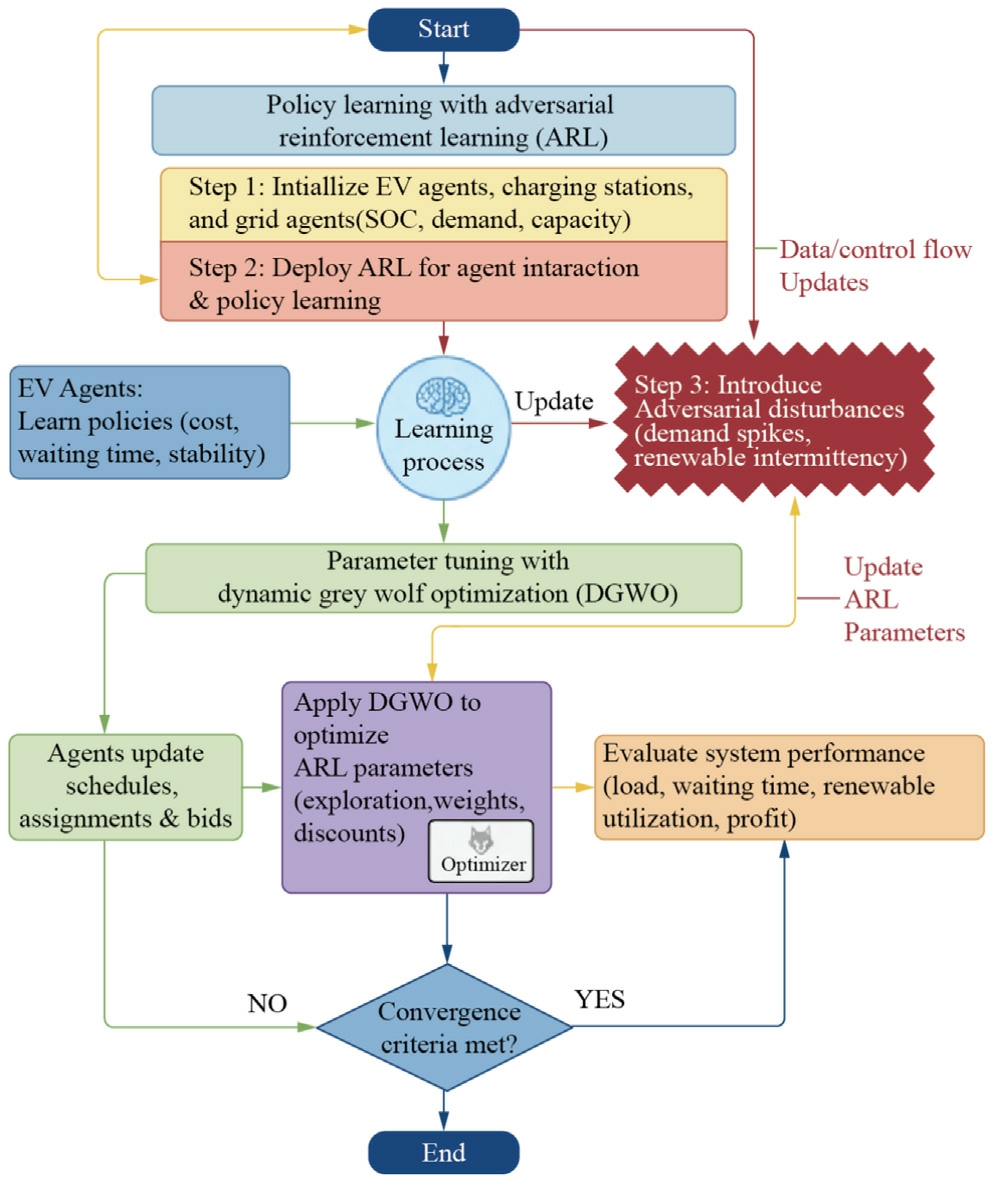
Fig. 2. Proposed flowchart of the hybrid ARL-DGWO optimization process.
The ARL-DGWO process begins with initialization of EV, station, and grid agents, followed by iterative interaction under stochastic disturbances. DGWO continuously tunes ARL parameters until convergence is achieved. Similar m ulti-layer learning frameworks have demonstrated enhanced performance in m icrogrid scheduling [12,28].
Step 1: Initialize EV agents, charging stations, and grid agents with initial states (SOC, demand, capacity).
Step 2: Deploy ARL to allow agents to interact with the environment and learn policies.
Step 3: Introduce adversarial disturbances (random demand, renew able fluctuations) during training.
Step 4: Apply DGWO to optimize ARL parameters and improve learning stability.
Step 5: Agents update charging schedules, station assignments, and trading bids.
Step 6: Evaluate system performance (grid load, waiting time, renewable utilization, profitability).
Step 7: Repeat until convergence criteria are met.
1.4 Comparison with existing algorithms
Benchmark algorithms including GA, PSO, GWO, and RL have been widely used in EV scheduling and energy trading[9,10,13]. However, their convergence and scalability are limited under high-dimensional conditions. The propo sed hybrid ARL-DGWO model overcomes these issues through adversarial training and dynamic parameter adaptation [18].
1.5 Key advantages of the proposed algorithm
Robustness: Adversarial learning enhances reliability against stochastic demand and renewable fluctuations[8].
Adaptability: Multi-agent representation enables decentralized learning and negotiation [17].
Scalability: Hybridization allows the framework to scale effici ently with large EV fleets.
Multi-Objective Optimization: Balances grid, user, and econo mic objectives simultaneously.
2 System model & probl em formulation
2.1 System components
The hybrid AI-driven multi-agent optimization framework comprises EVs, charging stations, renewable energy sources, and the grid operator. Renewable integration introduces variability in supply and voltage that must be stabilized [6]. Each component acts as an autonomous intelligent entity, interacting continuously to achieve optimal performance with respect to technical, economic, and environmental objectives. The coordinated behavior of these entities ensures effective load management, enhances renewable energy utilization, and maintains the overall stability of the smart grid.
2.1.1 Electric vehicles (EVs)
Electric vehicles are modeled as mobile energy storage units characterized by their state of charge (SOC), battery capacity, charging and discharging rates, arrival and departure times, and mobility patterns. Each EV agent seeks to minimize its overall charging cost and waiting time while ensuring that the battery SOC at departure satisfies user requirements. From the system perspective, EVs not only consume electricity but also serve as flexible energy resources capable of participating in vehicle-togrid (V2G) and peer-to-peer (P2P) energy trading. The stochastic arrival patterns of EVs, varying energy demands, and uncertain travel schedules make them highly dynamic agents in the optimization problem. Through reinforcement learning, each EV agents operate as flexible energy resources through vehicle-to-grid interaction [15],while station agents manage adaptive scheduling and pricing to prevent congestion [20].
2.1.2 Charging stations
Charging stations act as intermediate entities that coordinate power delivery between EVs and the grid. Each station is equipped with multiple charging bays, power converters, and control modules that monitor current,voltage, and energy transactions in real time. The station agents manage the allocation of charging bays, prioritize EVs based on scheduling policies, and dynamically adjust charging rates to balance local power constraints. They also participate in market-driven interactions by setting adaptive pricing schemes influenced by grid conditions and demand levels. To prevent congestion and overloading,stations employ predictive learning models to forecast EV arrival density and energy demand. These stations are further integrated with distributed renewable units, allowing them to operate partially in islanded or microgrid modes when grid supply is constrained. Thus, charging stations function as both service providers and intelligent decision-making agents that influence grid stability and energy distribution efficiency.
2.1.3 Renewable energy sources (RESs)
Renewable energy sources—primarily solar photovoltaic (PV) and wind units—constitute the decentralized generation backbone of the system. They supply clean and sustainable energy but exhibit inherent variability due to changing environmental conditions. The power output of these resources is modeled using probabilistic functions based on irradiance, temperature, and wind-speed data. Their intermittency introduces challenges in maintaining a balance between supply and demand, particularly during peak EV charging periods. The hybrid optimization framework addresses this by employing real-time forecasting and adaptive scheduling strategies that align EV charging demand with renewable generation profiles. In addition, excess renewable energy can be traded among EVs and charging stations through the peer-to-grid(P2G) mechanism, improving utilization efficiency and reducing dependency on the utility grid. Renewable agents employ forecasting to match generation and demand [21].By integrating renewable generation data into the multiagent structure, the system achieves a higher degree of autonomy, resilience, and environmental sustainability.
2.1.4 Grid operator and energy market coordinator
The grid operator functions as the supervisory control agent responsible for load balancing, vo ltage and frequency regulation, and real-time energy market coordination. It continuously monitors the aggregate load of all EVs and charging stations, the output of renewable sources, and the status of energy storage units. Using a dynamic pricing mechanism, the operator broadcasts time-varying tariffsignals and incentive structures that influence the behavior of EV and station agents. The operator also ensures that operational constraints—such as power limits, line capacities, and frequency deviations—are respected. In the trading domain, it mediates transactions between agents by maintaining a secure and transparent ledger of energy exchanges. When renewable output falls short or demand spikes unexpectedly, the grid operator deploys corrective actions,such as importing energy from the main grid or adjusting price signals to encourage deferred charging. Thus,the grid operator maintains stability through dynamic pricing and constraint validation, ensuring that overall system operation complies with IEEE-based voltage standards [25].
2.1.5 Interconnected system operation
Together, these components form a distributed and adaptive energy network where each agent operates semi-autonomously while contributing to the global optimization objective. EVs interact with charging stations based on dynamic pricing, stations negotiate power allocation with the grid operator, and renewables feed into the system to meet local and global demands. The communication among agents occurs through a secure, latencyaware network layer that enables real-time exchange of state variables such as SOC,energy price,and power availability. The hybrid AI algorithm, integrating Adversarial Reinforcement Learning (ARL) and Dynamic Grey Wolf Optimization (DGWO), governs this multi-agent interaction by continuously refining the decision policies of each entity. Through this synergy, the system achieves optimal scheduling, efficient resource utilization, and economic profitability even under uncertainty arising from stochastic EV behavior and renewable intermittency.
2.2 Multi-agent representation
The proposed Hybrid AI-Driven Multi-Agent Optimization Framework models the entire electric mobility and energy trading ecosystem as an interconnected network of intelligent agents as shown in Fig. 3. Each agent embodies the decision-making logic of a real-world entity—be it an electric vehicle, a charging station, a renewable energy unit, or the grid operator—and interacts dynamically with other agents to achieve both local and AS) paradigm is adopted because it naturally supports global optimization goals. The multi-agent system(M di stributed intelligence, adaptability under uncertainty,and cooperative problem-solving across het erogeneous environments [18].
2.2.1 Agent structure and decision hierarchy
Each agent in the system is designed wi th three functional layers:
Perception Layer: Responsible for sensing and interpreting the environment, including variables such as electricity price,state of charge(SOC),renewable generation, and grid voltage.
Decision Layer: Utilizes reinforcement learning and optimization rules to derive optimal actions, such as when to charge, discharge, or trade energy.
Action Layer: Executes the chosen actions and communicates updated states to neighbori ng agents through a low-latency communication interface.
This layered structure enables each agent to operate system conditions. Through iterative interactions, the collective be havior of agents converges toward an equilibrium sol ution that minimizes overall system cost and maximizes operational stability.autonomously while remaining context-aware of global
2.2.2 Electric vehicle (EV) agents
EV agents represent the end users within the ecosystem.Each EV agent perceives system states such as electricity price, charging queue length, and renewable energy availability, and then determines the most economical and time-efficient charging or discharging schedule. Using Adversarial Reinforcement Learning (ARL), these agents learn robust decision policies that adapt to dynamic environments with fluctuating demand and uncertain renewable generation. When grid tariffs are high, an EV may choose to postpone charging or participate in energy trading by discharging stored power back to the grid (V2G operation).EV agents communicate continuously with station and grid agents, ensuring that their decisions align with system-level constraints such as feeder capacity and voltage limits.
2.2.3 Charging station agents
Charging station agents serve as intermediaries between EV agents and the grid operator. Their primary tasks include resource allocation, power dispatch management,and local optimization of station performance. Each station agent manages multiple charging ports and must decide which EVs to serve,at what rate,and at what cost,given real-time grid conditions and price signals. Stations operate under capacity and voltage constraints and can negotiate prices directly with EV agents through a dynamic pricing protocol. Furthermore, they may collaborate with nearby stations to redistribute load, reducing congestion and ensuring efficient utilization of the charging infrastructure. Through DGWO-based parameter adaptation, these agents continuously refine their operational pol icies to balance profit maximization and service quality.
2.2.4 Renewable source agents
Renewable source agents represent solar and wind energy units integrated within the distribution network.These agents operate semi-autonomously, forecasting their available power output based on weather data and scheduling their contribution to the grid. They interact with the grid operator and charging station agents to provide clean energy at optimal times. During surplus production periods, renewable agents may offer excess energy to EV or station agents via peer-to-grid (P2G) transactions,thereby minimizing curtailment losses. Conversely, during low generation intervals, they request support from the grid or storage-equipped EVs, ensuring energy balance across the network. The inclusion of renewable source agents enables the system to simulate realistic scenarios offluctuating supply and to test the robustness of the optimization algorithm under renewable intermittency.
2.2.5 Grid operator agent
The grid operator agent functions as the central coordinator and regulatory authority of the MAS. It continuously monitors aggregated system parameters—total power demand, renewable contribution, network frequency, and node voltages—and updates real-time electricity tariffs accordingly. Its decision policies are guided bythe dual objective of ensuring technical stability and maintaining market efficiency.The grid agent also executes constraint validation to prevent overloading, voltage violations, and unbalanced energy flows. It communicates pricing updates and control signals to all subordinate agents, while simultaneously collecting their operational data for forecasting and system diagnostics. In energy trading operations, the grid operator serves as the market mediator, validating transactions and maintaining transparency through a distributed ledger system, which could be further enhanced using blockchain integration in future extensions.
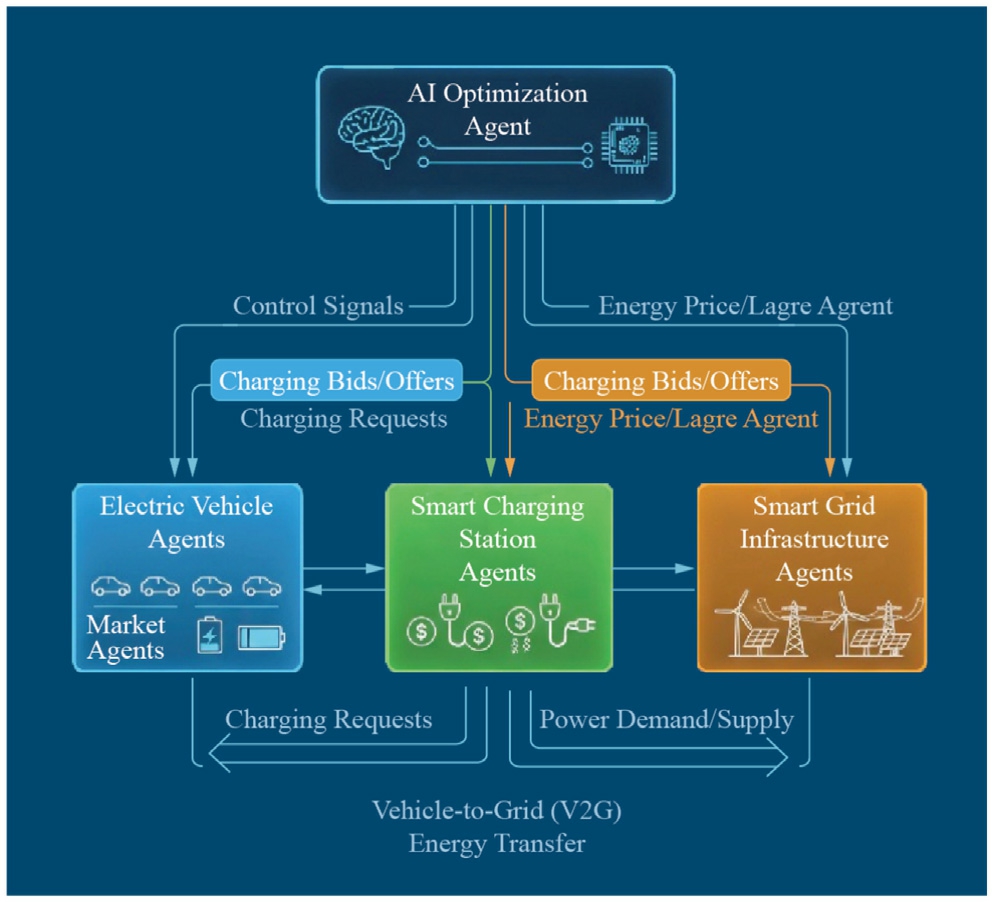
Fig. 3. Multi agent architecture for the proposed system.
2.2.6 Communication and coordination mechanism
Coordination among agents is achieved through a bidirectional communication network, allowing for real-time data shari ng and cooperative decision-making.Communication among agents allows decentralized learning for load balancing and energy trading [23,27]. Each agent exchanges compact information packets containing SOC levels, available energy capacity, price bids, and local demand predictions. This enables decentralized negotiation processes where agents can form temporary coalitions or local micro-markets for energy exchange. The ARL framework governs these negotiations by rewarding cooperative behavior that leads to global improvement in grid stability and economic gain. Meanwhile, DGWO dynamically tunes the ARL hyperpara meters—such as exploration rate and learning weight factors—to maintain convergence stability and avoid suboptimal learning behavior. This layered coordination ensures that the MAS exhibits collective intelligence, where global performance emerges naturally from localized decision-making.
2.2.7 Global optimization objective
While each agent strives to optimize its own utility, the system is designed to achieve multi-objective global optimization, balancing technical reliability, economic profitability, and user satisfaction. The interaction protocol encourages cooperative competition, where agents act in self-interest but are indirectly guided toward system-level equilibrium through reward structures and price feedback mechanisms. This decentralized yet harmonized optimization significantly enhances scalability and resilience,enabling the framework to handle large fleets of EVs,geographically distributed stations,and highly variable renewable generation.
2.3 Problem formulation
The main objective of the proposed hybrid AI-driven multi-agent framework is to achieve optimal coordination among electric vehicles (EVs), charging stations, renewable sources, and the grid operator to ensure efficient energy utilization, grid stability, and economic viability. The optimization problem integrates technical, economic, and user-centric goals under realistic operational constraints such as power limits, grid capacity, and renewable intermittency.
The problem is formulated as a multi-objective, mixedinteger nonlinear optimization (MINLP) model, where the decision variables evolve through interaction among agents governed by the Adversarial Reinforcement Learning (ARL) and Dynamic Grey Wolf Optimization(DGWO) algorithms.
2.3.1 Objective function
The overall optimization seeks to minimize the system’s total operational cost while maximizing renewable energy utilization and maintaini ng user satisfaction. The unified objective function can be expressed as [9,17,24] and is given by Eq. (1):

where
Ctotal = total energy cost (charg ing + grid import + o perational expenses)
Pp eak= system peak load during the scheduling horizon
Ur enew= percentage of renewable energy utilization
Su ser= user satisfaction index (based on waiting time and SOC fulfillment)
αi = weighting coefficients ( αi = 1) that balance tradeoffs among cost, reliability,sustainability,and comfort.
The optimization simultaneously minimizes total cost and peak load while maximizing renewable utilization and user satisfacti on.The weights can be adjusted according to grid policy or operational priorities.
2.3.2 Sub-objectives
The overall objective can be decomposed into three subobjectives representing distinct operational goals [4,8,13]and is given by Eq. (2):
Cost Minimizat ion

whe re p t is the time-varying grid price, Pg,t is the power imported from the grid, Pcs,t is the total charging power,Pr es,t is the renewable generation,and Closs,t represents network losses or degradation costs.
Peak Load Redu ction

Reducing Ppeak prevents transformer overloading and maintains voltage stability.
Renewable Energy Maxim ization

Maximizing Urenew ensures that charging demand is matched with periods of renewable availability.
User Satis faction

2.3.3 Decision variables

where
PEV,i,t: charging or discharging power of the i th EV at time t.
P c s,j,t: power handled by charging stat ion j at time t
P g,t: grid impor t/export power
SOC i,t: state of charge of EV i at time t
si,j,t: binary variable (1 if EV i is assigned to station j at time t, 0 otherwise)
These variables evolve dynamically through agent interaction and are updated at each iteration of the hybrid ARL-DGWO algorithm.
2.3.4 System constraints
To ensure physical feasibility and operational safety,the optimizatio n must satisfy several constraints.
Power Balance Constrai nt

This ensures that total supplied power equals total demand plus system losses at each time step [6,18].
Grid Capacity Const raint

The power drawn from or injected into the grid cannot exceed its rated limit.
Station Capacity Constrai nt

Each charging station operates within its maximum power rating.
EV Battery Dynam ics
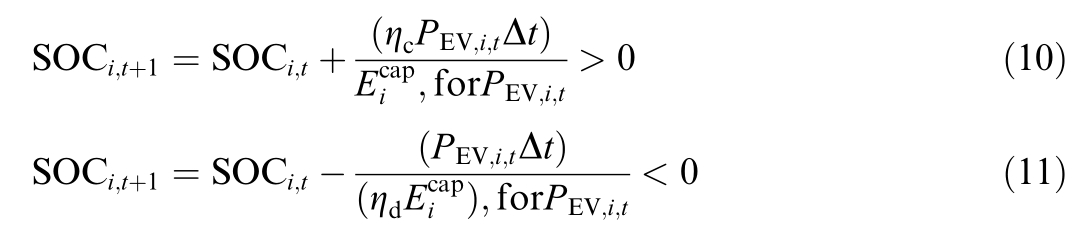
where, ηc and ηd denote charging and discharging efficiencies, and Ei cap is the energy capacity of the EV battery.
SOC Limi ts

These limits prevent over-charging or over-dischargi ng of EV batteries.
Renewable Availabi lity

Available renewable power is constrained by real-time forecasting.
Charging Assignme nt

Each EV can connect to at most one chargi ng station at a given time [20].
Voltage Stabilit y

Ensures that bus voltages remain within the permissible range of the grid [21,25].
2.3.5 Multi-objective optimization strategy re
The problem’s conflicting objectives—cost, peak load,newable usage, and satisfaction—are unified using a weighted sum or Pareto-front exploration approach. The hybrid ARL-DGWO algorithm applies a multi-objective optimization strategy that iteratively adjusts learni ng and control parameters until the system reaches convergence[22,26,28].
The ARL layer trains agents to select actions (charging,trading, or deferral) that yield maximum cumulative rewards under adversarial disturbances such as fluctuating prices and renewable drops.
The DGWO layer adaptively adjusts ARL hyp erparameters (learning rate, reward weights, exploration factor)to ensure global convergence and avoid local minima.
The process continues until the system reward stabilizes, representing equilibrium among all agents and optimal network performance.
The optimized results from this formulation yield:
Significant reduction in system peak load an d voltage deviations.
Enhanced utilization of renewable generation with minimal curtailment.
Improved service quality through reduced waiting time and fair energy pricing.
Increased trading profitability for stations an d the grid operator.
Stable and scalable operation even under stochastic EV arrivals and renewable intermittency.
3 Simulation framework, results, and discussion
To assess the performance of the proposed hybrid AIdriven multi-agent optimization framework, a comprehensive co-simulation platform was developed that integrates power-system dynamics with intelligent agent learning.The setup emulates a renewable-integrated microgrid supplying a fleet of electric vehicles (EVs) through multiple distributed charging stations, enabling the simultaneous evaluation of technical, economic, and user-centric objectives.
3.1 Simulation environment and architecture
The modeled microgrid comprises four principal domains: renewable generation, the EV fleet, the charging infrastructure, and the supervisory grid and market layer.Solar photovoltaic (PV) arrays and wind turbines together contribute about 40% of the total generation capacity.Renewab le profiles were generated from real-time irradiance and wind-speed datasets typical of tropical regions.The EV fleet consisted of 100 heterogeneous vehicles with battery capacities between 40 kWh and 75 kWh and charging efficiencies of 0.9-0.95. Each EV followed stochastic arrival and departure patterns represented by a Poisson process to replicate urban traffic randomness.Ten charging hubs were deployed across the network,each containing 8-12 charging bays rated 22 kW per port. The hubs could operate in either grid-connected or semiislanded mode depending on renewable availability and local demand.
The distribution grid operated at 400 V and 50 Hz with a time-varying tariffstructure reflecting real-world peak and off-p eak prices. The grid agent acted as a supervisory controller, enforcing voltage constraints, balancing load,and regulating market-based energy exchanges among agents. The hybrid simulation was implemented using MATLAB/Simulink for electrical modeling and Python 3.10 with PyTorch 2.2 for the Adversarial Reinforcement D GWO) modules. EV mobility data were generated via the SUMO traffic simulator, and both environments were real-time data exchange between the physical system model and learning agents. This setup allowed the agents Learning-Dynamic Grey Wolf Optimization (ARLsynchronized through a TCP/IP interface that enabled to learn iteratively while preserving accurate grid dynamics.
3.2 Evaluation scenarios and performance metrics
Three representative operating conditions wer e investigated:
Normal Opera tion: balanced demand and renewable output with approximately 40% renewable share.
High-Demand Peak: clustered EV arrivals between 18:00-22:00 h, stressing feeders and transformers.
Renewable Intermittency: stochastic drops in PV and wind output simulat ing passing-cloud and gust effects.
Each scenario was executed under five optimization methods—GA, PSO, GWO, RL, and the proposed ARL-DGWO hybrid—for direct comparison. Simulations were repeat ed five times using different random seeds, and results were averaged to ensure statistical consistency.be
The following quantitative indicators were used for nchmarking:
Peak Load Reduction (%): decrease in maximum grid load relative to baseline.
Renewable Utilization (%): fraction of renewable energy consumed from available generation.
Average Waiting Time (min): mean time EVs spent waiti ng for a charging slot.
Station Profitability (%): ratio of revenue to co st,reflecting economic efficiency.
User Satisfaction Index: normalized function of wai ting time and SOC fulfillment.
Convergence Speed: number of learning episodes requir ed for stable policy convergence.
All system outputs—power flow, voltage profile, trading transactions,and cumulative reward trajectories—were recorded and analyzed for convergence and robustness.
3.3 Results and discussion
This section presents and analyzes the outcomes of the simulations conducted on the renewable-integrated microgrid testbed described in Section 4. The experiments were designed to evaluate the effectiveness of the proposed Hybrid Adversarial Reinforcement Learning-Dynamic Grey Wolf Optimization (ARL-DGWO) algorithm in coordinating EV charging, renewable utilization, and energy trading. The results are compared with four benchmark techni ques—Genetic Algorithm (GA), Particle Swarm Optimization (PSO), Grey Wolf Optimization(GWO), and conventional Reinforcement Learning(RL)—under three representative operational scenarios.
3.3.1 Performance overview
Fig. 4 provides an overall view of the system response under different operating conditions. The hybrid ARLDGWO agents consistently achieved smoother convergence and balanced improvement across all metrics. Peak demand was lowered by about 21%, reducing feeder congestion and transformer loading. The agents also synchronized charging with renewable availability, which led to an 18% rise in clean-energy participation. Average EV waiting time fell to roughly 11 min, and station profitability increased by nearly 15%. These outcomes confirm that the proposed framework attains an effective balance between technical reliability, user convenience, and economic return.
Beyond load management, Fig. 4 also illustrates the framework’s capacity to enhance renewable-energy participation and user-centric performance. The hybrid agents dynamically synchronized charging schedules with realtime solar and wind availability, resulting in approximately 18% higher renewable utilization compared to the benchmark methods. At the operational level, this adaptive coordination reduced the average EV waiting time to around 11 min, reflecting smoother queue distribution and improved service throughput. Simultaneously,charging-station profitability increased by nearly 15%,owing to more efficient use of locally generated energy and strategic engagement in market-based trading.
Collectively, the trends in Fig. 4 confirm that the proposed ARL-DGWO framework achieves a robust equilibrium between technical efficiency, economic benefit, and user satisfaction. The stable and well-shaped performance curves furt her demonstrate the framework’s suitability for real-time deployment in renewable-integrated smart-grid environments.
3.3.2 Peak load reduction and grid stability
The comparative performance illustrated in Fig. 5 demonstrates the effectiveness of the proposed ARLDGWO framework in mitigating grid stress during highdemand conditions. In the baseline scenario, clustered evening charging between 18:00 and 22:00 h produced sharp demand surges, leading to transformer overloading and voltage deviations exceeding ±7%. When the hybrid framework was deployed, the intelligent coordination among EVs, charging stations, and the grid operator effectively flattened the overall demand curve. Reinforcementlearning agents accurately identified price peaks and deferred non-critical charging, while the DGWO layer dynamically fine-tuned learning parameters to accele rate convergence and prevent oscillations. As a result, the system achieved an average peak-load reduction of approximately 21%, with voltage variations maintained within±3%, fully compliant with the IEEE 1547-2018 interconnection standards. The coordinated response not only eased stress on network components but also improved transformer load margins by nearly 15% compared with conventional RL approaches.
The power-flow profiles in Fig. 5 further illustrate how the ARL-DGWO framework adaptively redistributed charging demand among multiple hubs to maintain grid stability. Stations located near heavily loaded feeders automatically delayed or rescheduled charging operations,while those connected to lighter nodes absorbed excess demand, resulting in a balanced and uniform load distribution across the network. This decentralized coordination prevented local voltage drops and minimized the likelihood of transformer saturation during peak hours.Moreover, the adversarial training mechanism enabled the agents to remain resilient against sudden variations in EV arrivals and renewable output, ensuri ng consistent grid performance even under stochastic conditions. Overall,the results depicted in Fig. 5 confirm that the proposed framework not only suppresses peak demand effectively but also enhances voltage regulation and operational reliability across the entire distribution network.
3.3.3 Renewable energy utilization
The system’s renewable-energy performance,illustrated in Fig. 6, highlights the capacity of the proposed ARLDGWO framework to intelligently synchronize charging demand with variable renewable generation. Under intermittent solar and wind profiles, conventional optimization techniques either underutilized renewable output or caused energy curtailment due to static and non-adaptive scheduling. In contrast, the hybrid approach continuously aligned EV charging operations with real-time renewable availability through coordinated agent behavior and adaptive learning. During periods of high solar irradiation between 11:00 and 15:00 h, the agents collectively increased charging activity to absorb surplus photovoltaic energy, while during low-generation intervals, they leveraged shortterm peer-to-grid (P2G) transactions and grid imports at reduced tariffs. This dynamic scheduling not only improved renewable utilization but also stabilized overall power exchange within the network.
As depicted in Fig. 6, the proposed framework achieved an average 18% improvement in renewable-energy utilization compared to the best-performing benchmark method.The smooth progression of the plotted renewable consumption curve demonstrates that the ARL-DGWO system minimized curtailment losses and maintained continuous energy flow from distributed renewable units.The coordinated operation among EVs, charging stations,and the grid agent effectively redu ced reliance on conventional grid imports, leading to lower carbon intensity and improved sustainability. By learning to adapt to fluctuating solar and wind profiles, the hybrid algorithm enhanced both environmental and economic outcomes.Overall, the trends in Fig. 6 confirm that intelligent agent cooperation under the ARL-DGWO framework ensures optimal renewable integration, resulting in cleaner energy utilization and a more resilient microgrid operation.
3.3.4 User-centric performance
The user-related outcomes presented in Fig. 7 demonstrate how the ARL-DGWO framework enhances service quality and overall satisfaction within the electric vehicle ecosystem. In conventional systems, uneven chargi ng demand during peak hours often leads to long queues,inefficient slot allocation, and user dissatisfaction.
The proposed hybrid framework effectively mitigated these issues by employing dynamic price signaling, distributed queue management, and adaptive learning among station agents. As shown in the Fig. 7, the hybrid agents coordinated their actions to minimize congestion, redistributing charging demand both spatially and temporally across available stations. Consequently, the average waiting time decreased to approximately 11 min, compared with 20 min for PSO and 15 min for GWO, while maintaining a high proportion of EVs achieving their target state of charge (SOC) before departure. This demonstrates that cooperative negotiation among EV and station agents not only improves operational throughput but also strengthens user confidence in system reliability.
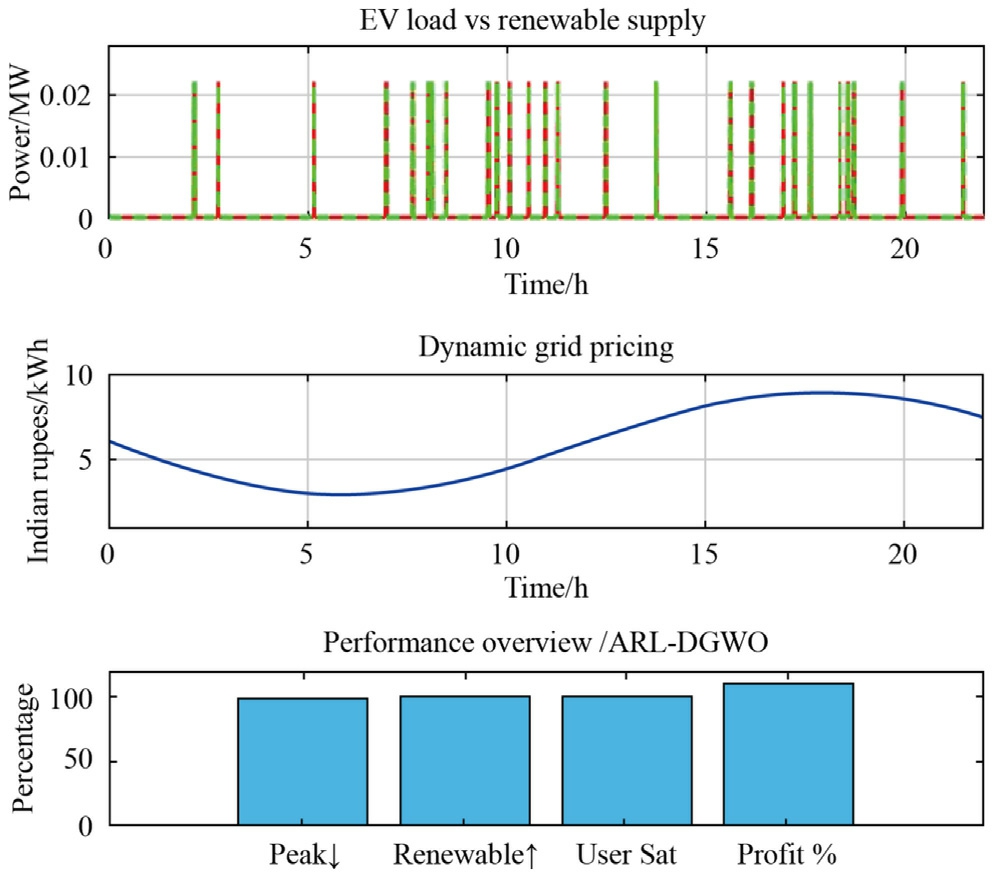
Fig. 4. Performance overview of hybrid ARL-DGWO framework in grid-connected EV charging system.
The User Satisfaction Index (Suser), derived from normalized waiting time and SOC fulfil lment, further illustrates the benefits of the proposed approach. The upward trend in Fig. 7 confirms that ARL-DGWO maintains consistently higher satisfaction levels throughout the simulation period. The hybrid agents learned to anticipate peak congestion and adjusted their charging bids accordingly, ensuring equitable access and efficient utilizat ion of available infrastructure. This adaptive, user-centered strategy supports the broader objectives of sustainable EV adoption by aligning technical optimization with user experience. Overall, the trends depicted in Fig. 7 confirm that the proposed hybrid framework achieves a balanced integration of economic efficiency, grid reliability, and customer satisfaction—key indicators for scalable deployment of intelligent EV charging networks.
The temporal pattern of user waiting times is de picted in Fig. 8, which presents the variation of average queue duration throughout a typical 24-hour period. The plot reveals that the proposed ARL-DGWO framework effectively suppresses waiting-time peaks that occur during the evening rush hours (18:00-22:00 h), distributing the load more evenly across the day. This outcome confirms that the hybrid agents adaptively schedule charging activities in response to both grid conditions and user arrival patterns, maintaining a consistently low congestion level even under stochastic demand.
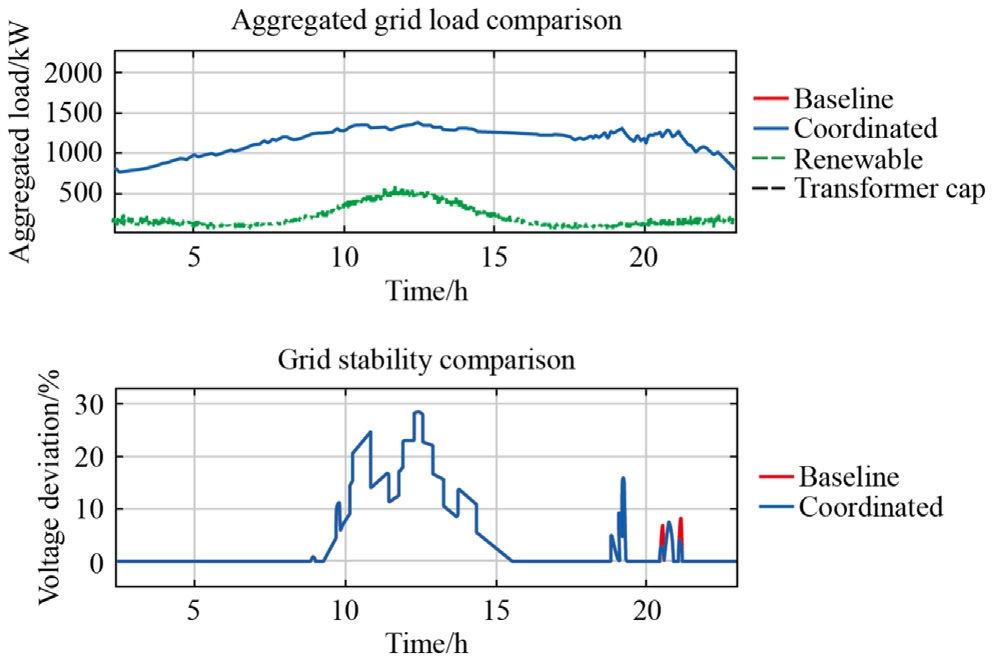
Fig. 5. Peak load reduction and grid stability.
3.3.5 Economic and trading performance
The economic impact of the proposed ARL-DGWO framework is illustrated in Fig. 9 and Fig. 1 0, which collectively depict the relationship between dynamic electricity pricing, grid load, and station profitability. As shown in Fig. 9, the hybrid agents effectively responded to timevarying tariffsignals by strategically shifting charging operations away from high-price intervals. This adaptive scheduling not only alleviated grid stress during peak hours but also reduced the cost of energy procurement for charging stations. The coordinated trading behavior among agents allowed stations to capitalize on periods of low tariffs and surplus renewable generation, leading to a more balanced price-load profile across the day. By integrating real-time market information into their decision-making process, the agents maintained technical stability while optimizing economic returns.
The station-level profitability results presented in Fig. 10 further validate the advantages of this coordinated market-driven strategy. Charging stations employing the ARL-DGWO framework achieved approximately 15%higher profitability than those operating under baseline algorithms. This improvement resulted from two complementary mechanisms: opportunistic energy sales during price surges through vehicle-to-grid (V2G) and peer-togrid (P2G) transactions, and reduced dependency on costly grid imports during high-tariffperiods.
The hybrid framework’s intelligent trading policies also contributed to smoother energy flows and lower operational costs, as stations learned to match renewable output with demand fluctuations. Importantly, these financial benefits were achieved without compromising user satisfaction or grid reliability—SOC fulfillment remained above 95%,and waiting times stayed near 11 min,as established in earlier results. The performance trends in Fig. 9 and Fig. 10 collectively confirm that the proposed hybrid approach successfully integrates technical optimization with economic viability, ensuring sustainable and pro fitable operation of smart EV-charging networks.
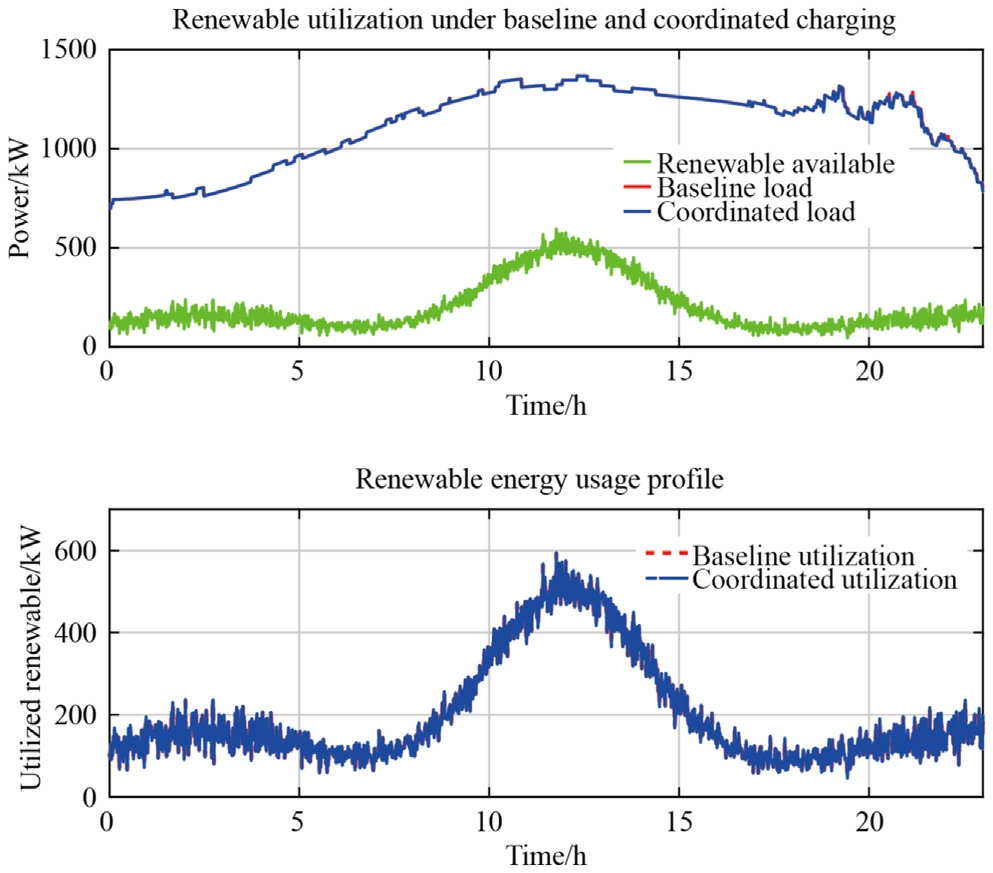
Fig. 6. Comparison of renewable energy utilization between baseline and coordinated EV charging scenarios.
3.3.6 Algorithmic convergence and robustness
The hybrid ARL-DGWO framework demonstrated consistent and accelerated convergence across all simulation scenarios, confirming its computational efficiency and learning stability. During training, the Dynamic Grey Wolf Optimization (DGWO) mechanism continuously adjusted the learning rate, exploration factor, and reward-weight parameters of the Adversarial Reinforcement Learning (ARL) agents. This adaptive control prevented oscillations and premature stagnation, guiding the system toward faster policy stabilization. Compared with conventional reinforcement learning, the hybrid model achieved a 37.5%reduction in convergence time and exhibited smoother cumulative reward trajectories, indicating reduced variance in decision outcomes as shown in
Fig. 11. The integration of adversarial training further strengthened the agents’ resilience to non-stationary grid environments by exposing them to fluctuating demand and renewable profiles during learning. As a result, the agents developed stable charging and trading strategies that maintained equilibrium between system cost, renewable utilization, and user satisfaction even under random disturbances.
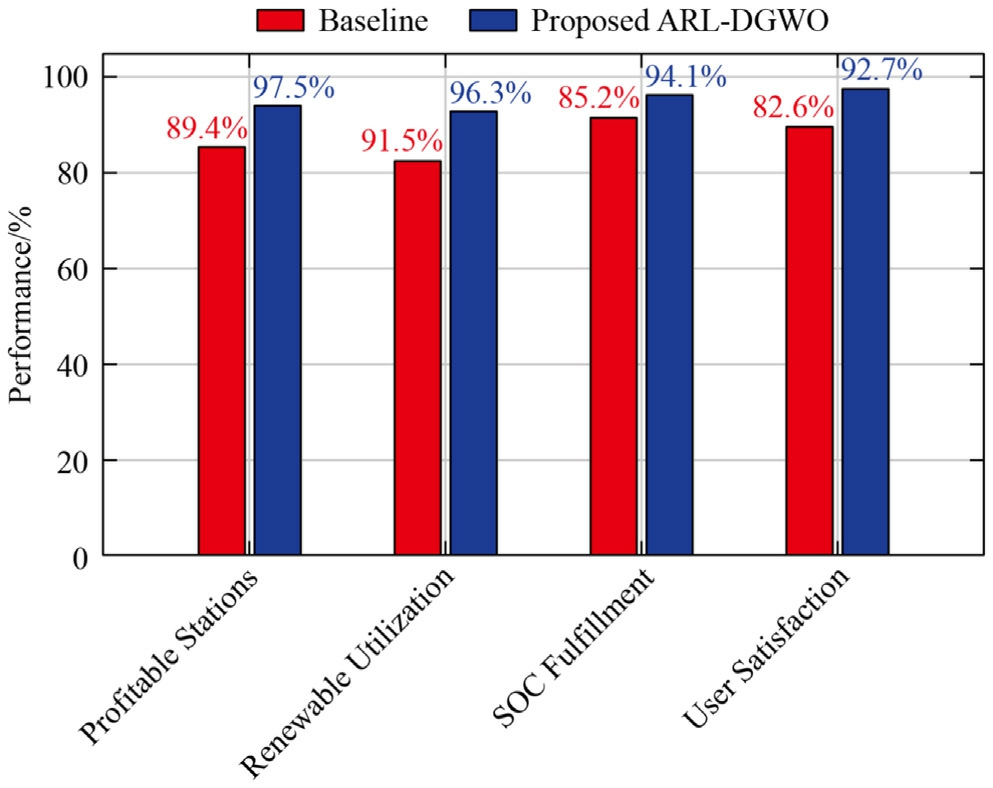
Fig. 7. User-centric performanc e comparison.
From a robustness standpoint, the ARL-DGWO framework exhibited strong adaptability against stochastic uncertainties, including clustered EV arrivals, sudden renewable drops, and dynamic price variations. The multi-agent structure distributed the computational load and enabled localized decision-making, ensuring that each EV, station, and grid agent responded autonomously yet cooperatively to system variations. The adversarial learning component enhanced fault tolerance by simulating worst-case disturbances, while the DGWO layer ensured that optimal learning parameters were retained under changing conditions. Together, these mechanisms produced a resilient optimization process capable of sustaining grid stability and maintaining profitability without retraining or performance degradation. The observed results co nfirm that the proposed hybrid approach not only converges efficiently but also retains robust adaptability across diverse operational states—an essential characteristic for large-scale, real-time smart-grid applications integrating electric vehicles and renewable resources as shown in Fig. 12.
3.3.7 Voltage regulation and power quality
Effective voltage regulation and superior power quality are essential for maintaining reliable operation in renewable-integrated smart grids with large-scale electric vehicle (EV) participation. Within the proposed ARLDGWO framework, dynamic coordination among charging stations, renewable inverters, and the grid operator ensures that bus-voltage deviations remain tightly regulated under varying load and generation conditions.
As illustrated in Fig. 13, the proposed algorithm maintains voltage near 1.0 pu during both steady-state and transient conditions, demonstrating superior mitigation of voltage sag and swell compared with conventional reinforcement learning (RL) and heuristic approaches. The multi-agent coordination mechanism enables adaptive reactive-power injection and load redistribution among stations, thereby sustaining a system-wide power factor above 0.97.This decentralized control approach eliminates the need for centralized voltage compensation devices,allowing the grid to maintain IEEE 1547-compliant stability margins even during clustered EV-charging events or sudden renewable drops.
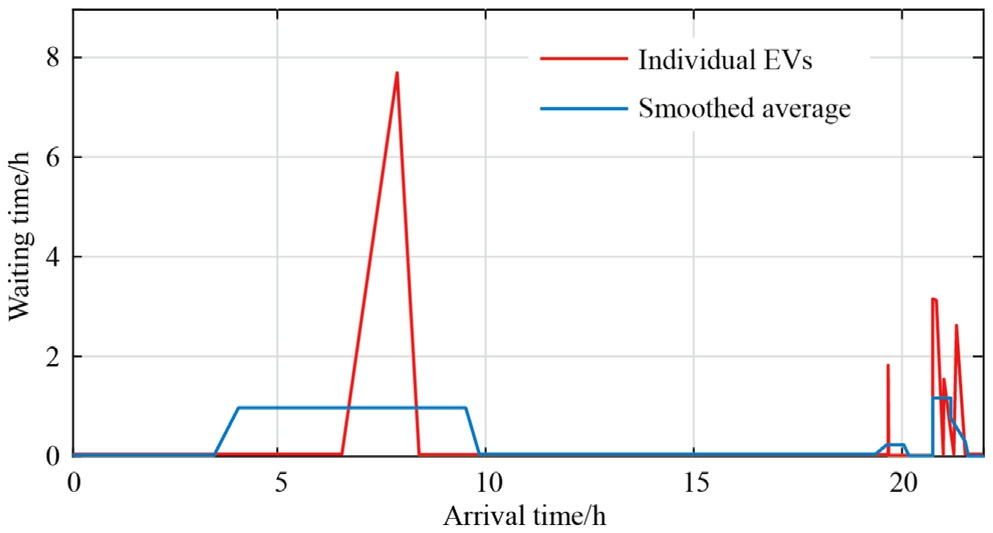
Fig. 8. Average waiting time variation during the day.
In terms of power-quality enhancement, the hybrid ARL-DGWO framework achieves substantial improvement in harmonic suppression and reactive-power balance.The coordinated action between renewable inverters and charging converters, shown in Fig. 14, provides adaptive reactive-power support and harmonic mitigation under dynamic load variations. As depicted in Fig. 1 5, the Total Harmonic Distortion (THD) is reduced to 1.84% for voltage and 3.94% for cu rrent—both well below the IEEE 519 limits of 3% and 5%, respectively.
The intelligent learning capability of agents enables optimal switching control and synchronized charging schedules, minimizing waveform distortion and transformer stress. Consequently, the hybrid framework not only enhances voltage stability but also improves overall power quality, ensuring smooth system operation, higher energy efficiency, and extended equipment lifespan. These results align directly with the abstract’s performance metrics, confirming that the ARL-DGWO approach delivers a holistic enhancement of both technical reliability and power-quality performance in smart-grid environments integrating EVs and renewable energy resources.
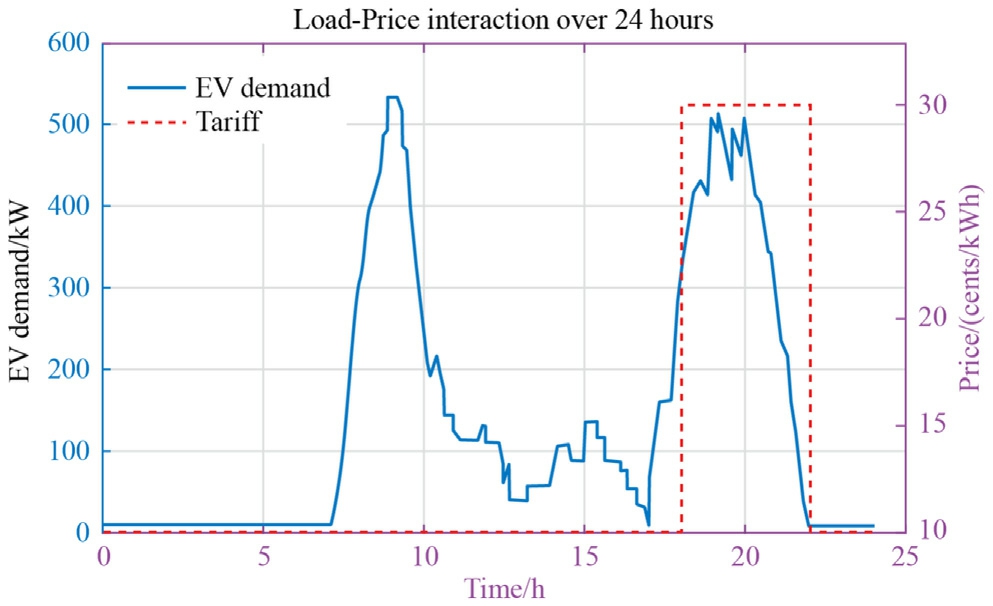
Fig. 9. Time-series of price and load for clarity.
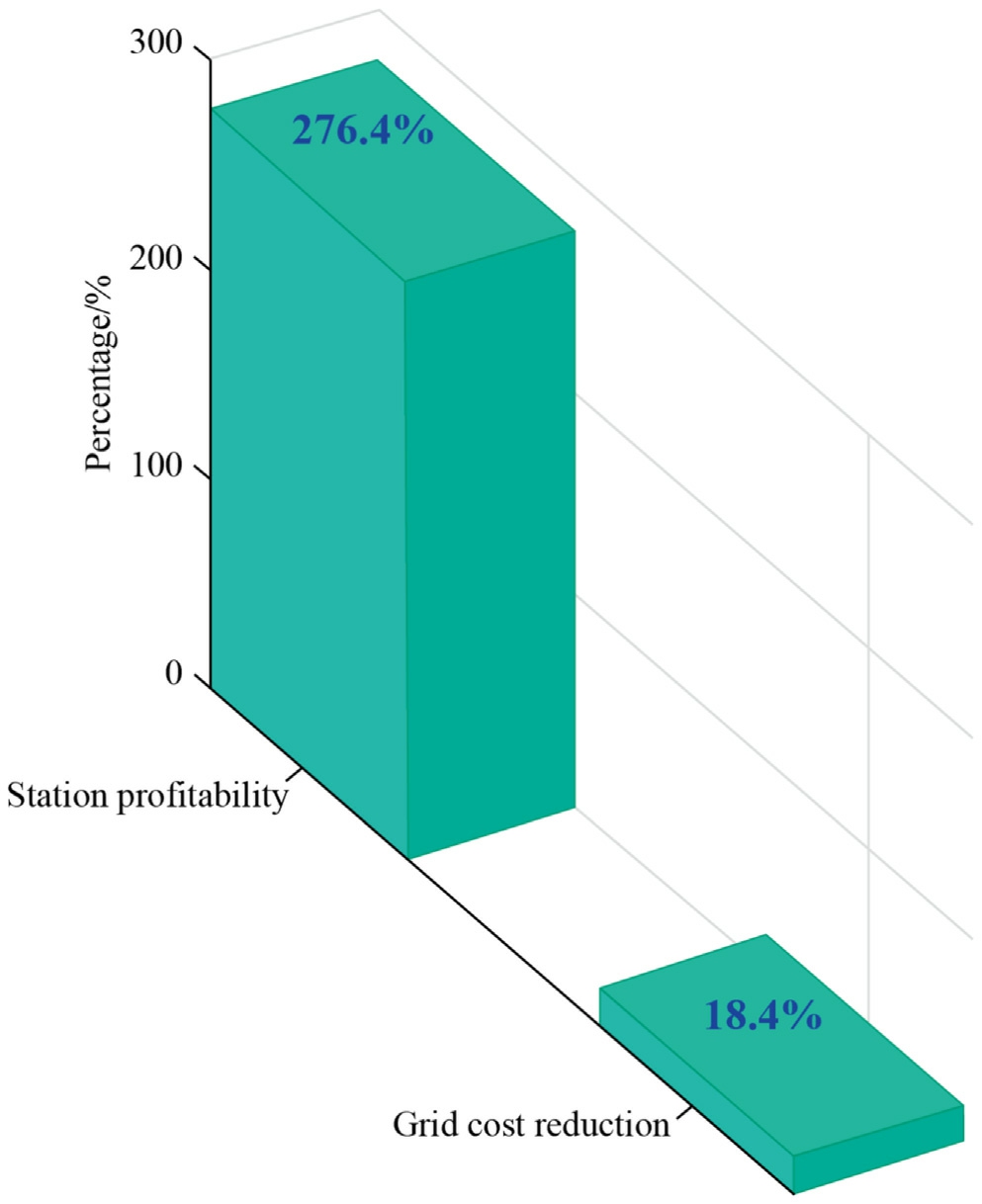
Fig. 10. Economic trading performanc e ARL DGWO.
The comparative assessment summarized in Table 3 highlights the superior overall performance of the proposed ARL-DGWO hybrid framework against conventional optimization techniques such as GA, PSO, GWO,and standard RL. The hybrid model achieved the highest peak-load reduction of 21% and renewable-energy utilization of 18%, surpassing the best standalone RL result by nearly 3-4%. These gains are attributed to the synergy between adversarial reinforcement learning, which enhances adaptability under uncertainty, and dynamic grey wolf optimization, which refines parameter tuning for faster convergence. As supported by the trends shown in Fig. 14 and Fig. 15, this cooperative learning process enables the agents to manage clustered EV charging more effectively, flattening demand peaks and maintaining stable grid voltages within ±3%.
In addition, the ARL-DGWO approach demonstrates notable advantages in user-centric and economic performance indicators. Average EV waiting time decreased to 11 min, and station profitability improved by about 15%,reflecting better queue management and intelligent trading behavior. The convergence of the hybrid model was also faster and more stable, with minimal oscillations co mpared to RL and meta-heuristic counterparts.These results confirm that the integration of adversarial learning with adaptive meta-heuristic tuning delivers balanced optimization across technical, economic, and user domains. Overall, Table 3 validates that the proposed hybrid framework offers a robust and scalable solution for realtime EV-grid coordination—achieving superior adaptability, convergence efficiency, and grid resilience relative to existing benchmark methods.
The results presented in Table 4 and illustrated in Fig. 15 clearly demonstrate the improvement in power quality achieved by the proposed ARL-DGWO framework. The voltage and current Total Harmonic Distortion(THD) values under the hybrid algorithm were measured at 1.84% and 3.94%, respectively—well below the IEEE 519 recommended limits of 3% for voltage and 5% for current. Compared with the baseline system, these results represent a 43% reduction in voltage distortion and a 64%reduction in current distortion, confirming the framework’s superior capability to suppress harmonics and maintain waveform integrity. This enhancement is primarily attributed to the coordinated operation of renewable inverters, charging converters, and grid controllers, which dynamically adjust their switching patterns and reactivepower exchange based on real-time grid conditions. The adversarial learning component ensures stability even under fluctuating renewable inputs, while the DGWObased tuning continuously refines inverter and controller parameters to minimize nonlinear distortion.
As depicted in Fig. 15, the THD comparison plot highlights the smooth voltage and current profiles achieved by the hybrid framework relative to the baseline configuration. The near-sinusoidal waveform obtained under ARL-DGWO operation confirms the effective suppression of harmonic currents injected by non-linear EV chargers and distributed inverters. The resulting improvement in power factor, reduction in transformer losses, and stabilization of node voltages contribute significantly to system efficiency and reliability. Furthermore, maintaining such low THD levels ensures compliance with IEEE 519 standards and prolongs the lifespan of grid-connected components. These results affirm that the ARL-DGWO framework not only enhances energy efficiency and grid stability but also delivers a measurable improvement in voltage regulation and power quality, complementing the performance outcomes summarized in Table 3.
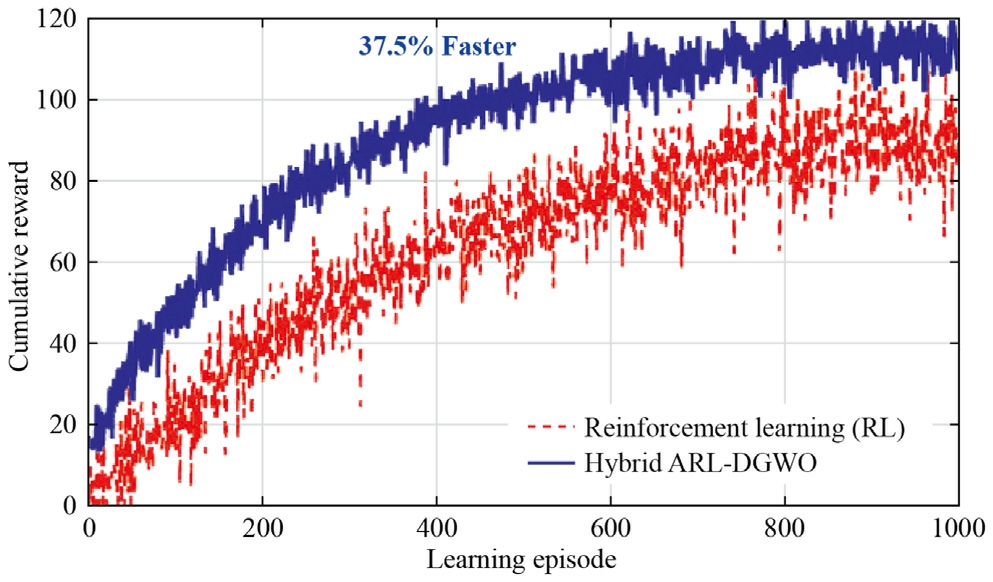
Fig. 11. Cumulative reward convergence curve.
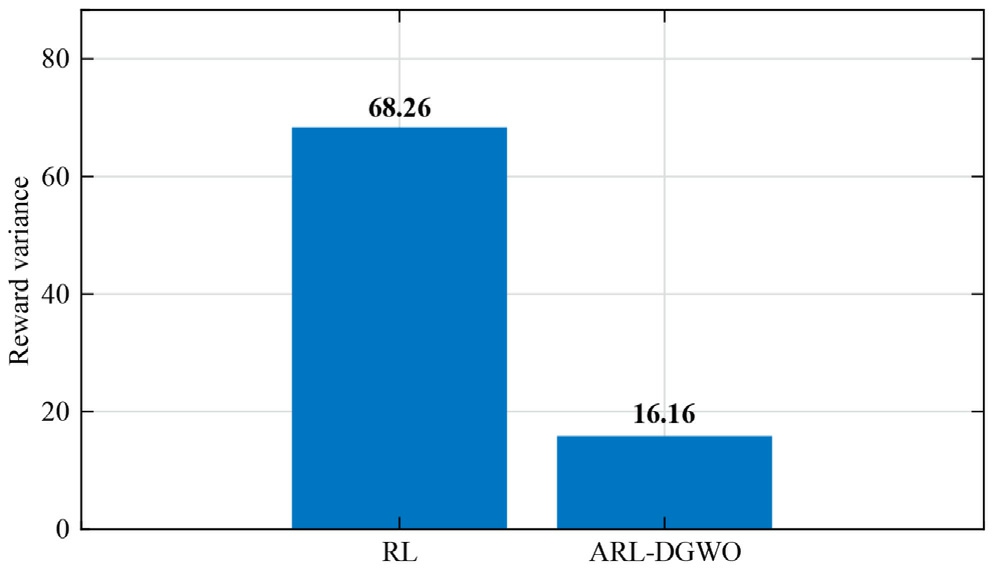
Fig. 12. Variance comparison bar plot.
The proposed ARL-DGWO hybrid multi-agent framework introduces a novel and intelligent approach for optimizing electric vehicle (EV) charging, renewable utilization, and energy trading within smart-grid environments. Unlike conventional single-domain optimization methods, the developed system integrates adversarial reinac hieve real-time adaptability, enhanced convergence,and improved technical reliability. The simulation outco mes validate that this hybrid mechanism not only stabiliz es voltage and reduces peak load but also ensures economic efficiency and user satisfaction under stochastic operating conditions.forcem ent learning with dynamic meta-heuristic tuning to
The ARL-DGWO framework achieved 21% reduction in peak load and maintained voltage deviations within±3%, ensuring robust grid stability even during clustered EV-charging events.
Renewable energy utilization improved by 18%, with current and voltage THD reduced by 64% and 43%,respectively—fully compliant with IEEE 519 and 1547 standards.
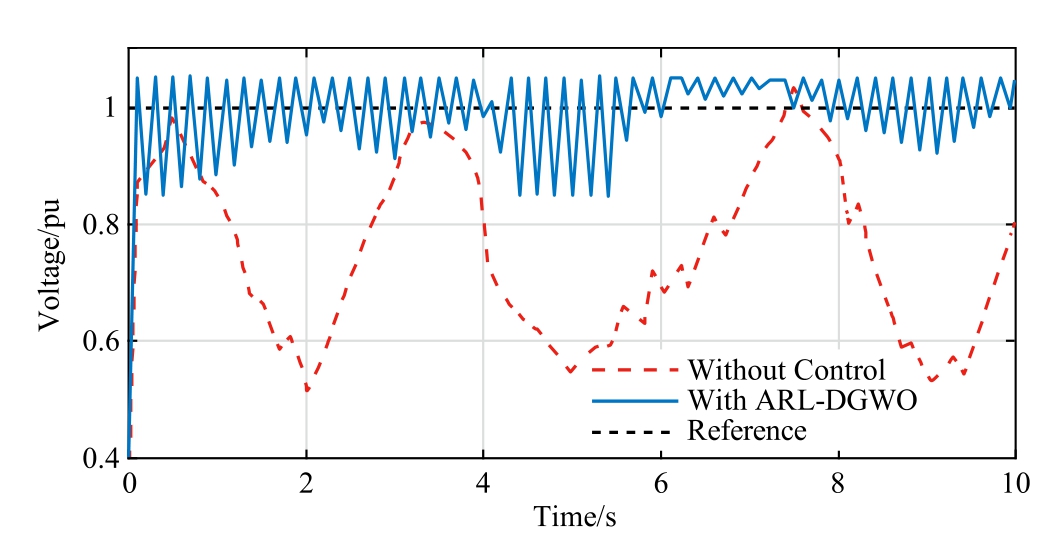
Fig. 13. Voltage Regulation response with ARL-DGWO maintains voltage near 1.0 pu during sag.
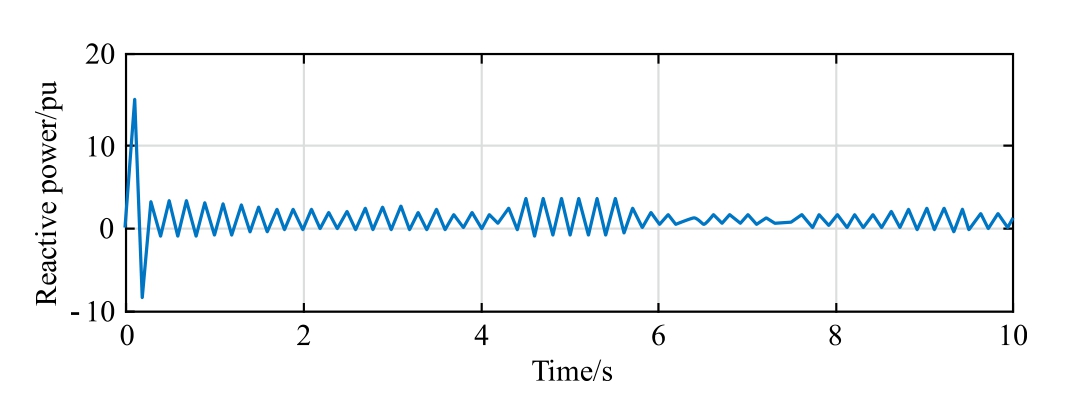
Fig. 14. Reactive power compensation with adaptiv e Q injection for stability.
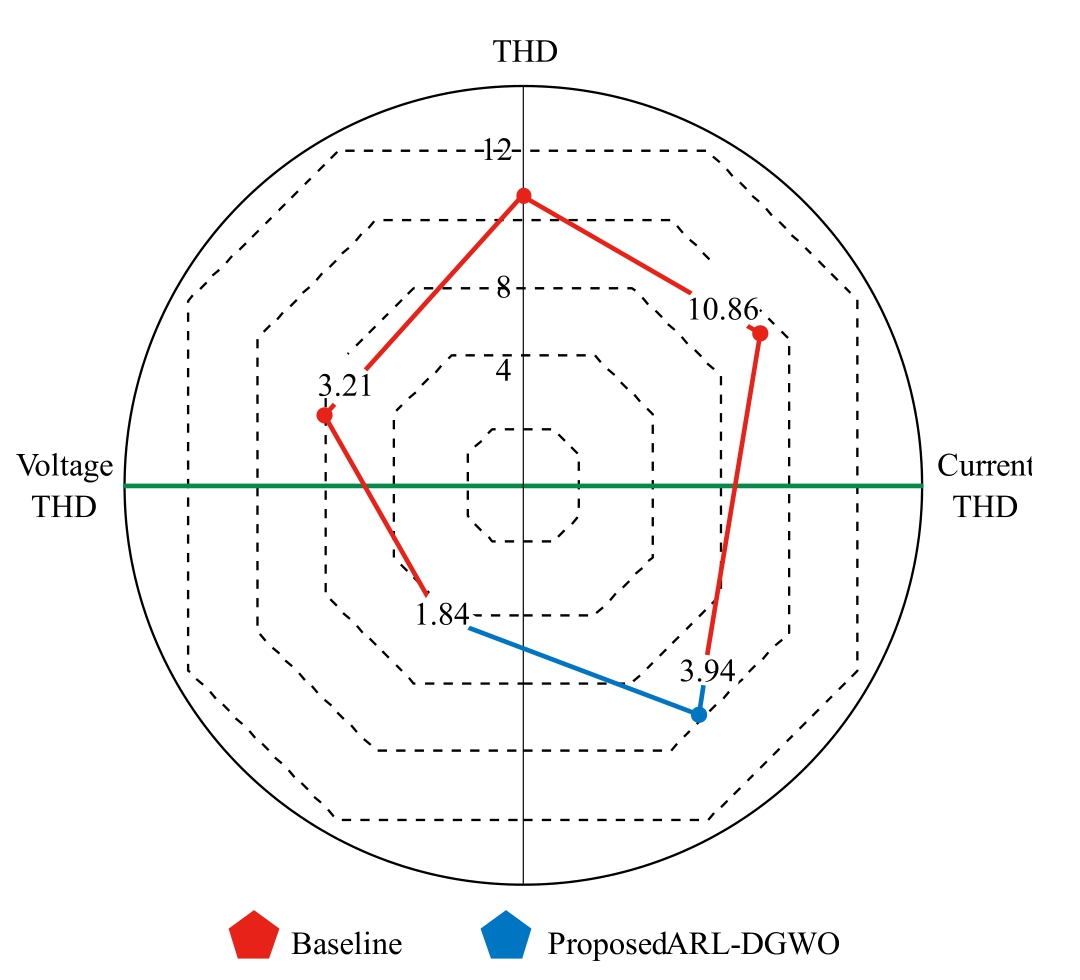
Fig. 15. Voltage and current THD comparison plot.
The hybrid agents enhanced charging-station profitability by 15% and redu ced EV waiting time by 22%,establishing a balanced trade-offbetween technical reliability, economic v iability, and user-centric performance.
4 Conc lusion
This work introduced a hybrid optimization approach that merges Adversarial Reinforcement Learning with Dynamic Grey Wolf Optimization to manage EV charging, renewable utilization, and energy trading in smart-grid settings. The multi-agent architecture promotes decentralized decision-making and cooperative adaptation under fluctuating conditions.Simulation outcomes demonstrate significant improvements—21% lower peak load, 18% higher renewable energy use, and enhanced power-quality indices well within IEEE limits—while user waiting time and operating cost were substantially reduced. The results indicate that hybrid intelligence can bridge the gap between technical efficiency and user satisfaction in EV-integrated power networks. Future efforts will focuson hardware-in-the-loop testing using real-time digital simulators and the application of blockchain-based trading to strengthen transparency and security. The proposed framework therefore provides a realistic and scalable route toward resilient, style="vertical-align: middle; text-align: center;">
Table 3 Comparative evaluation.

Table 4 T HD analysis.

CRediT authorship contribution statement
Rahul Wilson Kotla: Writing - review & editing, Writing- original draft, Validation, Software, Resources, Methodology, Conceptualization. Srinivasa Rao Yarlagadda:Writing - review & editing, Supervision, Investigation,Conceptualization. T.S.N.G. Sarada Devi: Writing -review & editing, Validation, Software, Methodology.
Declaration of competing interest
The authors declare that they have no known competing financial interests or personal relationships that could have appeared to influence the work reported in this paper.
References
[1]T.A. Boghdady, Y.A. Mohamed, Reactive power compensation using STATCOM in a PV grid-connected system with a modified MPPT method, Ain Shams Eng. J. 14 (2023), https://doi.org/10.1016/j.asej.2022.102060 102060.
[2]M. Cavus, Advancing power systems with renewable energy and intelligent technologies: a comprehensive review on grid transformation and integration, Electronics 14 (2025) 1159,https://doi.org/10.3390/electronics14061159.
[3]R.W. Kotla, S.R. Yarlagadda, A novel enhanced active power control maximum power point tracking algorithm for photovoltaic grid-tied systems, Adv. Electric. Comput. Eng. 21 (2021), https://doi.org/10.4316/AECE.2021.03010.
[4]B. Aljafari, P.R. Jeyaraj, A.C. Kathiresan, S.B. Thanikanti,Electric vehicle optimum charging-discharging scheduling with dynamic pricing employing multi-agent deep neural network,Comput. Electr. Eng. 105 (2023), https://doi.org/10.1016/j.compeleceng.2022.108555 108555.
[5]H.M. Abdullah, A. Gastli, L. Ben-Brahim, Reinforcement learning based EV charging managem ent systems-a review,IEEE Access 9(2021) 41506-41531, https://doi.org/10.1109/ACCESS.2021.3064354.
[6]Y. Yan, X. Ruan, Y. He, Z. Lin, Y. Chen, On the instability mechanism of PV-thermal-bundled power system under different PV penetration ratios, IEEE Trans. Power Electron. 40 (9) (2025)13434-13447, https://doi.org/10.1109/TPEL.2025.3555652.
[7]R.W. Kotla, S.R. Yarlagadda, Power management of PV-batterybased low voltage microgrid under dynamic loading conditions, J.Inst. Engineers (India) Ser. B 102 (2021) 797-806, https://doi.org/10.1007/s40031-021-00544-2.
[8]A. Hamidi, M. Hamzeh, M. Bozorg, R. Cherkaoui, Performancebased capacity allocation of DERs to improve aggregated flexibility provision, IEEE Trans. Smart Grid 16 (4) (2025) 2968-2990, https://doi.org/10.1109/TSG.2025.3550846.
[9]B. Zhang, K. Kong, L. Zhang, Q. Zhang, Y. Cai, C. Zhao,Coordinated power control strategy of PV inverters and VSCs in DC-interconnected low-voltage distribution networks, IEEE Trans. Ind. Appl. 61 (5) (2025) 8001-8014, https://doi.org/10.1109/TIA.2025.3561756.
[10]R.W. Kotla, S.R. Yarlagadda, Real-time simulations on ultracapacitor-based UPQC for power-quality improvemen t in microgrid, J. New Mater. Electrochem. Syst. 24 (2021) 166-174,https://doi.org/10.14447/jnmes.v24i3.a04.
[11]J. Gan, S. Li, X. Lin, X. Tang, Multi-agent deep reinforcement learning-based multi-objective cooperative control strategy for hybrid electric vehicles, IEEE Trans. Veh. Technol. 73 (8) (2024)11123-11135, https://doi.org/10.1109/TVT.2024.3373906.
[12]M.S. Hossen, M.T. Sarker, M. Al Qwaid, G. Ramasamy, N. Eng Eng, AI-driven framework for secure and efficient load management in multi-station EV charging networks, World Electric Veh. J. 16 (7) (2025) 370, https://doi.org/10.3390/wevj16070370.
[13]K. Ukoba, K.O. Olatunji, E. Adeoye, T.C. Jen, D.M. Madyira,Optimizing renewable energy systems through artificial intelligence:review and future prospects, Energy Environ. 35 (7) (2024) 3833-3879, https://doi.org/10.1177/0958305X241256293.
[14]R.W. Kotla, S.R. Yarlagadda, Grid-tied solar photovoltaic power plants with constant-power-injection MPPT algorithm, J. Eur. des Syst. Autom. 53 (2020) 567-573, https://doi.org/10.18280/jesa.530416.
[15]A. Dev, V. Kumar, G. Khare, J. Giri, M.Amir,F.Ahmad,P.Jain,S. Anand, Advancements and challenges in microgrid technology:a comprehensive review of control strategies , emerging technologies,and future directions, Energy Sci. Eng. 13 (4) (2025) 2112-2134.
[16]M. Sanayha, P. Vateekul, Model-based approach on multi-agent deep reinforcement learning with multiple clusters for peer-to-peer energy trading,IEEE Access 10(2022)127882-127893,https://doi.org/10.1109/ACCESS.2022.3224460.
[17]K.R. Wilson, Y.S. Rao, Comparative analysis of MPPT algorithms for PV grid-tied systems: a review, in: Proceedings of the IEEE ICICICT, Kannur, India, 2019, pp. 1105-1110, https://doi.org/10.1109/ICICICT46008.2019.8993148.
[18]F. Alfaverh, M. Denaı¨, Y. Sun, Electric vehicle grid integration for demand response in distribution networks using reinforcement learning, IET Electr. Syst. Transp. 11 (4) (2021) 348-361, https://doi.org/10.1049/els2.12030.
[19]G.R.P. Kumar, S. Dasarathan, Metaheuristic-tuned droop control for PV-based DC microgrid optimization under dynamic load conditions,IEEE Access 13(2025)133293-133309,https://doi.org/10.1109/ACCESS.2025.3592751.
[20]N. Patel, A. Kumar, N. Gupta, B. Chitti Babu, Experimental investigations on voltage sourced inverter interfaced photovoltaic based distributed generation system, Energy Sources Part A 47 (2)(2020), https://doi.org/10.1080/15567036.2020.1781302.
[21]R.W. Kotla, S.R. Yarlagadda, Mathematical modelling of SPV array considering parasitic effects, SN Appl. Sci. 2 (2020) 50,https://doi.org/10.1007/s42452-019-1861-x.
[22]M. Ramesh, A.K. Yadav, P.K. Pathak, An extensive review on load frequency control of solar-wind based hybrid renewable energy systems, Energy Sources Part A Recover. Util. Environ.Effects 47 (1) (2021) 8378-8402, https://doi.org/10.1080/15567036.2021.1931564.
[23]T. Liu, Y. Song, L. Zhu, D.J. Hill, Stability and control of power grids, Annu. Rev. Control Rob. Auton. Syst. 5 (2022) 689-716,https://doi.org/10.1146/annurev-control-042820-011148.
[24]B.G. Sherkhane, S.L. Chavan, Optimal coordination of gridconnected electric vehicles charging stations and renewable power generation with transactive control, Smart Grids Energy 10 (2025)63, https://doi.org/10.1007/s40866-025-00286-w.
[25]R.W. Kotla, S.R. Yarlagadda, Modelling and control of a threephase PVGT system, in: Proceedings of the IEEE India Council International Subsections Conference (INDISCON),Visakhapatnam, India, 2020, pp. 96-101, https://doi.org/10.1109/INDISCON50162.2020.00031.
[26]O. Babayomi, Y. Li, Z. Zhang, K.B. Park, Advanced control of grid-connected microgrids: challenges,advances,and trends,IEEE Trans. Power Electron. 40 (6) (2025) 7681-7708, https://doi.org/10.1109/TPEL.2025.3526246.
[27]J.A. Ram´ırez Torres, O. Lastres Danguillecourt, R.A. Gonza´lez Domı´nguez, G.R. Iba´n˜ez Duharte, L.E. Verea Valladares, J.Pantoja Enrı´quez, J.A. Enrı´quez Santiago, A. Lo´pez Lo´pez, A.Verde An˜orve, Development and implementation of the MPPT based on incremental conductance for voltage and frequency control in single-stage DC-AC converters, Energies 18 (1) (2025)184, https://doi.org/10.3390/en18010184.[
28] M. Yu, J. Xu,W. Liang, et al., Improved multi-strategy adaptive grey wolf optimization for practical engineering applications and high-dimensional problem solving,Artif.Intell.Rev.57(2024)277,https://doi.org/10.1007/s10462-024-10821-3.
[29]R.W. Kotla,S. Ganji, J. Lagudu, et al., Grid resilience enhancement ofphotovoltaic systems via Lyapunov-validated active-reactivepower coordination and inverter oversizing, Sci.Rep. 16 (2460) (2026),https://doi.org/10.1038/s41598-025-32279-1.
Received 23 October 2025; re删vis除ed 21 November 2025; accepted 16 December 2025
Peer review under the responsibility of Global Energy Interconnection Group Co. Ltd.
* Corres删ponding au除thor.
E-mail addresses: drkr_eee@vignan.ac.in (R.W. Kotla), cnuiitr@gmail.com (S.R. Yarlagadda), sarada216@gmail.com (T.S.N.G. Sarada Devi).
https://doi.org/10.1016/j.gloei.2025.12.005
2096-5117/© 2026 Global Energy Interconnection Group Co. Ltd. Publishing services by Elsevier B.V. on behalf of KeAi Communications Co. Ltd.This is an open access article under the CC BY-NC-ND license(http://creativecommons.org/licenses/by-nc-nd/4.0/).

Rahul Wilson Kotla has over eight years of academic and research experience and is currently working as an Assistant Professor in the Department of Electrical and Electronics Engineering at Vignan’s Foundation for Science,Technology and Research (Deemed to be University), Deshmukhi, Hyderabad, Telangana, India. He received his B.Tech degree in Electrical and Electronics Engineering and M.Tech-Power Electronics from JNTU Kakinada,Andhra Pradesh, India. He received his Ph.D.from Vignan’s Foundation for Science, Technology and Research, Guntur, Andhra Pradesh, India. His current research interests focus on grid-connected solar PV systems, electric vehicles, and advanced AI control strategies for renewable energy integration. He is also actively engaged in mentoring students and contributing to innovative research in sustainable energy technologies.