
0 Intr oduction
The global shift toward electrified transportation, with Electric Vehicles (EVs) at its forefront, presents a significant opportunity to address environmental challenges by reducing carbon emissions and dependence on fossil fuels.However, realizing this green potential depends directly on our ability to manage the growing complexity of EV operations and their extensive data ecosystems. Critical areas of focus link directly to sustainability: optimizing battery performance extends battery lifespan and reduces material waste, while enhancing Vehicle-to-Everything (V2X) communication and enabling real-time traffic analytics can significantly decrease road congestion and overall energy consu mption. These objectives necessitate innovative approaches to data processing and communication, as EVs generate vast datasets on battery health, driving patterns, and environmental conditions. Tackling these datadriven challenges is therefore essential for improving not just EV performance and user experience but also for ensuring the long-term scalability and environmental promise of the EV ecosystem.
1) Problem statement
Despite the rapid advancements in EV technology, several critical challenges persist, impeding widespread adoption and efficient operation. The primary obstacle to efficiently managing the EV ecosystem is the massive volume and complexity of data each vehicle generates. This style="font-size: 1em; text-align: justify; text-indent: 2em; line-height: 1.8em; margin: 0.5em 0em;">Addressing these challenges requires innovative solutions that leverage cutting-edge technologies such as GenAI and DML. These technologies offer transformative potential for enhancing co mmunication efficiency, optimizing resource allocation, and improving overall system performance in EV ecosystems.
2) Related work
Recent studies have investigated various strategies to address the challenges the EV ecosystem faces. These include advancements in communication protocols, the integration of Artificial Intelligence (AI) [1], deep learning(a field of machine learning that uses multi-layered neural networks to learn from vast amounts of data)and machine learning-driven data analytics [2]. Other contributions span decentralized data management systems [3–8], driver behavior analysis[9], and financial modeling with busines s impact assessments [10–14]. Further research explores mechanical aspects of EV design [15–17], supply chain optimization[18–20], and funding mechanisms[21]. Novel approaches, such as stochastic optimization [22] and surveillance technologies for safety and performance monitoring [23], also contribute to this evolving field.
3) Survey contributions: GenAI and DML in EVs
GenAI and DML have emerged as transformative technologies with the potentia l to revolutionize EV systems.As depicted in Fig. 1, the evolution of these technologies has been closely intertwined with the broader development of AI in the EV domain. GenAI, a branch of AI, excels at generat ing synthetic data and enabling semantic communication by modeling complex data distributions. Techniques such as GANs [24], Contrastive Learning [25] and VAEs empower GenAI to create realistic data, compress information for efficient transmission, and simulate diverse scenarios for system optimization. These capabilities are particu larly valuable in tackling challenges related to data scarcity,communication reliability,and real-time decisionmaking.
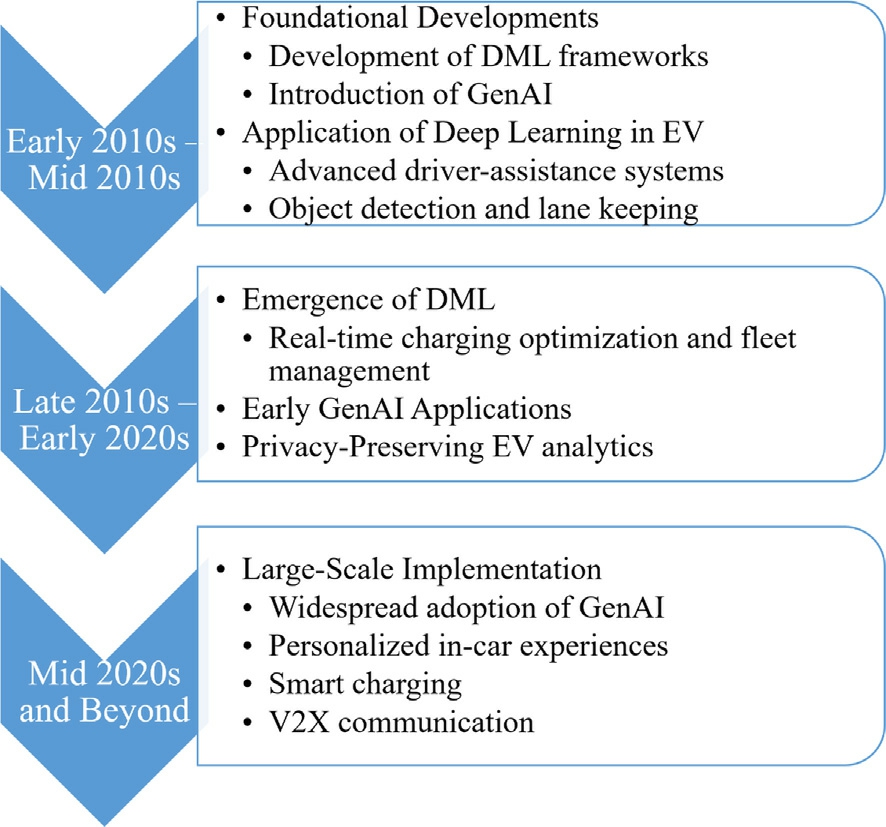
Fig. 1. Timeline of GenAI and DML adoption in the EV industry. This figure highlights the key milestones in the development and adoption of GenAI and DML technologies within the EV ecosystem. The milestones illustrate how GenAI and DML contribute to data efficiency (RQ1),communication optimization and computational demands (RQ2), and the synergistic combination of these technologies for enhanced control,energy management, and V2X communication (RQ3).
When combined with GenAI, DML becomes even more powerful. GenAI bridges gaps in data availability by first simulating a wide range of operational scenarios to generate high-quality synthetic datasets. These datasets can then be efficiently compressed for transmission, creating a complete pipeline from data creation to use. This approach is invaluable for overcoming key industry challenges, including data scarcity, the need for real-time decision-making,and the demand for reliable communication. Successfully addressing these issues is critical, as it directly enables the development of safer, more responsive, and efficient EV systems. For instance, generative models like GANs can create synthetic training data to enhance model robustness in scenarios where real-world data is limited[26]. This ensures that even in the absence of extensive datasets, EV systems can be trained and optimized effectively. Studies have demonstrated that VAEs, when combined wi th adversarial training, can achieve accurate degradation trajectory and Remaining Useful Life(RUL) predictions for systems like lithium-ion batteries[27]. VAE-based data augmentation is a powerful technique for enhancing the accuracy of battery degradation predictions, especially when real-world data is scarce. A key study by Xiang et al. demonstrated this by combining a VAE to generate new, diverse battery degradation trajectories with a Transformer model for prediction. In their experiments on a dataset of 20 commercial electric vehicles, the combined VAE-Transformer model achieved the best performance compared to multiple baseline methods,including LSTMs,GRUs,and traditional time-series models like ARIMA. Specifically, this approach yielded a Mean Absolute Error (MAE) of 0.58% and a Root Mean Square Error (RMSE) of 0.70%, highlighting the significant improvement in prediction reliability gained from using VAEs for data augmentation [28].
Previous studies have examined various applications of AI in the context of EVs. For instance, [29,30] analyzed challenges that hinder the widespread adoption of EVs, such as limited charging infrastructure, battery range anxiety, and high initial costs. These studies highlighted how AI-driven solutions,including predictive maintenance, dynamic pricing models, and intelligent route planning, can help address these challenges, thereby improving EV adoption. Similarly, [31]explored AI’s role in advancing autonomous vehicles, focusing on key functions such as perception, localization, mapping, and decision-making. Furthermore, [32] investigated the use of AI in enhancing V2X communication systems.Their findings underscored how AI can improve the safety,efficiency, and reliability of communication networks,enabling seamless interaction between EVs and their surrounding environment, including other vehicles, infrastructure, and pedestrians. Additionally, [33,34] explored using AI and GPU data processing to optimize the Internet of Vehicles (IoV), a network connecting vehicles to each other and to roadside infrastructure. Their research focused on edge computing services, which process data locally on or near the vehicle itself to better manage the complex data demands of a connected EV ecosystem.They addressed critical challenges such as real-time data processing, latency reduction, and resource allocation, emphasizing the importance of AI in managing the complex data demands of connected EV ecosystems. [35] highlighted the advantages of deep learning over traditional machine learning approaches for fault diagnostics in EVs, demonstrating its effectiveness in detecting and addressing issues in electrical components.These surveys provide a foundation for understanding the role of AI in enhancing various aspects of EV systems,including Smart Grid integration, Autonomous Driving,V2X Communication, and Fault Diagnosis, as summarized in Table 1. However, these prior surveys predominantly focus on conventional deep learning methods and do not explore the transformative potential of emerging technologies such as GenAI, particularly transformer-based foundation models like GPT, and DML techniques, which are central to our study.These newer techniques offer significant advancements over traditional CNNs and RNNs, enabling more sophisticated data generation,complex pattern recognition,and effi-cient decentralized learning.
While prior studies explored conventional AI in EVs,this survey addresses a gap by analyzing how GenAI and DML revolutionize communication, grid integration, and energy management. We provide a roadmap for advancedAI integration, benefiting researchers and policymakers.Specifically, Table 1 demonstrates that our survey is unique in its coverage of GenAI and DML alongside traditional AI applications, clearly highlighting the novel aspects of our work.
Table 1 Coverage Comparison of Previous Surveys and This Survey. Each column represents a key topic within the EV and AI domain. A checkmark (✔) indicates that the survey listed in the row provides coverage of that topic.This table highlights that our work is the first to review the intersection of all listed topics,particularly GenAI and DML.For example,the first row shows that the survey by[29] discusses Conventional AI and Smart Grids but does not focus on the other listed areas.

4)Survey methodol ogy
To ensure a systematic review of the literature, this survey employs a structured methodology for searching and selecting sources. Our objective is to synthesize the stateof-the-art research at the intersection of Generative Art ificial Intelligence (GenAI), Distributed Machine Learning(DML), and Electric Vehicle (EV) ecosystems. The methodology is composed of the following stages:
Search Strategy: We conducted a systematic search of major academic databases, including IEEE Xplore,ACM Digital Library, Scopus, Web of Science, and Google Scholar. We also included pre-print archives such as arXiv to capture the most recent, cutting-edge research in this fast-evolving field. The search was performed using a combination of keywords, structured with Boolean operators: ((‘‘Generative AI” OR‘‘GAN”OR‘‘VAE”OR‘‘Diffusion Model”)AND(‘‘Distributed Machine Learning” OR ‘‘Federated Learning” OR‘‘Decentralized Learning”)) AND (‘‘Electric Vehicle”OR ‘‘EV” OR ‘‘V2X” OR ‘‘Smart Grid” OR ‘‘Battery Management”))
Inclusion and Exclusion Criteria: To ensure the relevance and quality of the included literature, we applied the following criteria:
–Time Period: The search was primarily focused on publications from 2015 to the present (2025), a period that covers the rise of modern deep learning and its application in the EV domain.
–Relevance: We included only those studies that explicitly address the application or integration of both GenAI and/or DML in the context of EVs.Papers without a clear link were excluded.
–Publication Type: We prioritized peer-reviewed journal articles and conference papers. Highly cited and relevant pre-prints were also included to ensure currency.
–Language: The search was limited to articles published in English.
Synthesis and Analysis: After filtering the initial search results based on the criteria above, the selected papers were thoroughly reviewed. The findings were then synthesized to identi fy the key application areas, primary challenges, and promising future research directions that form the core structure of this survey.
To assign these papers to subsections, we conducted a thematic analysis. Each paper was read in full, and its primary contributions were categorized based on the specific EV challenge it addressed (e.g., energy efficiency, fault diagnosis,traffic management).These categories were then iteratively grouped and refined to form the core structure of this survey’s application-focused sections.
This structured approach explicitly defines this manuscript as a literature review and ensures that our synthesis i s based on a rigorous and reproducible selection process.
5) Performance metrics and evaluation
Throughout this survey, we refer to several quantitative metrics used in the literature to evaluate model performance. To ensure clarity, we formally define the most common error metrics here. Given a set of n groundtruth values yiand their corresponding model predictions yi,the metrics are defined as follows:
Mean Absolute Error (MAE): Measures the average magnitude of the errors in a set of predictions, without considering their direction. It is given by:

Mean Squared Error (MSE): Measures the average of the squares of the errors, giving more weight to larger errors. It is defined as:

Root Mean Squared Error (RMSE): Is the square root of the MSE, providing an error metric in the same units as the quantity being predicted. It is calculated as:

The units for MAE and RMSE are the same as the units of the quantity being predicted (e.g., meters, percentage of battery charge). Other metrics like accuracy are typically expressed as a percentage (%). For distributional metrics like Kullback-Leibler (KL) divergence, which measures how one probability distribution diverges from another,we refer readers to foundational texts for a detailed mathematical treatment [36].
6) Research questio ns
To address the identified gap in the literature, this survey aims to answer the following research questions:
RQ1: How can GenAI be employed to enhance data efficiency and accelerate model training in EV applications?
RQ2: How can DML strategies be designed to optimize communication efficiency and computational de mands of large-scale EV data across decentralized edge networks?
RQ3: How can the synergistic combination of GenAI and DML enhance EV communication and control,enabling advanced features like vehicle-to-vehicle(V2V) and vehicle-to-infrastructure (V2I) communication, as well as intelligent charging and energy management?
RQ4: What are the key challenges and limitations associated with the adoption of GenAI and DML in EV systems, and what are the potential strategies to mitigate these challenges?
RQ5: What are the future research directions for leveraging GenAI and DML to create a more sustainable and intelligent EV ecosystem, considering aspects such as energy efficiency, user experience, and societal impact?
The remainder of this paper is organized as follows:Section 2 explores the fundamental concepts of DML and GenAI in the context of vehicular networks.Section 3 overviews current challenges in the EV ecosystem. Section 4 delves into specific GenAI applications that can enhance EV communication efficiency. Section 5 discusses the potential benefits and limitations of the proposed GenAI-based approach, highlighting promising future research directions. Finally, Section 6 concludes the paper by summarizing the key findings and reiterating the importance of GenAI for communication efficiency in EVs.
1 Bac kground
1.1 Electric vehicles
EVs represent a significant shift toward sustainable transportation by utilizing electricity stored in batteries instead of fossil fuels. This transition aims to reduce greenhouse gas emissions, decrease oil dependency, and lower transportation costs [37,38]. EVs can be categorized into Battery EVs (BEVs), Hybrid EVs (HEVs), and Plug-In Hybrid EVs (PHE Vs), each offering unique levels of electrification and operational features [39].
Despite their numerous benefits, EV adoption faces a critical hurdle: the need for a robust and reliable c harging infrastructure. This system is more than just physical charging stations; it relies on a sophisticated communication network to enable seamless interaction between EVs, stations, and grid operators. The effi-ciency and reliability of this communication layer are paramount to the entire ecosystem’s success. Therefore,this paper focuses on optimizing this critical communication challenge, proposing a novel approach to enhance intelligence and coordination within the EV charging network. The inter-connected nature of the EV ecosystem, as depicted in Fig. 3, places significant demands on its underlying communication network.To ensure efficient and sustainable transportation, this network must successfully manage several critical aspects, each prese nting unique requirements.The most vital of these include:
Smart Charging: Effective communication is the backbone of smart charging, enabling the real-time data exchange required to dynamically adjust charging rates based on grid load, cost, and user preferences, thereby ensuring grid stability and economic efficiency [39].
Vehicle-to-Grid (V2G) Services: For advanced V2G services to be viable, sophisticated and secure communication protocols are essential to manage the complex,bidir ectional flow of energy and data between EVs and the grid, a key challenge detailed in [37].
User Experience and Efficiency: From the driver’s perspective, commun ication systems are vital for providing
real-time information on station availability, reservations, and pricing, which directly impacts user convenience and the overall efficiency of the infrastructure[40].
Safety and Security: Beyond convenience, secure and reliable communication channels are a non-negotiable requirement for safety, enabling the real-time monitoring needed to prevent overcharging, detect faults, and protect the entire network from cyber threats [41,42].
Interoperability: Finally, the entire ecosystem’s scalability hinges on standardized communication protocols that ensure vehicles and charging stations from diverse manufacturers c an interact seamlessly, a foundational requirement for a competitive and user-friendly market[43].
As EV adoption expands, robust communication networks will be critical for ensuring the seamless integration of EVs into broader transportation and energy systems.These networks are indispensable for realizing the full potential of smart charging, V2G services, safety, and interoperability, forming a key component of modern smart built environments [44].
1.2 Artificial intelligence and DML
AI is a rapidly evolving field, enabling intelligent machines to learn from data and address real-world problems.Appli cations include natural language understanding,smart grid optimization, multi-object optimization [45],and autonomous driving [46]. Machine Learning (ML), a subset of AI, encompasses techniques like supervised,unsupervised, semi-supervised, and reinforcement learning. As illustrated in Fig. 2, DML has emerged as a promising solution to these challenges by enabling devices to train models locally and share parameters, such as weights and biases, instead of raw data. This paradigm enhances scalability, reduces communication burdens,and safeguards user privacy. Federated learning, a prominent example, allows devices to train local models and transmit updates to a central server for aggregation, preserving data confidentiality[47]. The most common aggregation algorithm in federated learning is Federated Averaging (FedAvg), where the central server updates the global model by taking a weighted average of the locally trained models. The update rule is formally expressed as:

where wt+1 is the updated global model at iteration t + 1,K is the total number of client devices, nk is the number of data samples on client k, n is the total number of data samples across all clients, and is the model parameter update received from client k. Peer-to-peer learning,another approach, facilitates direct parameter exchange between devices, eliminating the need for a central server,though it requires robust coordination protocols.
Innovative techniques further optimize DML. Dynamic model offloading accelerates train ing by balancing workloads across devices [48]. Robust aggregation methods enhance the resilience of federated learning to potential adversarial attacks[49]. DML enables collaborative learning across decentralized devices, such as EVs and roadside units, without requiring centralized data storage. This decentralized framework enhances data privacy, as raw data remains local, mitigat ing risks of unauthorized access.It also reduces communication overhead, a critical benefit for bandwidth-constrained environments like vehicular networks [50,51].
The advantages of DML extend beyond privacy and bandwidth efficiency. It enables adaptive resource allocation by allowing devices with varying computational capacities to collaborate dynamically. In EV systems,which generate vast amounts of data from sensors,driving patterns,and charging activities,this capability is transformative [52,53]. It allows for localized computation and selective communication, ensuring efficient utilization of both energy and computational resources. For example,EVs can train models locally and share insi ghts with roadside units,enabling real-time optimizations in tasks such as route planning, energy management, and grid integration[49,54]. DML lays the groundwork for integrating advanced technologies, such as GenAI, to address data scarcity and improve communication efficiency in EV networks.
In the context of EVs, ML techniques have proven invaluable for tasks like battery state estimation and m aterial discovery [55]. However, traditional centralized ML approaches face several limitations when applied to EV networks. The scalability of centralized servers is constrained by the vast amounts of data generated by EVs,leading to computational bottlenecks. Furthermore, sharing raw data raises significant privacy concerns, while centralized aggregation introduces substantial communication overhead, particularly in geographically disper sed networks.
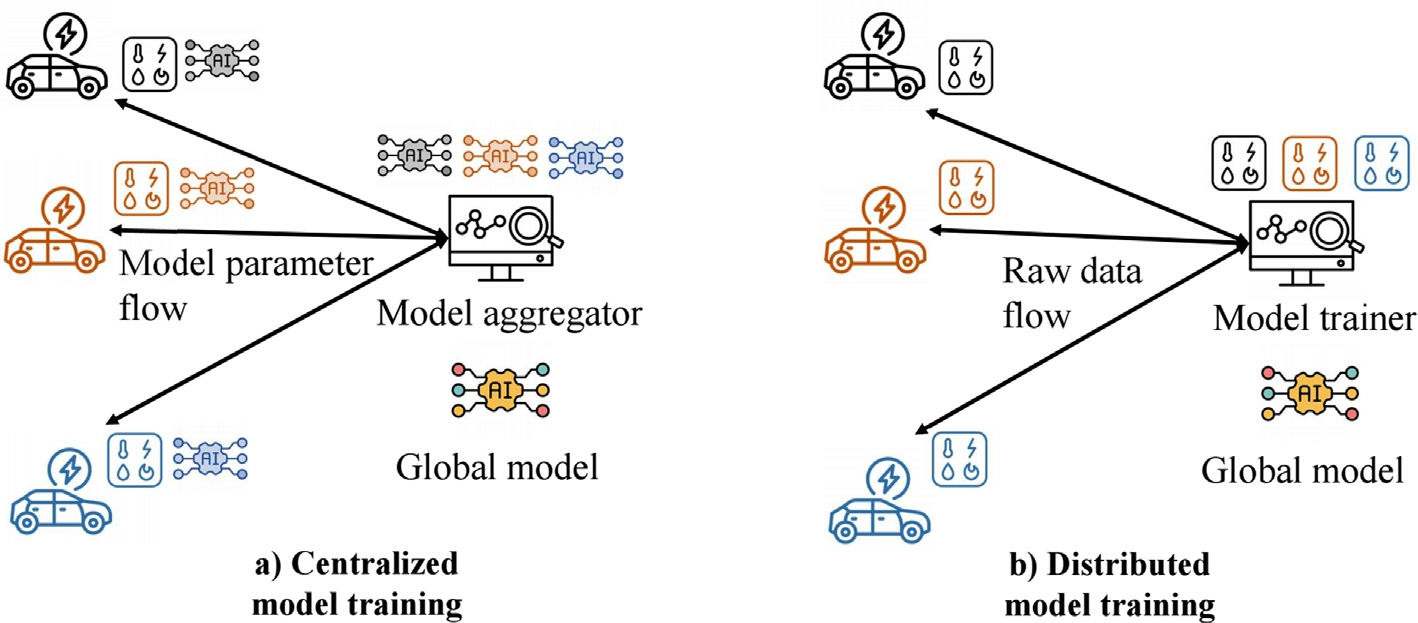
Fig. 2. Comparison of Centralized and DML in EV Applications. (a) Centralized ML: Requires transferring all data to a central server for training,leading to increased communication overhead and potential privacy concerns.(b)Distributed ML:Only model parameters are exchanged between EVs and the aggregator, minimizing data transmission and enhancing privacy.
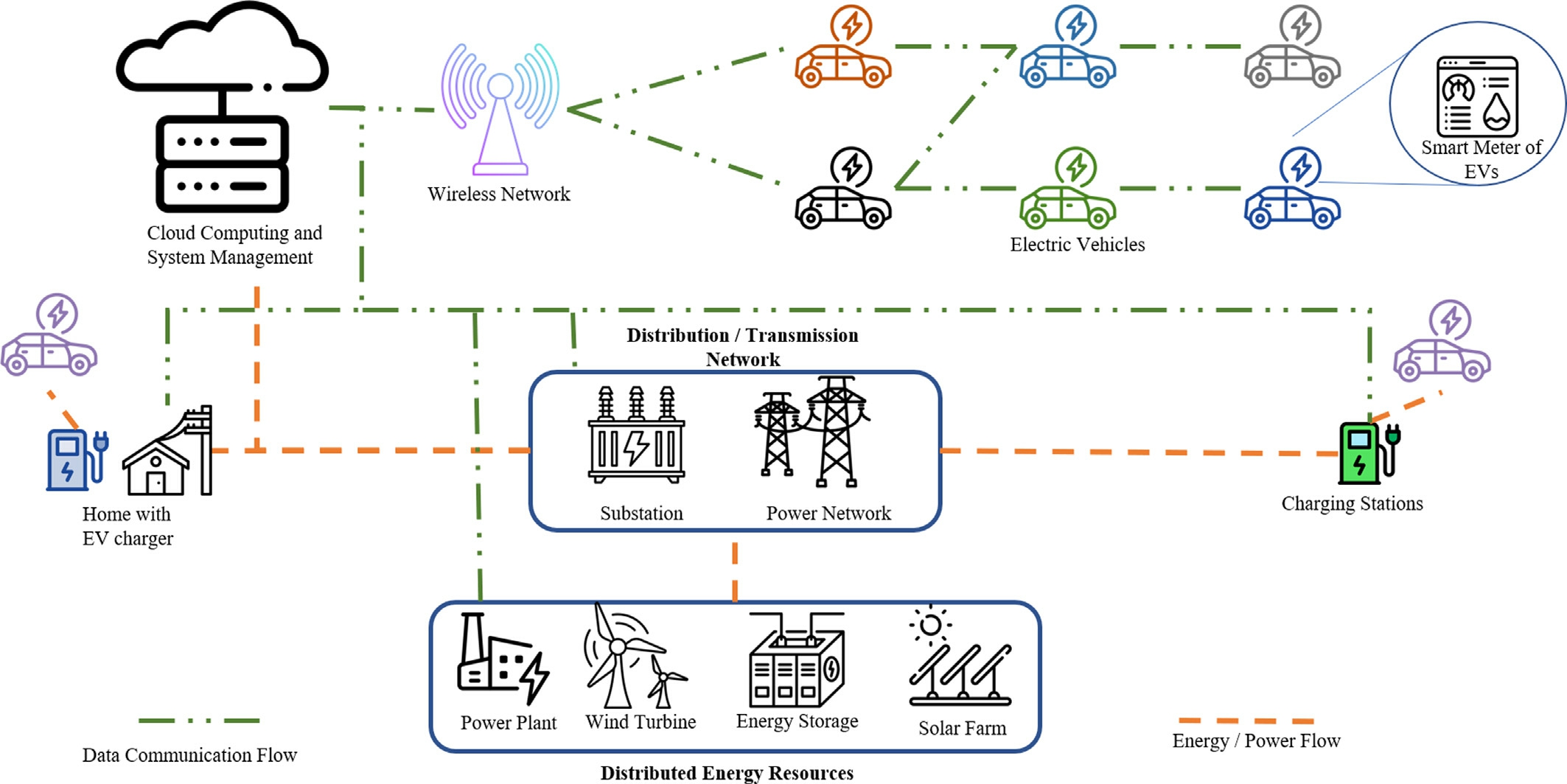
Fig. 3. The EV Ecosystem: A network of interconnected components for efficient and sustainable transportation. This diagram illustrates the causal flows between energy sources, the grid, and vehicles. DML methods are applied primarily at the edge (within the Electric Vehicles and Charging Stations) to enable collaborative learning without sending raw data to the central Cloud Computing servers. GenAI is leveraged both centrally for large-scale simulations and locally within EVs for data augmentation and compression.The components of this figure map to our research questions as follows:RQ1&RQ3 relate to the intelligent functions within the EVs and Cloud;RQ2 focuses on optimizing the Data Communication Flow;and RQ4&RQ5 address the challenges of this entire interconnected system.
1.3 GenAI for vehicular networks
GenAI offers a suite of powerful tools that directly address the core challenges of data scarcity, communication overhead, and privacy inherent in DML for the EV ecosystem. By focusing on creating new, high-quality data,GenAI extends DML’s capabilities in several keyways.One of its primary applications is data augmentation,where it generates synthetic data with statistical properties like real-world data.This is particularly useful for training DML models when real-world EV data is scarce, improving model performance without requiring additional data collection [56]. To tackle communication bottlenecks,GenAI is also used for data compression, learning efficient data representations to shrink large sensor readings for transmission over bandwidth-constrained networks [57].Finally, it addresses critical privacy concerns through anonymization, creating versions of sensitive data that preserve utility for training while protecting user privacy—a crucial function for DML applications handling personal driving information [58].
GenAI offers a diverse set of models, where the distinct architecture of each is suited for specific challenges within the EV ecosystem. For instance, Generative Adversarial Networks (GANs) [59] use an adversarial training process to create highly realistic synthetic data, making them invaluable for augmenting sparse datasets of rare events like battery faults or unique traffic scenarios. The adversarial training process in GANs is mathematically described by a minimax game between the generator (G)and the discriminator (D). The objective function is given by:

where the discriminator D tries to maximize the probability of correctly classifying real data (x) and fake data generated by G(z), while the generator G tries to minimize the probability that its generated samples are identified as fake. Similarly, Variational Autoencoders (VAEs) [60],which typically feature an encoder-decoder structure built with recurrent or convolutional layers, excel at learning compressed representations of complex information,which is ideal for efficiently shrinking large sensor data streams for transmission over bandwidth-limited vehicu lar networks. Lastly, foundation models [61], pre-trained on vast datasets, serve as powerful and adaptable backbones that can be fine-tuned with minimal driver-specific data to create highly personalized driver assistance systems or to predict charging behavior with greater accuracy [62].
GenAI systems can produce diverse outputs, including text, visual content, code, and audio. These systems extrapolate patterns from large datasets, using complex algorithms to transform raw inputs into novel creations. For instance,applications like ChatGPT generate coherent textual narratives by synthesizing patterns learned during training. However, despite their advanced capabilities, GenAI models lack genuine comprehension and operat e strictly within the confines of their training data and statistical patterns [63].
For instance, GenAI can enhance EV communication efficiency by leveraging multi-modal and semantic communication technologies. By integrating text and image data,GenAI facilitates the creation of multi-modal content that enhances the reliability and efficiency of information transmission within the communication framework [64]. Additionally, resource allocation for GenAI-enabled V2V communication can be optimized through deep reinforcement learning(DRL)approaches,improving both reliability and efficiency [65]. This integration of GenAI technologies with vehicular networks addresses real-time data processing and decision-making challenges, adapting to dynamic environments while ensuring privacy and security. A notable example is DRL-based task offloading in vehicular networks, where less critical tasks are delegated to the network edge. This optimization reduces the processing burden on individual vehicles, allowing them to focus on core driving functions while enhancing overall system efficiency [66]. Additionally, GenAI enables the simulation and optimization of urban transportation systems,such as EV charging station management[67], smart grid integration, and microgrid improvement, a domain where AI plays a critical role in design,control,and maintenance [68,69]. These applications ensure efficien t cooling system[70], energy use, and facilitate real-time traffic management, optimizing the entire transportation network[71,72]. By synthesizing realistic data, GenAI complements DML, enabling efficient, secure, and privacy-preserving solutions in vehicular networks. Synthetic data generated by GenAI can augment real-world datasets, improving the performance of DML models without requiring additional data collection from vehicles. Furthermore, GenAI facilitates efficient data compression, enabling the transmission of compressed repres entations of real-world data over networks, thereby reducing bandwidth demands.Privacy-preserving techniques leverage GenAI to produce anonymized versions of sensitive data, allowing for secure model training without compromising user confidentiality.
The integration of DML and GenAI creates a robust framework for addressing critical challenges in the EV ecosystem. Together, they enable real-time optimization of tasks like route planning, smart charging management[56,64], and traffic flow coordination, providing enhanced user experience. For example, this synergy can facilitate smart charging, where EVs dynamically interact with charging stations and grid infrastructure to optimize energy use while reducing waiting times. Additionally,the decentralized nature of DML, combined with GenAI’s ability to generate synthetic datasets, supports scalability.This ensures that even as the number of EVs within a network grows, the system remains efficient and adaptable.
To better illustrate the synergy between GenAI a nd DML, Fig. 4 presents a conceptual flowchart of a typical pipeline where GenAI-based data augmentation is used within a federated learning cycle.
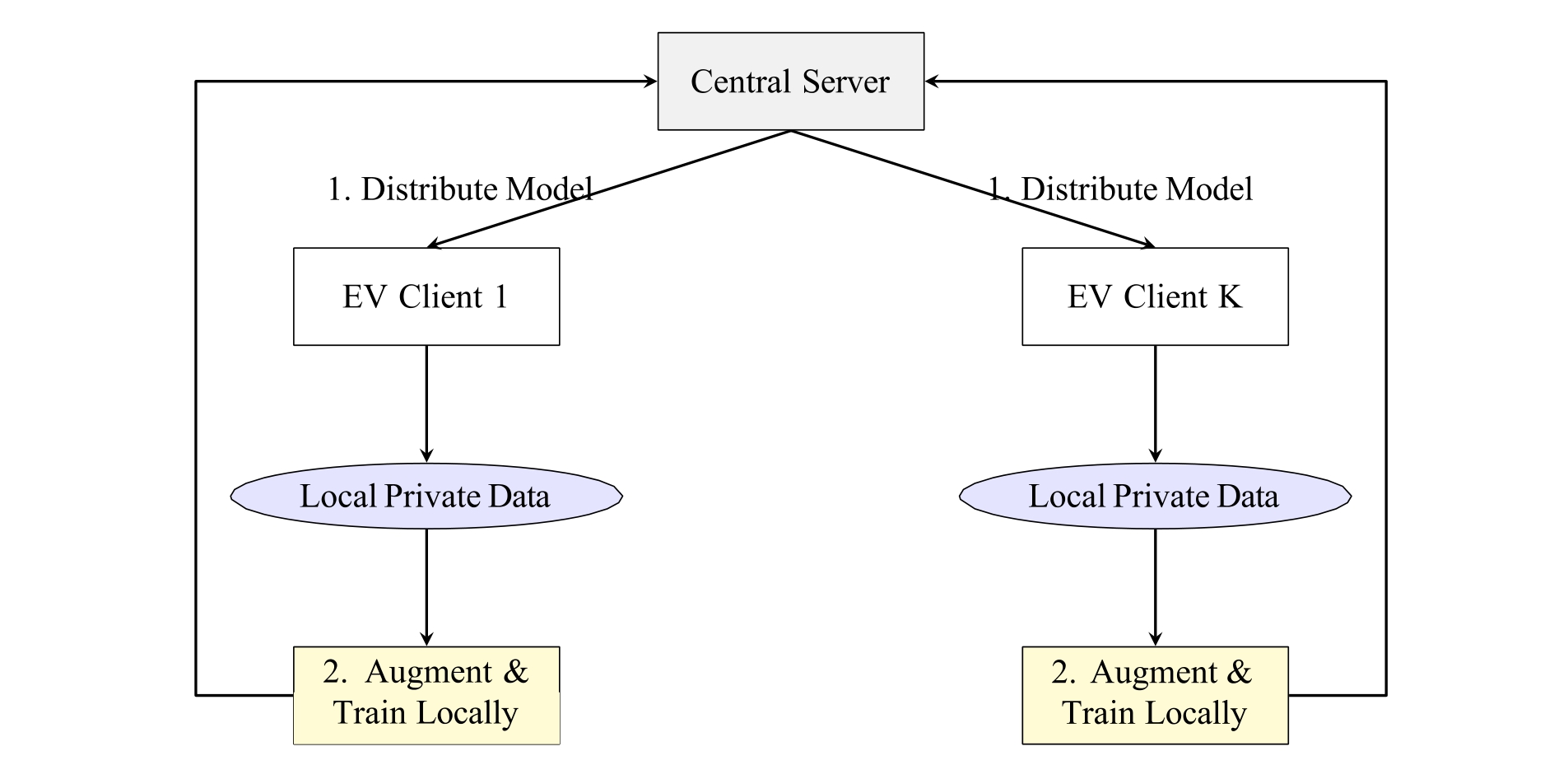
Fig. 4. Simplified flowchart of a GenAI-enhanced DML pipeline. The central server distributes a model (1), each EV client augments its local data and trains the model (2), and then sends the updated model back for aggregation (3).
2 Current challenges in EV ecosystem
Integrating intelligent transportation systems for EVs requires high-performance, precise subsystems while overcoming issues such as range anxiety, prolonged charging times, and complex communication demands [73]. This section explores the challenges facing a more efficie nt,secure, and intelligent EV ecosystem.
2.1 Scalability and security
The core challenges lie in managing the complexities of large-scale EV communication networks [74]. These networks will be characterized by:
Data Volume: EVs generate vast and diverse data (e.g.,sensor readings, driving patterns, and ch arging profiles)that strain current processing and transmission systems[75].
Security and Privacy: Ensuring secure, reliable data exchange between EVs and the energy grid is critical.Robust encryption and privacy-preservi ng techniques are essential to protect sensitive information and maintain real-time connectivity [76–78].
Network Heterogeneity: EV networks comprise a wide range of vehicles with different sensor types, capabilities, and communi cation protocols. Models must be adaptable enough to handle such diversity [79].
2.2 Dynamic and complex operational environments
The dynamic and complex nature of EV ecosystems presents unique challenges that require innovative solutions.These challenges stem from the unpredictable nature of traffic, the scarcity of fault data, and the need for seamless integration across various subsystems. Key challenges include:
Variable Traffic Conditions: The unpredictable and dynamic nature of traffic demands real-time adaptation,chall enging traditional traffic management systems that rely on historical data [80].
Fault Detection and Data Scarcity: Rare fault conditions in EVs result in imbalanced or limited datasets,making it difficult to develop reliable fault diagnosis and predictive maintenance systems [81].
Integration Challenges: Ensuring seamless connectivity and coordination between various subsystems—such as smart charging, battery managem ent,and V2X communication—remains a significant hurdle [82].
3 Approaches and applications of DML and GenAI in EVs
Section 2 discussed the promising capabilities of DML and GenAI for vehicular networks,and Section 3 outlined the current challenges in EV ecosystems. Building on this foundation, and as summarized in Fig. 5, we now delve into specific applications of these techniques to improve communication efficiency in EV systems:
3.1 V2X communication optimization
3.1.1 Data compression and optimization
The integration of GenAI into V2X communication optimization significantly enhances the performance of EVs. By leveraging GenAI technologies like deep reinforcement learning (DRL) and multi-modal content creation, vehicul ar networks can achieve significant improvements in navigation optimization, traffic prediction, data generation, and evaluation [64]. This powerful synergy addresses challenges associated with real-time data processing, decision-making, and adapting to dynamic environments [83]. Furthermore, GenAI facilitates the development of intelligent power management systems for EV Technology (EVT) and vehicula r ad hoc networks (VANETs). This translates to optimized power usage [84]. Integrating GenAI with V2X technology not only broadens driver awareness but also heightens safety,convenience, and efficiency [85]. In essence, incorporating GenAI into V2X communication optimization significantly improves the efficiency and effectiveness of EVs by enabli ng sophisticated decision-making, enhancing system usability, and fine-tuning power management.
While VAEs are powerful tools for data compression,their use in vehicular networks necessitates a careful evaluation of reconstruction quality and the associated tradeoffs. As generative models that perform lossy compression,VAEs do not guarantee perfect reconstruction of the original data on the receiver’s side.
Empirical Reconstruction Metrics: The quality of the reconstructed data is typically measured using metrics such as Mean Squared Error (MSE) or Peak Signalto-Noise Ratio (PSNR). These metrics quantify the difference between the original sensor data and the data reconstructed from the compressed latent space representation [60]. For example, a lower MSE would indicate that the reconstructed values (e.g., battery voltage, vehicle speed) are very close to the original measurements.
The Compression-Fidelity Trade-off: The primary trade-off in any VAE-based compression scheme is between the compression ratio and the reconstruction fidelity. A smaller latent space leads to a higher compression ratio (reducing communication overhead) but typically results in greater loss of information and higher reconstruction error. The optimal ba lance depends entirely on the specific application and the tolerance for data loss.
Warning for Safety-Critical Use Cases: It is crucial to emphasize that lossy compression, including that from VAEs, is unacceptable for safet y–critical signals where perfect data integrity is non-negotiable. Examples of such signals include:
Real-time braking or steering commands from the Controller Area Network (CAN) bus.
Raw point-cloud data from LiDA R for collision avoidance.
Critical diagnostic trouble codes (DTCs) indicating an imminent system failure.
For these use cases, lossless compression algorithms or no compression at all must be employed to ensure vehicle safety and reliability. VAE-based compression is better suited for non-critical data, such as infotainment content or aggregated driving statistics for long-term analysis.
3.1.2 Vehicle to grid integration
GenAI can facilitate the integration of EVs into the grid by optimizing charging and discharging schedules based on energy demand, grid conditions, and user preferences.By generating synthetic load profiles and simulating V2G interactions,GenAI can help balance supply and demand,mitigate grid fluctuations, and maximize the utilization of renewable energy sources [86,87]. This includes advanced control strategies where EVs participate in managing the grid’s reactive power, thereby enhancing the stability and reliability of the electrical grid [88].
[89]discusses how the increasing use of EVs can strain power grids and proposes a smart charging strategy using a id="generateCatalog_12" style="text-align: left; text-indent: 0em; font-size: 1.2em; color: rgb(195, 101, 0); font-weight: bold; margin: 0.7em 0em;">3.2 Energy efficiency optimization
GenAI algorithms can be employed to optimize energy efficiency in EVs by dynamically adjusting powertrain configurations and vehicl e settings based on driving conditions, traffic patterns, and user preferences [90]. By generating synthetic driving scenarios and simulating different energy management strategies, GenAI can identify optimal solutions for maxi mizing range and minimizing energy consumption, thus improving the overall efficiency of EVs.
3.2.1 Smart charging infrastructure management
Dynamic Charging Station Recommendations: GenAI offers advanced capabilities for managing the complex and uncertain charging demand in EV ecosystems. A key advantage of GenAI lies in its ability to simulate diverse and realistic charging scenarios, which simpler algorithms cannot achieve. For instance, the DiffCharge model [67]leverages denoising diffusion techniques to generate highfidelity charging load profiles at both the battery and station levels. DiffCharge captures unique temporal correlations inherent to different charging station types. This simulation capability enables accurate predictions of future demand, supporting optimal recommendations for charging station selection based on factors such as wait times and proximity. Furthermore, spatiotemporal charging demand models integrate real-time data from online mapping platforms and employ GenAI-based algorithms to interpret user driving and charging strategies. These models simulate diverse user behaviors and their impact on charging demand, significantly enhancing prediction accuracy and robustness. Thus, GenAI can generate synthetic data that reflects real-world variability. This is particularly valuable for training models in style="vertical-align: middle; text-align: center;">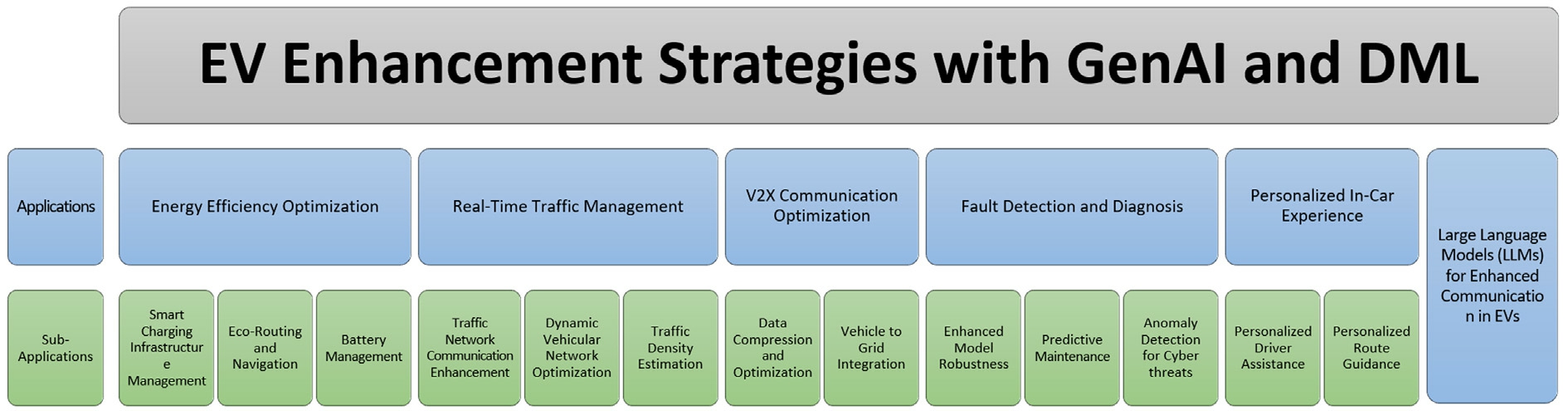
Fig. 5. Illustration of applications of GenAI for enhanced communication in EVs, including energy efficiency optimization, smart charging infrastructure management, eco-routing and navigation, battery management, real-time traffic management, V2X communication optimization, fault detection and diagnosis, personalized in-car experience, and the integration of Large Language Models (LLMs) for communication enhancement.
Grid Load Balancing: GenAI systems can communicate with charging stations and EVs to optimize charging schedules, balancing the load on the electricity grid and preventing power outages.
3.2.2 Battery management
DML can be employed to develop collaborative models for battery health prediction and remaining useful life estimation. EVs can train local models on their own battery data and share the learne d parameters with others. This allows for efficient anomaly detection and proactive maintenance without requiring extensive data transmission[92].[93] investigate the application of federated learning for energy management of EV fleets. It proposes a federated learning framework, implemented using the Federated Averaging (FedAvg) algorithm, wher e individual EVs collaboratively learn an optimal charging and discharging strategy without sharing raw battery data.
In the domain of realistic traffic simulat ion for testing autonomous systems,[94] proposed MIXSIM, a hierarchical framework for creating reactive and controllable digital twins of real-world scenarios. In their experiments using the real-world HIGHWAY dataset, the MIXSIM model demonstrated superior open-loop reconstruction performance. It achieved an along-track error of 4.86 m,a significant improvement over the non-reactive Replay baseline, which had an error of 12.65 m. This result, a single-run error reported on their test set, highlights the ability of advanced generative models to create more realistic and accurate traffic simulations [94].
3.3 Real-Time traffic management
3.3.1 Communication enhancement
GenAI can generate synthetic traffic data that mirrors real-world conditions. This data can train models for predicting traffic flow and controlling congestion. Conventional traffic management systems depend on historical data that may not always align with current conditions.GenAI presents a dynamic solution by enabling the generation of up-to-date synthetic traffic data [80].
3.3.2 Dynamic vehicular network optimization
In the context of real-time traffic management, GenAI can enhance communication within EVs through various strategies.
It can leverage the computational capabilities of nearby EVs for enhanced capacity, provide services for lowlatency task offloading, and improve communication effi-ciency. This approach has proven to be particularly valuable on highways, where vehicle demands are constantly changing due to high speeds, and the presence of roadside units(RSUs)is limited[66]. Additionally, GenAI can optimize the dynamic vehicular network’s performance by integrating with EV communication systems, considering latency requirements. V2V communication can be utilized for task offloading, potentially reducing the need for costly edge server installations. GenAI-driven traffic prediction models can also improve network resource availability and optimize the network’s dynamic performance. Furthermore, GenAI can foster the development of machine learning techniques for dynamic conditions. For example,ML-based strategies in these types of environments have led to more efficient task offloading services in vehicular networks. In summary, GenAI serves as an asset for real-time traffic management within EVs, especially when combined with communication systems and ML methodologies for dynamic settings. It can enhance communication capabilities, enable efficient task offloading, and optimize network performance [66].
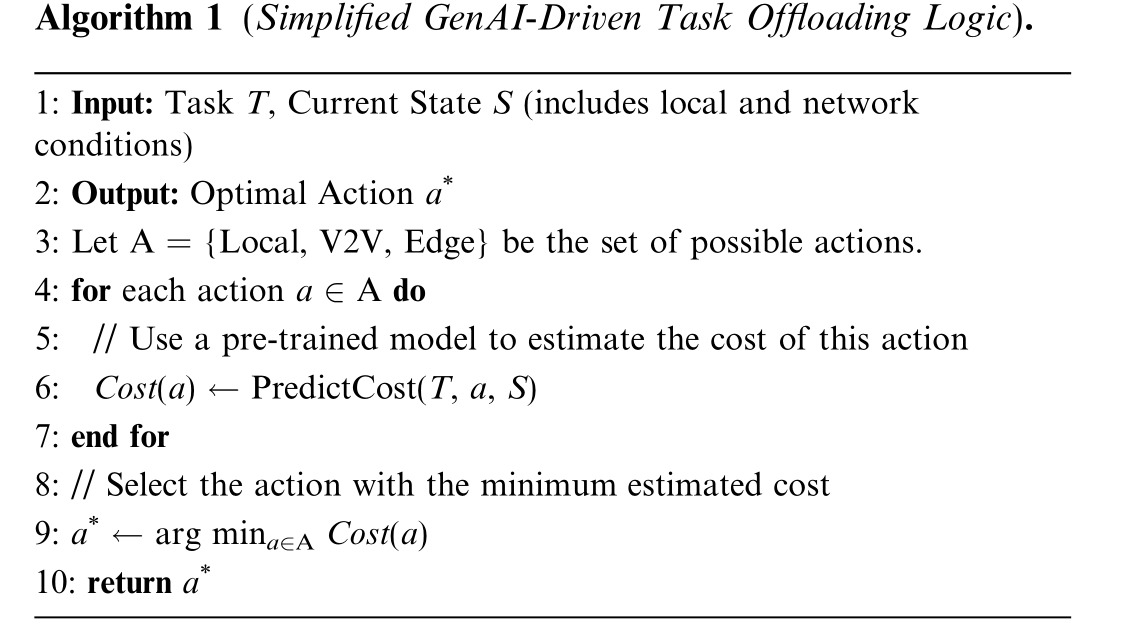
The decision-making process for task offloading can be formalized as an optimization problem, as outlined in Algorithm 1. A GenAI or DRL-based agent on the EV evaluates the costs associated with different offloading strategies to make an optimal choice in real-time.
3.3.3 Traffic density estimation
Real-time traffic density estimation is crucial for better traffic control amid the growing number of vehicles daily.Techniques utilizing Convolutional Neural Networks(CNNs), U-Net [95], Concrete Block Layer [96] and AI have been suggested by[97] to calculate this density. Consequently, this allows for the adjustment of green signal duration to minimize excessive wait tim es at intersections.[98] introduce an adaptive traffic control system for emergency vehicles (EVs) that grants EV drivers the ability to choose their route via a mobile application, triggering the corresponding traffic control modules along the selected route.
The study by[99] transforms static traffic signal systems into ones that conduct real-time signal monitoring and management.
The signal switching times are determined by real-time image detection, enhan cing accuracy in heavy traffic conditions.
Lastly, [100] proposes a method known as Knowledgeenhanced Denoising Diffusion for generative modeling of urban flow. This approach endeavors to generate dynamic urban flow data for areas without historical information.Leveraging a diffusion model and an urban knowledge graph, the technique accounts for various factors like regional features and the urban environment to accurately generate flow data.
3.4 Fault detection and diagnosis
The field of fault detection in EVs is currently undergoing significant advancements that are generating a lot of attention. One such development is the concept of digitalization [101], intelligent digital twins [102]. These digital twins are essentially computer simulations of a real EV,located at the network edge (closer to the vehicle itself)and connected through 5G. This real-time connection allows the digital twin to monitor the EV’s operation and detect abnormalities in the electrified powertrain and vehicle dynamics. This facilitates early fault detection,potentially preventing more serious issues and improving overall vehicle health.
Another promising approach involves enhanced GANs for fault diagnosis[103]. Their research introduces a novel GAN architecture, comprising a multi-layer convolutional generator and discriminator, that incorporates a filtering mechanism for fault data augmentation. This approach also utilizes a self-attention mechanism and instance normalization, leading to more accurate fault diagnosis. In simpler terms, this technique refines the data used to train the AI model,allowing it to better identify and classify different types of faults within the EV. A methodology has been presented that combines parameter estimation and machine learning classification algorithms for fault diagnosis [104]. This technique leverages the strengths of both approaches, allowing for the effective identification of faults based on their type and location within the vehicle’s primary electric machines.This approach provides a more nuanced understanding of fault conditions, aiding in targeted repairs and maintenance.
3.4.1 Enhanced model robustness with GenAI
The potential benefits of using GenAI for fault detection and diagnosis in EVs are multifaceted and offer significant improvements over existing methods [105]. GenA I,particularly GANs, can generate new data samples from the existing dataset, which is beneficial for training models under conditions where data is scarce or imbalanced[106].This capability is crucial for EV fault diagnosis, where certain fault conditions are rare, making it challenging to collect a comprehensive dataset for training traditional machine learning models [107].
One of the primary benefits of GenAI is its ability to enhance the robustness and accuracy of fault diagnosis models by generating synthetic data that mimics realworld scenarios [106]. For instance, studies have shown that foundation-based model training can achieve 93.67% accuracy in fault detection on the Case Western Reserve University (CWRU) dataset with as few as 50 samples, a number significantly lower than the 3500 labeled samples required by traditional learning systems for similar performance[81]. This improvement is particularly evident in diagnosing faults under conditions not well-represented in the original dataset. Furthermore,GenAI can help solve the small sample size problem, a common issue in fault diagnosis tasks,by generating additional training samples, reducing the need for extensive real-world data collection.
Compared to existing methods that rely on handcrafted features, the combination of GenAI and deep learning offers a more automated approach. First, GenAI learns the underlying statistical distribution from the available (even if small) real dataset. It then acts as a data synthesizer, generating a large and diverse set of new, artificial data samples that mimic the characteristics of the real fault data. A subsequent deep learning model, trained on this much larger augmented dataset, is then able to automatically learn and extract the relevant diagnostic features.While the quality of the synthetic data is crucial, studies have shown that this data augmentation process significantly improves the accuracy and generalization of the final diagnostic model,allowing it to perform reliably even when the initial real-world dataset is limited.This two-step process reduces the reliance on domain expertise and allows for more scalable and adaptable fault diagnosis solutions.
Moreover, GenAI can be integrated with other AI techniques to create hybrid models that leverage the strengths of different approaches. For instance, combining GenAI with reinforcement learning or supervised learning can lead to more accurate and efficient fault diagnosis systems.This integration can enhance the model’s ability to generalize from limited data and impr ove its performance in real-world applications. For example, [108] explores the optimization of fault detection and diagnostics in Industry 4.0 equipment within the context of the 6G era. It proposes a Chatbot assistant empowered with context awareness of factory machinery, interfacing with 3GPP APIs to enable a mental model for human–computer interaction [109] and human-robot cooperation in smart manufacturing environments [110]. Addressing fault detection highlights how GenAI can tackle data scarcity issues [111], a challenge also encountered in EV fault diagnosis. Thus, this subsection focuses on how GenAI enhances model robustness through data augmentation. The following section will shift the focus to its application in creating proactive maintenance schedules.
3.4.2 Predictive maintenance and fault detection
GenAI can play a crucial role in the predictive maintenance of EVs by analyzing sensor data to anticipate potential failures. A key metric in this process is the battery’s State of Health (SOH), an engineering term that quantifies its condition and remaining capacity compared to a new battery.Accurately predicting SOH is essential for optimizing maintenance schedules, reducing downtime, and enhancing overall vehicle reliability. However, this often requires extensive real-world data. By generating synthetic data that simulates various operating conditions and fault scenarios, GenAI can significantly improve the accuracy of these predictive models.For instance,a study by[112] that used a feature similarity matched parameter aggregation algorithm reported a 44.5% improvement in SOH estimation accuracy (reducing the estimation error from a baseline of 2.1% MAE to 1.16%MAE)and a 39.3%improvement in Remaining Useful Life (RUL) estimation compared to conventional methods.
In contrast to using sensor data for predicting component failures, the next section specifically addresses the challenge of detecting malicious cyber-physical anomalies in real-time.
3.4.3 Anomaly detection for cyber threats
[113]developed a tool using deep learning techniques to detect anomalies in vehicle measurements without relying on test cases. This tool aims to reduce defective leakage in automotive embedded systems. The tool uses CNN and GAN models [114] to classify maneuvers and predict anomalies, achieving 100% accuracy in detecting anomalies in test measurements collected from a vehicle’s Controller Area Network (CAN) bus compared to 33% for feature-based classification.
In summary, GenAI offers significant advantages for fault detection and diagnosis in EVs, including improved model robustness, the ability to handle imbalanced and scarce data, automatic feature extraction, and enhanced adaptability to complex systems. These benefits position GenAI as a superior alternative to existing methods, particularly in scenarios where traditional approaches fall short due to data limitations or the complexity of the system under study.
3.5 Personalized in-car experience
3.5.1 Personalized driver assistance systems
Personalized Driver Assistance Systems (DAS) represent an innovative shif t from one-size-fits-all safety features to a more driver-centric approach. Instead of using generic settings, these systems offer tailor-made customization, where key functions like alert sensitivity, inter vention timing, and feedback style are actively adapted to an individual driver’s unique behaviors and engagement levels[115]. By employing Generative Artificial Intelligence,these systems can model these distinct driver profiles without the need for extensive real-world data collection. As a result, the system generates customized recommendations and alerts that resonate more effectively with individual driving patterns [116].
The notion of personalization within DAS encompasses both explicit and implicit strategies. Explicit personalization entails users inputting their preferences and settings directly,whereas implicit personalization deduces user tendencies by monitoring their behavior[117]. In the realm of automotive technology, implicit personalization is becoming more prominent, especially in the context of Advance d Driver Assistance Systems (ADAS), such as Adaptive Cruise Control(ACC)[118]. For example, GANs generate realistic yet varied traffic scenarios, equipping DAS models with the capability to learn and tailor responses to the unique driving scenarios preferred by a user.This enhancement can significantly heighten the efficiency and user reception of personalized DAS in EVs. According to[119], an autonomous driving architecture has been proposed where GenAI synthesizes an unbounded array of conditioned traffic and drivi ng data within simulations to advance driving safety and traffic flow efficiency.
Nonetheless, challenges persist. For user acceptance,driver trust in the system, as well as the communication of its limitations, remains of the essence. Robust communication betw een the personalized DAS and the driver is pivotal, ensuring comprehension of the system’s functions and constraints.
Progress in fostering driver acceptance of ADAS is imperative for their successful deployment. Effective interaction between ADAS and drivers that conveys insights abou t system capabilities and constraints is seminal in cultivating trust and optimizing safety dividends [120].
The efficacy and acceptance of personalized DAS are not absolute; instead, they depend heavily on the specific driving context and the system’s real-world performance.A driver’s attitude is profoundly shaped by how the ADAS behaves in varied conditions like heavy traffic, poor weather, or on unfamiliar roads. When a system’s limitations become apparent in these situations, it can quickly erode trust, prompting drivers to ignore advice or deactivate the system altogether.Research confirms this,indicating that driver acceptance fluctuates significantly across different ADAS technologies,with the driving context acting as a key determinant of this variability [120].
To surmount these challenges, bolstering communication support between ADAS and drivers is vital, as it enhances driver acceptance by providing comprehensive information about ADAS functionality, including its constraints and rationale for its decisions. A system that proficiently communicates its performance and bounda ries can elevate the driver’s comprehension and maximize the safety advantages of ADAS [120]. In sum, personalized DAS, powered by GenAI, represents a formidable stride in automotive technology. By focusing on driver-specific preferences and conduct, these systems offer safer and individualized driving experiences, while aiming to heighten communication efficacy in EV frameworks.
3.5.2 Personalized and Eco-Conscious route guidance with GenAI
Integrating GenAI with navigation systems allows for dynamic route planning that considers factors like traffic congestion, road inclines, and weather conditions. This enables EVs to choose the most energy-efficient route,reducing overall energy consumption during a trip. DML enables eco-routing by dynamically planning energyefficient routes considering real-time factors like traffic and weather, addressing challenges highlighted by [121]regarding efficient charging station recommendations.Integrating LLMs, as emphasized by [122], allows GenAI to deliver context-aware recommendations, optimizing energy use and enhancing the driving experience. This facilitates an intelligent approach to reduce congestion and emissions, trans forming route guidance into a dynamic, user-centric service that balances personalized preferences with ecological considerations.
3.6 Large language models (LLMs) for enhanced communication in EVs
Recent advancements in GenAI, particularly Large L anguage Models like ChatGPT [123], are opening doors for innovative communication systems within EVs. These powerful AI models can process and generate natural language,enabling features like voice-controlled interfaces, personalized in-car assistants, and real-time traffic updates delivered through natural conversation. By leveraging the capabilities of LLMs, EVs can evolve from mere transportation devices to interactive companions,enhancing the driving experience and promoting safer interactions between humans and machines. [124] presents a system that integrates an intelligent chatbot with a two-stage auction model, aiming to improve the recycling process of EV batteries. The research demonstrates that the inclusion of chatbot technology is advantageous for b oth the participants and the auction platform. It also provides practical insights for stakeholders in the battery recycling industry. [125] explores the potential impact of ChatGPT on intelligent vehicle research. Although ChatGPT can be updated with the latest information, it may not always possess the most current knowledge. The investigation presents potential uses of Chat-GPT with in the realm of autonomous driving, detailing both the challenges and prospects. The study evaluated ChatGPT’s ability to integrate new information through a sequence of tests. Subsequently, it examined the model’s application possibilities in intelligent vehicles, particularly for autonomous driving,human-vehicle interaction, and intelligent transportation systems. The paper also addresses the challenges of integrating ChatGPT into extant systems, as well as ensuring privacy and security. Moreover, it poses technical questions about training methods tailored for intelligent vehicles and the representation of intelligence in human–machine shared con trol systems. Despite the exciting potential, the study acknowledges limitations and uncertainties related to ChatGPT,underlining the essential need for additional research to fully leverage its capabilities in the development of intelligent vehicles.[126] assesses the role of ChatGPT in vehicles, aiming to augment the driving experience and safety. The model offers personalized driver assistance, optimizes energy usage in EVs, aids in maintenance, and improves the user interfaces of autonomous systems.Thus,it contributes to making vehicles more secure, efficient, and user centric.
This study investigates how GenAI can be used to analyze unstructured data related to EV charging stations.They found that traditional rule-based methods are not sufficient for capturing the complexities of user-entered pricing information. The study explores using GPT-4, a large language model, to classify pricing schemes from user-entered descriptions. This approach achieved higher accuracy compared to traditional methods [127].
The study also explores using GPT-3 for sentiment analysis of user reviews on charging stations. Fine-tuned GPT-3 models outperformed traditional deep learning methods while requiring less training data. Notably,zero-shot learning with GPT-4 shows promising results for sentiment classification. [128].
The diverse applications discussed in this section highlight the transformative potential of GenAI and DML in the EV ecosystem. To provide a clear overview, Table 2 summarizes the key AI techniques, their primary application areas, and their respective advantages and limitations.Furthermore,Table 3 consolidates the main empirical performance metrics cited throughout our discussion, offering specific context on the datase ts and conditions under which these results were achieved.
4 Future direc tions
While the potential of DML and GenAI for EV communication is undeniable, significant hurdles remain. This section outlines promising future research directions to pave the way for a more efficient, secure, and intelligent EV ecosystem (see Fig. 6).
4.1 Explainable AI for interpretability
The black-box nature of many GenAI models poses a significant challenge for safety–critical applications likeEVs, where understanding decision-making processes is crucial. Limited interpretability not only hinders trust and adoption but also complicates debugging and safety assurance. To address these issues, future research must prioritize the development of explainable AI models with interpretability as a core principle. Key focus areas include:
Table 2 Summary of Key GenAI and DML Techniques in EV Applications. This table outlines prominent emerging techniques discussed in this survey. Technique:The specific AI model or framework. Application Area: The primary domain within the EV ecosystem where the technique is applied. Key Advantages:The main benefits offered, as reported in the literature.Limitations:Common challenges or drawbacks.For instance,the second row explains that DML is applied to Battery Health Prediction. Its key advantage is improving estimation while preserving privacy, but a major limitation is its reliance on stable communication networks, as discussed in [93].

Table 3 Summary of Key Quantitative Performance Metrics from Cited Studies. This table highlights key empirical results discussed in the survey, providing context on their measurement conditions. Note that many studies report single-run results on benchmark datasets, and thus confidence intervals or variance are not always available in the source material.
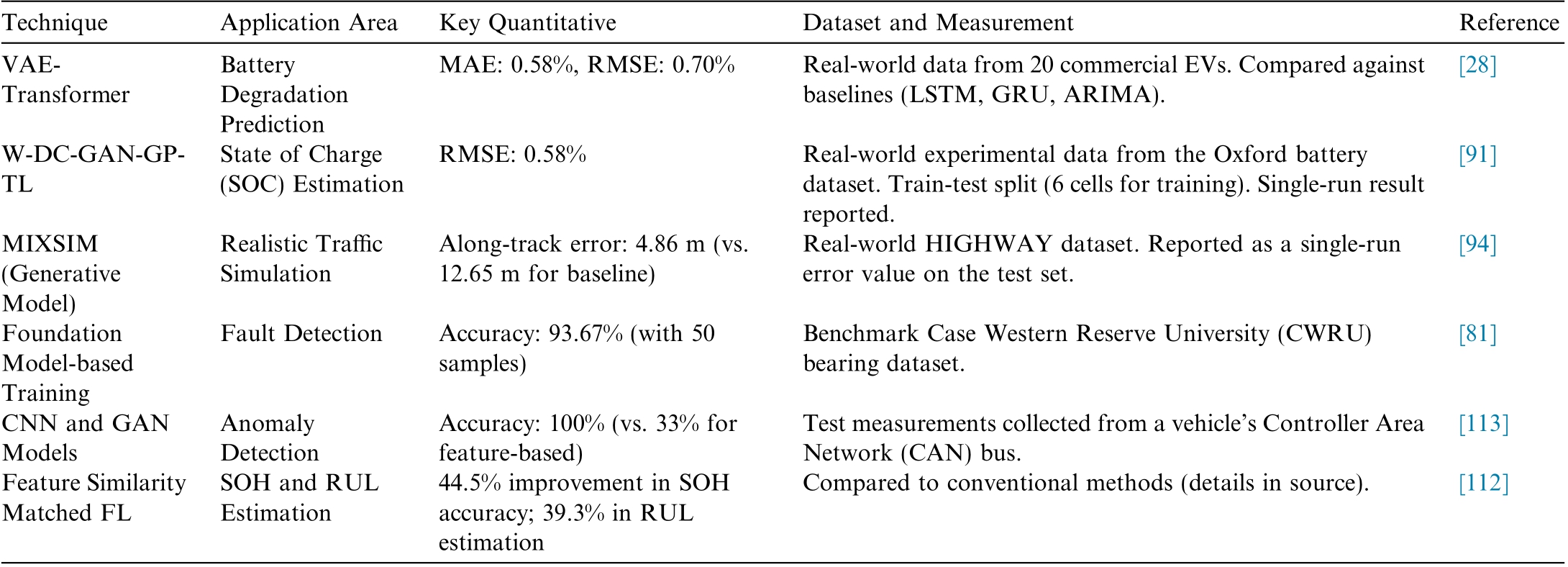
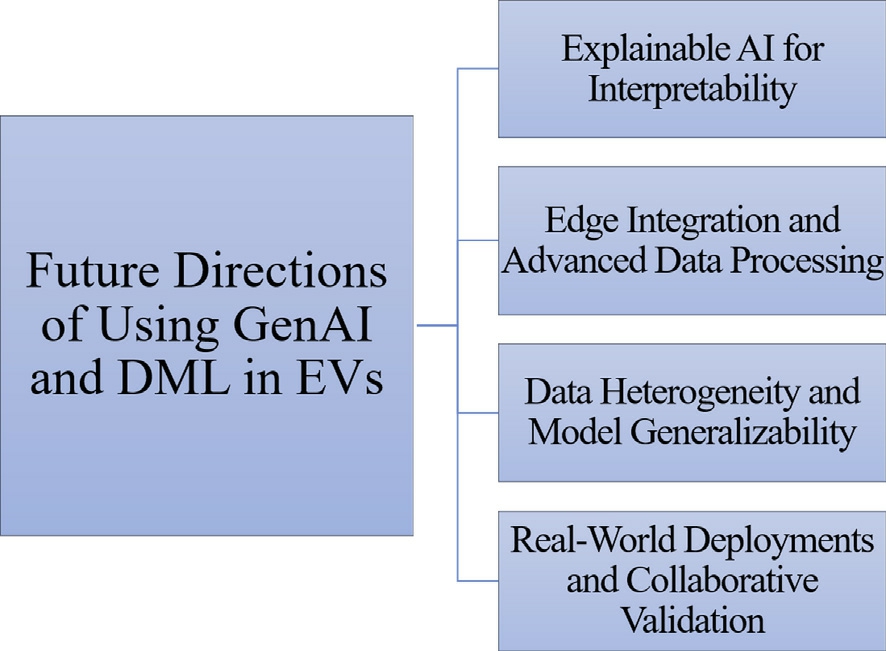
Fig. 6. Outline of future research directions for DML and GenAI in EV communication, including integration with cloud and edge computing,scalability, heterogeneity, explainability, and real-world deployment.
Enhancing Transparency and Trust: By providing clear insights into how models make decisions, it can foster greater confidence among users and stakeholders, particularly in safety–critical applications like autonomous driving and energy management.
Facilitating Effective Debugging: Interpretable models enable developers to identify and address biases, errors,or inefficiencies more efficiently, ensuring robust and reliable system performance.Improving Safety Assurance: In EV systems, where failures can have severe consequences, interpretability allows for real-time monitoring and vali dation of model behavior, ensuring safe and reliable operation under dynamic conditions.
4.2 Edge integration and advanced data processing
DML can be significantly enhanced by leveraging the complementary strengths of cloud and edge computing.The cloud offers centralized storage and powerful computational resources ideal for training complex models. Conversely, edge computing en ables real-time, localized processing and decision-making at the individual EV level.To unlock the full potential of this synergy,future research should explore:
Secure and Reliable Communication: Robust security protocols are essential to safeguard data privacy and integrity during communication between EVs, edge devices, and the cloud.
Strategic Data Segmentation: Developing efficient methods for segmenting data is crucial. This involves determining which data needs to be processed centrally in the cloud and which can be handled efficiently at the edge by individual EVs.
Resource Orchestration for Seamless Integration: Effective resource distribution strategies are necessary to ensure a smooth and cohesive integration of cloud and edge computing for DML.This includes optimizing resource allocation across the network for efficient model training and real-time decision-making.
4.3 Data heterogeneity and model generalizability
Designing intelligent systems for ultra-reliable, lowlatency communication in EV networks is critical, given the dynamic and heterogeneous nature of these environments [129]. A significant challenge lies in managing the inherent heterogeneity of EV communication, which stems from the diversity of vehicle configurations, sensor capabilities, and driving behaviors. This heterogeneity complicates the development of robust DML models capable of generalizing across diverse data sources and EV models.Future research must address the following key areas:
Accommodating heterogeneous data sources: DML models must be designed to handle the wide variety of data generated by different EVs, including variations in sensor types, data modality, data formats, and sampling rates. Techniques such as federated learning with adaptive aggregation [130] and multi-modal learning frameworks[131] can help integrate and process diverse data streams effectively.
Ensuring Model Generalizability: Developing models with universal applicability across different EV categories and environments is essential. This requires advancements in transfer learning [132] and domain adaptation to ensure that models trained on one type of EV or dataset can generalize to others.For instance,meta-learning approaches [133] can enable models to adapt quickly to new EV configurations with minimal retraining.
4.4 Real-World deployments and collaborative validation
The true test of DML and GenAI for EV communication lies in their successful deployment in real-world scenarios. To achieve this, collaboration with industry stakeholders is essential. Key areas of focus include:
Large-Scale Field Testing: Conducting extensive field tests in operational EV ecosystems will enable the evaluation of system resilience, scalability, and operational efficiency under real-world conditions. Thes e tests will provide critical insights into how these technologies perform in dynamic and unpredictable environments.
Identifying Unforeseen Challenges: Real-world deployments often reveal challenges that are not apparent in controlled lab settings. Collaborative efforts with industry partners can help uncover these issues,ensuring that the technologies are robust and adaptable for largescale adoption.
By bridging the gap between theoretical research and practical application, we can refine and optimize DML and GenAI for widespread use. This collaborative approach will pave the way for a future where these technologies enable a more efficient, secure, and intelligent electric transportation infrastructure.
4.5 Security and adversarial robustness
While DML enhances privacy by keeping raw data on local devices, the exchange of model parameters introduces a new attack surface that must be secured for deployment in safety critical EV ecosystems [134,135]. Future research must focus on building resilience against sophisticated adversarial threats that target the collaborative learning process. Key challenges and research directions include:
Data Poisoning and Backdoor Attacks: Malicious actors, such as a compromised EV or charging station,can inject manipulated data or model updates to degrade the global model’s performance or install hidden backdoors [136]. These backdoors can be triggered by specific inputs to cause targeted misbehavior, posing a severe risk to vehicle safety and grid stability. Developing robust aggregation algorithms that can identify and filter out malicious contributions is a critical area of research [137].
Model Inversion and Inference Attacks: Although raw data is not shared, sensitive information can still be leaked. Inference attacks can analyze shared model updates to deduce private information about a user’s driving habits, routes, or battery health [138]. Furthermore, model inversion attacks, particularly against generative models, could potentially reconstruct parts of the privat e training data, undermining the core privacy premise of DML [139].
Mitigation Strategies and Defenses: To counter these threats, a multi-layered defense strategy is necessary.The integration of formal privacy-preserving techniques like differential privacy, which adds statistical noise to model updates to mask individual contributions, is a promising direction [140]. Additionally, emerging solutions like blockchain technology can provide a tamperproof, decentralized ledger for model upda tes, enhancing transparency and accountability within the DML network [135,141]. This ensures that all contributions are traceable, making it more difficult for adversaries to mount undetected attacks.
4.6 Ethical implications and algorithmic fairness
Beyond technical and security challenges, the integration of GenAI and DML into the EV ecosystem carries significant societal implications that must be proactively addressed to ensure equitable outcomes and maintain public trust [142].The primary ethical risk stems from inherent biases within training data. For instance, if data on charging behavior and traffic patterns is predominantly collected from affluent suburban areas, the resulting models will fail to represent the needs of urban, rural, or lower-income communities. Such biases can lead to severe real-world consequences, such as smart charging systems that create financial barriers for certain users or route optimization algorithms that shift traffic congestion into historically disadvantaged neighborhoods. To mitigate these risks, a robust governance framework is required [143]. This should begin with pre-deployment data diversity audits to ensure datasets are demographically and geographically representative. Where gaps exist, GenAI can be c arefully leveraged to generate synthetic data that reflects underrepresented groups. Furthermore, the adoption of fairness-aware machine learning techniques can help prevent models from disproportionately harming any single group. Finally, continuous, independent algorithmic audits after deployment are essential to monitor for emergent biases and ensure the system operates equitably in the real world[144].
5 Conc lusion
This survey examined the integration of GenAI and DML to enhance efficiency in EV ecosystems, focusing on smart charging, Vehicle-to-Grid services, user convenience, safety, and system interoperability. Traditional centralized machine learning faces scalability, privacy,and communication overhead challenges in EV networks,which DML addresses by enabling collaborative learning without centralized data aggregation. GenAI further supports DML through data augmentation, compression,and anonymization. Together, GenAI and DML advance communication efficiency,fostering a scalable,secure, and style="font-size: 1em; text-align: justify; text-indent: 2em; line-height: 1.8em; margin: 0.5em 0em;">CRediT authorship contribution statement
Seyed Mahmoud Sajjadi Mohammadabadi: Writing –review & editing, Writing – original draft, Visualization,Validation, Supervision, Software, Resources, Project administration, Methodology, Investigation, Funding acquisition, Formal analysis, Data curation, Conceptualization. Aidin Karimi Moghaddam: Writing – review &editing, Software, Resources. Mahmoudreza Entezami:Writing – review & editing, Software, Resources. Mirali Seyedrezaei: Writing – r eview & editing, Software,Resources. Dorsa Charkhian: Writing – review & editing,Software, Resources. Behzad Moghaddami: Writing –review & editing, Software, Resources. Mohammad Sassani: Writing – review & editing, Software, Resources.
Declaration of competing interest
The authors declare that they have no known competing financial interests or personal relationships that could have appeared to influence the work reported in this paper.
References
[1]S. Sadeghi, C.L. Niu, Augmenting human decision-making in K-12 education: the role of artificial intelligence in assisting the recruitment and retention of teachers of color for enhanced diversity and inclusivity, Leadersh. Policy Sch. (2024) 1–21.
[2]M. EskandariNasab, Z. Raeisi, R.A. Lashaki, et al., A GRU–CNN model for auditory attention detection using microstate and recurrence quantification analysis, Sci. Rep. 14 (2024) 8861.
[3]Z. Ahmadirad, Banking and investment in the future: Unveiling opportunities and research necessities for long-term growth,Int.J.Appl. Res.in Manag., Econ. Acc. 1 (2) (2024) 34–41.
[4] Z. Ahmadirad, Evaluating the influence of AI on market values in finance: Distinguishing between authentic growth and speculative hype, Int. J. Adv. Res. Humanit. Law 1 (2) (2024) 50–57.
[5]Z. Ahmadirad, The beneficial role of silicon valley’s technological innovations and venture capital in strengthening global financial markets, Int. J. Modern Achiev. Sci., Eng. Technol.1(3)(2024)9–17.
[6]K.K. Nezhad, Z. Ahmadirad, A.T. Mohammadi, The Dynamics of Modern Business: Integrating Research Findings into Practical Management, Nobel Science, 2024.
[7]S. Dokhanian, A. Sodagartojgi, K. Tehranian, et al., Exploring the impact of supply chain integratio n and agility on commodity supply chain performance, World J. Adv. Res. Rev. 22 (1) (2024)441–450.
[8]M. Azadmanesh, J. Roshanian, K. Georgiev, et al.,Synchronization of angular velocities of chaotic leader-follower satellites using a novel integral terminal sliding mode controller,Aerosp. Sci. Technol. 150 (2024) 109211.
[9]A. Sheykhfard, F. Haghighi, S. Saeidi, et al.,Behavioral modeling of drivers near speed control cameras: a dual perspective from micro and macro data, Trans. Res. Record: J. Trans. Res. Board 2679 (4) (2025) 181–197.
[10]A. Askarzadeh, M. Kanaanitorshizi, M. Tabarhosseini, et al.,International diversification and stock-price crash risk, Int. J.Finan. Stud. 12 (2) (2024) 4.
[11]A. Askarzadeh, K. Yung, M. Najand, Managerial sentiment and predicted and opportunistic special items, J. Corp.Acc.Finan.34(3) (2023) 302–317.
[12]S. Naseri, Innovative sustainable architecture: a lesson learned from amphibious house in the UK, Res. Rev. (2024) 766–777.
[13]N. Roshdieh, G. Farzad, The effect of fiscal decentralization on foreign direct investment in developing countries: Panel smooth transition regression, Int. Res. J. Econ. Manag. Stud. IRJEMS 3(7) (2024) 133–140.
[14]E. Hanif, H. Hashemnejad, M. Ghafourian,Factors affecting the augmentation of spatial dynamics in social sustainability with an emphasis on human-orientation of space, J. Hist.Cult.Art Res.6(1) (2017) 419.
[15]S. Shabani, M. Majkut, S. Dykas, et al., Evaluation of a new droplet growth model for small droplets in condensing steam flows, Energies 17 (5) (2024) 1135.
[16]A.B. Nia, D.M. Moug, A.P. Huffman, et al., Numerical investigation of piezocone dissipation tests in clay: sensitivity of interpreted coefficient of consolidation to rigidity index selectio,in: Cone Penetration Testing, CRC Press, 2022, pp. 282–287.
[17]S. Mohaghegh, A. Mohaghegh, Machine learning in aircraft design: A comprehensive review of optimization, aerodynamics,and structural applications, IEEE Access 13 (2025) 105642–105653.
[18]M. Iraj, A.P. Chobar, A. Peivandizadeh, et al., Presenting a twoechelon multi-objective supply chain model considering the expiration date of products and solving it by applying MODM,Sustain. Manuf. Serv. Econ. 3 (2024) 100022.
[19]K.M. Jorshary, M. Sassani, F.S.S. Khamoushi, et al.,Ranking of AI-driven strategies for optimizing the health tourism supply chain using stratified BWM, Knowl. Decision Syst.Appl.1(2025)295–315.
[20]S. Basirat, S. Raoufi, D. Bazmandeh, et al.,Ranking of AI-based criteria in health tourism using fuzzy SWARA method, Comput.Decis. Mak. 2 (2025) 530–545.
[21]H. Arjmandi, X. Zhao, Social media impact on FEMA funding program, in: Proceedings of Americas Conference on Information Systems: Elevating Life through Digital Social Entrepreneurship,2024 in Salt Lake City, USA, 2024, p. 1539.
[22]M. Mahdavimanshadi, M.G. Anaraki, M. Mowlai, et al., A multistage stochastic optimization model for resilient pharmaceutical supply chain in COVID-19 pandemic based on patient group priorit, in: Proceedings of 2024 Systems and Information Engineering Design Symposium (SIEDS). 2024 in Charlottesville, USA, 2024, pp. 382–387.
[23]V.D. Nguyen, S. Mirza, A. Zakeri , et al., Tackling domain shifts in person re-identification: A survey and analysi, in: P roceedings of 2024 IEEE/CVF Conference on Computer Vision and Pattern Recognition Workshops (CVPRW), 2024 in Seattle,USA, 2024, pp.4149–4159.
[24]M. Eskandari Nasab, S.M. Hamdi, S.F. Boubrahimi,ChronoGAN: Supervised and embedded generative adversarial networks for time series generation [EB/OL]. arXiv: 2409.14013.(2024). https://arxiv.org/abs/2409.14013.
[25]M. Eskandari Nasab, S.M. Hamdi, S.F. Boubrahimi, Enhancing multivariate time series-based solar flare prediction with multifaceted preprocessing and contrastive learning. arXiv:2409.14016. (2024). https://arxiv.org/abs/2409.14016.
[26]C. Wang, C. Xu, X. Yao, et al., Evolutionary generative adversarial networks, IEEE Trans. Evol. Comput. 23 (6) (2019) 921–934.
[27]Y. Huang, Y.F. Tang, J. VanZwieten, Prognostics with variational autoencoder by generative adversarial learning,IEEE Trans. Ind. Electron. 69 (1) (2022) 856–867.
[28]H.X. Xiang, Y.J. Wang, Y.Y. Soo, et al., Predicting automotive battery degradation trajectories using transformer with variational auto-encoder based data augmenta tion, IEEE Trans.Veh. Technol. 74 (7) (2025) 10368–10379.
[29]W.Q. Hua, D. Mullen, A. Wahid, et al.,An overview of Artificial intelligence for Electric vehicle energy systems integration, in:Artificial Intelligence. ECAI 2023 International Workshops,Springer Nature, Switzerland, 2024, pp. 178–186.
[30]M. Ahmed, Y. Zheng, A. Amine, et al., The role of artificial intelligence in the mass adoption of electric vehicles, Joule 5 (9)(2021) 2296–2322.
[31]Y.F. Ma, Z.Y. Wang, H. Yang, et al., Artificial intelligence applications in the development of autonomous vehicles: A survey, IEEE/CAA J. Autom. Sin. 7 (2) (2020) 315–329.
[32]W. Tong, A. Hussain, W.X. Bo, et al., Artificial intelligence for vehicle-to-everything: A survey, IEEE Access 7 (2019) 10823–10843.
[33]X.L. Xu, H.Y. Li, W.J. Xu, et al., Artificial intelligence for edge service optimization in Internet of Vehicles: a survey, Tsinghua Sci. Technol. 27 (2) (2022) 270–287.
[34]N. Seifi, A. Al-Mamun, Optimizing memory access efficiency in CUDA kernel via data layout technique, J.Comput.Commun.12(5) (2024) 124–139.
[35]K.M. Sundaram, A. Hussain, P. Sanjeevikumar , et al., Deep learning for fault diagnostics in bearings, insulators, PV panels,power lines, and electric vehicle applications: The state-of-the-art approaches, IEEE Access 9 (2021) 41246–41260.
[36]T.M. Cover, Elements of Information Theory, John Wiley &Sons, 1999.
[37]I.A. Umoren, M.Z. Shakir, Electric vehicle as a service (EVaaS):Applications, challenges and enablers, Energies 15(19)(2022)720.
[38]J.M. Cansino, A. Sánchez-Braza, T. Sanz-Dı´az, Policy instruments to promote electro-mobility in the EU28: a comprehensive review, Sustainability 10 (7) (2018) 2507.
[39]O. Sadeghian, A. Oshnoei, B. Mohamm adi-ivatloo, et al., A comprehensive review on electric vehicles smart charging:solutions, strategies, technologies, and challenges, J. Storage Mater. 54 (2022) 105241.
[40]Y.L. Qi, G.C. Mai, R. Zhu, et al., EVKG: An inte rlinked and interoperable electric vehicle knowledge graph for smart transportation system, Trans. GIS 27 (4) (2023) 949–974.
[41] M. Cheng, L. Sun, G. Buja, et al., Advanced electrical machines and machine-based systems for electric and hybrid vehicles,Energies 8 (9) (2015) 9541–9564.
[42]M. Shoeibi, M.M.S. Nevisi, S.S. Khatami, et al., Improved IChOA-based reinforcement learning for secrecy rate optimization in smart grid communication s, Comput., Mater.Cont. 81 (2) (2024) 2819–2843.
[43]C. Madina, I. Zamora, E. Zabala, Methodology for assessing electric vehicle charging infrastructure business models, Energy Policy 89 (2016) 284–293.
[44]S. Talebian, A. Golkarieh, S. Eshraghi, et al., Artificial intelligence impacts on architecture and smart built environments: A comprehensive review, Adv. Civil Eng.Environ. Sci. 2 (1) (2025) 45–56.
[45]H. Razavi, A. Ghasemi, Multi-objective optimization of a qosaware channel allocation in cognitive radio networks using nsga-ii algorithm, J. Contr. 11 (1) (2017) 1–9.
[46]M. Tavasoli, E. Lee, Y. Mousavi, et al., WIPE: A novel webbased intelligent packaging evaluation via machine learning and association mining, IEEE Access 12 (2024) 45936–45947.
[47]S.M.S. Mohammadabadi, Y.C. Liu, A. Canafe, et al., Towards distributed learning of PMU data: A federated learning based event classification approach, in: Proceedings of 2023 IEEE Power& Energy Society General Meeting (PESGM), 2023 in Orlando,USA, 2023, pp. 1–5.
[48]S.M.S. Mohammadabadi, From generative AI to innovative AI:An evolutionary roadmap.arXiv:2503.11419.2025.https://arxiv.org/abs/2503.11419.
[49]S. Nabavirazavi, R. Taheri, S.S. Iyengar, Enhancing federated learning robustness through randomization and mixture, Futur.Gener. Comput. Syst. 158 (2024) 28–43.
[50]A. Thor Thorgeirsson, S. Scheubner, S. Fu¨nfgeld, et al.,Probabilistic prediction of energy demand and driving range for electric vehicles with federated learning, IEEE Open J. Vehic.Technol. 2 (2021) 151–161.
[51]H.B. McMahan, E. Moore, D. Ramage, et al., Communicationefficient learning of deep networks from decentralized data, in:Proceedings of International Conference on Artificial Intelligence and Statistics, 2017 in Flordia, USA, 2016, pp. 1–10.
[52]S. Farrokhi, W. Dargie, C. Poellabauer, Human activity recognition based on wireless electrocardiogr am and inertial sensors, IEEE Sens. J. 24 (5) (2024) 6490–6499.
[53]W. Dargie, S. Farrokhi, C. Poellabauer, Identification of persons based on electrocardiogram and motion data, IEEE Sens. J. 25(13) (2025) 24982–24991.
[54]S.M. Sajjadi Mohammadabadi, L. Yang, F. Yan, et al.,Communication-efficient training workload balancing for decentralized multi-agent learning, in: Proceedings of 2024 IEEE 44th International Conference on Distributed Computing Systems(ICDCS). 2024 in Jersey City, USA, 2024, pp. 680–691.
[55]M.A. Hannan, M.S. Hossain Lipu, A. Hussain, et al., Toward enhanced state of charge estimation of lithium-ion batteries using optimized machine learning techniques, Sci. Rep. 10 (2020) 4687.
[56]H.W. Zhang, D. Niyato, W. Zhang, et al.,The roles of generative artificial intelligence in Internet of electric vehicles. arXiv:2409.15750. (2024). https://arxiv.org/abs/2409.15750.
[57]Y.C. Wang, J.T. Xue, C.W. Wei, et al.,An overview on generative AI at scale with edge–cloud computing, IEEE Open J. Commun.Soc. 4 (2023) 2952–2971.
[58]A. Khan, N. Jhanjhi, G.A. Ali Abdulhabeb, et al., Securing IoT devices using generative AI techniques, in: Reshaping Cyber Security With Generative, AI Techniques, IGI Global, 2024, pp.219–264.
[59]A. Aggarwal, M. Mittal, G. Battineni, Generative adversarial network: an overview of theory and applications, Int. J. Inform.Manag. Data Ins. 1 (1) (2021) 100004.
[60]L.P. Cinelli, M.A. Marins, E.A. Barros da Silva,et al.,Variational autoencoder. Variational Methods for Machine Learning with Applications to Deep Network, Springer International Publishing, 2021.
[61]R. Bommasani, D.A. Hudson, E. Adeli, et al., On the opportunities and risks of foundation model. arXiv: 2108.07258.(2021). https://arxiv.org/abs/2108.07258.
[62]A. Zakeri, H. Hassanpour, WhisperNet: deep Siamese network for emotion and speech tempo invariant visual-only lip-based biometric, in: Proceedings of 2021 7th International Conference on Signal Processing and Intelligent Systems (ICSPIS), 2021 in Tehran, Iran, 2021, pp. 1–5.
[63]A. Golda, K. Mekonen, A. Pandey, et al., Privacy and security concerns in generative AI: a comprehe nsive survey, IEEE Access 12 (2024) 48126–48144.
[64]R.C. Zhang, K. Xiong, H.Y. Du, et al., Generative AI-enabled vehicular networks: Fundamentals, framework, and case stud.arXiv: 2304.11098. (2023). https://arxiv.org/abs/2304.11098.
[65]L. Stappen, J. Dillmann, S. Striegel, et al., Integrating generative artificial intelligence in intelligent vehicle systems,in:Proceedings of 2023 IEEE 26th International Conference on Intelligent Transportation Systems (ITSC), 2024 in Bilbao, Spain, 2024,pp. 5790–5797.
[66]S.M. Ahsan Kazmi, T.M. Ho, T.T. Nguyen,et al.,Computing on wheels: a deep reinforcement learning-based approach, IEEE Trans. Intell. Transp. Syst. 23 (11) (2022) 22535–22548.
[67]S.Y. Li, H. Xiong, Y.Z. Chen, DiffCharge: generating EV charging scenarios via a denoising diffusion model, IEEE Trans.Smart Grid 15 (4) (2024) 3936–3949.
[68]S. Kiani, A. Salmanpour, M. Hamzeh, et al., Learning robust model predictive control for voltage control of islanded microgrid,IEEE Trans. Autom. Sci. Eng. 22 (2025) 3021–3032.
[69]M. Hadi, E. Elbouchikhi, Z.B. Zhou, et al., Artificial intelligence for microgrids design, control, and maintenance: A comprehensive review and prospects, Energy Convers. Manage.:X 27 (2025) 101056.
[70]R. Splechtna, M. Behravan, M. Jelovic, et al., Interactive designof-experiments: optimizing a cooling system, IEEE Trans. Vis.Comput. Graph. 31 (1) (2025) 44–53.
[71]Z. Huang, X.C. Xiao, Y. Gao, et al., Emerging information technologies for the energy management of onboard microgrids in transportation applications, Energies 16 (17) (2023) 626.
[72]M. Hussain, When, where, and which?:navigating the intersection of computer vision and generative AI for strategic business integration, IEEE Access 11 (2023) 127202–127215.
[73]J. Jayakumar, B. Nagaraj, S. Chacko, et al.,Retracted]conceptual implementation of artificial intelligent based E-mobility controller in smart city environment, Wirel. Commun. Mob. Comput. 2021(2021) 5325116.
[74]M. Rahimi, C. Wood, M. Fathizadeh, et al., A multi-method geophysical approach for complex shallow landslide characterization, Ann. Geophys. 68 (3) (2025) NS336.
[75]A.K.M. Ahasan Habib, M.K. Hasan, G.F. Issa, et al., Lithiumion battery management system for electric vehicles: constraints,challenges, and recommendations, Batteries 9 (3) (2023) 15.
[76]A. Afrasiabi, A. Faramarzi, D. Chapman, et al., Toward the optimisation of the Kalman Filter approach in ground penetrating radar application for detection and locating buried utilities, J. Appl. Geophys. 219 (2023) 105220.
[77]A. Afrasiabi, A. Faramarzi, D. Chapman, et al., Optimising Ground Penetrating Radar data interpretation: a hybrid approach with AI-assisted Kalman Filter and wavelet transform for detecting and locating buried utilities, J. Appl. Geophys. 232(2025) 105567.
[78]M.K. Hasan, A.A. Habib, S. Islam, et al., S mart grid communication networks for electric vehicles empowering distributed energy generation: constraints, challenges, and recommendations, Energies 16 (3) (2023) 1140.
[79]R.T. Morales, J. Ko, Future of digital assays to resolve clinical heterogeneity of single extracellular vesicles, ACS Nano 16 (8)(2022) 11619–11645.
[80]S. Mahardhika, O. Putriani, A review of artificial intelligenceenabled electric vehicles in traffic congestion management, in:Proceedings of the 1st International Conference on Sustainable Engineering Development and Technologica l Innovation,ICSEDTI 2022, in Tanjungpinang, Indonesia, 2023, p. 255.
[81]M.R. Wei, Y. Liu, T. Zhang, et al., Fault diagnosis of rotating machinery based on improved self-supervise d learning method and very few labeled samples, Sensors 22 (1) (2021) 192.
[82]R. Ramraj, E. Pashajavid, S. Alahakoon, et al.,Quality of service and associated communication infrastructure for electric vehicles,Energies 16 (20) (2023) 7170.
[83]R. Binisha, P. Rajasekaran, K. Kalpana, et al., Enhancement of V2X technology with artificial intelligence, in:Proceedings of 2022 International Conference on Augmented Intelligence and Sustainable Systems (ICAISS), 2022 in Trichy, India, 2023, pp.159–163.
[84]B.P. Bhuyan, Artificial intelligence-based approaches in vehicular power energy application, in: AI Techniques for Renewable Source Integration and Battery Charging Methods in Electric Vehicle Applications, IGI Global, 2023, pp. 200–219.
[85]M.Z. Khaneghah, M. Alzayed, H. Chaoui, Fault detection and diagnosis of the electric motor drive and battery system of electric vehicles, Machines 11 (7) (2023) 71.
[86]H. Ardalan, F. Vafaei, M. Azizi, et al., Investigation of the velocity and angle effects on the behavior of brine discharge by inclined jet into the stationary and homogenize ambient, J.Oceanogr. 9 (33) (2018) 51–58.
[87]B. Akram, A.K. Arabi, Water–energ y nexus for Birmingham,UK, Proc. Institut. Civil Eng. - Energy 176 (2) (2023) 53–66.
[88]A. Safari, H. Rahbarimagham, An improved control strategy for managing reactive power and reducing capacity of interlinking converters by participating of electric vehicles in hybrid AC/DC microgrids, IEEE Access 13 (2025) 17878–17894.
[89]B. Alshehhi, A. Karapetyan, K. Elbassioni, et al., DClEVerNet:Deep combinatorial learning for efficient EV charging scheduling in large-scale networked facilities, in: Proceedings of the 14th ACM International Conference on Future Energy Systems, 2023 in Orlando, USA, 2023, pp. 287–298.
[90]M. Shoeibi, A.E. Oskouei, M. Kaveh, A novel six-dimensional chimp optimization algorithm: Deep reinforcement learningbased optimization scheme for reconfigu rable intelligent surfaceassisted energy harvesting in batteryless IoT networks,Fut.Int.16(12) (2024) 460.
[91]J.H. Sun, A.K. Gu, J. Kainz, A solution framework for the experimental data shortage problem of lithium-ion batteries:generative adversarial network-based data augmentation for battery state estimation, J. Energy Chem. 103 (2025) 476–497.
[92]M. EskandariNasab, S.M. Hamdi, S. Filali Boubrahimi, Impacts of data preprocessing and sampling techniques on solar flare prediction from multivariate time series data of photospheric magnetic field parameters, Astrophys. J. Suppl. Ser.275(1)(2024)6.
[93]T. Kro¨ger, A. Belnarsch, P. Bilfinger, et al.,Collaborative training of deep neural networks for the lithium-ion battery aging prediction with federated learning, eTranspo rtation 18 (2023)100294.
[94]S. Suo, K. Wong, J. Xu, et al., MIXSIM: A hierarchical framework for mixed reality traffic simulation, in: Proceedings of 2023 IEEE/CVF Conference on Computer Vision and Pattern Recognition (CVPR), 2023 in Vancouver, Canada, 2023, pp.9622–9631.
[95]M. Benchari, M.W. Totaro, MRI brain cancer image detection:Application of an integrated U-Net and ResNet50 architecture,in: Artificial Intelligence in Medicine, Springer Nature,Switzerland, 2024, pp. 104–108.
[96]P. Narimani, M.D. Abyaneh, M. Golabchi, et al., Digitalization of analysis of a concrete block layer using machine learning as a sustainable approach, Sustainability 16 (17) (2024) 759.
[97]R.S. Sabeenian, R. Ramapriya, S. Swetha, Density-based traffic control system using artificial intelligence, in: International Conference on Innovative Computing and Communications,Springer Nature, Singapore, 2022, pp. 417–425.
[98]V. Kumar, S. Kumar, L. Sreekar, et al.,AI powered smart traffic control system for emergency vehicle, in: ICDSMLA 2020,Springer, Singapore, 2021, pp. 651–663.
[99]J. Tiwari, A. Deshmukh, G. Godepure, et al., Real time traffic management using machine learning, in: Proceedings of 2020 International Conference on Emerging Trends in Information Technology and Engineering (ic-ETITE), 2020 in Vellore, India,2020, pp. 1–5.
[100]Z.L. Zhou, J.T. Ding, Y. Liu, et al.,Towards generative modeling of urban flow through knowledge-en hanced denoising diffusio,in:Proceedings of the 31st ACM International Conference on Advances in Geographic Information Systems, 2023 in Hamburg, Germany, 2023, pp. 1–12.
[101]K. Nawaser, F. Jafarkhani, S. Khamoushi, et al., The dark side of digitalization: A visual journey of research through digital game addiction and mental health, IEEE Eng. Manag. Rev. (2024),https://doi.org/10.1109/EMR.2024.3462740.
[102]F. Dettinger, N. Jazdi, M. Weyrich, et al., Machine-learningbased fault detection in electric vehicle powertrains using a digital twin, SAE Tech. Paper Series 1 (2023) 2023-1-1214.
[103]L.X. Shao, N.Y. Lu, B. Jiang, et al., Improved generative adversarial networks with filtering mechanism for fault data augmentation, IEEE Sens. J. 23 (13) (2023) 15176–15187.
[104]A. Salah, O. Abu Mohareb, H.C. Reuss, Fault diagnosis for automotive electric machines based on a combined machine learning and parameter estimation method: an approch for predective maintenance, in: Proceedings of 2023 International Conference on Control, Automation and Diagnosis (ICCAD),2023 in Rome, Italy, 2023, pp. 1–7.
[105]S. Rezvani Boroujeni, H. Abedi, T. Bush, Enhancing glass defect detection with diffusion models: addressing imbalanced datasets in manufacturing quality control, Comput. Decis. Mak. 2 (2025)687–707.
[106]Y. Ding, L. Ma, J. Ma, et al., A generative adversarial networkbased intelligent fault diagnosis method for rotating machinery under small sample size conditions, IEEE Access 7(2019)149736–149749.
[107]A. Golkarieh, K. Kiashemshaki, S.R. Boroujeni, Advanced deep learning techniques for classifying dental conditions using panoramic X-ray image. arXiv: 2508.21088. (2025). https://arxiv.org/abs/2508.21088.
[108]N. Gkatzios, N. Vryonis, C. Fragkos, et al., A chatbot assistant for optimizing the fault detection and diagnostics of industry 4.0 equipment in the 6G era, in: Proceedings of 2023 IEEE Conference on Standards for Communicat ions and Networking(CSCN), 2023 in Munich, Germany, 2024, pp. 124–129.
[109]H. Atashpanjeh, R. Paudel, M.N. Al-Ameen, Mental modelbased designs: the study in privacy policy landscape, Int. J.Human-Comput. Int. 41 (12) (2025) 7253–7272.
[110] M. Hadad, S. Attarsharghi, M.D. Abyaneh, et al.,Exploring new parameters to advance surface roughness prediction in grinding processes for the enhancement of automated machining, J.Manufact. Mater. Proc. 8 (1) (2024) 41.
[111]A. Karapantelakis, P. Alizadeh, A. Alabassi, et al.,Generative AI in mobile networks: a survey, Ann. Telecommun.79(1)(2024)15–33.
[112]A. Arunan, Y. Qin, X.L. Li, et al., A federated learning-based industrial health prognostics for heterogeneou s edge devices using matched feature extraction, IEEE Trans. Autom. Sci. Eng. 21(3)(2024) 3065–3079.
[113]A. Mohanan, S. Gangadharan Santha, P.P. Padmanabha Rajeswari, et al., Anomaly detection using convolutional neural network and generative adversarial network, SAE Tech. Paper Series 1 (2023) 2023-1-0590.
[114]A. Golkarieh, P. Razmara, A. Lagzian, et al., Semi-supervised GAN with hybrid regularization and evolutionary hyperparameter tuning for accurate melanoma detection, Sci.Rep. 15 (2025) 31977.
[115]M. Asadi, R. Taheri, Enhancing peer assessment and engagement in online ielts writingcourse through a teacher’s multifaceted approach and ai integration, Tech. Assist. Lang. Educ. 2 (2)(2024) 94–117.
[116]P. Nikzat, S. Hosseinzade, A practical model to measure E-service quality and E-customer satisfaction of crypto wallets, Open J.Bus. Manag. 13 (3) (2025) 1634–1660.
[117]H. Kim, Personalization of electric vehicle accelerating behavior based on motor torque adjustment to improve individual driving satisfaction, Sensors 21 (12) (2021) 395.
[118]P. Nikzat, T. Hasangholi Pouryasori, M.A. Shah Hosseini,et al.,A strategic control model by emphasis on the green approach,Environ. Energy Econ. Res. 3 (2) (2019) 85–106.
[119]M.R. Xu, D. Niyato, J.L. C hen, et al., Generative AI-empowered simulation for autonomous driving in vehicular mixed reality metaverses, IEEE J. Sel. Top. Signal Process.17(5)(2023)1064–1079.
[120]L. Masello, G. Castignani, B. Sheehan, et al., On the road safety benefits of advanced driver assistance systems in different driving contexts, Transp. Res. Interdiscip. Perspect. 15 (2022) 100670.
[121]Z.X. Zhu, S. Gupta, A. Gupta, et al., A deep reinforcement learning framework for eco-driving in connected and automated hybrid electric vehicles, IEEE Trans. Veh. Technol. 73 (2) (2024)1713–1725.
[122]H.W. Xu, J.H. Yuan, A.Y. Zhou, et al., GenAI-powered multiagent paradigm for smart urban mobility: Opportunities and challenges for integrating large language models (LLMs). and retrieval-augmented generation (RAG). with intelligent transportation systems. arXiv: 2409.00494. (2024). https://arxiv.org/abs/2409.00494.
[123]V. Ashrafimoghari, N. Gu¨rkan, J.W. Suchow, Enhancing peer assessment and engagement in online ielts writing course through a teacher’s multifaceted approach and ai integration. arXiv:2401.02985. (2024). https://arxiv.org/abs/2401.02985.
[124]J.H. Feng, N. Yu, Z.H. Wang, et al.,ChatGPT-enabled two-stage auctions for electric vehicle battery recycling, Trans. Res. Part E:Logist. Trans. Rev. 183 (2024) 103453.
[125]H.P. Du, S.Y. Teng, H. Chen, et al., Retracted: chat with ChatGPT on intelligent vehicles: an IEEE TIV perspective,IEEE Trans. Intell. Veh. 8 (3) (2023) 2020–2026.
[126]G. Singh, Enhancing driving experience and safety through ChatGPT in vehicle systems, Ref. Acad. Multidiscipl. J. 12 (2)(2023) 118–124.
[127]Z. Entezami, C.H. Davis, M. Entezami, An AI-assisted topic model of the media literacy research literature, Media Lit. Acad.Res. 8 (1) (2025) 5–28.
[128]S. Chaturvedi, E.W. Chen, I.P. Sharma, et al., A generative AI approach to pricing mechanisms and consumer behavior in the electric vehicle charging market, Proc. AAAI Symp. Series 2 (1)(2024) 54–61.
[129]F. Naeem, S. Seifollahi, Z.Y. Zhou, et al., A generative adversarial network enabled deep distribution al reinforcement learning for transmission scheduling in Internet of vehicles,IEEE Trans. Intell. Transp. Syst. 22 (7) (2021) 4550–4559.
[130]E. Yaghoubi, E. Yaghoubi, A. Khamees, et al., A systematic review and meta-analysis of machine learning,deep learning,and ensemble learning approaches in predicting EV charging behavior,Eng. Appl. Artif. Intel. 135 (2024) 108789.
[131]D. Li, J.Q. Tang, B. Zhou, et al.,Toward resilient electric vehicle charging monitoring systems: curriculum guided multi-feature fusion transformer, IEEE Trans. Intell. Transp. Syst. 25 (12)(2024) 21356–21366.
[132]P. Banda, M.A. Bhuiyan, K.N. Hasan, et al., Assessment of hybrid transfer learning method for forecasting EV profile and system voltage using limited EV charging data, Sustain. Energy Grids Networks 36 (2023) 101191.
[133]R.H. Wong, A. Manoharan, D. Sooriamoo rthy, et al., A homogeneous meta-learning LSTM-RNN ensemble method for electric vehicle battery state of charge estimation, in: 2023 9th International Conference on Compute r and Communication Engineering (ICCCE). Kuala Lumpur, Malaysia. IEEE, 2023,pp. 367–372.
[134]N. Islam, M. Zulkernine, Privacy-preserving machine learning in Internet of vehicle applications: Fundamentals, recent advances,and future direction,arXiv:2503.01089.(2025).https://arxiv.org/abs/2503.01089.
[135]N. Seifi, E. Ghoodjani, S.S. Majd, et al., Evaluation and prioritization of artificial intelligence integrated block chain factors in healthcare supply chain: a hybrid decision making approach, Comput. Decis. Mak. 2 (2025) 374–405.
[136]M. Girdhar, J. Hong, H. Lee, et al., Hidden Markov modelsbased anomaly correlations for the cyber-physical security of EV charging stations, IEEE Trans. Smart Grid 13 (5) (2022) 3903–3914.
[137]M. ElKashlan, H. Aslan, M.S. Elsayed, et al.,Intrusion detection for electric vehicle charging systems (EVCS), Algorithms 16 (2)(2023) 75.
[138]P. Mahadevappa, R. Al-amri, G. Alkawsi, et al., Analyzing threats and attacks in edge data analytics within IoT environments, IoT 5 (1) (2024) 123–154.
[139]W.C. Yang, S. Wang, D. Wu, et al., Deep learning model inversion attacks and defenses: a comprehensive survey, Artif.Intell. Rev. 58 (8) (2025) 242.
[140]H.U. Manzoor, A. Shabbir, A. Chen, et al., A survey of security strategies in federated learning: defending models, data, and privacy, Fut. Int. 16 (10) (2024) 374.
[141]R. Mishra, N. Kshetri, S. Kumar Jha, Leveraging blockchain technology for making secure IoT networks, in: Blockchain Technology for Cyber Defense, Cybersecurity, and Countermeasures, CRC Press, 2024, pp. 17–33.
[142]H.W. Zhang, D. Niyato, W. Zhang, et al., The role of generative artificial intelligence in internet of electric vehicles,IEEE Internet Things J. 12 (6) (2025) 6208–6232.
[143]A. Golkarfard, S. Sadeghmalakabadi, S. Talebian, et al., Ethical challenges of ai integration in architectu re and built environment,Curr Opin. 5 (2) (2025) 1136–1147.
[144]A. Tiwari, H.E. Farag, Responsible ai framew ork for autonomous vehicles: addressing bias and fairness risk s, IEEE Access 13 (2025) 58800–58 822.
Received 31 December 2024;revised 14 October 2025; accepted 26 October 2025
Abbreviations: ACC, Adaptive cruise control; AI, Artificial intelligence; CAN, Controller area network; CNN, Convolutional neural network; DAS, Driver assistance systems; DML, Distributed machine learning; DRL, Deep reinforcement learning; DTC, Diagnostic trouble code; EV, Electric vehicle; GAN,Generative adversarial network; GenAI, Generative artificial intelligence;IoV,Internet of vehicles;LLM,Large language model;MAE,Mean absolute error;MSE, Mean squared error; RMSE, Root mean squared error; SOH, State of health; V2X, Vehicle-to-everything; VAE, Variational autoencoder
Peer review under the responsibility of Global Energy Interconnection Group Co. Ltd.
* Corresponding author at: Department of Computer Science and Engineering, University of Nevada, Reno, 1664 N.Virginia Street, Reno, NV 89557, USA.
E-mail addresses: mahmoud.sajjadi@unr.edu, mahmoud.sajjadi@gmail.com (S.M. Sajjadi Mohammadabadi), aidinkmo@gmail.com(A.K. Moghaddam), mahmoudreza.entezami@mail.concordia.ca (M. Entezam i), miraliseyedrezaei@mines.edu (M. Seyedrezaei), Dorsacharkhian1@gmail.com (D. Charkhian) , b.khomami@gmail.com (B. Moghaddam i), m.sasani.asl@gmail.com (M. Sassani).
https://doi.org/10.1016/j.gloei.2025.10.010
2096-5117/© 2026 Global Energy Interconnection Group Co. Ltd. Publishing services by Elsevier B.V. on behalf of KeAi Communications Co. Ltd.
This is an open access article under the CC BY-NC-ND license(http://creativecommons.org/licenses/by-nc-nd/4.0/).

Seyed Mahmoud Sajjadi Mohammadabadi received his Ph.D. in Computer Science and Engineering from the University of Nevada,Reno. His research centers on trustworthy artificial intelligence and scalable distributed learning, with a focus on developing privacy-preserving, communication-efficient,and compute-efficient machine learning methods for resource-constr ained environments. His work spans federated learning,subspace-aware parameter-efficient finetuning (PEFT), foundation models, and self-supervised representation learning, with applications in healthcare and smart grid systems. Dr. Mohammadabadi has received several honors, including the 2024 GSA Outstanding Graduate Researcher Award, and the 2024 TechWise Program Scholarship.