
0 Introduction
The ongoing progress of industrialization has led toa transformative enhancement in power grid technology,marking the advent of smart grid [1]. Smart grid encompass all facets of electricity system generation, transm ission, distribution, consumption, and dispatch through the comprehensive integration of contemporary information, communication, and control technology[2]. The progression of digitalization and informatization has facilitated the integrated bidirectional flow of information and energy within the power grid, thereby satisfying user electricity demands, optimizing resource allocation, ensuring the safe operation of the grid, achieving energy conservation and emission reduction, and enhancing economic benefits. Nonetheless, the formidable capabilities of artificial intelligence (AI) technology have engendered a range of intricate security and ethical dilemmas, encompassing network intrusion, privacy protection, uncertainty, lack of explainability, algorithmic discrimination, and social impact [3]. The ethical security concerns arising from the AI revolution appear to be intensifying. Diverse sectors both domestically and internationally are concurrently advancing AI governance, investigating an array of governance strategies and assurance mechanisms, including legislation, ethical frameworks, standard certification, and industry best practices, to foster the development of responsible, trustworthy, and human-centric AI [4]. The complexity and autonomy of AI systems raise concerns about data privacy, algorithm ic discrimination, lack of transparency, and social equity imbalances [5]. Highprofile incidents, such as the 2015 Ukraine Black Energy attack and the 2025 Pakistan-led cyberattack on India’s national grid, which targeted SCADA systems and caused widespread outages, underscore the vulnerability of AIdriven grids to cyberattacks [6]. These events highlight the urgent need for robust ethical governance to mitigate risks like data breaches, false data injection, and responsibility attribution ambiguities. Globally, efforts to address these challenges are accelerating through coordinated policyframeworks and ethical guidel ines.The UNESCO Recommendation on the Ethics of Artificial Intelligence(2021)establishes fundamental principles such as transparency,accountability, and non-discrimination in AI applications[7]. Likewise, the International Energy Agency’s (IEA)policy guidelines underscore the essential role of ethical AI in modern energy systems, particularly in advancing sustainable grid modernization. Despite these advancements, existing research often lacks cohesive ethical frameworks tailored to smart grid, with fragmented standards and insufficient dynamic risk assessment mechanisms.
This study develops an ethical assessment framework to ensure the secure and responsible integration of AI in smart grid. It adopts a theoretical approach, comprising three phases: (1) a systematic literature review using databases such as IEEE Xplore and Scopus (2018–2025) to identify security and ethical challenges in AI-driven smart grid, (2) synthesis of ethical principles from global frameworks, including UNESCO’s Recommendation on AI Ethics and the EU’s Trustworthy AI guidelines, and (3)adaptation of these principles to address smart gridspecific issues, such as data privacy, algorithmic transparency, and cybersecurity. The framework evaluates the benefits and limitations of AI applications in power systems, including fault diagnosis, load forecasting, and intrusion detection, while addressing security challenges like uncertainty and cyber threats. Additionally, it critiques the inadequacies of current AI governance policies and proposes improvements to foster sustainable development. By providing theoretical and practical insights, this research supports professionals and policymakers in ensuring the safe, ethical, and efficient operation of smart grid,with plans for future empirical validation through case studies and stakeholder consultations. This work significantly contributes to the responsible application of AI in power systems, promoting both securi ty and ethical ad vancement.
1 Related works
1.1 Applications of AI in power systems
The applications of AI technology in power and integrated energy systems will achieve deep integration of intelligent sensing and physical states [8], style="font-size: 1em; text-align: justify; text-indent: 2em; line-height: 1.8em; margin: 0.5em 0em;">As illustrated in Fig. 1, modern smart grid demonstrate deep AI integration across the entire power system lifecycle—from generation and economic dispatch to transmission, distribution, and utilization. AI technologies,including machine learning, deep learning, and reinforcement learning, have become embedded in critical operations such as fault diagnosis, stability analysis, load forecasting, operational control, and cybersecurity detection. This comprehensive AI-grid integration creates unpreced ented interdependence where algorithms autonomously make decisions affecting power system reliability,economic efficiency, and security. Smart grid’ evolution toward renewable energy integration, widespread power electronics deployment, and convergence of physicalinformation systems [12] amplifies this AI dependency.However, this deep integration introduces significant ethical challenges. When AI systems autonomously manage fault isolation, control economic dispatch with milliondollar implications, or make real-time stability decisions affecting entire regions, critical questions arise regarding algorithmic accountability, data privacy, decision transparency,and fairness in resource allocation.The pervasive AI role shown in Fig. 1 demonstrates that artificial intelligence is no longer auxiliary but has become core decisionmaking infrastructure. This paper examines key areas where AI-ethics intersection is most critical: fault diagnosis, transient stability analysis, load forecasting and coordinated control, operational strategies, and security intrusion detection—domains where AI decisions carry significant societal, economic, and safety implications.
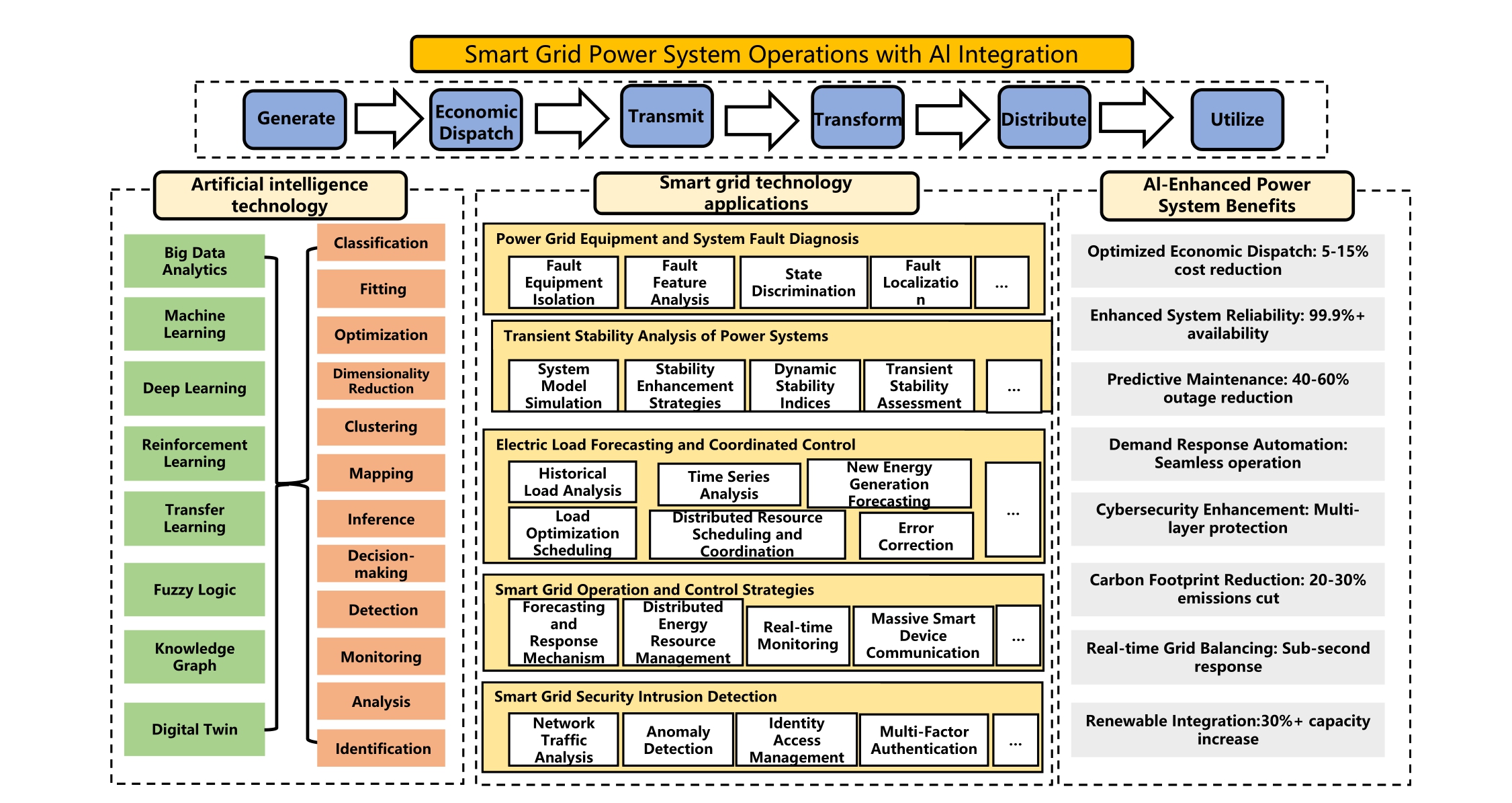
Fig. 1. Smart grid applicatio ns architecture diagram.
AI technologies, particularly deep learning, provide no vel solutions for fault diagnosis in power equipment and systems. By leveraging large volumes of data accumulated from online monitoring, offline testing, and operational maintenance, AI can perform in-depth analysisof raw data to identify patterns of abnormal equipment states and system faults [13]. Although AI technologies significantly enhance the efficiency and reliability of smart grid,they also introduce numerous ethical challenges. For instance, the training of AI models relies on large-scale datasets, which may raise concerns about data privacy and security. In particular, data breaches in smart grid could increase the risk of operational failures. Therefore,when applying AI technologies, it is essential to ensure data privacy and transparency while improving technical performance, and to avoid algorithmic bias and potential ethical risks. Fault diagnosis is critical for maintaining the reliability and safety of power systems.
As illustrated in Fig. 2(a), traditional methods rely on manual observation of equipment states, signal indicators,and key parameters such as voltage, current, and frequency. While effective in simpler systems, these methods heavily depend on human expertise and signal processing capabilities, limiting their accuracy and adaptability in complex fault scenarios[14]. This reliance on human intervention also introduces potential biases and errors, raising ethical concern s about the fairness and reliability of diagnostic outcomes[15]. In contrast,Fig. 2(b) demonstratesa deep learning-based fault diagnosis approach, representing a significant advancement in AI-driven grid management.This approach employs various deep learning architectures, such as convolutional neural networks (CNNs),recurrent neural networks (RNNs), autoencoder neural networks, deep belief networks, and linear neural networks. These models are trained through data prepro cessing and neural network extraction, enabling them to automatically learn and identify complex patterns from raw data without human intervention.
Reference [16] proposes a fault diagnosis method combining transfer learning with CNNs. This method generates time-series data by simulating different fault conditions for CNN training, followed by dimensionality reduction and fine-tuning to establish a pre-trained diagnostic model. To imp rove the accuracy of fault diagnosis,reference [17] applies wavelet feature extraction and deep learning techniques in microgrids. This approach uses maximal overlap discrete wavelet transform (MODWT)and parent wavelets for signal feature extraction and constructs a deep recurrent Q-network (DRQN) to analyze complex data, suppress n oise, and perform diagnosis and classification [18]. This method not only enhances the accuracy and efficiency of fault diagnosis but also reduces the risk of human errors and biases. However, the ‘‘blackbox” nature of deep learning models poses ethical challenges, as their decision-making processes are often opaque and difficult to interpret, potentially undermining user trust and accountability[19]. The transition from traditional to AI-driven fault diagnosis methods highlights both the potential benefits and ethical risks of AI in powe r systems. While AI technologies offer higher accuracy and efficiency, they also introduce new challenges related to transparency, fairness, and accountability. For example,the lack of interpretability in deep learni ng models may make it difficult to trace the root causes of faults or justify diagnostic decisions, especially in cases of errors [20].Additionally, the reliance on large-scale datasets for training AI models raises concerns about data privacy and security, as sensitive information collected from smart meters and sensors may be vulnera ble to misuse or breaches [21].
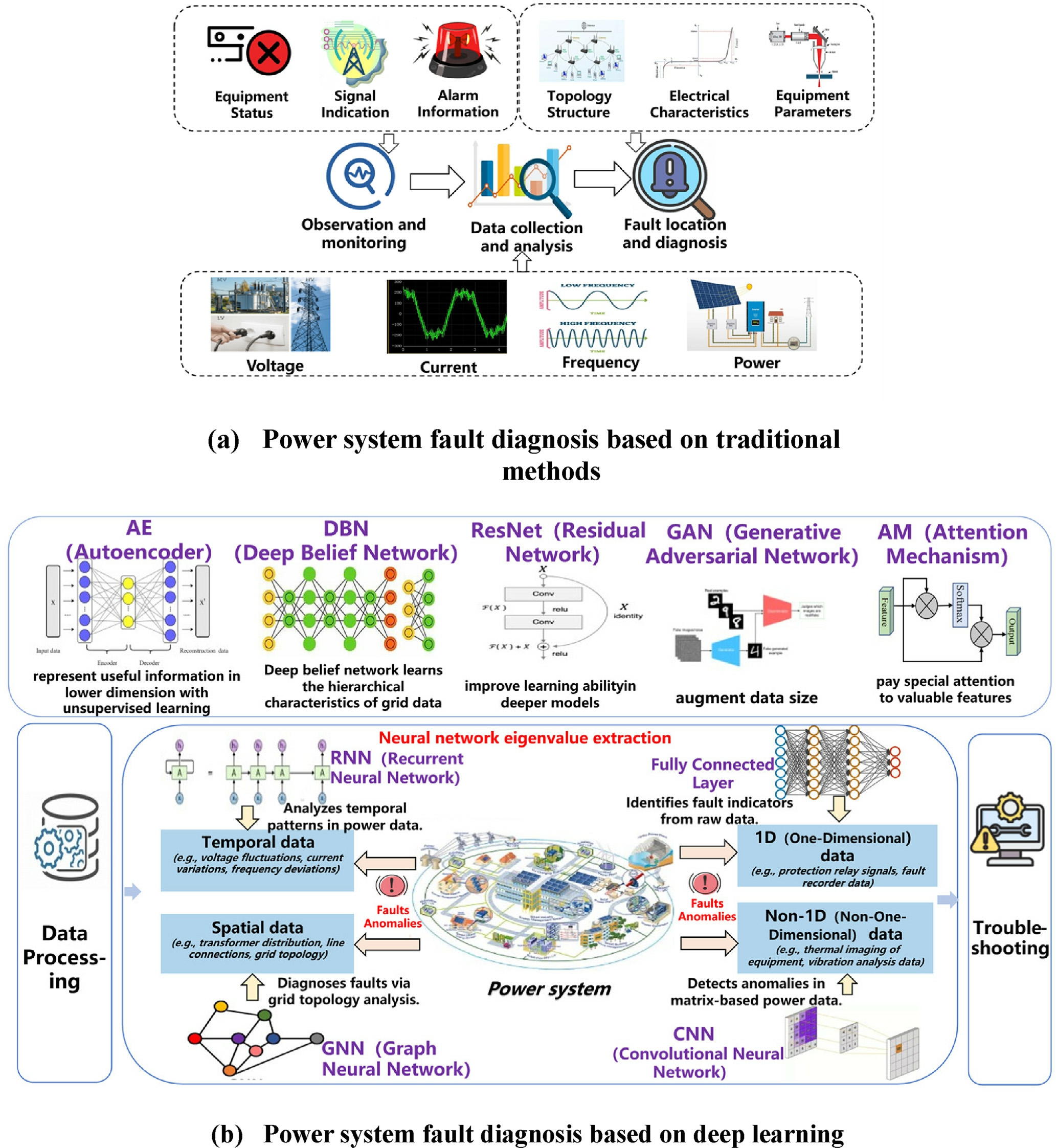
Fig. 2. Comparison of power grid fault technologies.
1.2 Ethics and safety issues raised
The integration of AI into smart grid has transformed traditional power systems into complex, multidimensional networks that combine physical infrastructure with advanced information technologies [22]. While this integration has enhanced grid efficiency and reliability,it has also introduced significant ethical and safety challenges. The ethical dilemmas associated with AI in power systems are multifaceted,encompassing issues such as data privacy, algorithmic transparency, and the potential for biased decision-making [23]. These challenges are further exacerbated by the increasing complexity of grid operations and the growing reliance on AI-driven automation.The smart grid, resulting from the deep integrationof power systems and information technology, has evolved beyond traditional power equipment into a multidimensional, heterogeneous, and highly interconnected electric-physical information fusion system. The rapid advancement of AI technologies, particularly driven by sophisticated models like ChatGPT and the rise of platforms such as DeepSeek, is intensifying ethical dilemmas in the realm of science and technology. However, challenges persist in the governance of science and technology ethics, including inadequate institutional frameworks,flawed systems, and uneven development, which fail to adequately address the actual requirements of scientific and technological innovation and progress. James Moore,an American philosopher of technology,argued that as the technological revolution progresses and its societal impact broadens, ethical challenges have also escalated. Ethics in science and technology encompass the principles and behavioral standards that must be adhered to in scientific research,technological development,and related activities,and they are essential for fostering the responsible advancement of science and technology.
The ethical governance of AI in power systems is further complicated by the rapid pace of technological advancement, which often outpaces the developmentof regulatory frameworks. While international efforts, such as UNESCO’s ‘‘Recommendation on the Ethics of Artificial Intelligence,”have established guidelines for ethicalAI deployment, these frameworks are not always tailored to the specific challenges of smart grid [24]. In China, the State Grid Corporation has emphasized the importance of ethical standards in AI development, advocating for transparency, accountability, and user-centric design [25].However, the implementation of these principles remains a work in progress, particularly in addressing the ethical risks associated with AI-driven decision-making [26].
This article examines the ethical security implicationsof integrating AI technology into power grids, addressing the current state of this convergence and analyzing the ethical security challenges arising from its application. The paper aims to establish an ethical security assessment framework for smart grid, enhance the ethical governance of AI, proactively address the short-and medium-term challenges facing smart grid, and evaluate the potential ethical security implications of future AI technologies,thereby ensuring the safer and more trustworthy development of smart grid[27].
2 AI in smart grid: Applica tions and ethical challenges
2.1 Definition and characteristics of smart grid
Smart grid represent the advanced evolution of traditional power systems, often referred to as ‘‘Grid 2.0.”They integrate cutting-edge information and communication technologies with conventional electrical infrastructure[28]. By leveraging high-speed bidirectional communication networks alongside advanced sensing, measurement,and control technologies, smart grid enhance the reliability,security,cost-effectiveness,and environmental sustainability of electricity supply[29]. These systems enable realtime monitoring, automated adjustments, and style="font-size: 1em; text-align: justify; text-indent: 2em; line-height: 1.8em; margin: 0.5em 0em;">However, while the technological advancementsof smart grid offer significant benefits, they also introduce profound ethical challenges that must be addressed [30].These include privacy infringement, algorithmic bias and discrimination, accountability dilemmas ,and the potential misuse of technologies [31]. Such concerns extend beyond technical boundaries and are deeply intertwined with societal ethics, legal frameworks, and human values. This section explores the ethic al issues arising from the application of artificial intelligence in smart grid and analyzes their potential implications.
2.2 AI in power systems: Technological applications
2.2.1 AI-enabled g rid modernization
The integration of artificial intelligence has becomea critical component in the modernization of power systems,with practical implementations demonstrating substantial progress. Globally, AI has emerged as a key driver in transforming electric power infrastructures, yielding significant advancements. In China, the State Grid Corporation is leading this transformation through demonstration projects in regions such as Hebei and Shandong: Hebei has imple mented AI-based predictive maintenance and realtime monitoring to reduce system downtime [32], while Shandong leverages AI to analyze customer behavior and provide personalized energy services, thereby enhancing user satisfaction [33]. Ongoing developments include foundational models for power system operation, multimodal AI that integrates visual, textual, and sensor data,and neuromorphic computing for ultra-low-latency control. The ‘‘Yu Dian” intelligent simulation model (recipient of the 2024 SAIL Award) combines large language models (LLMs) and graph neural networks for renewable energy optimization and secure dispatching[34]. Real-time AI-powered digital twin platforms enable predictive analytics and scenario modeling. Federated learning frameworks facilitate distributed grid optimization while preserving data privacy. Quantum-inspired algorithms enhance the resolution of complex optimization problems inlarge-scale grid management. The evolving OpenDER model incorporates transformer architectures and attention mechanisms for distributed energy resource assessment, and utilizes reinforcement learning with human feedback (RLHF)to support advanced grid planning[35].
2.2.2 Transient stability of power systems
As power systems expand in scale and electricity demand continues to rise, the operational stability margin isapproaching its critical threshold, significantly increasing the uncertainty and complexity of stability control[36]. Traditional control methods are increasingly inadequate for the needs of modern grids. The deployment of smart grid technologies offers new solutions to ensure the secure and stable operation of power systems. AI-Driven Transient Stability in China’s Southern Power Grid In 2022, China’s Sout hern Power Grid implemented an AIbased transient stability assessment system using deep learning models to predict and mitigate voltage instability inits Guangdong region, which serves over 100 million customers[37]. The PJM Interconnection, a regional transmission organization in the United States, deployed an AIdriven transient stability framework in 2023 to manage its grid serving 65 million customers across 13 states. Fig. 3 illustrates a structured methodology for developing and evaluating models. This process begins with data preprocessing—including cleaning, normalization, and preparation of raw data for further analysis—followed by the model training phase, where machine learning algorithms are applied to build predictive models. The integration of AI into transient stability assessment enhances decisionmaking accuracy and control effectiveness. To address the interpretability challenges posed by complex neural network structures, Reference [38] incorporates physical information into the neural network’s loss function,resolving the long-standing trade-off between computational efficiency and accuracy in constructing security domains for conventional power systems. While deeply embedding AI into the core of power systems improves operational efficiency,it also introduces substantial ethical risks that warrant careful consideration.
2.2.3 Power load forecasting and coordinated control
Power load forecasting is a cornerstone for the stable and economical operation of power systems. Its application across different time scales is critical to grid operation and management. Accurate short-term load forecasting is especially important for power system operators, as it supports the development of sound production plans, ensures supply–demand balance, and enhances the security of grid operation. However, with increasing system complexity and data volume, traditional forecasting methods are facing growing challenges. Deep learning models have garnered considerable attention due to their sup erior performance in processing time-series data, effectively improving the accuracy of power load predictions. Reference [39]proposed a deep learning model based on Gated Recurrent Units (GRU), specifically designed to analyze historical load sequences with temporal features. By learning the internal dynamics of load data, the model ach ieves precise forecasting. Reference [40] introduced a mid-term load forecasting approach combining Artificial Neural Networks (ANN) with an Adaptive Neuro-Fuzzy Inference System (ANFIS) to enhance prediction accuracy.Furthermore, Long Short-Term Memory networks(LSTM) and Deep Belief Networks (DBN) demonstrate strong capabilities in nonlinear modeling, highdimensional data processing, and time-series prediction—consistently outperforming traditional shallow learning algorithms.
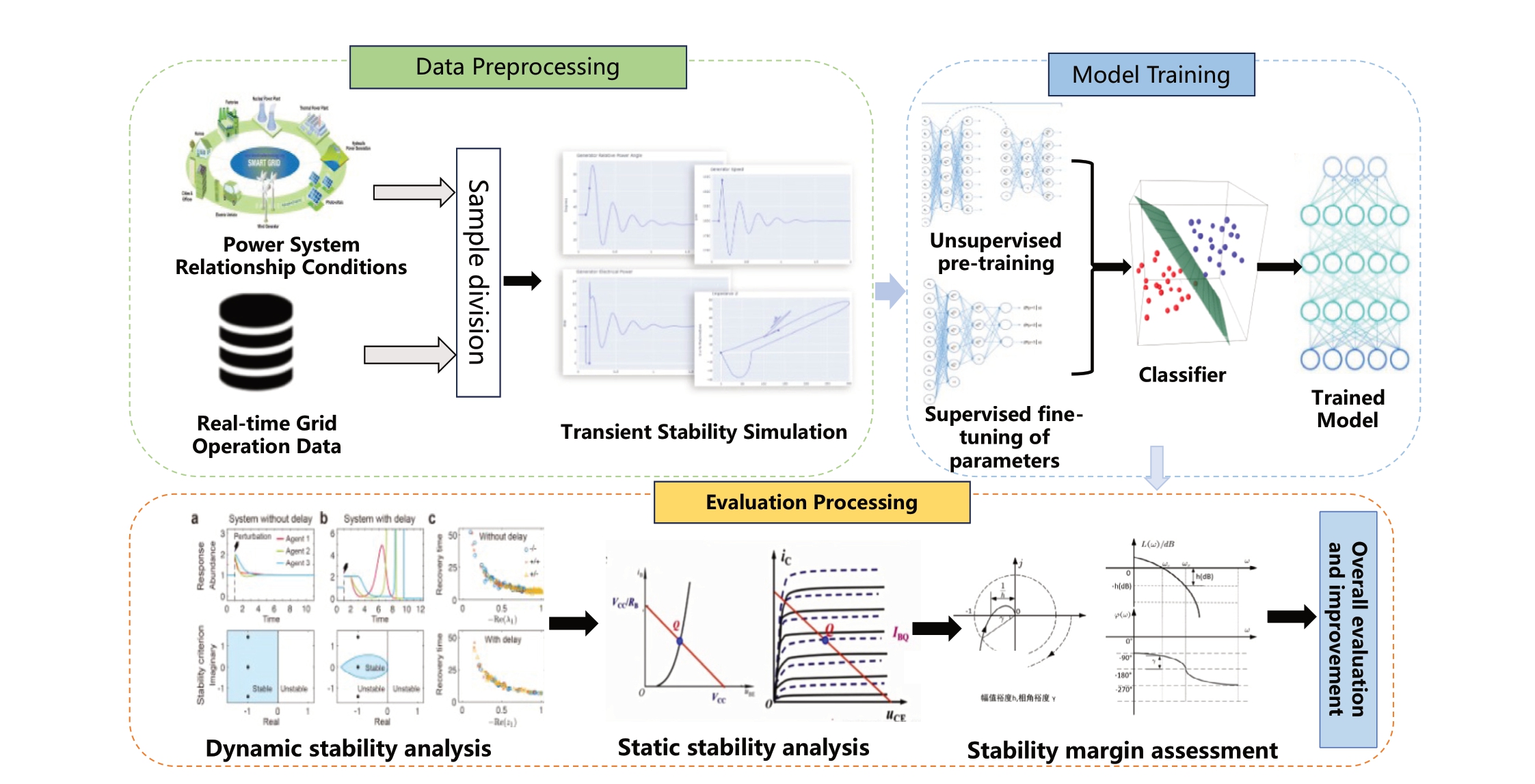
Fig. 3. Technical for transient stability of power grids.
2.2.4 Smart grid operation and control strategies
Modern power systems are rapidly evolving toward intelligence and autonomy, with smart grid forming the foundation of this transformation. Although renewable energy sources inherently exhibit variab ility and intermittency, their integration into the grid presents new challenges for system planning, operational control, and energy management[41]. High penetration levels of renewable energy require advanced solutions for operation and regulation. Multi-energy systems must analyze real-time energy flows and optimize the operation of various interconnected energy types, including wind, solar, natural gas, hydrogen, cooling, heating, and electricity. Modern smart grid control employs advanced artificial intelligence techniques to achieve optimal regulation. Reference [42]proposed a consensus-q-based learning algorithm, which effectively addresses coordination issues among distributed units by exchanging q-value matrices an d integrating prior knowledge,thereby significantly improving system convergence.Reference[43] explored deep reinforcement learning methods for optimizing energy dispatch and demand response across generation resources, distributed storage,and loads. Recent developments include federated learning for distributed grid optimization, digital twin technologies for real-time system modeling, and edge computing for ultra-low-latency control responses. These technologies enable autono mous gridoperations whilemaintainingstability under high renewable penetration. are the elements presentin the energyload matrix;
 is the probabilityof component failure. Thediscriminantformula isshownin(1):

The implementation of these advanced AI-driven control strategies introduces ethical considerations regarding transparency, accountability, and fairness in automated decision-making processes.
2.3 Development of smart grid and ethical challenges of AI
The rapid advancement of large language models(LLMs) has significantly propelled the progress of deep learning-based AI. Today’s state-of-the-art AI systems have achieved, and in some cases surpassed, human-level performance across a wide range of tasks, demonstra ting immense potential for real-world applications. Fig. 4 illustrates the projected evolution of Smart grid by 2025 toward the integration of complex renewable energy systems. This evolution encompasses a 95% renewable energy grid target, the proliferation of distributed energy resources (DERs),vehicle-to-grid (V2G) infrastructures, the deployment of 5G/6G networks, carbon neutrality mandates, prosumer trading pla tforms,and digital twin modeling.
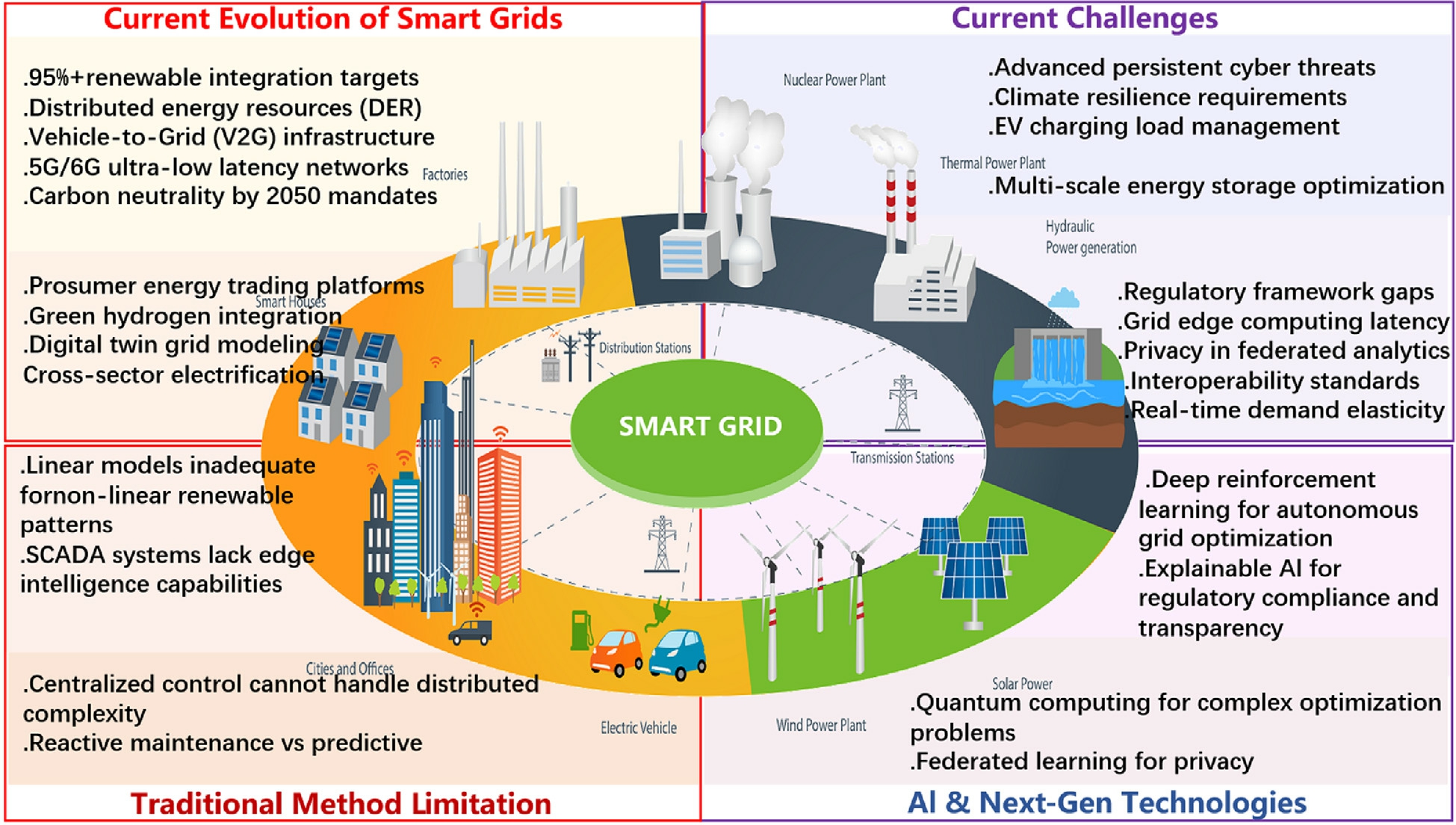
Fig. 4. Smart grid safety ethics diagram.
Traditional grid management approaches face critical limitations: linear models are insufficient for capturing the nonlinear behavior of renewable energy sources;SCADA systems lack edge intelligence capabilities; and centralized control architectures are inadequate for managing the complexity of distributed energy systems.AI presents transformative solutions: deep reinforcement learning enables autonomous optimization, explainable AI ensures regulatory compliance, quantum computing addresses computationally intensive challenges,and federated learning supports pattern recognition, decision assistance, and real-time autonomous grid operations.Together,these technologies enhance adaptability and effi-ciency in dynamic energy environments.
However, AI is inherently a double-edged sword. While itdrives technological innovation, it simultaneously introduces serious challenges. These include advanced persistent cyber threats, climate adaptation requirements,multi-scale energy storage optimization, real-time demand elasticity, regulatory gaps, interoperability standards, and privacy concerns in federated analytics. Grid security has evolved beyond the traditional cyberat tack paradigms of the internet era into a phase of complex interactivity with broader societal and ethical implications. Recent cyber incidents—such as the blackouts in Ukraine, Venezuela,and the ransomware attack on South Africa’s power infrastructure—underscore the escalating nature of these threats [44]. Emerging attack vectors, including cyber theft, remote sabotage, and ransomware targeting power systems, are expected to increase. Therefore, the development of a comprehensive and robust security framework isessential to ensure the resilience of future power grids.
2.4 style="font-size: 1em; text-align: justify; text-indent: 2em; line-height: 1.8em; margin: 0.5em 0em;">2.4.1 Privacy infringement
AI algorithms are not inherently value-neutral; biases may be embedded in their design and training data. At the core of smart grid lies data—massive volumes of user electricity consumption data are generated during operation, raising serious privacy concerns. Users’ daily habits,lifestyles, and even health conditions can be inferred with high precision, and any data leakage or misuse poses significant risks, leading to potential invasions of user privacy. AI-driven applications such as load forecasting and fault detection require highly accurate user data;however,the bidirectional flow of this data makes it vulnerable to cyberattacks during transmission and storage. Attackers may infer daily user activities based on power consumption patterns or inject falsified data to disrupt grid operations, thereby threatening both user privacy and system security[45]. Furthermore, the rapid increa se in user numbers contributes to system latency and degrades service quality, adding further complexity to privacy protection.
2.4.2 Algorithmic discrimination
Smart grid, as advanced power systems that integrate big data analytics, AI, and the Internet of Things (IoT),rely heavily on data processing and algorithmic applications in load forecasting, demand response, and energy distribution. However, this reliance introduces the risk of algorithmic discrimination. AI algorithms optimize power supply strategies by analyzing user energy consumption and behavioral patterns. Discrimination can arise from biased datasets or flawed algorithmic design. For instance,iftraining data fails to adequately represent electricity consumption patterns of low-income households or users in remote areas, algorithms may prioritize highconsumption or urban users, exacerbating inequalities in energy distribution. Moreover, due to biases in historical data, algorithms may perpetuate or even amplify discriminatory decisions—such as imposing higher dynamic pricing on certain user groups. Technological advancement can further intensify these issues. The complexity and‘‘black-box” nature of AI systems make their decisionmaking processes opaque, preventing users from understanding the rationale behind algorithmic outcomes.While big data analytics can uncover behavioral patterns,limitations in data sampling may also introduce biases. The widespread deployment of IoT devices facilitates data collection but simultaneously increases risks related to privacy and data security.
2.4.3 Data security and cyberattack risks
The cyber-physical integration characteristic of smart grid makes them susceptible to various cyberattacks,including false data injection (FDI), data replay, and man-in-the-middle attacks. FDI attacks manipulate sampling and power flow data in data acquisition and monitoring systems, thereby compromising the accuracy of state estimation and load–frequency control.This manipulation can lead to the issuance of incorrect control commands, ultimately resulting in grid instability.
2.5 Unexplainable security issues
Smart grid security depends on continuous innovations inembedded systems, communication technologies, control strategies, and computational methods. As the grid expands and evolves toward distributed and intelligent architectures, the autonomy of AI technologies is also increasing, playing an increasingly critical role in power system operation. However, this high degree of autonomy introduces new challenges. When the operational logic of AI—especially its complex internal structures and decision-making processes—cannot be understood or explained by humans, accountability mechanisms become ambiguous, complicating regulatory oversight of grid safety. From an accountability perspective, technologies that are open and have transparent decision-making processes are generally easier to understand and accept. However, with the continuous advancement of AI and its reliance on massive datasets, the logic behind its operations has become increasingly complex, exacerbating its opacity. The operation of smart grid is inherently influenced by many uncertainties, which may introduce vulnerabilities and compromise system stability. To asses s these risks effectively, detailed vulnerability analyses are required, along with evaluations of the potential consequences of various attack scenarios. In the event of a system failure, the ‘‘black box” nature of AI not only makes fault tracing extremely difficult but may also trigger ethical disputes, affecting the rights and interests of victims and stakeholders [46]. These concerns underscore the importance of robust security assessment mechanisms and clearly defined accountability frameworks to ensure the safe deployment of smart grid technologies. More importantly, the development of smart grid must not be driven solely by efficiency gains; ethical considerations mustbe placed at the core. There is a need to develop transparent and explainable AI systems, ensuring that their decisionmaking processes can be scrutinized and questioned [47].Additionally, stringent regulations and standards must be established to define the boundaries of data usage and protect user privacy. A clear accountability mechanism should be built to identify responsible entities throughout the AI system’s lifecycle. Only by doing so can we fully benefit from the efficiency improvements brought byAI while effectively mitigating its potential ethical risks—ensuring that smart grid serve the well-being of all, rather than exacerbating digital divides and fostering mistrust.
3 Ethical and safety
3.1 The concept and importance of security
AI security refers to taking necessary measures to prevent attacks, intrusions, interference, destruction, illegal use and accidents, ensuring the integrity, confidentiality,availability, robustness, transparency, fairness and privacy of AI algorithm models, data, systems and prod uct applications, keeping AI systems in a stable and reliable state,and following AI security principles such as peopleoriented and consistency of rights and responsibilities.
3.2 Uncertainty: Safe grid issues
As akeymeansofanalyzingcomplexnetworksystems,thenetwork scienceofsmart gridhasdeveloped intoa multi-dimensionalfield.Itnotonly includes coretechnologies such asthe Internetof Things,cloud computing, data transmission and control,butalsomustbe considered in thecontextofanincreasinglycomplexoverallenvironment.Theoperationofsmart gridis amulti-objectiveoptimization problem involving complex coupling and conversion relationships between energy sources. In this system, there are a large number of uncertain, imprecise,and unquantifiable factors that pose a challenge to the learning of agent-incomplete AI models. The operations of AI applications require a large number of credible samples to drive, but the technology for screening these samples is not yet mature. Therefore, the core of the problem has shifted from the credibility of the data to the completeness of learning. Due to the incompleteness of the data, the completeness of learning is difficult to guarantee, which further increases the uncertainty of smart grid. In order to evaluate the robustness of smart grid, indepth analysis must be carried out by showing the vulnerability of the grid,the collapse index, and the fault propagation path.In the overall design of the power grid system,different defense strategies are essential to cope with largescale network collapses.When the robustness of the power grid network is not enough to withstand large-scale network collapses,the entire power grid system may be paralyzed. Therefore, the security assessment and controlof smart grid becomes particularly important,which includes the evaluation of their vulnerabilities and the examination of the serious consequences that attacks may cause.
3.3 Smart grid security intrusion detection
Smart grid have achieved efficient management of millions of edge-computing-enabled power devices by deeply integrating 5G/6G communication networks and digital twin technology, building a dynamic interactive infrastructure with advanced predictive maintenance and autonomous energy optimization functions. However, this high dependence on heterogeneous networks also makes smart grid face sophisticated security ris ks including firmware supply chain compromises and advanced persistent threat actors[48]. State-sponsored adversaries may exploit industrial protocol vulnerabilities in IEC 61850 and DNP3 communications, threatening the integrity and confidentiality of smart grid systems through multi-stage attack chains and living-off-the-land techniques. The current power system and integrated energy system have evolved beyond traditional SCADA networks into AI-enhanced cyberphysical systems (CPS) with deep integration of operational technology and information technology infrastructures. In this context, federated learning-based intrusion detection systems have be come critical defense mechanisms in maintaining grid cybersecurity posture.As shown inFig. 5, the current intrusion attack methods faced by powergrids include supply chain firmware manipulation,exploitation of zero-day industrial control system vulnerabilities,adversarial machine learning attacks againstAI models,quantum computing threats to existing cryptographicprotocols, and distributed denial of service attacks targeting critical infrastructure. These attack methods are rapidly evolving into sophisticated, AI-augmented campaigns leveraging deep learning for evasion and coordinated advanced persistent threat operations.
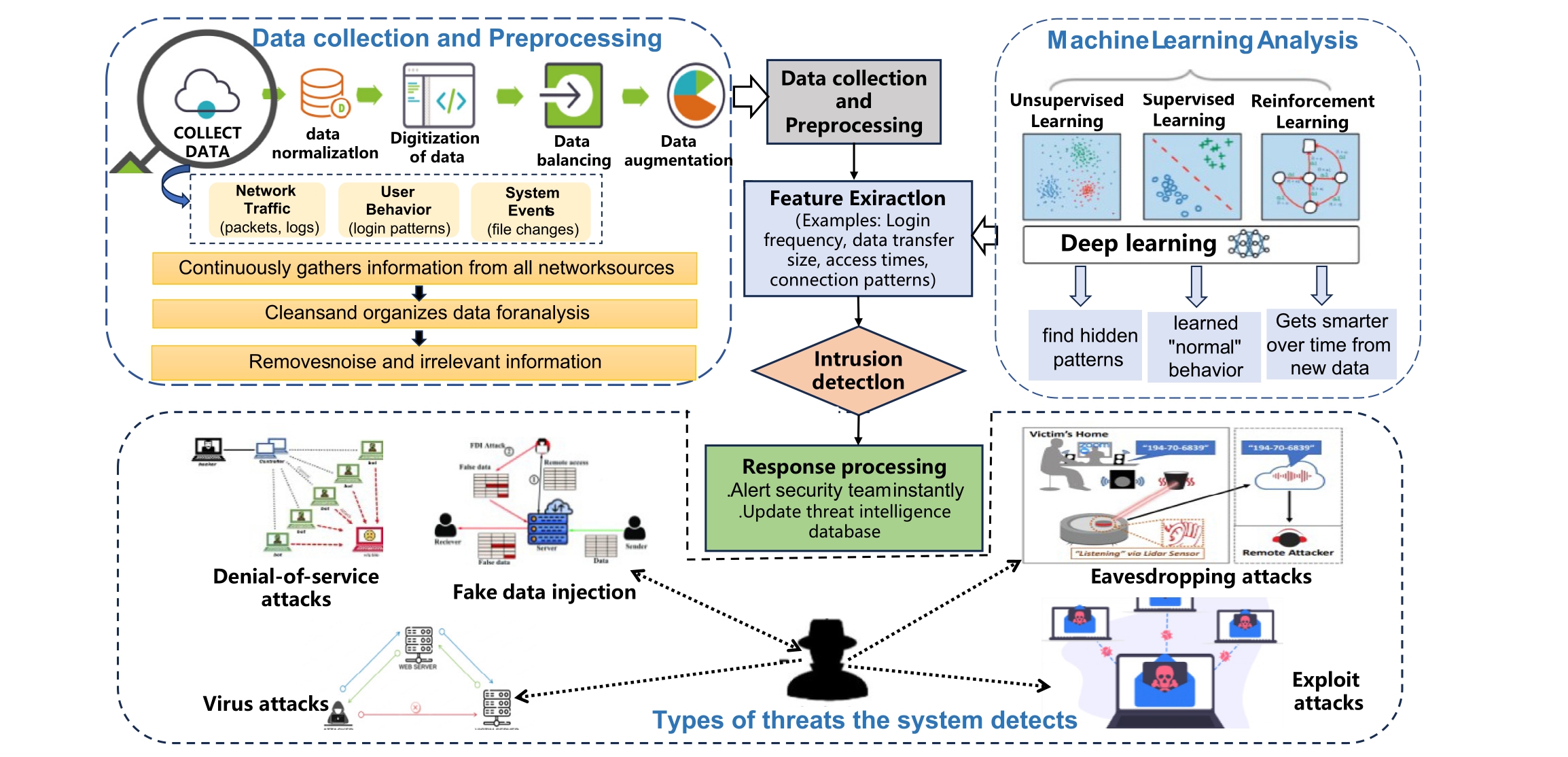
Fig. 5. Grid intrusion detection technology diagram.
An intrusion detection system (IDS) usually consists of three core components: information collection, detection analysis, and incident response. In terms of combating false data intrusion in the power grid, literature [49] proposed a power grid false data intrusion detection method based on deep machine learning. This method uses deep learning technology to effectively identify abnormal behavior in the power grid. Literature [16] introduces an algorithm integrating convolutional neural network (CNN)for detecting power theft attacks in the power grid. Compared with traditional machine learning technology, this algorithm shows significant advantages in evaluation indicators. Literature [50] proposed a deep neural network model combining multi-layer perception (MLP) and gated recurrent unit (GRU) for theft detection. The introduction ofMLP aims to reduce the overfitting phenomenon of the detection model, thereby enhancing the generalization ability of the model. The gating configuration of multilayer GRU improves the accuracy of prediction and shortens the time required for prediction. Some researchers have also tried to apply deep learning algorithms to the field of intrusion detection of smart grid advanced metering infrastructure (AMI). These studies not only promote the application of deep learning technology in the field ofpower grid security, but also provide new solutions for the security protection of smart grid.
3.4 Policies and regulations are inadequate
The swift advancement of AI technology starkly contrasts with the delay in legislation and regulations [51].Technology giants are continually augmenting their investments in AI technology, yet the associated safety standards, specifications, and regulatory frameworks have not been concurrently updated, leading to a regulatory gap. The swift advancement of AI security is misaligned with current processes and regulatory frameworks, leading tothe chaotic proliferation of associated enterprises. In contrast to the swift advancement of technology, the evolution of AI ethics is comparatively sluggish, resulting in inadequate ethical frameworks in nascent application domains such as new power systems.
The above analysis shows that the ethical challenges of AI technology in smart grids do not exist in isolation, but are closely coupled with specific technical paths. Table 1 further reveals this correlation through empirical data,providing a targe ted basis for subsequent policy making.
In smart grids, AI technology’s ethical risks have transformed from theoretical hypotheses to real system threats.For example, in European synchronous power grids, using application of Explainable AI(XAI) technology for frequency stability prediction, research employed Shapley Additive Explanations to explicitly identify key driving features, achieving model interpretability and successfully increasing trust in disp atch decisions, confirming IEEE P7001 s requirements for explainability [52]. On the otherhand, research on AMI energy consumption deep learning models demonstrated that black-box structures are extremely vulnerable to adversarial attacks in real-world scenarios—hackers can hide signi ficant energy theft through minute perturbations, while models fail to identify these in time, exposing the shortcomings of deep models in robustness [53]. At the data governance level, researchers simulated demand-side attacks through false data injection targeting real-time load scheduling algorithms, revealing potential system instab ility and even regional power outage risks arising from lacking real-time monitoring and traceability mechanisms [54]. The AI models used by PG&E in California’s ‘‘Public Safety Power Shutoff”(PSPS) policy were criticized for lacking transparent standards and fair assessments, with some communities not receiving timely power outage notifica tions, reflecting algorithmic decision-making’s fairness and accountability issues in public policy, embodying the dual challengesof accountability mechanisms and fairness governance [55].Moreover, in DARPA’s ‘‘Plum Island” grid recovery exercises at US national laboratories, multiple simulations explored AI-driven system strategies for responding to power outages after attacks, highlighting the importance of model resilience and governance mechanism design—requiri ng test participants to successfully restart and restore power supply under ‘‘hypothetically compromised” grid conditions,demonstrating the necessity of resilience governance pathways.
Table 1 Ethical-security risk mapping analysis of smart grid AI technology.
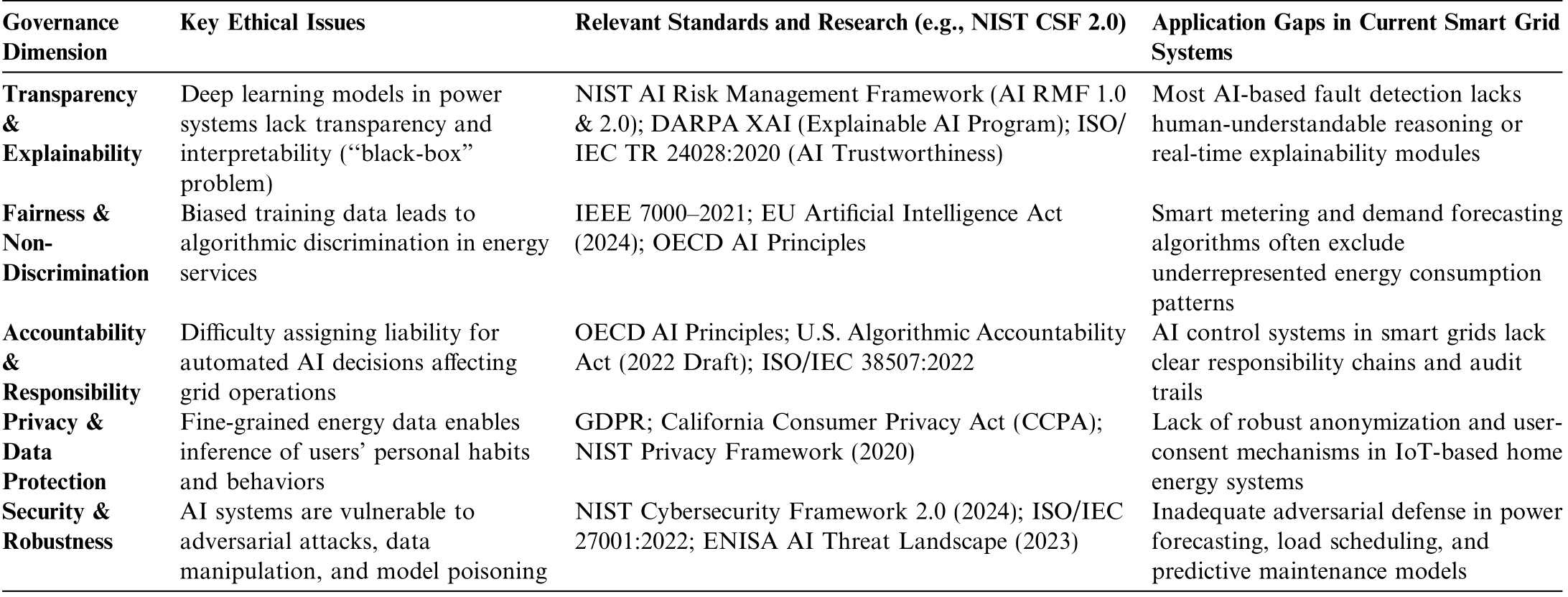
The ethical challenges facing smart grids essentially represent the compounded effects of technological vulnerability, lagging governance mechanisms, and absent fair responsi bility attribution. Therefore, constructinga‘‘technology-policy-ethics” collaborative governance system is critically important.
4 Ethical assessment framework and resear ch on smart grid security
4.1 Methodology for framework development
The integration of AI into smart grid enhan ces operational efficiency and risk assessment but raises significant ethical challenges [56]. This section proposes four ethical principles—human-centricity and sustainability, precision in service delivery, agile early warning systems, and full transparency—derived from global AI ethics frameworks and tailored to smart grid applications. The ethical principles were developed through systematic synthesis of established frameworks: the National Science Foundation’s guidelines for responsible AI research conduct, the European Union’s Ethics Guidelines for Trustworthy AI (EU,2019), the NIST AI Risk Management Framework(NIST,2023), and the AAAI Code of Ethics and Professional Conduct (AAAI, 2019). A literature review using IEEE Xplore and Scopus databases covered 2018–2025 publications with keywords including ‘‘AI ethics,” ‘‘smart grid security,” and ‘‘data privacy,” prioritizing peer-reviewed articles and authoritative standards.
The analysis identified core ethical dimensions (transparency, accountability, fairness) and application gaps in smart grid, particularly regarding real-time decisionmaking and renewable energy integration. These insights informed principle development addressing data, algorithm, and application levels to align with smart grid operational and societal needs. The proposed principles are theoretical and lack empirical validation in operational smart grid environments due to the nascent stage ofAI integration and the complexity of large-scale studies in critical infrastructure. Future research should validate these principles through case studies (e.g., EU Horizon Europe smart grid pilots), AI-driven grid simulations, or stakeholder workshops with utilities and regulators. Such efforts will refine the framework’s applicability,addressing challenges like balancing transparency with data security orensuring equitable energy allocation.
4.2 Research on the principles of AI power grid
The integration of AI into smart grid enhances risk assessment and operational efficiency but introduces ethical challenges that require robust standards. This section reviews prior research on AI ethics standards relevant to smart grid, focusing on the data, algorithm, and application layers. These standards—respect for privacy and data security, responsibil ity and accountability, inclusiveness and shared benefits, and active safety—form the foundation for the ethical framework proposed in Section 4. 1. The review synthesizes global AI ethics guidelines and smart grid literature to inform th e development of these standards.
At the data level, smart grid must protect user privacy and ensure data security when collecting extensive data(e.g., consumption patterns, system status) [57]. The EU’s GDPR mandates data minimization, user consent,and robust security measures, while the AI Act (2024)requir es high-risk AI systems to implement encryption and access controls (EU, 2016; EU, 2024) [58]. Poor data governance can lead to biases and malicious use, undermining algorithmic fairness (Floridi & Cowls, 2019) [59]Data breaches could expose sensitive user information,requiring transparent collection mechanisms and GDPR/NIST complia nce. User-accessible dashboards are essential for enhancing data transparency and control [60].
At the algorithm layer, AI-driven smart grid decisions require accountability and responsibility. The NIST AI Risk Management Framework (2023) emphasizes proactive risk assessments during design to mitigate biased energy allocation, while IEEE P7003 standards address algorithmic bias for equitable outcomes (NIST, 2023;IEEE,2021)[61,62]. Traceability mechanisms are essential for identifying and correcting errors in load forecasting(Binns, 2018). Smart grid must implement audit trails and human oversight to comply with the EU AI Act(2024) requirements for high-risk systems. Regular audits and stakeholder engagement ensure ongoing ethical compliance [63].
At the application level, it is essential to ensure that users of AI systems act scientifically, reasonably, and appropriately. This approach can minimize biases, discrimination, and personal harm resulting from misuse or abuse.For example,the AAAI Ethical Guidelines for AI emphasize that the use of AI technologies must adhere to ethical principles to prevent harm to humans and society.
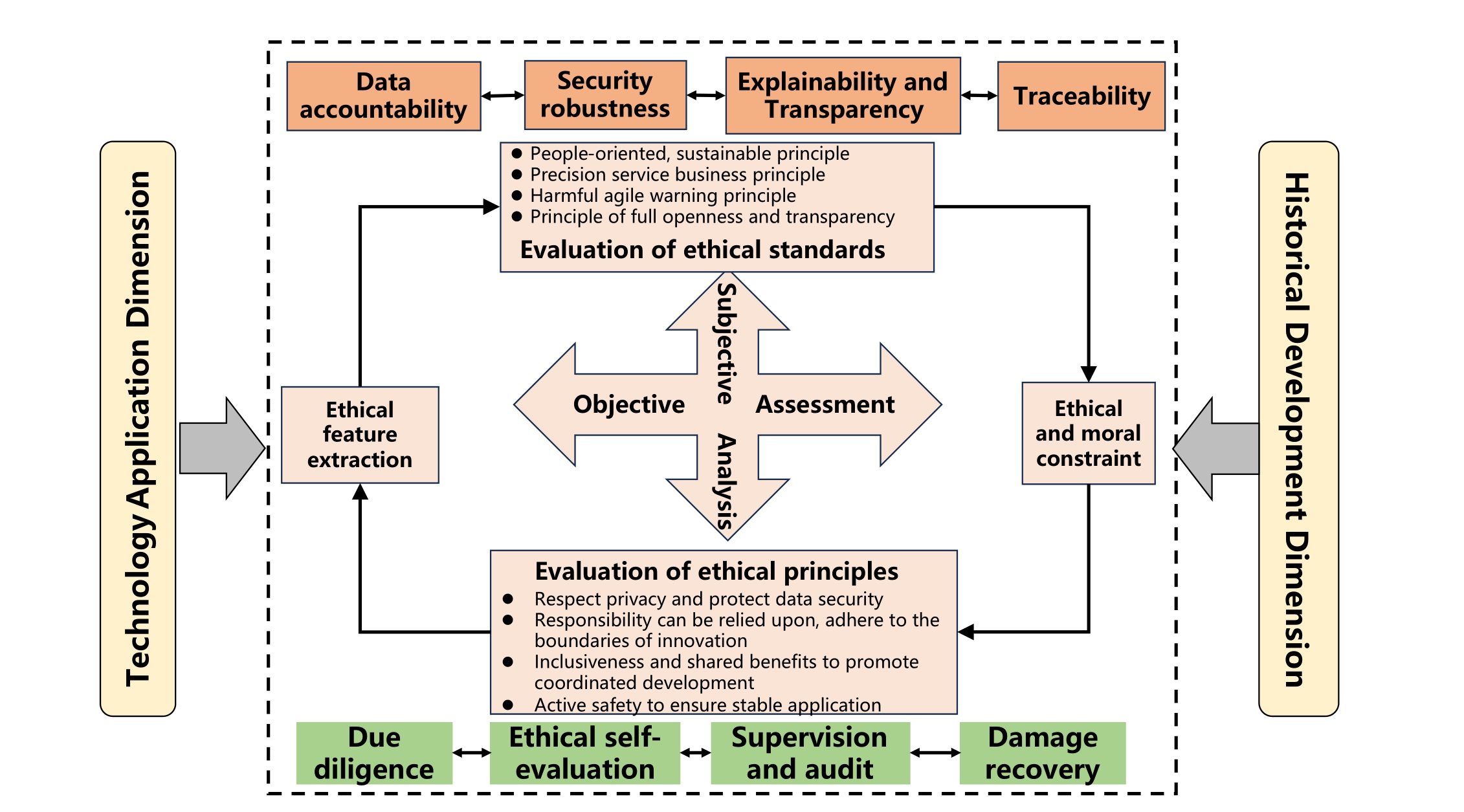
Fig. 6. Framework for ethical evaluation.
As illustrated in Fig. 6, the ethical assessment framework integrates four dimensions—data accountability,security, explainability, and traceability—to guide AI applications in smart grid. Data accountability ensures transparent data collection and compliance with GDPR(EU, 2016). Security measures, such as encryption, prevent data breaches and cyber attacks, as emphasized by NIST(2023). Explainability clarifies AI decision-making, while traceability enables issue tracking and resolution. Mechanisms like due diligence, ethical self-evaluation,supervisory audits, and damage remediation support developers and operators in managing ethical risks, ensuring fair, secure,and environmentally responsible smart grid operations.
4.2.1 People-oriented, sustainable principles
Smart grid development must align with human values and ethics, protect fundamental rights, comply with legislation, and prioritize environmental conservation and sustainable development. This includes optimizing renewable energy integration, intelligent distribution, and real-time monitoring while balancing efficiency, stability, and flexibility to meet user needs and promote green, low-carbon models. The human-centric and sustainable principleis foundational to the ethical design and operation of AIdriven smart grid,prioritizing user welfare,environmental conservation, and societal values.
This principle requires balancing efficiency, stability,and flexibility in AI-driven smart grid operations while addressing ethical trade-offs, such as efficiency versus fairness or short-term performance versus long-term sustainability. Transparent and explainable AI models, robust ethical frameworks, and stakeholder engagement are essential to ensure decisions uphold human-centric values and environmental goals.
4.2.2 Precise service business principles
Smart grid must integrate advanced AI technologies to deliver personalized, efficient energy services that prioritize user needs and satisfaction. Using smart meters, IoT sensors, and real-time monitoring systems, grids collect comprehensive data on consumption patterns and electrical characteristics. Machine learning algorithms and digital twin models analyze this data to identify behavioral trends and optimize energy distribution. AI-powered demand forecasting enables predictive analytics for consumption patterns, faci litating proactive grid management and dynamic pricing strategies. Edge computing and federated learning ensure real-time responses while preserving data privacy. These technologies enable personalized energy recommendations, automated load balancing, and seamless integration of renewable energy sources, ultimately delivering superior electricity services tailored to individual user requirements.
This principle requires robust data governance to mitigate biases and errors in AI-driven service delivery, ensuring alignment with societal values and user expectations.Transparent and explainable AI models, as emphasized by the IEEE P7003 standard for algorithmic bias (IEEE,2021), are critical to maintain trust and accountability.
4.2.3 Harmful agile early warning principles
In the functioning of smart grid, prompt notificationof detrimental effects is crucial to maintain the safety and stability of the grid. Scientific and technical endeavors must objectively evaluate risks, mitigate potential hazards, and respond to risky behaviors with agility. AI systems must be designed to fulfill anticipated roles, detect and prevent inadvertent harm, and include the capability to deactivate or shut down when necessary to maintain safety. The application scope of AI systems must be explicitly delineated,and thorough testing should be conducted within this framework to guarantee their safety, confidentiality, and robustness. Smart grid continuou sly assess critical parameters including voltage, current, and temperature via monitoring devices. Upon the emergence of a warning signal,it can promptly react and implement specific measures to avert the escalation of the problem. By synthesizing and examining the warning data and processing outcomes, the underlying cause of the issue can be identified,and a resolution can be suggested. Simultaneously, safety issues in power grid operations must be promptly investigated and rectified to ensure the long-term stability of the grid.
4.3 Research on AI grid standards
On September 25, 2021, the National New Generation AI Governance Professional Committee released the‘‘New Generation Artificial Intelligence Ethics Code.”The purpose of AI ethics standards is to harmonize the interplay between economic advancement and AI technology research and development. The knowledge framework pertaining to AI technology, directives for the AI sector and digital economy, and ethical norms for AI. AI ethics standards facilitate the establishment of ethical norms and ethical indexing technology, offering an inherent framework for the ethical practice of technology design.It can enhan ce ethical parameters and resolve conflictsof interest,exemplified by the IEEE Autonomous and Intelligent System Ethics Certification Program, which tackles concerns including algorithmic responsibility, transparency,and prejudice.The ethical norms of AI are crucial for the harmonious advancement of society. Facilitate the judicious application and advancement of artificial intelligence, address technical misuse and ethical dilemmas, so fostering the unrestricted evolution of humanity and the collective advancement of society.
4.3.1 Respect privacy and ensure data security
Smart grid need to collect a large amount of user data,such as power supply information, user power consumption, power system operation status, etc. These data are crucial for grid optimization and intelligence. However,if these data are abused or leaked, it will seriously damage the privacy of users and bring negative impacts and potential risks to users.Therefore,smart grid must take technical means. Such as encryption and access control, set boundaries and establish norms in the process of data collection,storage, processing and use to protect the confidentiality and security of user data. Smart grid must comply with relevant laws, regulations and industry standards to ensure that data collection, processing and use meet legal requirements. When processing sensitive information, smart grid need to pay special attention to data security and compliance. In order to enhance user control and supervision of data, smart grid should establish a transparent mechanism todisclose the purpose,type and processing method of data collection. In smart grid applications, respecting privacy and protecting data security are crucial. The development ofAI should respect and protect personal privacy and fully protect the individual’s right to know and right to choose.Efforts should be made to protect user personal information and data security,establish and improve management and transparency mechanisms, ensure the smooth operation of the power grid, and protect user rights.
4.3.2 Responsibility can be followed, adhere to the boundary of innovation
Smart grid need to establish and improve responsibility management mechanisms, timely discover and deal with problems, pursue responsibilities, ensure safety and ensure the stable operation of the power grid. If a fault occurs in the power grid during operation, the problem should be eliminated in time, the root cause should be traced, and the safety and stability of the power grid should be ensured. In addition, the relevant parties of the smart grid should also assume social responsibility. Strengthen the assessment and control of the impact on users, employees,and the environment, starting from the actual application effect. Smart grid should focus on technological innovation, continuously improve the technical level, and provide support for the sustainable development of the industry.But at the same time,relevant laws,regulations and ethical principles should be observed. Prevent excessive innovation and abuse of technology and protect user privacy and data security. The development of smart grid should becommitted to ensuring safety, reliability and sustainability in an ethical and responsible manner. At the same time, the scope and boundaries of technology use should bestrictly controlled to ensure the correctness and applicability of technology and avoid unnecessary safety hazards and risks. Only in this way can smart grid develop in the long term and users can benefit in the long term.
4.3.3 Inclusiveness and sharing, and promote coordinated development
Smart grid is a new type of energy infrastructure. It uses advanced information and communication technology and Internet of Things technology to improve energy effi-ciency. It realizes the integration of multiple energy sources,focuses on coordinated development,and realizes intelligent energy distribution and controllable management. The goal is to achieve intelligence sharing and protect privacy and information security through the aggregation and analysis of information from all parties under the condition of multi-party participation and mutual distrust. Based on the Internet of Things, modern,intelligent and shared management is achieved through wireless sensing, automatic control, network and database technology. Smart grid should emphasize inclusive sharing asa development concept. It comprehensively considers social, economic, environmental and other factors,respects the rights and interests of various fields and groups, and promotes the integration of power grid and ecological environment. For inst ance, the application of Explainable AI(XAI) in power systems not only significantly enhances the transparency and credibility of AI models but also provides an intuitive interpretive framework for decision-making processes in smart grid. This innovative application offers new solutions for addressing technical and ethical challenges in smart grid, facilitating the implementation of AI technologies in this domain.At the same time, advanced technology is used to collect,process and share data of different dimensions, optimize the smart grid system and meet the needs of different users.
4.3.4 Active safety to ensure stable application
Smart grid security demands advanced cyber-physical protection integrating AI-driven threat intelligence and quantum-resistant cryptography. Zero-trust architecture with micro-segmentation isolates critical assets, while blockchain-secured energy transactions prevent tampering and fraud. Machine learning-based anomaly detection identifies sophisticated attacks including adversarial AI manipulation and supply chain compromises. Real-time security orchestration platforms automatically respond to threats using federated learning models that preserve privacy while sharing threat intelligence across grid operators. Homomorphic encryption enables secure data processing without exposure, and digital twin security models simulate attack scenarios for proactive defense.Edge computing with hardware security modules protects distributed IoT devices from state-sponsored advanced persistent threats (APTs). Security-by-design principles incorporate post-quantum cryptography and resilient control systems capable of autonomous operation during cyberattacks. This comprehensive cybersecurity ecosystem ensures grid resilience against emerging threats while maintaining operational efficiency and public trust.
5 Conc lusion
5.1 Summary of the study
A This study proposes an ethical assessment framework for I applications in smart grid, addressing critical security and ethical challenges including privacy protection, algorithmic transparency, and cybersecurity threats. Building upon established principles from UNESCO’s AI ethics guidelines and EU’s trustworthy AI framework, recent advancements in large language models (e.g., ChatGPT,DeepSeek) demonstrate both transformative potential for risk assessment and heightened concerns regarding data security and interpretability. The framework integrates core principles from international AI governance standards,specifically tailored to address cyber-physical vulnerabilities inherent in smart grid infrastructures. Future research will involve comprehensive empirical validation through targeted case studies to enhance practical applicability and establish evidence-based implementation guidelines.
5.2 Policies and regulations
Ethical review mechanisms within research institutions are central to governing AI ethics in smart grid, ensuring rigorous evaluation and early identification of technological risks. These mechanisms must adhere to comprehensive national standards and guidelines, such as the Interim Measures for Scientific and Technological Ethics Review and IEEE P7000 standards for ethical system design.Authoritative experts should develop resources like the AI Ethics Review Committee Operational Manual and AI Ethics Review Implementation Guide to standardize procedures, define responsibilities, and establish oversight for ethical compliance.
For smart grid, ethical reviews must address data privacy, algorithmic transparency, and the impact of AI on grid security and user rights. User data collection and processing, critical to smart grid operations, require strict adherence to privacy and security regulations, as outlined in the Interim Me asures and IEEE P7001 on transparency.Tailored review principles, distinct from generic AI ethics frameworks, should account for smart grid-specific challenges,such as cybersecurity risks from false data injection and algorithmic bias in energy allocation.
To promote ethical AI development, incentive mechanisms should prioritize funding for projects demonstrating robust ethical risk analysis and mitigation strategies.Researchers must be encouraged to transparently address ethical concerns without penalty, fostering accountability and aligning with IEEE P7003 s focus on mitigating algorithmic bias.By integrating these standards and incentives,ethical reviews will enhance the responsible deploymentof AI in smart grid,supporting secure and sustainable energy systems.
CRediT authorship contribution statement
Yiying Zhang: Writing – review & editing, Supervision,Resources, Project administration. Congcong Zhao: Writing–original draft,Data curation.Ziang Meng:Software,Methodology, Investigation. Chun Sing Lai: Visualization,Resources, Funding acquisition, Conceptualizati on.Xi Chen: Validation, Supervision, Funding acquisition.
Declaration of competing interest
The authors declare that they have no known competing financial interests or personal relationshi ps that could have appeared to influence the work reported in this paper.
References
[1]P. Liu, W. Jiang, X. Wang, et al., Research and applicationof artificial intelligence service platform for the power field, Global Energy Int. 3 (2) (2020) 175–185.
[2]D.W. Liu, H.Y. Yang, G.S. Zhao, Research and implementationof visualization technology for smart grid situational awareness,Automat. Instrument. 4 (5) (2024) 132–136.
[3]G.N. Uunona, L. Goosen, Leveraging ethical standards in artificial intelligence technologies: a guideline for responsible teaching and learning applications, in: Handbook of research on instructional technologies in health education and allied disciplines.IGI Global,2023, pp. 310–330.
[4]H. Cossette-Lefebvre, J. Maclure, AI’s fairness problem:understanding wrongful discrimination in the contextof automated decision-making, AI Ethics 3 (4) (2023) 1255–1269.
[5]A. Alam, Developing a curriculum for ethical and responsible AI:a university course on safety, fairness, privacy, and ethics to prepare next generation of AI professionals, in: Intelligent Communication Technologies and Virtual Mobile Networks, Springer Nature Singapore, Singapore, 2023, pp. 879–894.
[6]T. Birkstedt, M. Minkkinen, A. Tandon, et al., AI governance:themes, knowledge gaps and future agendas, Internet Res. 33 (7)(2023) 133–167.
[7]E. Prem, From ethical AI framewor ks to tools: a reviewof approaches, AI Ethics 3 (3) (2023) 699–716.
[8]J. Silvestre-Blanes,V.Sempere-Payá, T. Albero-Albero, Sma rt sensor architectures for multimedia sensing in iomt, Sensors 20 (5) (2020)1400.
[9]W. Liang, Y. Fan, K.C. Li, et al.,Secure data storage and recovery in industrial blockchain network environment s, IEEE Trans. Ind.Inf. 16 (10) (2020) 6543–6552.
[10]M.A. Hannan, A.Q. Al-Shetwi, P.J. Ker, et al., Impactof renewable energy utilization and artificial intelligence in achieving sustainable development goals, Energy Rep. 7 (2021) 5359–5373.
[11]X.F. Zhang, H.W. Liang, Analysis of the influence of smart grid technology on power system, Urban construction theoretical research (electronic version) (12) (2024) 22–24.
[12]K. Wang, Y. Xie, W. Zhang, et al., Research on optimal dispatch of distributed energy considering new energy consumption,Energy Rep. 10 (2023) 1888–1898.
[13]H. Wang, N. Zhang, E. Du, et al., A comprehensive review for wind, solar, and electrical load forecasting methods,Global Energy Inter. 5 (1) (2022) 9–30.
[14]L. Zhang, Application and prospects of smart grid technologyin power systems, Jiangxi Power 47 (6) (2023) 36–39.
[15]G.J. Tan, Discussion on the monitoring a nd fault diagnosisof electricity system equipment, China Equipment Eng. 1 0 (2024) 154–156.
[16]J. Zhang, Y. Ye, C. Hu, et al., Architecture design and demand analysis on application layer of standard system for ubiquitous power internet of things, Global Energy Inter.4(3)(2021)304–314.
[17]P. Guo, K. Xiao, X. Wang, et al., Multi-source hetero geneous data access management framework and key technologies for electric power internet of things, Global Energy Inter.. 7 (1) (2024)94–105.
[18]D. Qi, X. Xi, Y. Tang, et al., Real-time scheduling of power grid digital twin tasks in cloud via deep reinforcement learning,J.Cloud Comp. 13 (2024) 121.
[19]Z. Wang, D. Qi, J. Mei, et al., Real-time controller hardware -inthe-loop co-simulation testbed for cooperative control strategy for cyber-physical power system, Global Energy Inter.. 4 (2) (2021)214–224.
[20]H. Liang, X. Han, H. Yu, et al., Transmission line fault-cause identification method for large-scale new energy grid connection scenarios, Global Energy Inter.. 5 (4) (2022) 362–374.
[21]J.J. Ding, Q.Z. Shao, Z.X. Qi, et al.,Convolutional neural network power grid fault diagnosis based on transfer learning,Sci.,Technol.Eng. 22 (14) (2022) 5653–5658.
[22]X. Yao, S.Y. Xing, P. Xin, Microgrid fault diagnosis and classification method based on wavelet feature extraction and deep learning, Smart Power 49 (12) (2021) 17–24.
[23]L.Y. Zhu, X.F. Hu, Lessons from UNESCO’s recommendation on theethics of artificial intelligence and its contribution to China:from the perspective of human rights protection, Human Rights Res. 04 (2022) 47–64.
[24]J.J. Meng, Construction of new power system based on digital technology empowerment, Appl. Energy Technol 10 (2022) 31–35.
[25]H.Y. Sun, Reconstruction of political order and risk governance from the perspective of ChatGPT technology,Academia 08(2023)81–90.
[26]X. Wang, Y.Z. Zhou, J.H. Shi, R.P. Liu, Design of smart grid information standardization management system based on WebGIS, Automat. Technol. Appl. 43 (04) (2024) 159–163.
[27]M.K. Hasan et al., Review on cyber-physical and cyber-security system in smart grid: Standards, protocols, constraints, and recommendations, J. Netw. Comput. Appl. 209 (2023) 103540.
[28]M.Q. Ren, Research on network security protection technology of power system information and communication, Network Sec.Technol. Appl. 06 (2024) 130–131.
[29]S.X. Fan, Z.N. Zhao, J.B. Guo, et al., Survey of name="ref30" style="font-size: 1em; text-align: justify; text-indent: 2em; line-height: 1.8em; margin: 0.5em 0em;">[30]S. Xu, X.M. Zhang, M. Li, Demand-side load resource regulation technology and strategy under the background of smart grid,Energy Energy Conserv. 04 (2024) 39–42.
[31]Y.Y. Cheng, Research on Short-Term Power Load Prediction Based on Artificial Neural Network, Zhejiang University, 2017.
[32]Y.R. Zhuang, T.N. Xiao, C. Lin, et al., Transient stability assessment of power system based on spatiotemporal graph convolutional network, PowerSyst. Automat. 46(11)(2022)11–18.
[33]L. Zhao, H.D. Zhen, X.G. Hao, et al., An online power system transient stability assessment method based on graph neural network and central moment discrepancy, Front. Energy Res.(2023).
[34]Z.P. Wang, B. Zhao, W.J. Ji, et al., Short-term load forecasting method based on GRU-NN model, Power Syst. Automat. 43 (05)(2019) 53–58.
[35]U.E. Candidus, A.S. Olalekan, S.B. Lucky, et al., Improved medium term approach for load forecasting of nigerian electricity network using artificial neuro-fuzzy inference system: a case study ofUniversity of Nigeria, Nsukka, Procedia Comput. Sci. 218(2023).
[36]G. Cui, X.Y. Zhang, G.Y. He, et al.,Flexible load participation in theeconomic optimization operation of power grid dispatching,Sci., Technol. Eng. 24 (07) (2024) 2767–2774.
[37]Y. Hang, Operation optimization of integrated energy system based on deep reinforcement learning, North China Electric Power University, 2024.
[38]X.S. Zhang, Q. Li, T. Yu, et al.,Consensus transfer Q-learning for decentralized generation command dispatch based on virtual generation tribe, IEEE Trans. Smart Grid 9 (3) (2016) 2152–2165.
[39]J. Ren, Y. Zeng, C. Qin, Practical dynamic security region model:a hybrid physical model-driven and name="ref40" style="font-size: 1em; text-align: justify; text-indent: 2em; line-height: 1.8em; margin: 0.5em 0em;">[40]E. Foruzan, L.K. Soh, S. Asgarpoor, Reinforcement learning approach for optimal distributed energy management in a microgrid, IEEE Trans. Power Syst. 33 (5) (2018) 5749–5758.
[41]X. Wang, J. Dou, Z. Liu, C. Liu, T. Pu, J. He, A review of the application and prospects of explainable artificial intelligence in power systems, Automat. Electr. Power Syst. 48 (4) (2024) 1–15.
[42]J.Y. Zhou, X. Zhang, L.S. Shao, et al.,Challenges and prospects of cyber security protection for new power system, Automat. Electr.Power Syst. 47 (8) (2023) 15–24.
[43]W. Zhu, Y.P. Hu, Y.Q. Nie, et al.,Research on false data intrusion detection method of power grid based on deep machine learning,Electr. Measur. Instrument. (2023) 1–8.
[44]H.M. Rouzbahani, H. Karimipour, L. Lei, An ensemble deep convolutional neural network model for electricity theft detection insmart grid, IEEE Inter. Conf. SMC (2020) 3637–3642.
[45]V.Z. Mohale, I.C. Obagbuwa, A systematic review on the integration of explainable artificial intelligence in intrusion detection systems to enhancing transparency and interpretability incybersecurity, Front. Artif. Intell. 8 (2025) 1526221.
[46]A.B. Arrieta, N. D´ıaz-Rodr´ıguez, J.D. Ser, A. Bennetot, S. Tabik,A.Barbado, Explainable artificial intelligence (XAI): concepts,taxonomies, opportunities, and challenges toward responsible AI,Inf. Fusion 58 (2020) 82–115.
[47]S. Ali, J.A. Shamsi, S. Mustafa, S. Shamshirband, Intrusion detection system in IoT-based Smart City applications using explainable AI, Sustain. Cities Soc. 77 (2022) 103590.
[48]B. Kabir, Pamir, A. Ullah, S. Munawar, M. Asif, N. Javaid,Detection of non- technical losses using MLP-GRU based neural network to secure smart grid, Intellig. Softw. Intens. Syst. (2021).
[49]Y. Jia, T. Zuo, Y. Li, et al.,Finite-time economic model predictive control for optimal load dispatch and frequency regulation in interconnected power systems, Global Energy Interconnect. 6 (3)(2023) 355–362.
[50]Y. Wang, X. Wang, Y. Zhang, et al., Over-limit risk assessment method of integrated energy system considering source-load correlation, Global Energy Interconnect. 6 (6) (2023) 661–674.
[51]W. Tang, W. Huang, C. Guo, Z. Jing, Q.Guo,M.Xu,Z.Yuan,L.Li, Theoretical development and technical system of distributed intelligent grids, Power Syst. Technol. 48 (9) (2024) 1–15.
[52]C. Xu, Z. Liao, C. Li, X. Zhou, R. Xie, Review on interpretable machine learning in smart grid, Energies 15 (12) (2022) 4427.
[53]D. Nicolas, K. Orozco, S. Mathew, Y. Wang, W. Elmannai, G.C.Giakos, Trustworthiness of deep learning under adversarial attacks inpower systems, Energies 18 (10) (2025) 2611.
[54]L.-H. Nguyen, V.-L. Nguyen, R.-H. Hwang, J.-J. Kuo, Y.-W.Chen, C.-C. Huang, P.-I. Pan, Towards secured smart grid 2.0:exploring security threats, protection models, and challenges.arXiv:2411.04365. (2024).
[55]Z. Li, S. Wang, X. Zheng, F. de Leo´n,T.Hong,Dynamic demand response using customer coupons considering multiple load aggregators to simultaneously achieve efficiency and fairness,IEEE Trans. Smart Grid 9 (04) (2016) 112–3121.
[56]X. Zhang, J. Zhou, M. Li, G. Xu, W.Dong,W.Liu,Multi-column optimization strategy for wind-solar hydrogen production with alkaline-PEM hybrid electrolyzers considering energy consumption characteristics, Power Syst. Technol. 48 (10) (2024) 1–12.
[57]S. Deng, L. Zhang, D. Yue, name="ref58" style="font-size: 1em; text-align: justify; text-indent: 2em; line-height: 1.8em; margin: 0.5em 0em;">[58]E. Union, Regulation (EU) 2024/1689 of the European Pa rliament and of the Council of 13 June 2024 laying down harmo nised rules onartificial intelligence (Artificial Intelligence Act), Off. J. Eur.Union L234 (2024) 1– 132.
[5 9]L. Floridi, J. Cowls, A unified framework of five principles forAI in society, Harvard Data Sci. Rev. 1 (1) (2019).
[60]H.J. Jo, I.S. Kim, D.H. Lee, Efficient and privacy-preserving metering protocols for smart grid systems, IEEE Trans.Smart Grid 3 (07) (2016) 1732–1742.
[61]National Institute of Standards and Technology (NIST). (2023)Artificial Intelligence Risk Management Framework (AI RMF 1.0). NIST Technical Report.
[62]IEEE Standards Association. (2021) IEEE P7003: Standard for algorithmic bias considerations. IEEE Standards.
[63]B.N. Jørgensen, S.S. Gunasekaran, Z.G. Ma, Impact of EU laws on AI adoption in smart grids: a review of regulatory barriers,Technol. Challeng., Stakehold. Benef. Energ. 18 (12) (2025) 3002.
Received 12 March 2025;revised 26 July 2025; accepted 22 October 2025
Peer review under the responsibility of Global Energy Interconnection Group Co. Ltd.
* Corresponding author.
E-mail addresses: yiyingzhang@tust.edu.cn (Y. Zhang), zhaoccong@-mail.tust.edu.cn (C. Zhao), mengziang@psbc.com (Z. Meng), chunsing.lai@brunel.ac.uk (C.S. Lai), xc@ieee.org (X. Chen).
https://doi.org/10.1016/j.gloei.2025.10.006
2096-5117/© 2025 Global Energy Interconnection Group Co. Ltd. Publishing services by Elsevier B.V. on behalf of KeAi Communications Co. Ltd.
This is an open access article under the CC BY-NC-ND license(http://creativecommons.org/licenses/by-nc-nd/4.0/).

Yiying Zhang received the Ph.D. degreeat Korea University, Seoul, South Korea.He completed his postdoctoral research at the joint program between the State Grid Information&Telecommunication Branch Company and Beijing University of Posts and Telecommunications. He is currently working as a Haike Scholar Distinguished Professor at Tianjin University of Science and Technology, Tianjin,China. His research interests include the Internet of Things and its security, smart grids, big data, secure key management, and vehicular ad hoc networks.