
0 Introduction
The shift to cleaner energy is now a major global goal because we urgently need to fight climate change and cut greenhouse gases. Using electricity for transportation is a major way to become carbon neutral, and EVs are key to this [1]. In 2024, global EV sales were over 17 million,accounting for more than 20% of the new car market [2].The International Energy Agency (IEA) expects sales to pass 20 million in 2025, with EVs taking over 25% of the market[3].This quick growth is beneficial for the environment but makes managing power systems harder. More EVs equal more power use, often when everyone’s home charging up. This spike could stress the power grid, possibly causing outages or requiring more power plants. Furthermore, solar and wind power aren’t always stable because they fluctuate with the weather. When the sun isn’t shining or the wind isn’t blowing, these sources produce less electricity. Adding many EVs to the grid complicates the issue because the grid needs to balance the fluctuating supply of renewable energy with the rising and sometimes unpredictable demand from EV charging [4].
To address these challenges, intelligent charging solutions are required. These systems incentivize users to charge during off-peak hours or during periods of high renewable energy production. Upgrading grid infrastructure is also essential to manage increasing electricity demand. These improvements ensure the seamless integration of renewable energy sources. Without these measures,grid instability and persistent fossil fuel reliance may undermine the environmental benefits of EVs. These are major challenges to a zero-carbon economy[5]. Traditionally, EVs act as passive loads that only draw power from the grid. V2G tech treats EVs as mobile energy storage.They can send power back to the grid. This capability enables parked EVs to provide essential grid services,including voltage regulation,peak shaving,frequency control, load balancing, and enhanced absorption of renewable generation [6]. Recent years have witnessed remarkable progress in V2G technology, transitioning from pilot demonstrations to commercial offerings.Factory-enabled bidirectional vehicles (e.g., Renaul t 5 with Mobilize, BYD models via Octopus Energy) and expanding fleets demonstrate real-world viability [7].
This assessment is needed because V2G is becoming more commercialized in grids that use a lot of renewable energy. There is a lot of scattered research on new digital tools, especially DTs, that has to be put together to help with large-scale deployment. This paper offers a comprehensive review of V2G technology, synthesizing core components including architectural designs, advanced bidirectional converters, communication protocols, battery degradation impacts, and control strategies from traditional PID to AI-driven predictive methods with emerging innovations such as Digital Twins for real-time monitoring and DERMS integration, machine learning for superior forecasting, 5G/IoT for low-latency connectivity, and blockchain for secure energy trading.The study fixes important security holes and looks ahead to the early 2026 market, which will be marked by ongoing pilot and fleet-scale deployments giving way to wider commercial availability. The global V2G market is expected to reach USD 15–22 billion by the end of the year. It has technoeconomic frameworks, worldwide case studies up to early 2026, and a list of the most important future paths [8].
1 Review methodol ogy
To ensure a complete and unbiased review that can be easily reproduced, this study uses a systematic method. It follows established guidelines, such as the PRISMA framework. We searched Scopus, Web of Science, IEEE Xplore,and ScienceDirect for articles. Our search terms combined‘‘vehicle-to-grid,‘‘ ”V2G,‘‘ or ”bidirectional charging‘‘ with terms related to our main topics: ”digital twin,‘‘ ”machine learning‘‘ OR ”AI‘‘ OR ”predictive control,‘‘ ”5G‘‘ OR”IoT,‘‘ ”blockchain,‘‘ ”battery degradati on,‘‘”V2G communication protocols,‘‘ ”cybersecurity,‘‘ and ”DERMS.‘‘ We used Boolean operators, wildcards, and filters to focus on titles, abstracts, and keywords. Publications from January 2015 to January 2026 were prioritized to capture recent advancements, with seminal earlier works (pre-2015)included selectively for foundational concepts (e.g., early V2G architectures). We considered peer-reviewed articles,conference papers, and strong reviews or surveys. The content had to directly cover V2G tech, how it affects batteries,security, and digital twins, ML, 5G/IoT, and blockchain.We left out sources that weren’t peer-reviewed (except for reports from groups like IEA and IRENA). We also skipped work that only looked at charging in one direction, EV studies that weren’t related (like just self-driving cars), repeats, or abstracts that didn’t fit well. Initial searches yielded approximately 550 records (after duplication). Titles and abstracts were screened by the authors, resulting in 181 full-text assessments. Eligibility was determined through f ull-text review, with consensus resolution for discrepancies. Final inclusion: 142 primary sources, supplemented by forward/backward snowballing for key citations. The PRISMAinspired flow diagram for the V2G review is shown in Fig. 1.
1.1 Related work: Comparison with recent V2G reviews
This study is contextualized within the current literature by providing a comparative analysis of significant V2G reviews from 2024 to 2025. These recent works were selected for their thoroughness and relevance,allowing this review to highlight its unique focus on digital twins and intelligent energy ecosystems.The Table 1 below delineates the primary contributions and limits of each paper, as well as the degree to which our work mitigates those deficiencies.
This comparison shows that past assessments create solid foundations in auxiliary services and general issues,but they often lack seamless integration of DTs as a critical tool and market maturation study.
1.2 Evolution of V2G technology
The evolution of V2G technology was illustr ated in Fig. 2. At the University of Delaware, Willettsch and Steven Letendre conducted their first experiment with V2G in 1997. Investigations into the technical feasibility of bidirectional power flow and its potential effects on the grid or EVs were conducted through feasibility studies and reviews in the early 2000 s. The first EV to be launched commercially was the Nissan LEAF, which was introduced in 2010. However, the 2011 earthquake and tsunami sparked interest in V2G as a backup power source for homes and critical services. As a result, prototype and commercial systems were created, including the Nissan/Nichicon LEAF-to-Home power supply system. Battery management systems (BMS) and artificial intelligence algorithms have been utilized to enhance efficiency. EVs become more accessible to consumers with advanced technology. The sales and usage of V2G have increased.Despite these improvements, there are still issues such as battery degradation, high infrastr ucture costs,lack of uniform standards, regulatory roadblocks, and insufficient public knowledge [14,15]. Ultimately, the goal of future study and development will be to address these issues and integrate V2G into more advanced smart grid features. These issues can only be resolved with the help of battery technology and charging infrastructure impr ovements. It will also need governments, industries, and researchers to continue pushing for more adoption of V2G technology so that a more sustainable energy future is achieved [16].
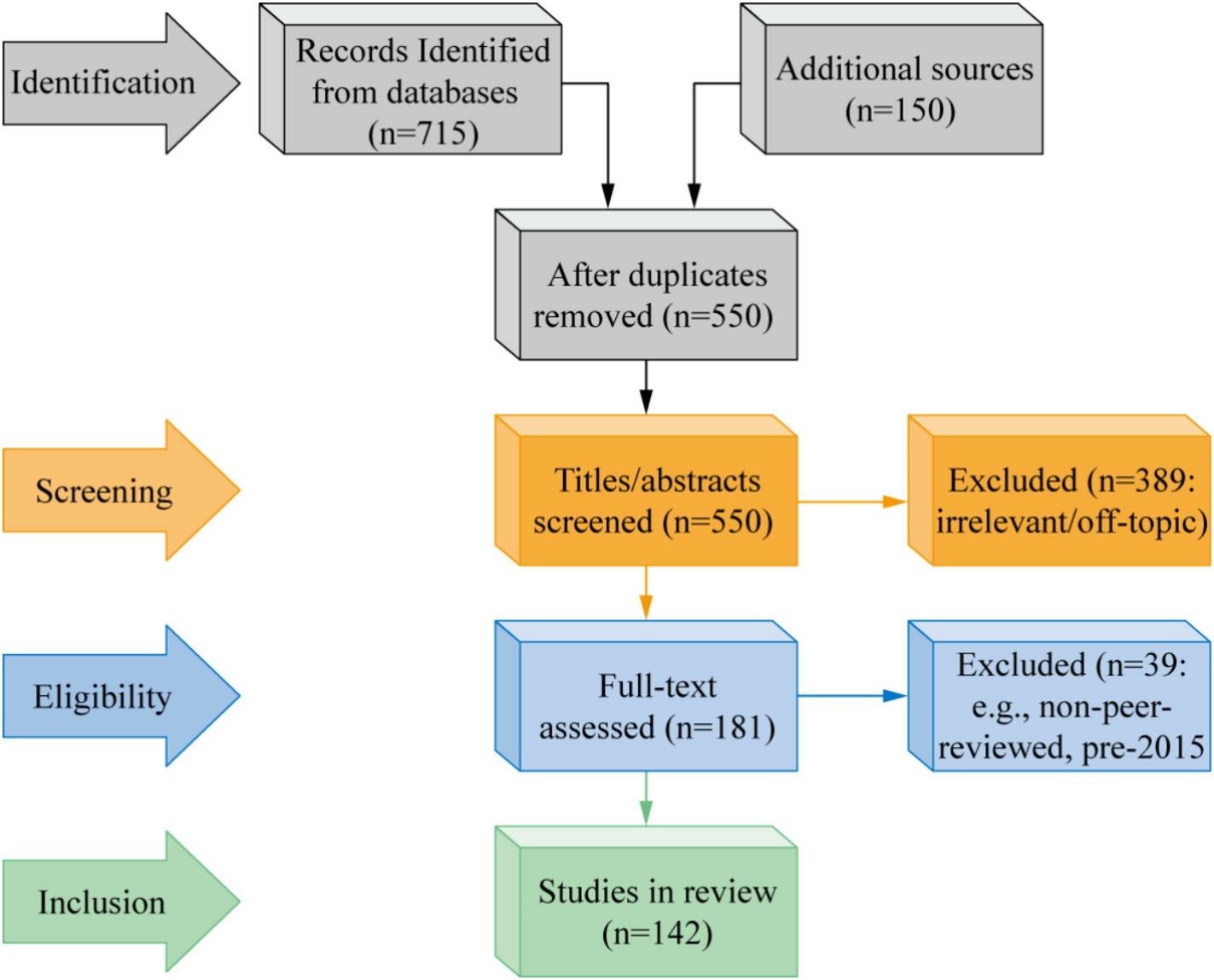
Fig. 1. PRISMA flow diagram for the systematic V2G review.
1.3 Key challenges in V2G technology adoption
The majority of functioning EVs are not equipped for bidirectional charging and upgrading them can be expensive and challenging. Fig. 3 illustrates the key challenges in V2G technology adoption. There is no defined method of communication for V2G and grid integration, which creates additional technological challenges. Pilot initiatives encounter infrastructure and logistical obstacles, which lead to large-scale deployments.The adoption of standard methods is necessary to enable seamless communication between EVs and the grid, leading to the widespread use of V2G technology [17]. Furthermore, the impact of V2G on the EV batteries is among the most important issues in this field, and its environmental effects must also be taken into account.Ensure that users are fully engaged and provide appropriate incentives [18]. Lacking effective policies/rules can hinder investment and usage of technology. Additionally, clear policies should encourage people to invest in and use technologies widely. V2G involves complex energy coordination and management to maximize renewable energy synergy,unlike ordinary renewable sources. The business case for V2G should be compelling to consumers and grid providers in order to justify the investments.
There are many technical, economic, and behavioral issues that make it impossible to use V2G. Problems with battery drain, inadequate communication methods, and limited user participation are some of the things that affect the performance of the bidirectional converter [19]. In order to provide a comprehensive overview of the current state, challenges faced by V2G technology, and prospects, this review is presented.Specifically, it:
Examines the architecture of V2G systems, including hardware, commun ication, and energy management infrastructure.
Bidirectional chargers are compared across different power converter topologies.
Examines control strategies from traditional methods to artificial intelligence and emerging machine learning techniques.
Table 1 Comparison with recent V2G reviews.
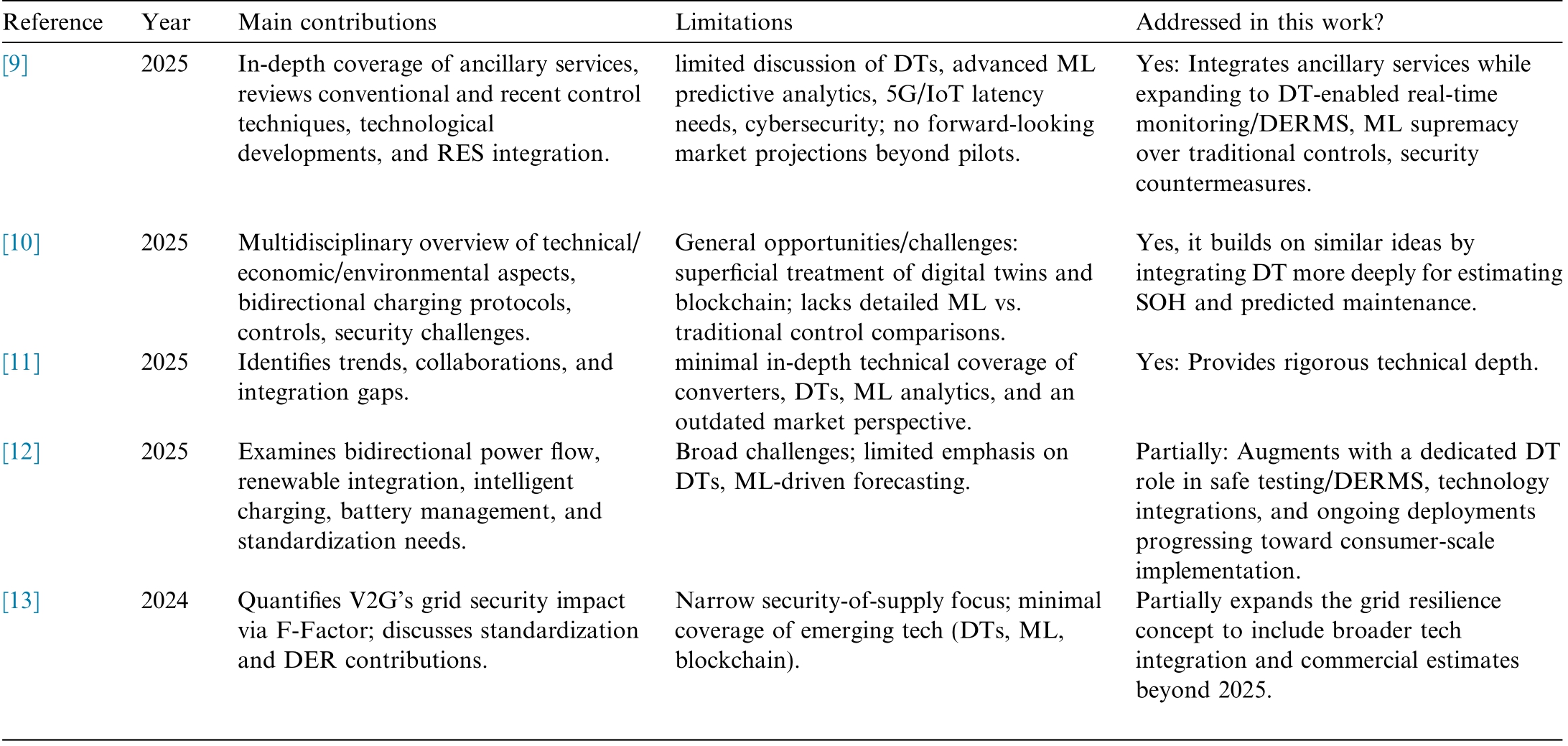
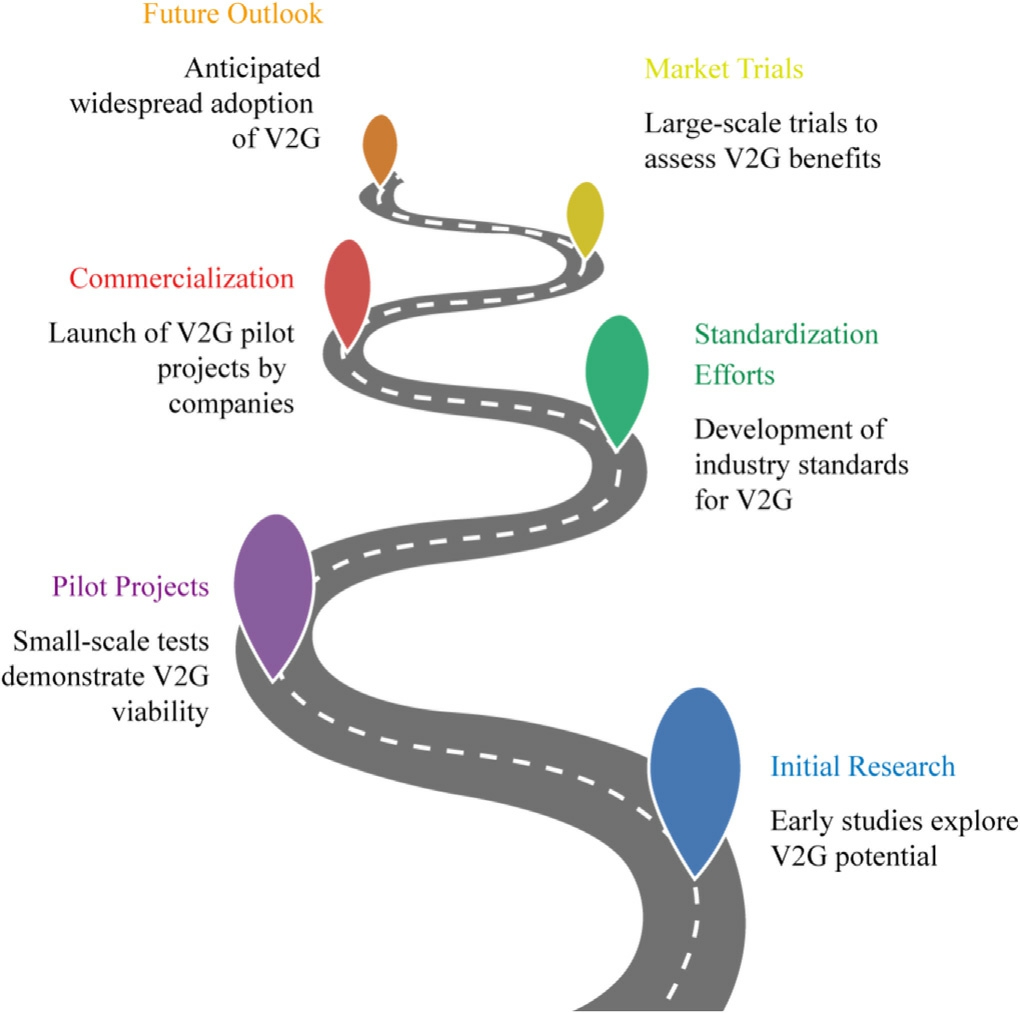
Fig. 2. Evolution of V2G technology.
Specifically, investigates the impact of bidirectional charging on degradation, performance, and econo mics while also evaluating V2G battery technology.
Highlights real-world case studies and global V2G deployment trends.
Shares important issues and future research options.
The remainder of this paper is organized as follows:Section 2 details the V2G system architecture; Section 3 reviews EV charger converter topologies; Section 4 discusses battery technologies and degradation in V2G; Section 5 presents communication infrastructures; Section 6 discusses control and optimization methods; Section 7 describes digital twin infrastructure in V2G; Section 8 addresses techno-economic analys is; Section 9 presents case studies and pilot projects; and Section 10 outlines future resear ch directions.
2 Overview of V2G architecture
V2G technology is an important part of the growing digital energy environment. It connects smart energy systems to EVs. At the heart of this concept is a bidirectional power converter, which interfaces EVs and distributed energy storage devices. Aggregators coordinate EV-grid interactions by grouping EVs to provide grid ancillary services. A solid communication infrastructure allows EVs,chargers, grid operators, and market p latforms to coordinate using standardized data exchange protocols. Fig. 4 shows V2G technology in the context of a larger smart energy framework that encompasses the Internet of Energy (IoE), Virtual Power Plants (VPPs), S mart Grids,and Microgrids [20]. V2G improves the dependability of renewable-dominated energy systems and facilitates realtime load balancing in smart grids. EVs can serve as backup storage in microgrids during outages or times when renewable energy sources are intermittent, particularly in remote or rural configurations.EVs can act as traditional power plants by providing aggregated and controllable capacity when incorporated into VPPs [21].
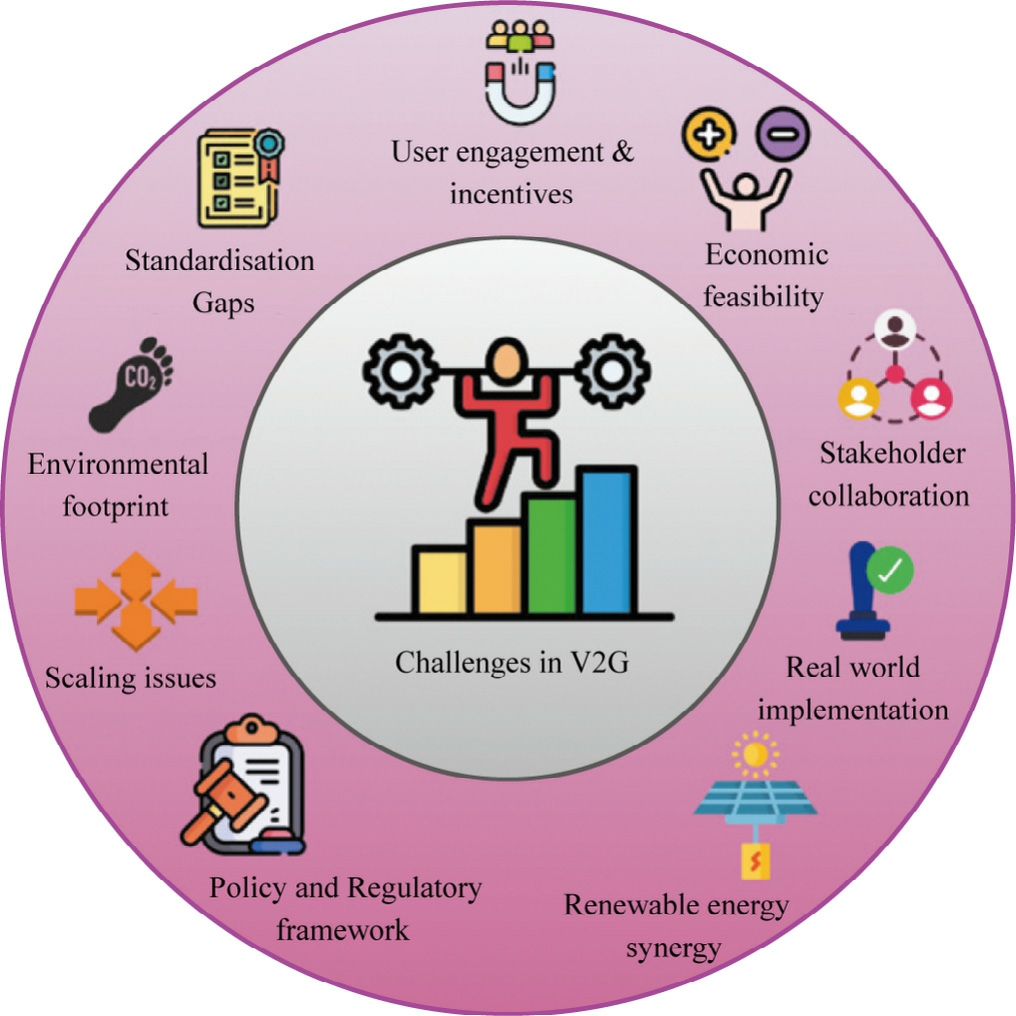
Fig. 3. Key challenges in V2G technology adoption.
2.1 Strategic importance of EV-grid integration and roles
The connection of EVs to the power grid is a significant step towards building a di stributed, sustainable, and smart energy infrastructure[22]. As the number of EVs on the road grows worldwide, their batteries represent a large and mostly untapped source of distributed energy. When EVs are hooked up to the grid,they can help with a number of important grid services [23,24]. Fig. 5 shows how energy and data move among a number of stakeholders, such as grid operators,aggregators, energy markets, public infrastructure operators,and residential and commercial E V users. Each participant makes a unique contribution to grid stability.
The modern V2G ecosystem is composed of a diverse array of energy nodes, ranging from decentralized residential households to large-scale institutional hubs. Residential users leverage vehicle-to-home (V2H) configurations, combining rooftop solar and home energy management systems(HEMS) to optimize self-consumption and provide local backup power [25]. On a bigger scale, commercial fleets and institutional buildings such as hospitals and universities serve as high-capacity, predictable energy storage resources.The scalability of these distributed assets is supported by the Virtual Power Plant (VPP) aggregator, which synthesizes individual EV capacities into a singular, dispatchable energy resource. By utilizing intelligent control platforms and standardi zed communication protocols, aggregators mediate between EV owners and energy markets[26]. This orchestration layer not only maximizes financial r eturns through strategic energy arbitrage but also safeguards grid stability by dynamically adjusting charging and discharging schedules in reaction t o real-time market signals.
3 EV chargers: A detailed overview
An EV charger, also known as EV supply equipment(EVSE), provides electrica l energy to recharge the batteries of EVs [27]. As the adoption of EVs increases, the availability and efficiency of EV chargers have become crucial for seamless transportation[28]. The classification of EV chargers is mostly determined by the co ntrol architecture,power levels, and charging directionality.

Unidirectional chargers are essential for charging EVs.These chargers transfer power from the power source to the battery of the EV. They can only power the EV to recharge its energy storage and not the grid or another device. For reliable EV charging, they are used in homes,public charging stations, and businesses. Bidirectional chargers enable the application of V2G and V2H [29,30].
B)Power level-based class ification
Based on their architecture and power transfer capability, EV chargers are generally categorized as either AC or DC systems.Table 2 classifies the EV charger power levels[31]. The three main charging system tiers are dependent on power capacity and application, and owing to their bidirectionality and power, DC fast chargers are ideal for V2G [32,33]. Urban planning and policies are also being changed to encourage EVs. These policies ensure EV infrastructure and encourage workplace and household charging, which benefits from controlled V2G participation. DC fast chargers are the best for bidirectional energy exchange, whereas AC chargers are scalable and cost-effective for widespread charging networks. V2G charging systems require regulatory support and the deployment of strategic infrastructure.
C) Classification by connection method
Fig. 6 illustrates the two primary electric vehicle charging technologies: inductive coupling (wireless charging)and conductive coupling (wired cha rging),along with their layouts for both on-board and off-board chargers.
i) Inductive coupling (wireless charging)
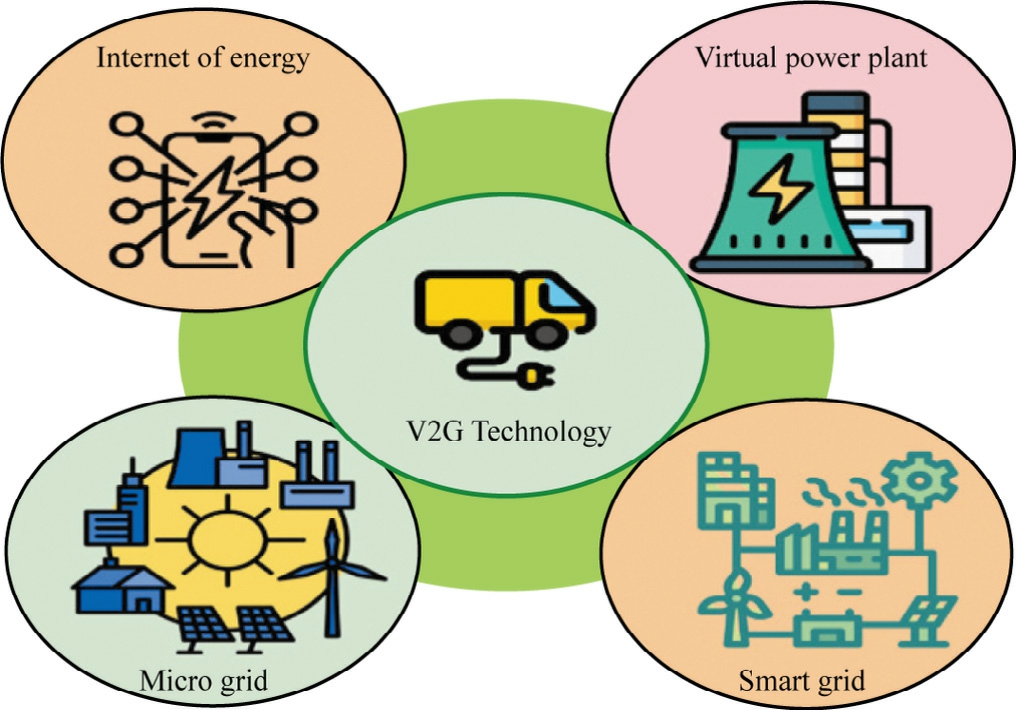
Fig. 4. Overview of V2G technology.
Using the inductive coupling method, energy is wirelessly transferred between a receiver coil installed underneath the EV and a transmitter coil on the ground(embedded in a parking pad or road) [34,35]. Through a combination of AC/DC and DC/high-frequency AC converters as well as compensation networks that maximize power transfer, the grid powers the transmitter coil. To charge the battery pack, the high-frequency AC of the vehicle is converted back to DC using an AC/DC converter. This system is ideal for dynamic charging applications (charging while the vehicle is in motion) and autonomous vehicles because it does away with physical connectors, thereby improving safety and convenience.
ii) Conductive coupling (wired charging)
A direct electrical connection between the EV and power grid is made using the conductive coupling method,which has two different configurations:
On-board Charging: To charge the lithium-ion battery,AC power from the grid is sent via a plug to the onboard charger, where an internal AC/DC converter transforms it into DC. This approach supports both Level 1 and Level 2 charging and is frequently used in both home and office settings [36,37].
Offboard Charging: This technique uses an external DC fast-charging station with an off-board charger to convert AC power to DC[38]. In Level 3 or ultrafast charging systems, the high-voltage DC is then delivered directly to the car battery, avoiding onboard power electronics and facilitating faster charging [39].
3.1 Multifaceted roles of EVs in energy systems
The multifaceted roles of EVs in energy systems are illustrated in Fig. 7. EVs are no longer confined to the role of passive energy consumers. With the evolution of power electronics and smart-grid infrastructure, they have emerged as dynamic elements within modern energy systems. In conventional grid-to-vehicle (G2V) mode, EVs draw electricity from the grid to charge their batteries. In contrast, the V2G mode enables bidirectional power flow,allowing EVs to discharge the stored energy back into the grid. Two EVs can share a charge with vehicle-to-vehicle(V2V) charging. This means that if one EV gets stuck far away from a charging point, it can get a charge from another EV. Expanding this concept to residential settings,the vehicle-to-home (V2H) mode allows EVs to supply power directly to a household’s electrical system [40].V2H is especially valuable in homes equipped with rooftop solar power or those located in areas prone to grid unreliability.
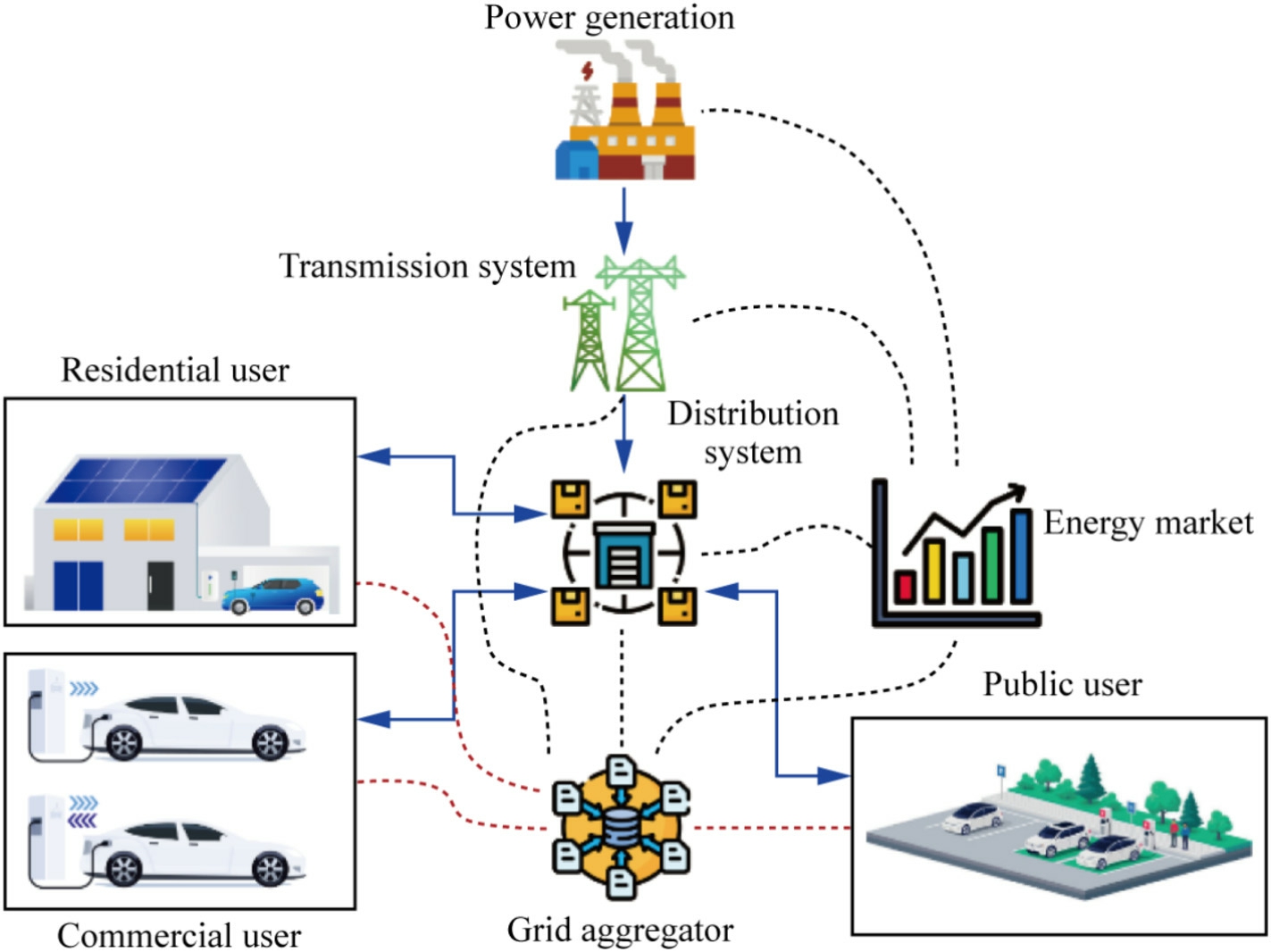
Fig. 5. V2G system participants.
On a larger scale, vehicle-to-building (V2B) mode facilitates energy exchange between multiple EVs and commercial or institutional buildings. Another versatile mode,vehicle-to-load (V2L), enables EVs to directly power external devices or appliances in off-grid scenarios,such as outdoor events, remote work locations, or emergency response sites [41,42].
3.2 Bidirectional chargers
Fig. 8 illustrates a schematic representation of the power flow and control structure in a bidirectional V2G system. The system enables bidirectional energy flow,supporting both the G2V and V2G operational modes. Bidirectional converters play a central role in managing the transformation and direction of power flow. These converters are composed of both AC/DC (rectifier) and DC/AC (inverter) stages, enabling seamless conversion between grid-compatible alternating current (AC) and battery-compatible direct current (DC) [43]. The DC-link capacitor stabilizes the voltage fluctuations during conversion, ensuring smooth power delivery. The DC-DC converter stage further regulates the voltage to match the EV battery requirements and enables effective battery management [44]. On the control side, measurement and feedback systems continuously monitor the voltage, current, power levels, and state of charge (SoC). These signals are processed by a centralized con troller, which applies control algorithms (e.g., PI, MPC, or intelligent control)to manage converter-switching actions in real time.
3.2.1 Bidirectional converter topologies in V2G systems
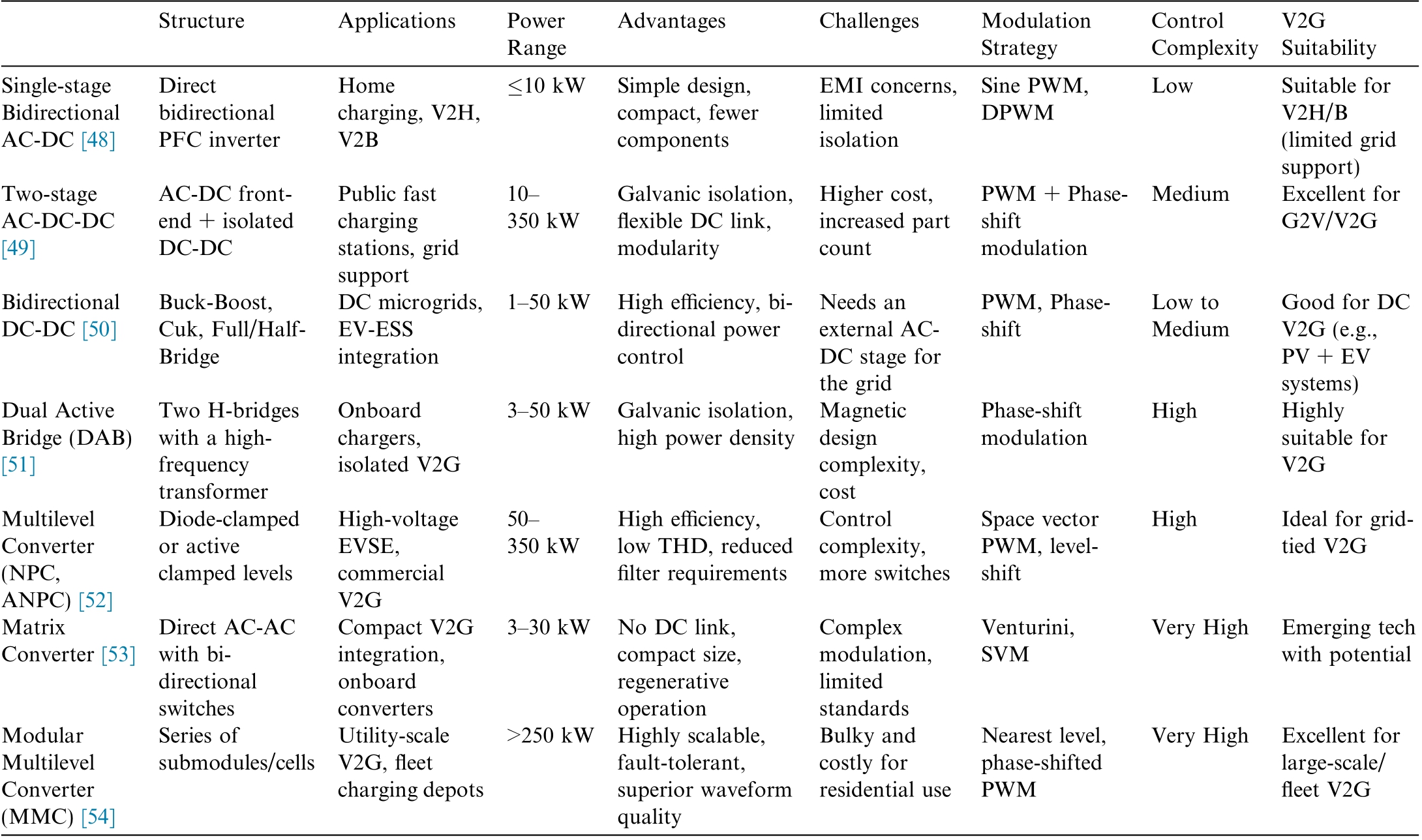
Power electronic converters are the main interface between EVs and the grid in V2G systems, allowing foreffective and regulated two-way energy transfer. Different converter configurations have unique benefits and drawbacks depending on the application, ranging from utilityscale fleet integration to home-based charging [45,46].V2G converter topologies can be broadly classified according to their isolation capability, modulation techniques,and structural complexity (single- or multi-stage). Singlestage bidirectional AC-DC converters, for example, provide a small and affordable solution that is perfect for residential V2H/V2B applications. On the other hand, twostage AC-DC-DC converters are ideal for grid-tied applications and public fast-charging stations because they integrate galvanic isolation via an intermediate DC-DC stage.Bidirectional DC-DC converters are frequently used in EV energy storage systems (ESS) [47]. Although they have more control complexity and design challenges, advanced topologies such as the Dual Active Br idge (DAB) and Multilevel Converters improve the power quality and offer higher power density and efficiency. Emerging solutions for utility-scale and compact onboard V2G applications are represented by modular multilevel converters(MMC), which are known for their waveform quality and modularity, an d matrix converters, which offer direct AC-AC conversion without a DC link. The converter topologies applicable to V2G systems are compared in Table 3.
Table 2 EV charger power level classification.
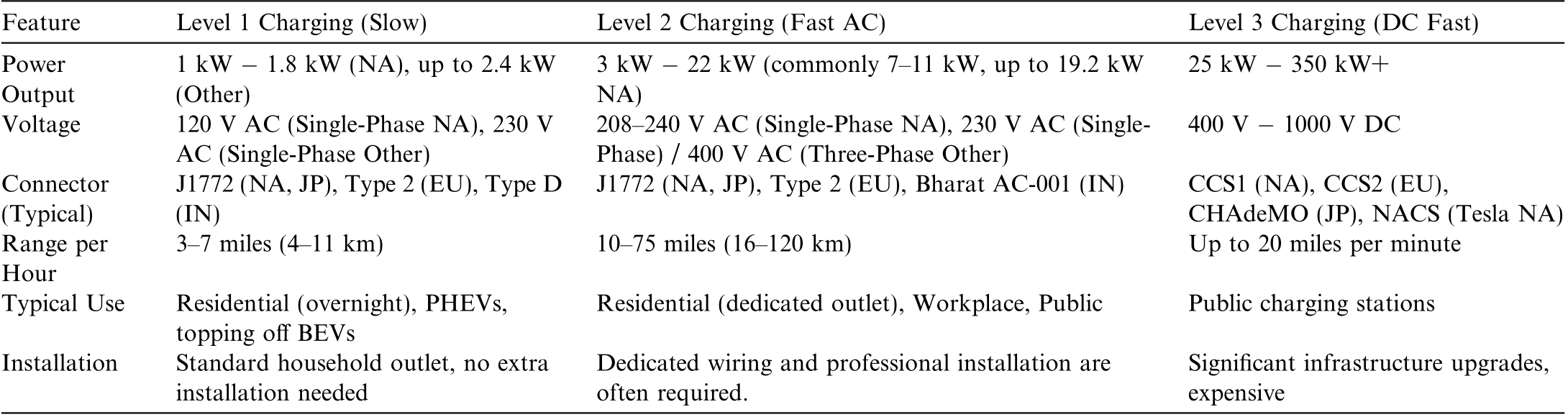
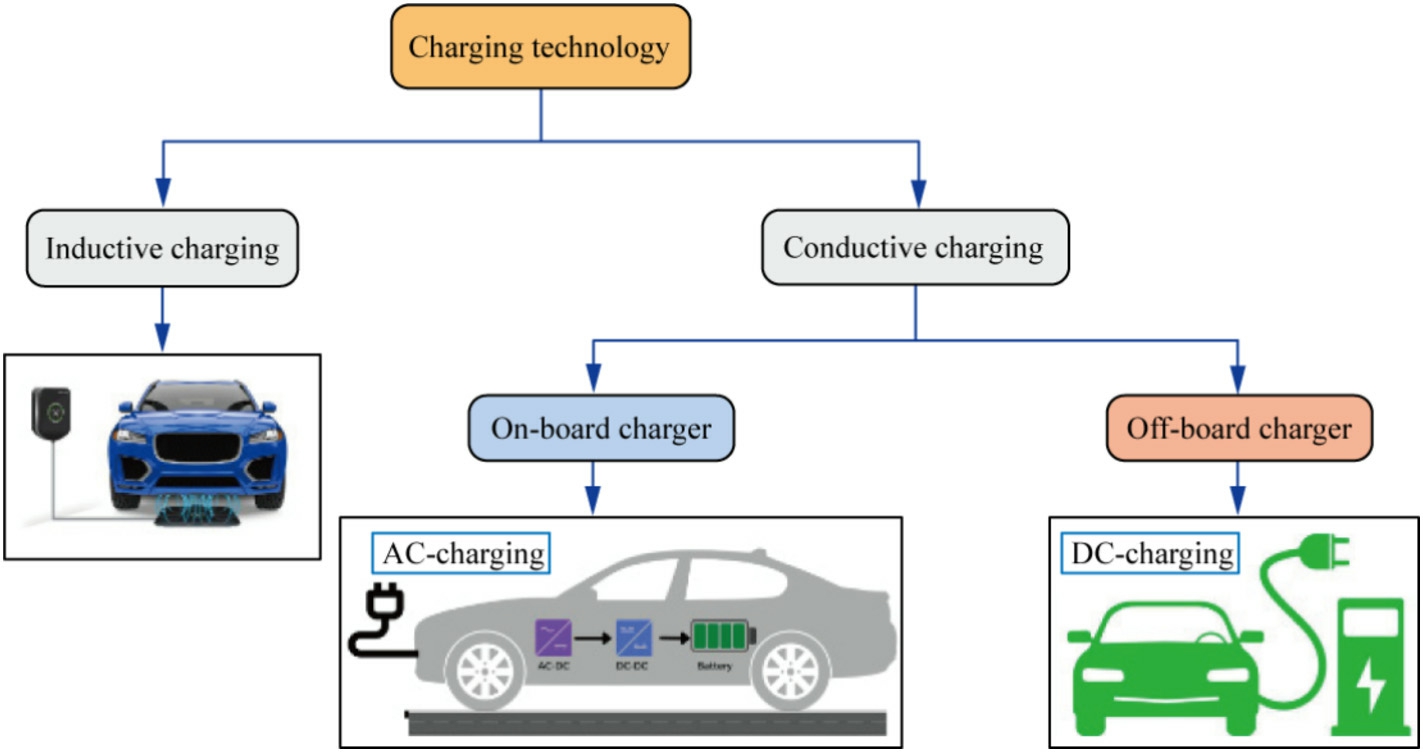
Fig. 6. EV charging technologies.
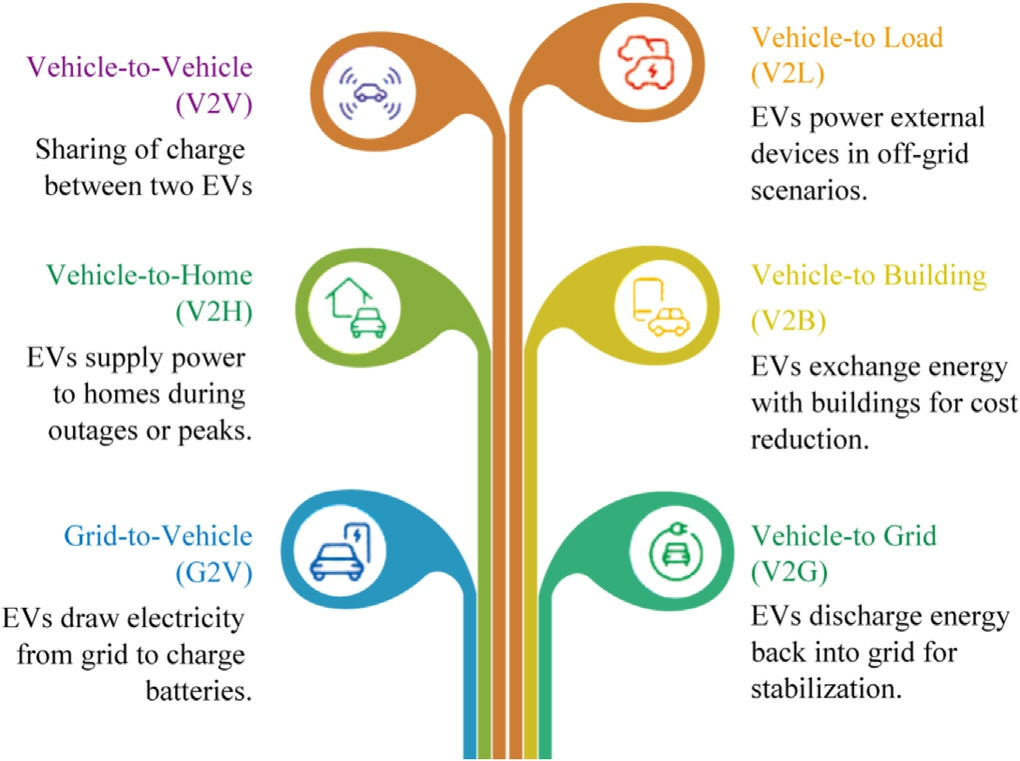
Fig. 7. Multifaceted roles of EVs in energy systems.
4 Battery technologies and degradation consid erations in V2G systems
Battery degradation in V2G systems is a complex process involving both capacity fade (loss of total storage capacity) and power fade (increase in internal resistance)[55]. The efficiency, dependability, and suitability of V2G applications are directly affected by the different battery technologies that EVs rely on. Emerging technologies,including solid-state and flow batteries, are being explored for their enhanced safety and durability in V2G operations, despite lithium-ion batteries, particularly NMC and LFP chemistries, currently prevailing in the electric vehicle market due to their superior performance and established reliability [56,57]. By meticulously regulating state of charge and temperature while utilizing more robust LFP technology, the economic feasibility of V2G systems in 2026 is markedly enhanced relative to prior implementations. Because of these characteristics, they are especially well suited for high-frequency charge/discharge cycles that are common in V2G operations, where long-term durability is crucial.
4.1 Impact of V2G operations on battery life
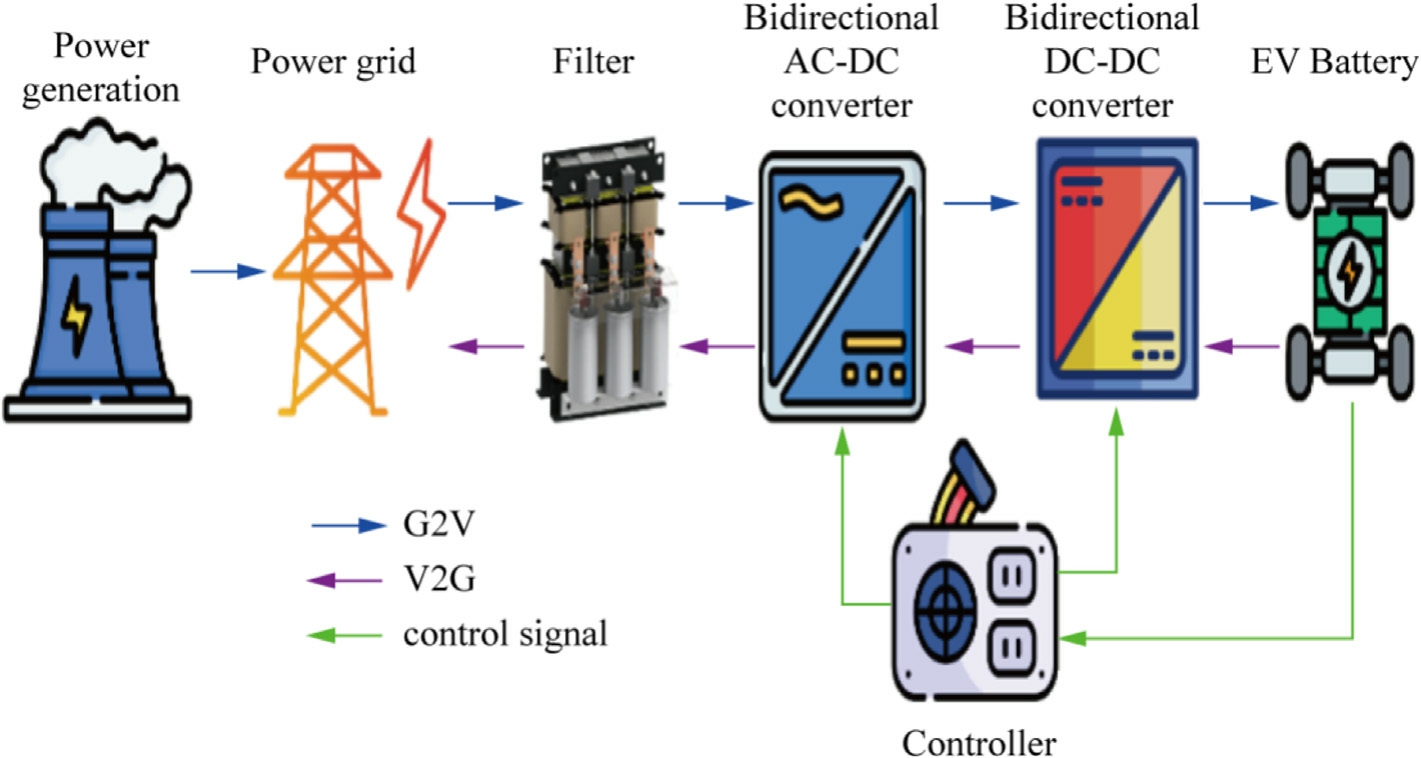
Fig. 8. Power conversion and control path in a V2G system.
The addition of EVs to V2G systems creates both technical and engineering challenges. One of the most important issues is how it affects battery life [58]. Because lithium-ion batteries are the mostcomm on type ofenergy storage technology in EVs, it is import ant tounderstand how two-way energy flows affecthowquicklytheybreak down. Therefore, it is nec e ssaryto determine whether V2G applications will be pro fitable and usefulin thelong run. G2V charging proceeds in onlyone way.V2Gcharging adds more charge–discha rgecycles, which may speed up capacity loss, increase int ernalresistance, andshorten the battery’s overall cycle life.Several simu la tion-and experiment-based studies ha ve examinedho w batteries degrade unde r different V2G usecases, such as frequency regulation,peak shaving,and smart charge wit h improved state-of-charge(SoC)control [59,60]. The level of degradation is affected by factors su ch as thebattery chemistry,depth of discharge (DoD), how the temperature ismanaged, and how the SoC win dows aremanage d. Table 4 presents the key findings fro m literature and field trials reviewed by experts in the field.
These results clarify a few important points. First,the battery makeup determines howquickl y itbreaks down.Because they have stable ele ctrochemi cal qualities and a long cycle life, chemistries suchasLF P and LTOare highly resilient under V2G cy cling. This makes them ideal for heavy-duty grid suppor ts.High-energy chemistries,such as NMC and NCA, havehighe r energy densities and longer vehicle ranges. Ho wever,the y aremore sensitive to temp eratur e changes, full-depth cycling, and SoC extremes,and oft en require more advanced thermal and BMS cont rol toremain durable. Second, degradation is sign ificant l y affe c tedby how often and how strongly V2G dispat ch occ urs.As long as shallow DoD and small SoC wind o ws ar e used, short-duration, high-power services, such as frequency regulation, may not cause as much dam age. H o weve r , long-term discharges or uncontrolled V2G even tswith deep cycling can significantly shorten the useful lifeof thebattery. Even though V2G activities always place more cycling stress on EV batteries, the am o unt of d amag e can beeasily controlled with the appropria te batt eryche mistry,system design, and control strategy [66].F orcomm ercialV2G deployment, especially at scal e, it is import ant tomatch the battery choice to the use casepr oflie and build smart degradation mitigation methods into the system.
4. 2Battery degradation in V2G systems
The long-termimpact of V2G operations on battery health remains a signifciant barrier to their extensive adoption. WhileV2Gprovides significant benefits for renewable energy integration and grid stability, these advantagesare counterbalanced by the potential for accelerated battery degradation resulting from more chargingand discharging cycles [67]. Understanding lithium-ion battery degrading physics is essential to overcomi ng these costly and practical obstacles. Fig. 9 shows that calendar aging, caused by chemical instability over time, and cycle aging, caused by charging and discharging,determine battery longevity [68]. Quantifying the impact of V2G cycles versus ordinary driving cycles is crucial for designing‘‘degradation-aware” control systems that meet manufacturer criteria and preserve vehicle value.
Table 3 Comparison of bidirectional conver ter topolog ies for V2 G applications.
Recent studies suggest that V2G, when deployed under controlled conditions, does not necessarily accelerate battery degradat ion, and in some cases, may even improve battery health.
4.3 Battery management strategies to minimize degradation
Battery management is necessary for the longevity of V2G technology. Smart energy management systems(EMS) and pr edictive algorithms that dynamically plan charging and discharging are beneficial [69,70]. To optimize the energy flow and reduce wear, these systems assess real-time grid circumstances, user mobility patterns, and battery health. Limiting the battery DoD by maintaining operations within a moderate SoC range (30–80%) is crucial.This limitation greatly minimizes electrochemical and thermal stresses, protects electrodes, and extends battery life [71]. Integrated deterioration modelling is currently being used in improved battery management systems(BMS). Hybrid control technologies, such as adaptive model predictive control (MPC) or machine learningbased SoC forecasting, predict battery aging trajectories and change V2G schedules [72]. Empirical data and control advances have challenged the idea that V2G accelerates battery degradation. V2G can safeguard and impr ove battery health using a targeted EMS, smart BMS, and predictive scheduling algorithms [73].
5 Communication infrastructure in V2G systems
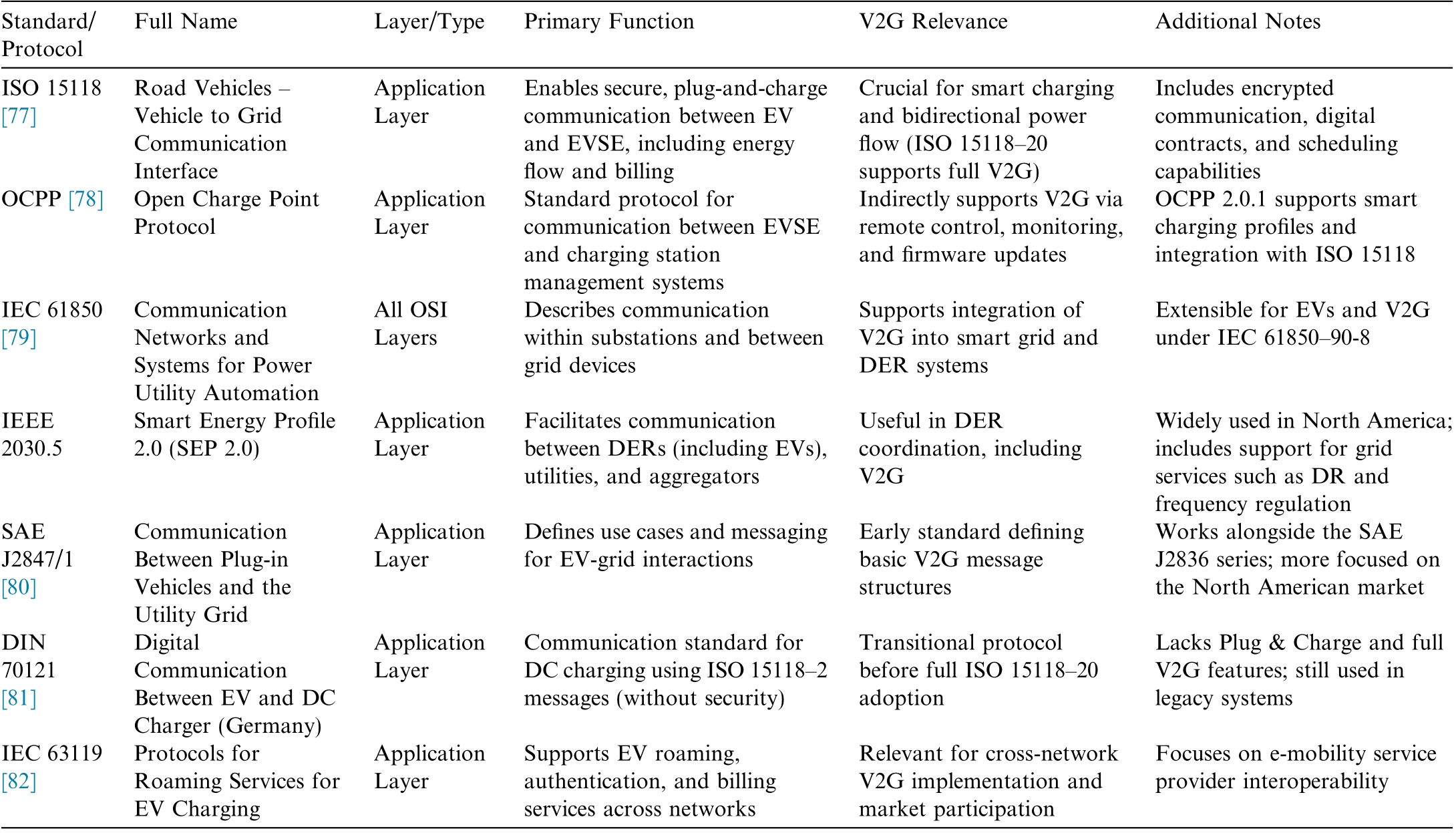
The communication infrastructure is crucial for V2G as it facilitates the transmission of essential data and power among aggregators, grid operators, charging stations,EVs, and energy markets [74]. Various communication standards and protocols, such as X, Y, and Z at the application layer, guarantee interoperability, security, and realtime responsiveness across different hardware and platforms. These protocols detail the interchange of device data, coordination of charging/discharging events, and integration with extensive smart grids and distributed energy resource (DER) management systems [75,76]. The main protocols and standards that support the communication framework in V2G ecosystems are listed in Table 5.
5.1 Cybersecurity in V2G systems
Cybersecurity Threat Taxonomy in V2G System s is depicted in Fig. 10. As of early 2026, with commercial deployments accelerating (e.g., Nissan’s bidirectional chargers and expanding CCS-compatible fleets), V2G’s dependence on real-time communication protocols (ISO 15118-20, OCPP 2.0.1), 5G/IoT connectivity, and interconnected components (EVs, EVSE, aggregators, an d DERMS) creates multiple entry points for sophisticated cyber threats. A successful attack can compromise not only data privacy and financial integrity but also physical grid stability and vehicle safety [83,84].
Man-in-the-Middle (MitM) and data manipulation attacks represent the most immediate operational risks.By intercepting or altering messages during authentication, scheduling, or power dispatch, adversaries can falsify SoC values, inject erroneous discharge commands, or manipul ate billing data, leading to energy theft, incorrect load forecasting,unintended battery cycling,and localized voltage/frequency instability [85].
Denial-of-Service (DoS/DDoS) attacks pose a particularly severe threat to V2G’s value proposition as a reliable grid asset. Coordinated flooding of aggregators or utility servers with illegitimate traffic can prevent timely dispatch of charging/discharging instructions, rendering large fleets of EVs unavailable for ancillary services exactly when they are most needed, such as during renewable variability or extreme demand events[86]. The timing sensitivity of theseattacks amplifies their potential to trigger cascading failures or blackouts. Additional vectors, including malware injection, credential theft, ECU tampering, phishing, and third-party supply chain vulnerabilities, further undermine trust and scalability. Malware can establish persistent control over charging infrastructure, while credential compromise and ECU tampering enable una uthorized parameter changes or safety bypasses. The communication protocols and standards like ISO 15118-20, OCPP, and IEC 61850 that were looked at are very important for making sure that V2G systems can send and receive data securely and in real time[87]. They not only help with basic tasks like charging but also with the fast, reliable links needed for more complex tasks like setting up digital twins.
Table 4 Common battery chemistrie s in EVs.
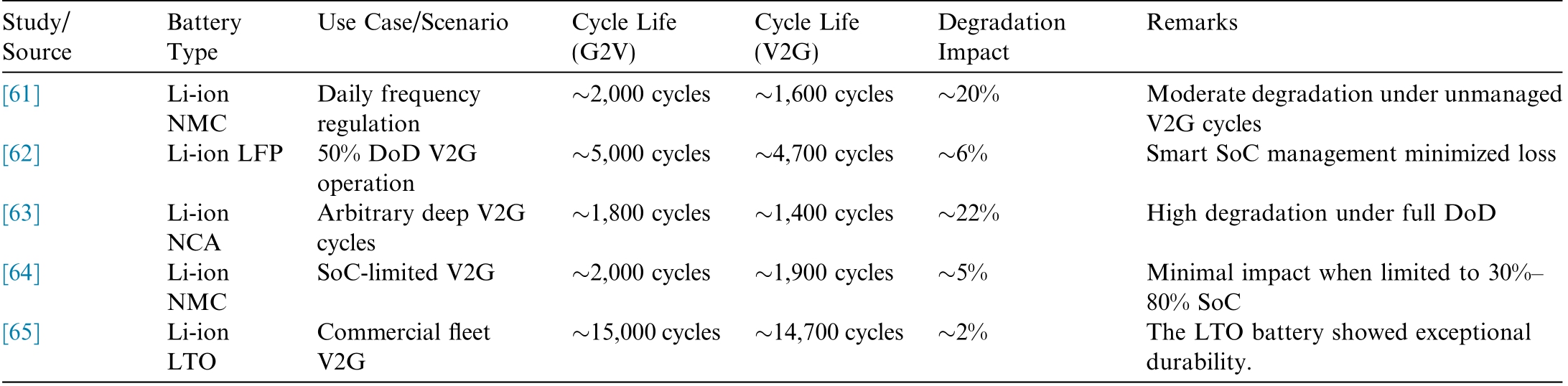
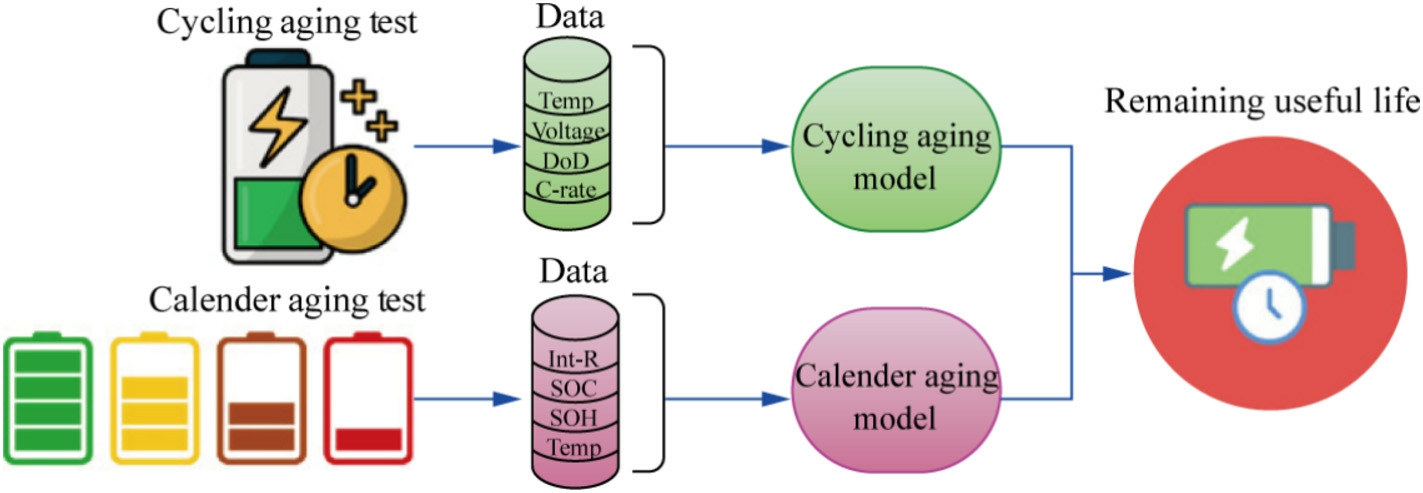
Fig. 9. Battery degradation mechanisms in V2G applications.
Table 5 Communication standards and protocols for V2G systems.
6 Control and optimization stra tegies in V2G systems
To keep the grid stable and get the most out of this bidirectional energy flow for both EV owners and the grid,advanced control and opti mization measures are needed[88,89]. Fig. 1 1 shows an overview of the optimization structures that are employed in the V2G control frameworks.

Fig. 10. Cybersecurity threat taxonomy in V2G systems.
6.1 Classi fica tion of control strat egies
A)Classi cal control methods
Traditional proportional-integral-derivative (PID) controllers have been widely used in power electronic interfaces in V2G systems due to their simplicity and ease of implementation[90,91]. Converter current, voltage, and power are often regulated using these controllers. Under highly nonlinear grid conditions, unpredictable load demands, and disturbances like grid failures or EV connection transients, PI/PID controllers may function poorly.However, their low computational burden makes them suitable for embedded control in many low- to mediumcomplexity V2G applications.
B)Modern control techniq ues
Modern control approaches such as Model Predictive Control (MPC), Sliding Mode Control (SMC) [92], and H-infinity control offer greater robustness and adaptability than classical techniques [93–95]. MPC uses a system model to forecast future behavior and optimize EV charging/discharging decisions over a specific time horizon while explicitly handling operational restrictions like battery SoC limits, power capacity, and dynamic grid demands [96–98]. SMC also offers excellent robustness against system uncertainties, external disturbances, and parameter fluctuations, whic h is ideal for V2G applications’ fluctuating dynamics.
C) Intelligent control methods
Intelligent control techniques utilize adaptive and nonlinear decision-making approaches to effectively respond to dynamic system conditions. Fuzzy Logic Controllers(FLC) provide a rule-based framework that does not rely on anexact mathematical model, making them particularlywel l-suited for V2G applications where interactions are comp lex and parametersoften uncertain. Artificial NeuralNetworks (ANN) offercontrol strategies based on learni ng from data, allowingthem to model nonlinear system behaviors; however, their performance largely depends on the quality and representativeness of the training data sets [99,100]. AdaptiveNeuro-Fuzzy Inference Systems (ANFIS) integrate the transparency and interpretability of fuzzy logic with the learning capabilities of neuralnetworks, forming a powerful tool for real-time controlin V2G systems [101,102].
D) Ad vanced and emerging c ontrol strategies
Advanced control strategies, such as Active Disturbance R e jection Control (ADRC), robust control, and multi-agent systems, a re being explored fo r highreliabilit y V2G networks [103]. ADRC provides realtime disturbance estimation and rejection without requiring det a iled system modeling,making it effective in dynamic grid environments.Multi-agent control frameworks enable decentralized and cooperative o peration of multiple V2G units, supporting scalability and fault tolerance i n distributed energy resource (DER) settings[104].
6.2 Optimization strategies for V2G operations
A) Classical optimiza tion techniques
Traditional optimization methods such as Linear Programming (LP) and Quadratic Programming (QP) are commonly applied in V2G scheduling to reduce costs or improve system efficiency, s ubject to fxied constraints. These approaches are well-suited for static problems where system parameters and constraints remain constant and predictable[105]. For instance, LP can effectively optimize energy pricing plans, while QP is useful for reducing power losses or fnietuning converter controls. Nevertheless, these techniques can struggle with highly dynamic or nonlinear scenarios due to their dependence on linear models and assumptions [106].
B) Metaheuristic approac hes
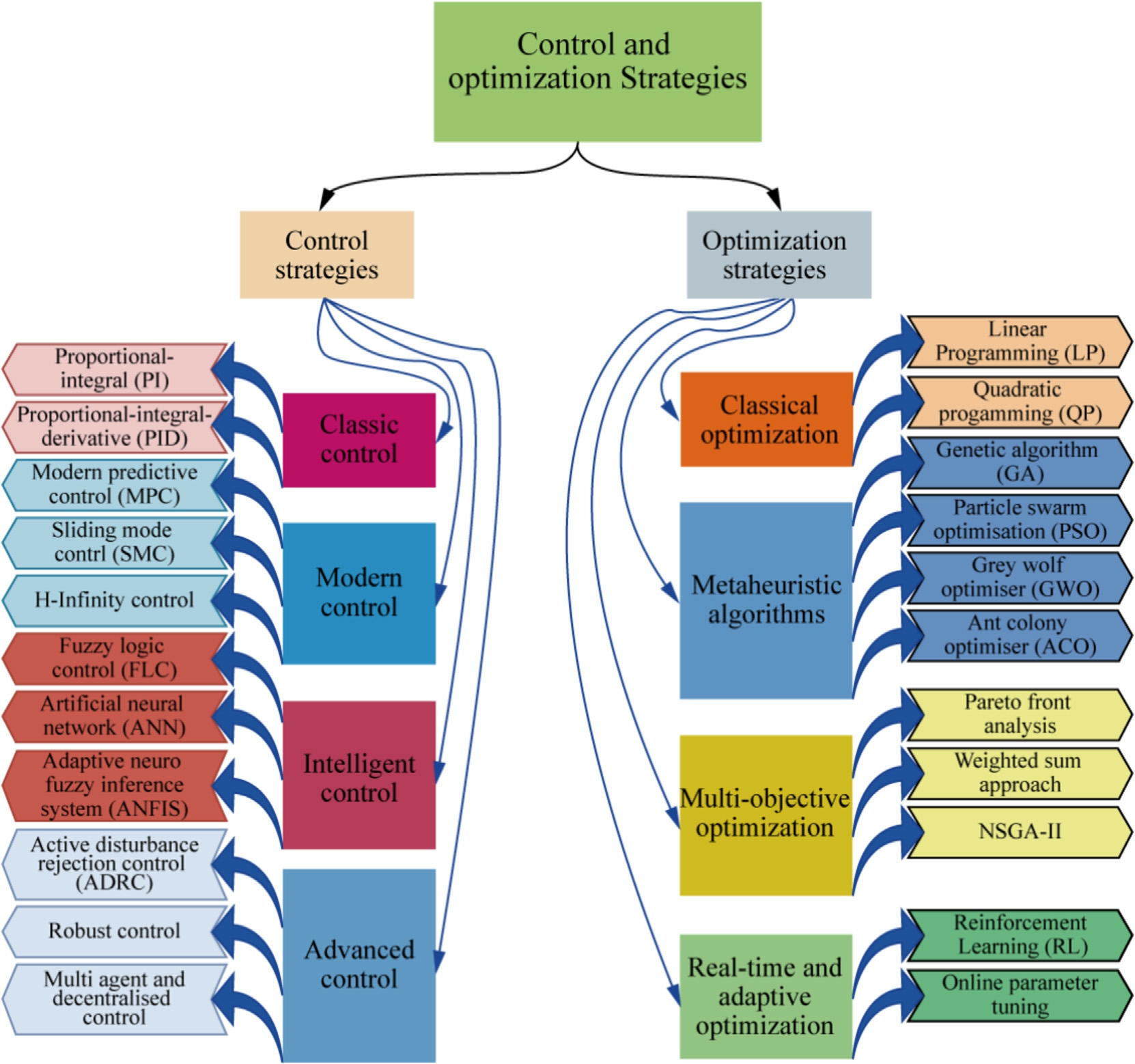
Fig. 11. Control and Optimization Strategie s in V2G Systems.
To address complex and nonlinear challenges in V2G optimization, metaheuristic algorithms have become invaluable. Methods such as Gene tic Algorithms (GA)[107], Particle Swarm Optimization (PSO) [108], Ant Colony Optimization (ACO) [109], Grey Wolf Optimizer(GWO) [110], and White Shark Optimization Algorithm(WSA) [111] are frequently employed. These algorithms excel in tasks like tuning controller parameters, balancing loads, minimizing energy costs, and improving system robustness. Their main advantage lies in handling uncertainties such as fluctuating EV availability, variable electricity prices, and grid limitations without requiring gradient information. They also help avoid local optima in intricate search spaces.
C) Multi-objective optimization framework s
Optimization with a single emphasis is ineffective for V2G system operation, which has competing aims [112]. If the only goal was to increase ancillary service revenue,aggressive and frequent cycling would harm the vehicle’s principal asset, its battery, accelerating depreciation. Effective optimization frameworks for many objective s are essential. Instead of fniding the ‘‘best” response, these models discover the Pareto front, where enhancing one goal inevitably entails compromising another [113]. Decision-makers can examine best-case situations in context with this strategy. Simpler approaches like the Weighted Sum Method involve a priori and often subjective objective importance assignment. In the complicated, non-linear, and limited problem spaces typical of V2G, more sophisticated metaheuristic algorithms, such as the Non-dominated Sorting Genetic Algorithm II (NSGA-II), work very well for finding this front. Stakeholders can benefit greatly from these methods bec ause they evaluate a population of possible solutions across multiple criteria at once.
D) Adaptive and real-time optimization
Dynamic conditions in V2G environments necessitate optimization methods capable of real-time adaptation.Techniques like Reinforcement Learning (RL) and online parameter adjustment enable control policies to evolve continuously based on system feedback. RL frameworks,through ongoing interaction with their environment, can effectively manage changing conditions such as variable EV participation, fluctuating market prices, and unpredictable grid demands [66,114]. These adaptive methods improve both the responsiveness and the long-t erm effectiveness of V2G operations.
7 Digital twin integration for V2G systems
Utilizing the communication framework outlined in Section 5, such as ISO 15118-20 for bidirectional communication and OCPP for charger management, the digital twin concept leverages rapid, reliable connections, particularly through IoT and 5G, to create synchronized digital replicas of real-world V2G systems [115]. The integration of DT technology within V2G systems requires a multidimensional technological ecosystem [116]. Creating a highfidelity DT for V2G systems is a big change from reactive control to predictive and prescriptive management. The V2G DT is a virtual version of the real V2G ecosystem,which includes the EV,its battery,the charging infrastructure, and how it interacts with the power grid [117,118].Fig. 12 shows that numerous major technologies intersect to create and operate it.
A) IoT and charging stations
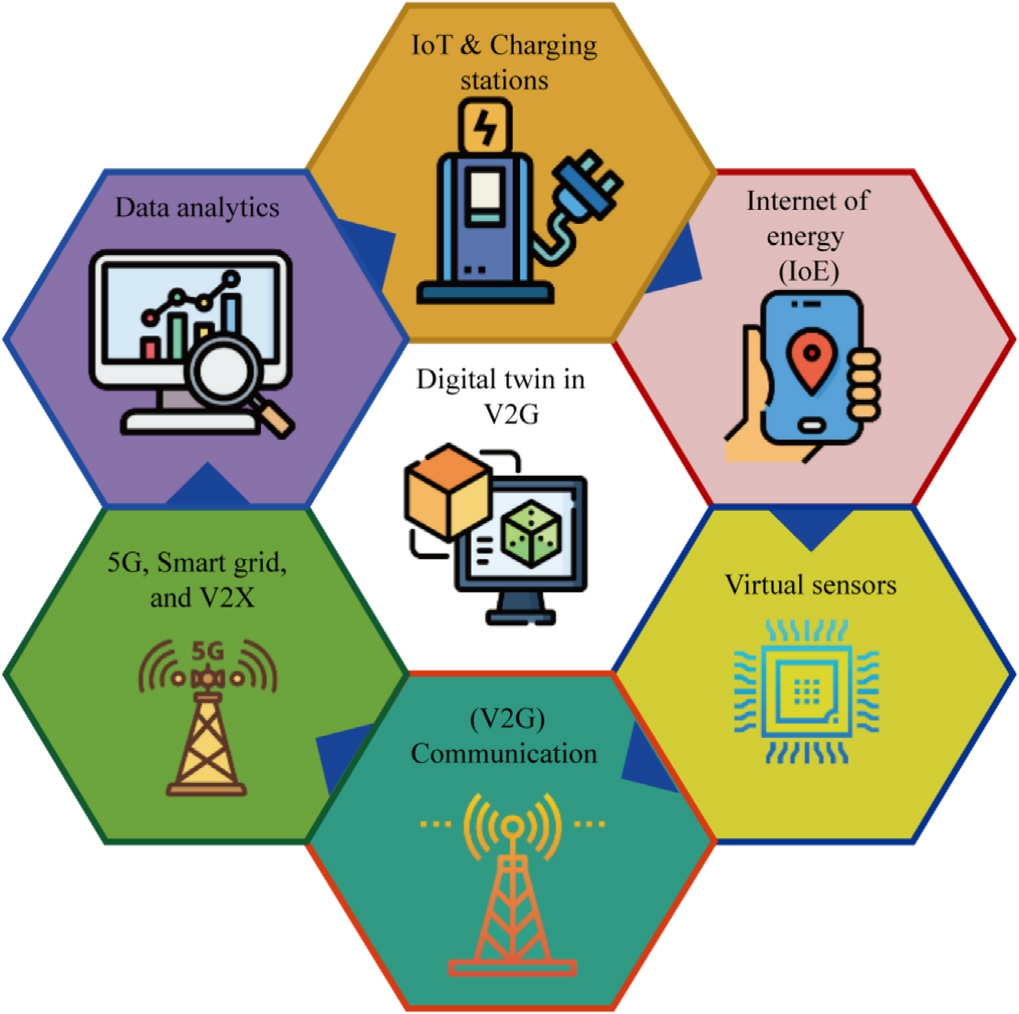
Fig. 12. Technologies for DT integration in V2G systems.
These advanced edge devices are more than just power supplies; they also have b uilt-in sensors and communication modules that constantly record a wide range of realtime operational parameters[119]. These important measurements include SoC, SoH, cell temperature, and Crates. They are collected along with power-grid interface parameters like real-time voltage, current, frequency,and power factor at the point of common coupling. In addition, they keep an eye on the station’s operational state, which includes checking for problems and seeing how the connections are working. This steady flow of detailed data is what keeps the DT alive. It makes sure that the virtual model always accurately represents how the EV and its charging infrastructure work in the real world [120].
B)Virtual sensors
Physical IoT sensors provide useful information, but they can’t measure all crucial factors, such as battery chemistry or long-term wear and tear. Virtual sensors are in charge here. A virtual sensor is a software model that uses realworld data to guess or figure out amounts that are hard or impossible to measure directly. The V2G DT needs virtual sensors for processing real-time data on current, voltage, and temperature. Virtual sensors can figure out the battery pack ’s State of Health(SoH)and Remaining Useful Life (RUL).This tells you how things will get worse before they happen [121]. Virtual sensors give the DT a full and predictive picture of system health and performance by combining phys ical data with inferred insights.
C)Smart Grid, V2X, an d 5G
The effectiveness of a digital twin depends on the communication network that underpins it. A network with high bandwidth, ultra-low latency, and massive connectivity is required for the bidirectional data streams that flow between thousan ds of EVs and a central or distributed DT platform. For this task, legacy communication systems are inadequate [122].
V2X and 5G Communication: One important enabler is 5G cellular technology, which provides the almost instantaneous response times (sub-10 ms latency) needed for realtime grid stabilization services. The DT can reflect the holistic awareness created by Vehicle-to-Everything (V2X) communication protocols, which are based on 5G and ena ble the vehicle to communicate not only with the V2G but also with other vehicles(V2V)and infrastructure(V2I)[123,124].
D) Data analyti cs
At the heart of the DT is the Data Analytics component,which processes the massive amounts of raw data generated by the Internet of Things (IoT) and virtual sensors to derive useful insights. Its functions are multi-faceted, utilizing a spectrum of approaches from advanced machine learning to statistical analysis.Simple pattern recognition and anomaly detection allow it to spot even the most minute changes from the norm that can point to impending problems with the battery or charging apparatus. Energy pricing, grid load,and driver behavior are just a few of the important aspects that it uses previous data to predict, going beyond realtime monitoring. Because of this predictive capability, DT can model potential outcomes and, most importa ntly, execute sophisticated optimization algorithms.
E) The Internet of Energy (IoE)
The V2G DT works within the IoE, an ecosystem of DERs like rooftop solar, stationary batteries, and smart appliances. The DT relies on this framework’s socioeconomic layer and market interface. By receiving realtime pricing signals and demand-response requests from grid operators or energy aggregators, DT can actively engage in energy markets. It can optimize its behavior with other local energy assets to maximize renewable selfconsumption or assist a microgrid due to its connectivity.The IoE allows EV owners to establish preferences, such as needing an 80% charge by 7 AM or maximizing revenue,which become solid constraints for the DT’s optimization engine through a mobile app. IoE contextual awareness is the final, important layer based on other enabling technologies. IoT sensors provide raw data, virtual sensors enrich it, 5G and V2X connectivity transport it instantly,and data analytics generate intelligence, but the IoE applies it to a market-driven environment [125].
7.1 DERMS-oriented integration of V2G
DTs serve as a practical and powerful bridge that connectsEVs to DERMS. They creat e an accurate virtual copy of each EV’s battery condition, charging behavior,and power flow, allowing the grid to manage mobile energy resources safely and effectively [126].
This integration follows a clear three-level structure:
At the device level, each individual EV has its own DT that continuously tracks real-time battery SoH and SoC. This helps prevent unsafe operation and protects battery life.
At the aggregator level, many EV DTs are grouped together to form Virtual Power Plants (VPPs). The aggregator uses these combined twins to optimize charging and discharging across the entire fleet,making decisions that benefit both vehicle owners and the grid.
At the utility level, the aggregated DTs connect to the wider grid management system. This allows utilities to balance overall grid needs, reduce congestion, avoid wasting renewable energy, and provide important services such as voltage support and frequency regulation.The success of this approach depends on smart computing tools, especially Deep Reinforcement Learning (DRL)and LSTM-based forecasting [127]. These methods let operators run ‘‘what-if” simulations in the virtual world,testing different charging and discharging plans without ever touching the real vehicles. Results from real-world pilots in 2024 and 2025 show that DT-enabled DERMS can improve local grid flexibility by up to 40% while keeping battery wear much lower through careful, health-aware scheduling. As of early 2026, the adoption of the ISO 15118-20 standard has made communication betw een physical EVs and their DTs much more reliable and consistent. This standardization supports ‘‘value-stacking,”where EVs can earn money from multiple grid services at the same time. Overall, by carefully matching individual driving needs with the bigger energy requirements of the grid, DT-integrated DERMS turn EV into reliable, flexible, and valuable parts of a modern, decentralized, and renewable-friendly power system [128].
8 Techno-economic analysis in V2G systems
Techno-economic analysis (TEA) plays an essential role inassessing whether V2G systems are technically sound and financially worthwhile. By combining engineering performance data with cost modeling, TEA helps utilities,aggregators, policymakers, and EV owner s make informed choices about design, investment, and policy support[129,130]. The framework splits into two main parts: technical and economic evaluation.
Technical evaluation focuses on three key areas. First,grid impact assessment examines how V2G affects power system stability and quality through load flow studies, harmonic analysis, and transient simulations. Second, system performance tracks metrics like availability, response time togrid signals, round-trip efficiency, and capacity for ancillary services. Third, battery degradation modeling is crucial, as extra V2G cycles increase capacity fade (typically 1–2% per year from calendar aging, with an additional 0.3–1% annual rise from cycling under optimized conditions) [131]. Recent studies show that well-managed V2G adds only modest cyclic degradation (around 0.31%extra per year for moderat e participation), but poor control can accelerate wear and shorten remaining useful life[132,133].
Economic evaluation assesses these technological realities in relation to financial outcomes. A cost-benefit analysis evaluates initial capital expenditures (bidirectional chargers, infrastructure) and recurring costs (maintenance,possible battery replacement) against income generated from grid services such as frequency management, peak shaving,voltage support,and energy arbitrage[23]. Essential metrics comprise Net Present Value (NPV), Benefit-Cost Ratio (BCR), Internal Rate of Return (IRR), and payback duration. Sensitivity analysis examines the variation in outcomes based on factors such as electricity price differentials, incentives, and degradat ion rates. Recent evaluations reveal significant regional disparities: regions exhibiting substantial peak-valley pricing differentials(e.g.,0.5–0.65 USD/kWh)may provide a net present value of up to USD 25,000 per car over a decade, whereas limited spreads render V2G unviable without remuneration[134].
TEA also captures broader benefits, such as deferred grid upgrades, better renewable integration, and reduced emissions. Emerging tools like AI optim ization, carbon pricing, and DTs for predictive maintenance are starting to improve accuracy and outcomes. Table 6 summarizes the core elements of a prac tical TEA framework for V2G.
This streamlined framework supports evaluation across residential, fleet, and utility-scale cases, helping guide V2G toward sustainable, profitable deployment.
9 Case studies and lessons from global V2G pilot projects
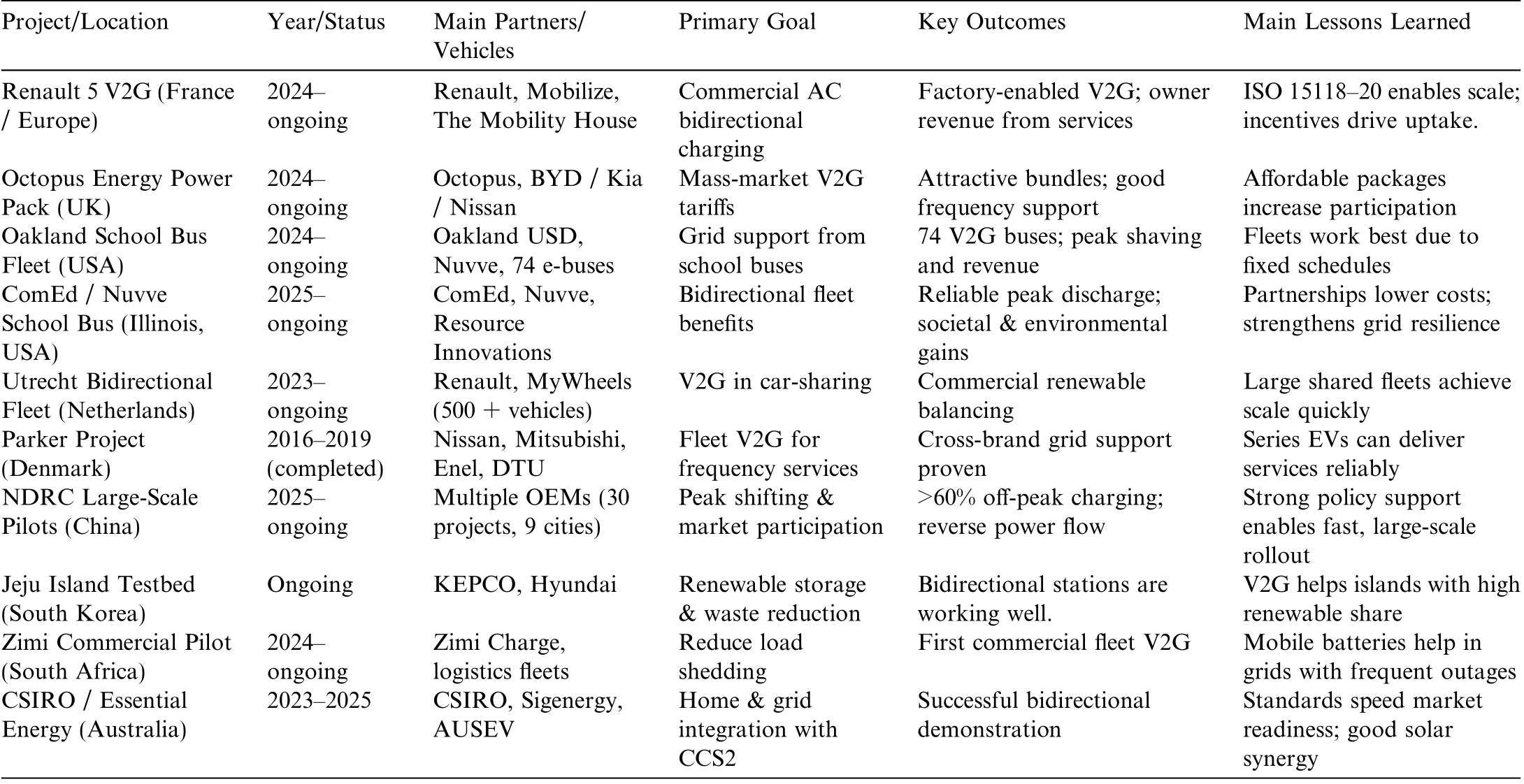
Real-world V2G projects around the world have turned theoretical concepts into practical experiences. These pilots and early commercial trials have tested technical performance, user behavior, economic returns, and the readiness of regulations and markets. They serve as important learning grounds for developing business models,communication standards, energy policies, and reliable technology. Successful V2G projects closely match the local energy situation, level of stakeholder cooperation,grid readiness, and policy environment. Early efforts in Japan focused on disaster resilience, while the United States emphasized frequency regulation. In Europe, projects like Denmark’s Parker trial concentrated on smart grid integration and standard harmonization. The United Kingdom has used V2G to improve energy resilience in public buildi ngs, and countries like India are exploring V2G in rural microgrids to handle intermittent renewable supply.A common theme across nearly all projects is careful battery management[135]. To protect battery life while still earning revenue from grid services, most pilots limit the SoC window and avoid deep discharges. Communication standards, especially CHAdeMO (early phase), ISO 15118-20 (current mainstream), OCPP for chargers, and IEC 61850 for grid connection, have proven essential for interoperability and real-time control.Table 7 below summarizes key global V2G projects, their main goals, outcomes, and practical lessons learned [9,136].
9.1 Key technical lessons from recent global pilots
From 2024 to early 2026, V2G has moved from small experiments to more mature regional applications. Europe leads in cost-effective shared mobility (e.g., Utrecht using AC charging with solar-rich fleets). The United States has shown strong results with school bus fleets using high-power DC charging for peak support and resilience.China demonstrates how national policy can drive very large-scale rollout across multiple cities, focusing on peak shaving and heavy vehicles. These projects confirm that centralized fleet management through aggregators offers the most reliable way to provide grid services, while residential V2G still faces limited compatible hardware and regulatory hurdles (such as double taxation on energy flows in some countries). Battery degradation concerns have been mostly addressed by using smart SoC limits and gentle cycling strategies; real data s hows only small extra wear when managed properly.The widespread adoption of ISO 15118-20 and OCPP has greatly improved interoperability and real-time control[78]. However, moving to mass-market use in the coming years will require global agreement on standards, clearer utility tariffs, andstronger financial incentives that fairly reward EV owners for supporting the grid. These lessons provide a solid foundation for scaling V2G in a way that benefits both vehicle owners and the wider energy system [137].
Table 6 Techno-economic analysis framework for V2G systems.
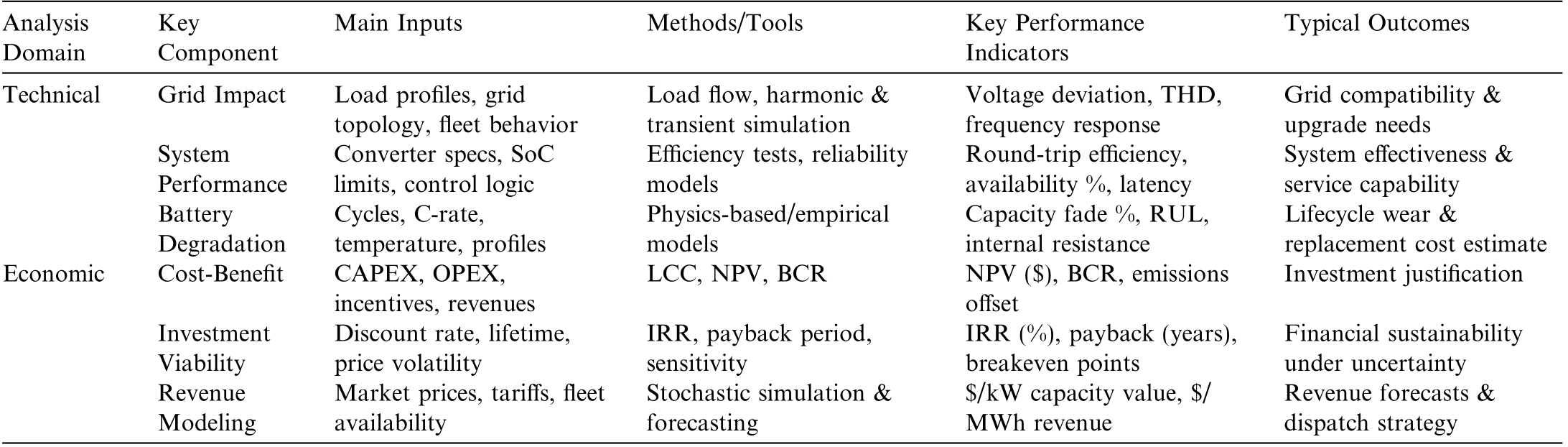
Table 7 Summary of global V2G pilot projects and key parameters.
10 Future research directions
As V2G moves from pilot projects to widespread commercial use starting in 2026, four emerging technologies will play the biggest role in solving remaining challenges:scalability, reliability, security, battery life, and overall cost-effectiveness.
The top priority goes to AI/ML predictive control and advanced DTs. Both are already quite mature and deliver the strongest benefits. AI methods such as deep reinforcement learning, LSTM forecasting, and federated learning excel at real-time energy scheduling,accurate demand prediction, early detection of problems, and smart charging/discharging that keeps battery wear low [138]. Advanced DTs create precise virtual copies of vehicles and batteries,allowing safe testing of new strategies, accurate tracking of battery health (SoH), predictive maintenance, and simulation of cyber threats, all without touching real equipment.The main hurdles are high computing needs and data privacy, but progress in edge computing and privacypreserving methods is making these much easier to handle.Together, these two technologies are expected to bring the largest gains in grid effici ency, system stability, and user participation by 2030 [139].
IoT and 5G connectivity come next in priority. 5G is maturing quickly and is already being rolled out widely.It offers the very low latency (under 10 ms) and ability to connect thousands of devices needed for real-time control, large fleet coordination, and smooth communication between a ggregators and utilities. The biggest remaining issues are incomplete coverage in rural areas, high buildout costs, and spectrum management. Once these are solved, 5G/IoT will form the essential backbone for reliable large-scale V2G [140].
Blockchain ranks third. It provides excellent tools for secure, transparent peer-to-peer energy trading, tamperproof records, and trust in multi-party markets. However,it currently suffers from limited transaction speed, high energy use (especially in older proof-of-work versions),and slow regulatory approval in many countries. Newer solutions like layer-2 scaling and permissioned blockchains are improving the situation and should gradually increase its practical role.
In short, focusing research and investment first on AI/ML and DTs, while pushing forward 5G rollout and improving blockchain, offers the clearest path to a strong,affordable, and widely accepted V2G system over the next five years. Key future work should include combining these technologies, developing global standar ds, and carrying out more larg e-scale real-w or ld tests to turn promising concepts into everyday reality.
11 Conc lusion
As the global energy landscape shifts toward decarbonization, decentra lization, anddigitization, V2G technology has becomecritical to achieving a sustainableand intelligent energyfut ure. Thisco mprehensive research studied several parts of the V2G ec osystem, including system architecture, communication protocols, bidirectional power converters,energy management systems (EMS),and battery technol o gies. It also examines the ess ential functions of cyberse curity, intell igent control systems,and the development of commercia l and legal frameworks that facilitate V2G integration. Critical findings highlight the significance of sophisticated control and optimization methodologies. Theincorporation of digital twin technology offers transformat ive potential by facilitating real-time simulation, predict ive maintenanc e, and battery health diagnostics, which are crucial for optimizing V2G system performance and ensuring long-term economic sustainability. The evaluation highlights concrete pilot projects that illustrate the growing interest in and feasibility of V2G across several regions. These case studies provide substantial insights into technical challenges, grid interaction issues, market participation, user behavior, and economic incentives. Progress necessitates the development of multi-objective optimization frameworks that consider technical efficiency, economic benefits, environmental impacts, and user preferences. Improving V2G cybersecurity frameworks inside IoT and blockchain ecosystems.Improving digital twin models for thorough energy ecosystem simulations. This study serves as a resource for researchers, industry experts, and policymakers aiming to optimize V2G systems to accelerate the transition to netzero e missions and a more sustainable, digitally advanced energy future.
CRediT authorship contribution statement
Nagarajan Munusamy: Writing – review & editing,Writing – original draft, Methodology, Data curation,Conceptualization.Indragandhi Vairavasundaram:Writing– review & editing, Supervision, Project administration,Investigation, Funding acquisition, Formal analysis.
Declaration of competing interest
The authors declare no con flict of interest.
Acknowledgement
This res earch was supported by the Royal Academy of Engineering, UK, under the scheme of Distinguished Interna tion al Associates (DIA-242 4-5-134)
Referenc es
[1]P.R. Satpathy, V.K. Ramachandaramurthy, T.R. Radha Krishn an, S. Padmanaban, Technologica l innovations and sustain able strategies for advancingelectric vehicle performance andmarket integration, Energ. Strat.Rev. 60 (2025), https://doi.org/10.1016/j.esr.2025.101790 101790.
[2]Y. Wa ng, F. Witlox, Global trendsin electric vehicle adoption and t h e impact of environmental awareness, user attributes, and barriers, Energy Rep. 13 (2025)1125–1137, https://doi.org/10.1016/j.egyr.2024.12.054.
[3]Interna tional Energy Agency, ‘‘Global EV Outlook 2025,” Paris,2025.
[4]A.M. Shaheen, A.R. Ellien, A.A. El-Ela, A.M. El-Rifaie, Electric vehicl e s with renewables integrationin electrical power systems:a review of technologies,uncertaintiesand optimization allocations,Unconv. Resour. 9 (2026), https://doi.org/10.1016/j.uncres.2025.100252 100252.
[5]H.Yu, S. Niu, Y. Shang, Z. Shao,Y.Jia, L. Jian,Electric vehicles integra tion and vehicle-to-grid operation in active distribution grids: a comprehensive review onpower architectures, grid connection standards and typical applications, Renew. Sustain.Energy Rev. 168 (2022), https://doi.org/10.1016/j.rser.2022.112812.
[6]N. Munusamy, I. Vairavasundaram, AI and Machine Learning in V2G technology: a review of bi-directional converters, charging systems, and control strategies for smart grid integration,e-Prime– Adv. Electr. Eng. Electr. Energy 10 (2024), https://doi.org/10.1016/j.prime.2024.100856 100856.
[7]P. Biswas et al., Vehicle to grid: technology, charging station,power transmission, communication standards, techno-econom ic analysis,challenges,and recommendations,World Electr.Vehicle J. 16 (3) (2025), https://doi.org/10.3390/wevj16030142.
[8]A.Q. Al-Shetwi, I.E. Atawi, M.A. El-Hameed, A. Abuelrub,Digital twin technology for renewable energy,smart grids,energy storage and vehicle-to-grid integration: advancements,applications, key players, challenges and future perspectives in modernising sustainable grids, IET Smart Grid 8 (1) (2025),https://doi.org/10.1049/stg2.70026.
[9]S. Alamgir et al., A comprehensive review of vehicle–to–grid(V2G) technology as an ancillary services provider, Results Eng.27 (2025), https://doi.org/10.1016/j.rineng.2025.106813 106813.
[10]M.S. Eltohamy et al., A comprehensive review of vehicle-to-grid V2G technology: technical, economic, regulatory, and social perspectives, Energy Convers. Manage.: X 27 (2025), https://doi.org/10.1016/j.ecmx.2025.101138 101138.
[11]P. Kumar et al., A comprehensive review of vehicle-to-grid integration in electric vehicles: powering the future, Energy Convers. Manage.: X 25 (2025), https://doi.org/10.1016/j.ecmx.2024.100864 100864.
[12]S. Dong, S. Guo, Advancements, challenges, and future trends of vehicle-to-grid technologies: a review, Energ. Technol. (Jun.2025), https://doi.org/10.1002/ente.202500481.
[13]S. Giannelos, S. Borozan, G. Strbac, T. Zhang, W. Kong, Vehicleto-Grid: quantification of its contribution to security of supply through the F-Factor methodology, Sustain. Energy Res. 11 (1)(2024) 32, https://doi.org/10.1186/s40807-024-00125-z.
[14]S.P. Rao, T.S. Olusegun, P. Ranganathan, U. Kose, N. Goveas,Vehicle-to-grid technology: opportunities, challenges, and future prospects for sustainable transportation, J. Energy Storage 110(2025), https://doi.org/10.1016/j.est.2024.114927 114927.
[15]D.S. Kumar, S.B. Krishnan, A. Sharma, T.K. Tak, A.K. Rathore,Vehicle-to-Grid (V2G) technology: global scenario, future scope,challenges, and implementat ion, in: 2024 IEEE International Conference on Power Electronics, Drives and Energy Systems(PEDES), 2024, pp. 1–6, https://doi.org/10.1109/PEDES61459.2024.10961434.
[16]M.A. Hannan et al., Vehicle to Grid Connected Technologies and Charging Strategies: Operation, Control, Issues and Recommendations, Elsevier Ltd., 2022.
[17]M.S.H. Lipu et al., Intelligent algorithms and control strategies for battery management system in electric vehicles: progress,challenges and future outlook, J. Clean.Prod.292(2021)126044.
[18]M. Mohamed, G.T. Arasan, G. Sivakumar, Study on electric vehicles in india opportunities and challenges, Int. J. Scient. Res.Environ. Sci. Toxicol 3 (1) (2018) 1–5, https://doi.org/10.15226/2572-3162/3/1/00115.
[19]S. Bhoir, P. Caliandro, C. Brivio, Impact of V2G service provision on battery life,J.Energy Stor.44(2021),https://doi.org/10.1016/j.est.2021.103178 103178.
[20]M. Elnady, S. Ozana, Artificial Intelligence techniques in Vehicleto-Grid (V2G) systems: a review, comparative study, and model evaluation,J.Energy Storage 135(2025),https://doi.org/10.1016/j.est.2025.118155 118155.
[21]M.A. Parazdeh, N.Z. Kashani, D. Fateh, M. Eldoromi, A.A.Moti Birjandi, 13 - EVs vehicle-to-grid implementation through virtual power plants, in: A.Z. Plants, M. Moeini-Aghtaie (Eds.),Scheduling and Operation of Virtual Power, Elsevier, 2022, pp.299–324, https://doi.org/10.1016/B978-0-32-385267-8.00018-4.
[22]Z. Zhang, J. Teh, Enhancing grid flexibility and renewable integration: a review of V2G and dynamic line rating synergies,Renew.Sustain.Energy Rev.226(2026),https://doi.org/10.1016/j.rser.2025.116341 116341.
[23]A. Tavakoli, S. Saha, M.T. Arif, M.E.Haque,N.Mendis,A.M.T.Oo, Impacts of grid integration of solar PV and electric vehicle on grid stability, power quality and energy economics:a review,IET Energy Syst. Integr. 2 (3) (2020) 243–260.
[24]Y. Yang, W. Wang, J. Qin, M. Wang, Q. Ma, Y. Zhong, Review of vehicle to grid integration to support power grid security,Energy Rep. 12 (2024) 2786–2800, https://doi.org/10.1016/j.egyr.2024.08.069.
[25]O. Ouramdane, E. Elbouchikhi, Y. Amirat, F. Le Gall, E. Sedgh Gooya, Home energy management considering renewable resources, energy storage, and an electric vehicle as a backup,Energies (Basel) 15 (8) (2022) 2830.
[26]V. Patil, M.R. Sindhu, An intelligent control strategy for vehicleto-grid and grid-to-vehicle energy transfer,IOP Conf.Ser.:Mater.Sci. Eng. 561 (1) (2019), https://doi.org/10.1088/1757-899X/561/1/012123 012123.
[27]E. Garcı´a-Martı´nez, J. Mun˜oz-Cruzado-Alba, J.F. Sanz-Osorio,J.M. Perié, Design and experimental validation of power electric vehicle emulator for testing electric vehicle supply equipment(EVSE) with vehicle-to-grid (V2G) capability, Appl. Sci. 11 (23)(2021), https://doi.org/10.3390/app112311496.
[28]R. Raff, V. Golub, D. Pelin, D. Topic´, Overview of different types of chargers and converters for the electric vehicle charging stations. 2019.
[29]S. Habib, M.M. Khan, F. Abbas, H.Tang,Assessment of electric vehicles concerning impacts, charging infrastructure with unidirectional and bidirectional chargers, and power flow comparisons, Int. J. Energy Res. 42 (11) (2018) 3416–3441.
[30]S. Vijayakumar, N. Sudhakar, A review on unidirectional converters for on-board chargers in electric vehicle, Front.Media S.A. (2022), https://doi.org/10.3389/fenrg.2022.1011681.
[31]M.R. Khalid, I.A. Khan, S. Hameed, M.S.J. Asghar, J.-S. Ro, A comprehensive review on structural topologies, power levels,energy storage systems, and standards for electric vehicle charging stations and their impacts on grid, IEEE Access 9(2021)128069–128094.
[32]S.S.G. Acharige, M.E. Haque, M.T. Arif, N.Hosseinzadeh,K.N.Hasan, A.M.T. Oo, Review of electric vehicle charging technologies, standards, architectures, and converter configurations, IEEE Access (2023).
[33]R. Murali, U. Chaithanya Kumar, N.S. Goud, T. Anil Kumar,Fuzzy control Vehicle-To-G rid Technology in a Micro-grid using DC Fast Charging Architecture, 2021.
[34]M. Amjad, M. Farooq-i-Azam, Q. Ni, M. Dong, E. Ansari,Wireless charging systems for electric vehicles, Renew. Sustain.Energy Rev. 167 (Aug. 2022), https://doi.org/10.1016/j.rser.2022.112730 112730.
[35]A. Mahesh, B. Chokkalingam, L. Mihet-Popa,Inductive wireless power transfer charging for electric vehicles–a review, IEEE Access 9 (2021) 137667–137713.
[36]S. Kim, F.-S. Kang, Multifunctional onboard battery charger for plug-in electric vehicles, IEEE Trans. Ind. Electron. 62 (6) (2014)3460–3472.
[37]C. Shi, Y. Tang, A. Khaligh, A three-phase integrated onboard charger for plug-in electric vehicles, IEEE Trans.Power Electron.33 (6) (2017) 4716–4725.
[38]R.K. Lenka, A.K. Panda, A.R. Dash, N.N. Venkataramana, N.Tiwary, Reactive power compensation using vehicle-to-grid enabled bidirectional off-board EV battery charger, in: 2021 1st International Conference on Power Electronics and Energy(ICPEE), 2021, pp. 1–6.
[39]V. Monteiro, P. Lima, T.J.C. Sousa, J.S. Martins, J.L. Afonso,An off-board multi-functional electric vehicle charging station for smart homes: analysis and experimental validation, Energies(Basel) 13 (8) (2020) 1864.
[40]I. Aboudrar, Y. Oubail, M. Boulakhbar, A.-W. Ibrahim, I.Ouachtouk, K. Saidi Alaoui, Robust ADRC-controlled bidirectional converters in fast DC BEV charging systems supporting G2V, V2G, and V2H operations, e-Prime – Adv.Electr. Eng. Electr. Energy 11 (2025), https://doi.org/10.1016/j.prime.2025.100936 100936.
[41]H.M.M. Adil, H.A. Khan, WOA-tuned supertwisted synergetic control of multipurpose on-board charger for G2V/V2G/V2V operational modes of electric vehicles, Control Eng. Pract. 154(2025), https://doi.org/10.1016/j.conengprac.2024.106136 106136.
[42]X. Wang, Design, analysis and control of a SiC bidirectional G2V,V2L and V2G universal power converter in next generation electric vehicle, 2019.
[43]J. Han, X. Zhou, S. Lu, P. Zhao, A three-phase bidirectional gridconnected AC/DC converter for V2G applications, J. Contr. Sci.Eng. 2020 (2020) 1–12, https://doi.org/10.1155/2020/8844073.
[44]H.S.H. Chung, W.C. Chow, S.Y.R. Hui, S.T.S. Lee, Development of a switched-capacitor DC-DC converter with bidirectional power flow, IEEE Trans. Circ. Syst. I: Fund. Theory Appl. 47(9) (2000) 1383–1389, https://doi.org/10.1109/81.883334.
[45]S. Panchanathan, et al., A comprehensive review of the bidirectional converter topologies for the vehicle-to-grid system,2023, MDPI. doi: 10.3390/en16052503.
[46]J. Wang, B. Wang, L. Zhang, J. Wang, N.I. Shchurov, B.V.Malozyomov, Review of bidirectional DC–DC converter topologies for hybrid energy storage system of new energy vehicles, Green Energy Intell Transp. 1 (2) (2022), https://doi.org/10.1016/j.geits.2022.100010 100010.
[47]A. Chub, D. Vinnikov, R. Kosenko, E. Liivik, I. Galkin,Bidirectional DC–DC converter for modular residential battery energy storage systems, IEEE Trans. Ind. Electron. 67 (3) (2019)1944–1955.
[48]D. Das, N. Weise, K. Basu, R. Baranwal, N. Mohan, A bidirectional soft-switched DAB-based single-stage three-phase AC–DC converter for V2G application, IEEE Trans. Transp.Electrif. 5 (1) (2018) 186–199.
[49]J.-H. Park, K.-B. Lee, A two-stage bidirectional DC/DC converter with SiC-MOSFET for vehicle-to-grid (V2G)application, in: 2017 IEEE Conference on Energy Conversion(CENCON), 2017, pp. 288–293.
[50]V. R. Siva Reddy, Bidirectional DC-DC converter circuits and smart control algorithms: a review. 2022, doi: 10.21203/rs.3.rs-1217632/v1.
[51]A. Fernandez-Hernandez, F. Gonzalez-Hernando, A. Garcia-Bediaga, I. Villar, G. Abad, Design space analysis of the dualactive-bridge converter for more electric aircraft,Energies(Basel)15 (24) (2022) Dec, https://doi.org/10.3390/en15249503.
[52]K. Filsoof, P.W. Lehn, A bidirection al multiple-input multipleoutput modular multilevel DC–DC converter and its control design, IEEE Trans. Power Electron. 31 (4) (2015) 2767–2779.
[53]M. Su, H. Wang, Y. Sun, J. Yang, X. Wenjing, Y. Liu, AC/DC matrix converter with an optimized modulation strategy for V2G applications,Power Electr.,IEEE Trans.on 28(2013)5736–5745,https://doi.org/10.1109/TPEL.2013.2250309.
[54]A. Jain, K.K. Gupta, S.K. Jain, P. Bhatnagar, H. Vahedi, A V2G enabled bidirectional single/three-phase EV charging interface using modular multilevel buck PFC rectifier, Electronics(Switzerland) 11 (12) (2022), https://doi.org/10.3390/electronics11121891.
[55]L. He, H. Jing, Y. Zhang, P. Li, Z. Gu, Review of thermal management system for battery electric vehicle,J.Energy Storage 59 (2023), https://doi.org/10.1016/j.est.2022.106443 106443.
[56]S. Evro, A. Ajumobi, D. Mayon, O.S. Tomomewo, Navigating battery choices: a comparative study of lithium iron phosphate and nickel manganese cobalt battery technologies, Future Batt. 4(2024), https://doi.org/10.1016/j.fub.2024.100007 100007.
[57]A. Gulraiz et al., Energy advancements and integration strategies in hydrogen and battery storage for renewabl e energy systems,iScience 28 (3) (2025), https://doi.org/10.1016/j.isci.2025.111945 111945.
[58]S. Sagaria, M. van der Kam, T. Bostro¨m, Vehicle-to-grid impact on battery degradation and estimation of V2G economic compensation, Appl. Energy 377 (2025), https://doi.org/10.1016/j.apenergy.2024.124546 124546.
[59]C. Harnischmacher, L. Markefke, A.B. Brendel, L. Kolbe, Twosided sustainability: simulating battery degradation in vehicle to grid applications within autonomous electric port transportation,J. Clean. Prod. 384 (2023), https://doi.org/10.1016/j.jclepro.2022.135598 135598.
[60]H.M. Khalid, F. Flitti, S.M. Muyeen, M. Elmoursi, T. Sweidan,X. Yu, Parameter estimation of vehicle batteries in V2G systems:an exogenous function-based approach, IEEE Trans. Ind.Electron. 69 (9) (2022) 9535–9546, https://doi.org/10.1109/TIE.2021.3112980.
[61]N. Fallah, C. Fitzpatrick, Is shifting from Li-ion NMC to LFP in EVs beneficial for second-life storages in electricity markets?, J Energy Storage 68 (2023), https://doiorg/10.1016/j.est.2023.107740 107740.
[62]S. Bhowmick, ‘‘A Detailed Comparison of Popular Li-Ion Battery Chemistries Used in Electric Vehicles,” 2022.
[63]M. Kemeny, P. Ondrejka, M. Mikolasek, ‘‘Comprehensive degradation analysis of NCA Li-Ion batteries via methods of electrochemical characterisation for various stress-inducing scenarios, Batteries 9 (1) (2023), https://doi.org/10.3390/batteries9010033.
[64]H. Movahedi, S. Pannala, J. Siegel, S.J. Harris, D. Howey, A.Stefanopoulou, Extra throughput versus days lost in V2G services: influence of dominant degradation mechanism, J.Energy Storage 104 (2024), https://doi.org/10.1016/j.est.2024.114242 114242.
[65]G. Dang et al., Lithium titanate battery system enables hybrid electric heavy-duty vehicles, J. Energy Storage 74 (2023), https://doi.org/10.1016/j.est.2023.109313 109313.
[66]X. Hao, Y. Chen, H. Wang, H. Wang, Y. Meng,Q.Gu,A V2Goriented reinforcement learning framework and empirical study for heterogeneous electric vehicle charging management, Sustain.Cities Soc. 89 (2023) 104345.
[67]M.M. Reda, M.I. Elsayed, M.A. Moustafa Hassan, H.M. Seoudy,Enhancing microgrid renewable energy integratio n at SEKEM farm, Global Energy Interconnect. 7 (6) (2024) 761–772, https://doi.org/10.1016/j.gloei.2024.11.003.
[68]Q. Yang et al., An improved vehicle to the grid method with battery longevity management in a microgrid application,Energy 198 (2020), https://doi.org/10.1016/j.energy.2020.117374 117374.
[69]K. Wen, X. Fu, F. Pei, Research on the thermal management safety of the fast charging power battery management system,Energy Rep. 10 (2023) 3289–3296, https://doi.org/10.1016/j.egyr.2023.09.130.
[70]S. Thangavel, M. Deepak, T. Girijapras anna, S. Raju, C.Dhanamjayulu, S.M. Muyeen, A comprehe nsive review on electric vehicle: battery management system, charging station,traction motors, IEEE Access (2023).
[71]N. Dai, J. Long, Research on fast-charging battery thermal management system based on refrigerant direct cooling,Sci.Rep.13 (1) (2023) 11707, https://doi.org/10.1038/s41598-023-38330-3.
[72]T. Mazhar et al., Electric vehicle charging system in the smart grid using different machine learning methods, Sustainability 15 (3)(2023) 2603.
[73]A.S. Al-Ogaili et al., Review on scheduling, clustering, and forecasting strategies for controlling electric vehicle charging:challenges and recommendations, IEEE Access 7 (2019) 128353–128371.
[74]K.P. Inala, S. Kumar Bose, P. Kumar, Impact of Communication Network on V2G System in a Smart Grid Scenario,in:2019 IEEE 16th India Council International Conference (INDICON), 2019,pp. 1–4, https://doi.org/10.1109/INDICON47234.2019.9028899.
[75]S. Mookherji, V. Odelu, R. Prasath, Secure ultra fast authentication protocol for electric vehicle charging, Comput.Electr. Eng. 119 (2024), https://doi.org/10.1016/j.compeleceng.2024.109512 109512.
[76]K.P. Inala, K. Thirugnanam, Role of communication networks on vehicle-to-grid (V2G) system in a smart grid environment, in:2022 4th International Conference on Energy, Power and Environment (ICEPE), 2022, pp. 1–5, https://doi.org/10.1109/ICEPE55035.2022.9798110.
[77]M. Helmy, M.T. Samy, K.A. Azab, Enhancing cybersecurity strategies for ISO15118 V2G protocols within AUTOSAR-based systems, Int. Conf. Comput. Appl. (ICCA) 2024 (2024) 1–6,https://doi.org/10.1109/ICCA62237.2024.10927801.
[78]C. Alcaraz, J. Cumplido, A. Trivino, OCPP in the spotlight:threats and countermeasures for electric vehicle charging infrastructures 4.0, Int. J. Inf. Secur. 22 (5) (2023) 1395–1421,https://doi.org/10.1007/s10207-023-00698-8.
[79] R. Huang et al., Integration of IEC 61850 into a Vehicle-to-Grid system with networked electric vehicles, IEEE Power Energy Society Innovat. Smart Grid Technol. Conf. (ISGT) 2015 (2015)1–5, https://doi.org/10.1109/ISGT.2015.7131826.
[80]A. Safari, A. Rahimi, Vehicle-to-everything mode of operation technologies: a state-of-art systematic review, Appl. Energy 398(2025), https://doi.org/10.1016/j.apenergy.2025.126382 126382.
[81]V.N. Saraswathi, V.P. Ramachandran, A comprehensive review on charger technologies, types, and charging stations models for electric vehicles,Heliyon 10(20)(2024),https://doi.org/10.1016/j.heliyon.2024.e38945 e38945.
[82]A. Goncearuc et al., The barriers to widespread adoption of vehicle-to-grid : a comprehensive review, Energy Rep. 12 (2024)27–41, https://doi.org/10.1016/j.egyr.2024.05.075.
[83]S. Hamdare et al., Cybersecurity risk analysis of electric vehicles charging stations,Sensors 23(15)(2023),https://doi.org/10.3390/s23156716.
[84]J. Johnson, T. Berg, B. Anderson, B. Wright, Review of electric vehicle charger cybersecurity vulnerabilities, potential impacts,and defenses, Energies (Basel) 15 (2022) 3931, https://doi.org/10.3390/en15113931.
[85]M.A. Razzaque, S.K. Khadem, S. Patra, G. Okwata, Md. Noor-A-Rahim, Cybersecurity in vehicle-to-grid (V2G) systems: a systematic review, Appl. Energy 398 (2025), https://doi.org/10.1016/j.apenergy.2025.126364 126364.
[86]Y. Kim, S. Hakak, A. Ghorbani, Detecting distributed Denial-of-Service (DDoS) attacks that generate false authentications on Electric Vehicle(EV)charging infrastructure,Comput.Secur.144(2024), https://doi.org/10.1016/j.cose.2024.103989 103989.
[87]S. Ahmed, M.H. Anisi, Optimizing V2G dynamics: an AIenhanced secure protocol for energy management in industrial cyber-physical systems, IEEE Trans. Ind. Cyber-Phys. Syst. 2(2024) 312–320, https://doi.org/10.1109/TICPS.2024.3432851.
[88]M. S. H. Lipu, et al., ‘‘Review of electric vehicle converter configurations, control schemes and optimizations: Challenges and suggestions” 2021, MDPI AG. doi: 10.3390/electronics10040477.
[89]A. Abbasi, F. Alves, R.A. Ribeiro, J.L. Sobral, R. Rodrigues,‘‘Optimizing virtual power plants with parallel simulated annealing on high-performance computing, Smart Cities 8 (2)(2025), https://doi.org/10.3390/smartcities8020047.
[90]S.S.A. Naqvi et al., Multi-objective optimization of PI controller for BLDC motor speed control and energy saving in Electric Vehicles: a constrained swarm-based approach, Energy Rep. 12(2024) 402–417, https://doi.org/10.1016/j.egyr.2024.06.019.
[91]N.F. Nanyan, M.A. Ahmad, B. Hekimog˘lu, Optimal PID controller for the DC-DC buck converter using the improved sine cosine algorithm, Results Control.Optim. 14 (2024),https://doi.org/10.1016/j.rico.2023.100352 100352.
[92]D.M. Abraham, Particle swarm optimization based sliding mode controllers for electric vehicle onboard charger, Comput. Electr.Eng. 96 (2021) 107502.
[93]A. Agarwal, K. Deekshitha, S. Singh, D. Fulwani, Sliding mode control of a bidirectional DC/DC converter with constant power load, in: 2015 IEEE first international conference on DC microgrids (ICDCM), IEEE, 2015, pp. 287–292.
[94]I. Ahmed, M. Adnan, M. Ali, G.Kaddoum,Supertwisting sliding mode controller for grid-to-vehicle and vehicle-to-grid battery electric vehicle charger, J. Energy Storage 70 (2023) 107914.
[95]S. Zhou, L. Li, S. Ben, B. Long, and Y. Chen, NDM-based Hinfinity robust control of parallel-connected grid-connected converters for V2G, in: IOP Conference Series: Earth and Environmental Science, IOP Publishing Ltd, 2021. doi: 10.1088/1755-1315/675/1/012095.
[96]A. Pirooz, R. Noroozian, Model predictive control of classic bidirectional DC-DC converter for battery applications, in: 2016 7th Power Electronics and Drive Systems Technologies Conference (PEDSTC), IEEE, 2016, pp. 517–522.
[97]M. Parvez, S. Mekhilef, N.M.L. Tan, H. Akagi, ‘‘Model predictive control of a bidirectional AC-DC converter for V2G and G2V applicatio ns in electric vehicle battery charger,” in,IEEE Transportation Electrification Conference and Expo(ITEC) 2014 (2014) 1–6, https://doi.org/10.1109/ITEC.2014.6861795.
[98]W. Kim, P.-Y. Lee, J. Kim, K.-S. Kim, A robust state of charge estimation approach based on nonlinear battery cell model for lithium-ion batteries in electric vehicles, IEEE Trans. Veh.Technol. 70 (6) (2021) 5638–5647.
[99]R.S.R. Sankar, K. Deepika, K.M. Alsharef, B. Alamri, A smart ANN-based converter for efficient bidirectional power flow in hybrid electric vehicles,Electronics(Basel)11(2022)3564,https://doi.org/10.3390/electronics11213564.
[100]R.K. Phanden, R. Gupta, S.R. Gorrepati, P. Patel, L. Sharma,ANN based robust bidirectional charger for electric vehicles,Mater. Today Proc. 38 (2021) 80–84.
[101]B. Sah, P. Kumar, S.K. Bose, A Fuzzy Logic and Artificial Neural Network-based Intelligent Controller for a Vehicle-to-Grid System, IEEE Syst. J. 15 (3) (Jul. 2020) 3301–3311, https://doi.org/10.1109/jsyst.2020.3006338.
[102]B. Sah, P. Kumar, S.K. Bose, A fuzzy logic and artificial neural network-based intelligent controller for a vehicle-to-grid system,IEEE Syst. J. 15 (3) (2020) 3301–3311.
[103]Y.-H. Tu, R.-F. Wang, W.-H. Su, Active disturbance rejection control—new trends in agricultural cybernetics in the future: a comprehensive review, Machines 13 (2) (2025), https://doi.org/10.3390/machines13020111.
[104]A. Hezzi, E. Elbouchikhi, A. Bouzid, S. Ben Elghali, M.Zerrougui, M. Benbouzid, Active disturbance rejection control for distributed energy resources in microgrids, Machines 12 (1)(2024), https://doi.org/10.3390/machines12010067.
[105]L. Rubino, G. Rubino, R. Esempio, Linear programming-based power management for a multi-feeder ultra-fast DC charging station, Energies (Basel) 16 (3) (2023), https://doi.org/10.3390/en16031213.
[106]T.R. Radha Krishnan, P.R. Satpathy, V.K.Ramachandaramurthy, Z. Dollah, S. Pulenthirarasa, A.Ramasamy, Optimizing vehicle-to-grid systems: smart integration of shared autonomous and conventional electric vehicles, eTransportation vol. 24 (2025), https://doi.org/10.1016/j.etran.2025.100401 100401.
[107]S. Abdullah-Al-Nahid, T.A. Khan, M.A. Taseen, T. Jamal, T.Aziz, A novel consumer-friendly electric vehicle charging scheme with vehicle to grid provision supported by genetic algorithm based optimization, J Energy Storage 50 (2022) 104655.
[108]A. Nouri, A. Lachheb, L. El Amraoui, Optimizing efficiency of Vehicle-to-Grid system with intelligent management and ANNPSO algorithm for battery electric vehicles,Electr.Pow.Syst.Res.226 (2024), https://doi.org/10.1016/j.epsr.2023.109936 109936.
[109]S. Mahfoud, A. Derouich, A. Iqbal, N. El Ouanjli, ANT-colony optimization-direct torque control for a doubly fed induction motor : an experimental validation, Energy Rep. 8 (2022) 81–98,https://doi.org/10.1016/j.egyr.2021.11.239.
[110]M. Fodil et al., Optimization of PI controller parameters by GWO algorithm for five-phase asynchronous motor,Energies(Basel)16(10) (2023), https://doi.org/10.3390/en16104251.
[111]M. Braik, A. Hammouri, J. Atwan, M.A. Al-Betar, M.A.Awadallah, White Shark Optimizer: a novel bio-inspired metaheuristic algorithm for global optimization problems, Knowl Based Syst 243 (2022), https://doi.org/10.1016/j.knosys.2022.108457 108457.
[112]Z.M. Mosammam, P. Ahmadi, E. Houshfar, Multi-objective optimization-driven machine learning for charging and V2G pattern for plug-in hybrid vehicles: Balancing battery aging and power management,J.Power Sources 608(2024),https://doi.org/10.1016/j.jpowsour.2024.234639 234639.
[113]R. Roy, T. Das, K.K. Mandal, Optimal reactive power dispatch using a novel optimization algorithm,J.Electr.Syst.Inf.Technol.8 (1) (2021) 18, https://doi.org/10.1186/s43067-021-00041-y.
[114]J. Dong, A. Yassine, A. Armitage, M.S. Hossain, Multi-agent reinforcement learning for intelligent V2G integration in future transportation systems, IEEE Trans. Intell. Transp. Syst. (2023).
[115]I. Saba, A.H. Alobaidi, S. Alghamdi, M. Tariq, Digital twin and TD3-enabled optimization of xEV energy management in vehicleto-Grid networks, IEEE Access 13 (2025) 92495–92506, https://doi.org/10.1109/ACCESS.2025.3572345.
[116]S. Djebali, G. Guerard, I. Taleb, Survey and insights on digital twins design and smart grid’s applications, Futur. Gener.Comput. Syst. 153 (2024) 234–248, https://doi.org/10.1016/j.future.2023.11.033.
[117]J.-U. Yu, K.-S. Cho, S.-W. Park, S.-Y. Son, Digital twin system framework and implementation for grid-integrated electric vehicles, Energies (Basel) 17 (24) (2024), https://doi.org/10.3390/en17246249.
[118]H. Zahid et al., Transforming nano grids to smart grid 3.0: AI,digital twins, blockchain, and the metaverse revolutionizing the energy ecosystem, Results Eng. 27 (2025), https://doi.org/10.1016/j.rineng.2025.105850 105850.
[119]S.N. Makhadmeh, M.A. Al-Betar, K. Assaleh, S. Kassaymeh, A hybrid white shark equilibrium optimizer for power scheduling problem based IoT, IEEE Access 10 (2022) 132212–132231,https://doi.org/10.1109/ACCESS.2022.3229434.
[120]F. Naseri et al., Digital twin of electric vehicle battery systems:comprehensive review of the use cases, requirements, and platforms, Renew. Sustain. Energy Rev. 179 (2023), https://doi.org/10.1016/j.rser.2023.113280 113280.
[121]H. Omrany, K.M. Al-Obaidi, A. Husain, A. Ghaffarianhoseini,Digital twins in the construction industry: a comprehensive review of current implementations, enabling technologies, and future directions, Sustainability 15 (14) (2023), https://doi.org/10.3390/su151410908.
[122]U.R.S. Yalavarthy, N.B. Kumar, A.R.V. Babu, R.P.Narasipuram, S. Padmanaban, Digital twin technology in electric and self-navigating vehicles: readiness, convergence, and future directions,Energy Convers.Manage.:X 26(2025),https://doi.org/10.1016/j.ecmx.2025.100949 100949.
[123]S. Verma, A. Sharma, B. Tran, D. Alahakoon, A systematic review of digital twins for electric vehicles, J. Traff. Trans. Eng.(English Edition)11(5)(2024)815–834,https://doi.org/10.1016/j.jtte.2024.04.004.
[124]V.C.F. da Costa, L. Oliveira, J. de Souza, Towards a taxonomy for ranking knowledge in internet of everything, in: 2021 IEEE 24th International Conference on Computer Supported Cooperative Work in Design (CSCWD), 2021, pp. 775–780,https://doi.org/10.1109/CSCWD49262.2021.9437857.
[125]M.S. Peelam, V. Chamola, Blockchain-enabled secure V2V and V2G energy trading for carbon-aware internet of energy (IoE)networks, IEEE Netw. (2025) 1–7, https://doi.org/10.1109/MNET.2025.3619992.
[126]P.R. Satpathy, V.K. Ramachandaramurthy, Artificial intelligence and machine learning for distributed energy resource management systems: applications, frameworks, and future directions, Appl.Energy 403 (2026), https://doi.org/10.1016/j.apenergy.2025.127109 127109.
[127]K. Wang et al., Electric vehicle clusters scheduling strategy considering real-time electricity prices based on deep reinforcement learning, Energy Rep. 8 (2022) 695–703.
[128]S. Lee, J. Jung, Improving distribution system flexibility using electric vehicles under the distribute d energy resource management system framework, Renew. Sustain. Energy Rev.226 (2026), https://doi.org/10.1016/j.rser.2025.116292 116292.
[129]D. Melo Gomes, R. Costa Neto, Techno-economic analysis of vehicle-to-grid technology: efficient integration of electric vehicles into the grid in Portugal,J Energy Storage 97(2024), https://doi.org/10.1016/j.est.2024.112769 112769.
[130]S. Yoon, T.W.K. Mak, R. Dargaville, Techno-economic analysis of G2V and V2G charging systems: a case study based on the Monash microgrid,Electr.Pow.Syst.Res.248(2025),https://doi.org/10.1016/j.epsr.2025.111875 111875.
[131]E. Cready, J. Lippert, J. Pihl, I. Weinstock, P. Symons,‘‘Technical and economic feasibility of applying used EV batteries in stationary applications,” Sandia National Lab.(SNL-NM), Albuquerque, NM (United States); Sandia , 2003.
[132]A. De Los Rı´os, J. Goentzel, K.E. Nordstrom, C.W. Siegert,Economic analysis of vehicle-to-grid (V2G)-enabled fleets participating in the regulation service market, in: 2012 IEEE PES Innovative Smart Grid Technologies (ISGT), 2012, pp. 1–8,https://doi.org/10.1109/ISGT.2012.6175658.
[133]S. Babu R G, et al., ‘‘Techno-economic assessment of distribution system considering different types of electric vehicles and distributed generators,” IET Generat., Trans. Distribut., 18(9)(2024) 1815–1829. doi: 10.1049/gtd2.13158.
[134]L. Shi, M. Guo, An economic evaluation of electric vehicles balancing grid load fluctuation, new perspective on electrochemical energy storage alternative, J. Energy Storage 68(2023), https://doi.org/10.1016/j.est.2023.107801 107801.
[135]R. Aalund, W. Diao, L. Kong, M.Pecht,Understanding the noncollision related battery safety risks in electric vehicles a case study in electric vehicle recalls and the LG Chem battery,IEEE Access 9(2021) 89527–89532.
[136]A.U. Rehman, J. Lu, B. Du, F. Bai, M.J. Sanjari, M.A. Hossain,Vehicle-to-grid technology for load balancing and energy management: a comprehensive review of technical, economic and environmental perspectives,Appl.Energy 402(2026),https://doi.org/10.1016/j.apenergy.2025.126974 126974.
[137]G. Chen, Z. Zhang, Control strategies, economic benefits, and challenges of vehicle-to-grid applications: recent trends research,World Electric Vehicle J. 15 (5) (2024), https://doi.org/10.3390/wevj15050190.
[138]A.Q. Al-Shetwi, I.E. Atawi, M.A. El-Hameed, A. Abuelrub,Digital twin technology for renewable energy, smart grids, energy storage and vehicle-to-grid integration: advancements,applications, key players, challenges and future perspectives in modernising sustainable grids, IET Smart Grid 8 (1) (2025),https://doi.org/10.1049/stg2.70026.
[139]J. Ru, M. Gillott, R. Shipman, Vehicle-to-grid (V2G) research: a decade of progress, achievements, and future directions, Energies(Basel) 18 (23) (2025), https://doi.org/10.3390/en18236148.
[140]A.I. Zreikat, Z. AlArnaout, A. Abadleh, E. Elbasi, N. Mostafa,‘‘The integration of the internet of things (IoT) applications into 5G networks: a review and analy sis, Computers 14 (7) (2025),https://doi.org/10.3390/computers14070250.
Received 29 July 2025;revised 21 January 2026; accepted 27 January 2026
Peerreviewunderthe responsibility of Global Energy Interconnection Group Co. Ltd.
* Correspondingauthor
.
E-mail addresses: nagarajan.m@vit.ac.in (N. Munusamy), indragandhi.v@vit.ac.in (I. Vairavasunda ram).
https://doi.org/10.1016/j.gloei.2026.01.002
2096-5117/© 2026 Global Energy Interconnection Group Co. Ltd. Publishing services by Elsevier B.V. on behalf of KeAi Communications Co. Ltd.
This is an open access article under the CC BY-NC-ND license(http://creativecommons.org/licenses/by-nc-nd/4.0/).

Nagarajan Munusamy completed B.E. in Electrical and Electronics Engineering from Anna University in 2010. He received an M.E. in Control and Instrumentation Engineering from Anna university, Chennai in 2012. Embarking on a career in academia, he has since accumulated 10 years of experience as an Assistant Professor. Subsequently, He is pursuing Ph.D.at Vellore Institute of Technology, Vellore,India.He has been engaged in research work for the past 3 years in the areas of Smart grid,Renewable energy systems, V2G technology and Artificial Intelligence Algorithm.