
0 Intr oduction
In the context of global energy decentralization and multi-energy complementarity, virtual power plants(VPP) are pivota l in enhancing the efficient exploitation of distributed energy [1]. The influence of uncertainty factors, including the variability of renewable energy production and frequent market price fluctuations, is progressively complicating the multi-agent collaborative management of VPPs. Consequently, achieving multiagent collaborative operation in an unpredict able environment is of considerable importance [2].
With the large-scale integration of distributed resources(e.g., new energy generation units, energy storage, controllable loads), multiple operational entities have emerged in VPPs. These entities differ in optimization goals and face information asymmetry, making it essential to clarify the coordination mechanisms within a single VPP and across multiple VPPs, as well as establish an efficient operation framework. Game theory effectively facilitates the coordination of interest equilibrium across various actors and has increasingly been utilized in the synchronized operation of VPPs in recent years. Comprising two categories:non-cooperative games and cooperative games. Noncooperative games are exempl ified by the Stackelberg game [3]. Reference [4] formulates a Stackelberg game model to examine the non-cooperative dynamics between the upper-level distribution network operator and the lower-level VPP. Reference [5] constructed a two-layer Stackelberg game model between EH and users, achieving the integration of the game framework and uncertainty modeling. The leader–follower game is also often used to formulate the optimal pricing strategy and guide user behavior. In the leader–follower game framework of Reference[6], the aggregator of producers and consumers acts as the leader, dynamically formulating coupled electricity prices and carbon prices, while the producers and consumer s as followers adjust their own electricity usage behavior to reduce costs and carbon emissions.References[4–6] attain reciprocal responses inside the system, enhancing their own objectives. Non-cooperative games prioritize individual interests; Yet, their disregard for collective interests may result in a socially suboptimal outcome.Cooperative games emphasize collective advantages. In the context of collaborative optimization across numerous VPPs, global resource sharing and coordinated optimization can be attained, typically depicted as coalition games[7] or Nash bargaining models[8]. Reference [9] developed a cooperative game model utilizing Nash bargaining between solar power generation and power-to-hydrogen,to optimize the benefits of the cooperative alliance. The previously mentioned cooperative game model offers substantial benefits in attaining optimal overall advantages for the alliance and equitable profi t distribution.Nonetheless, while safeguarding the alliance’s overall optimal advantage,it remains essential to further examine the relational dynamics among the members inside the alliance.Reference [10] created a mixed game architecture with an upper layer featuring a Stackelberg game between the VPP and the RIES alliance, and a lower layer consisting of a cooperative game among the members of the RIES alliance. Reference [11] establishes a leader–follower game among the upper-level power grid, gas grid, and lowerlevel energy stations. Subsequently, a Nash cooperative game is subsequently formulated between the upper-level distribution and gas networks. The Nash-Stackelberg game (N-S game) framework, as delineated in references[10,11] and this paper, amalgamates the benefits of master–slave and cooperative games, thereby ensuring the stable operation of VPPs while accounting for the competitive and cooperative dynamics among diverse entities,thus offering a more lucid depiction of the interaction processes among these entities. To protect the privacy of the participants in the game, distributed algorithms are often used for solution. Currently, there have been studies that apply distributed algorithms to the game framework: Literature [12] uses the binary method to handle the Stackelberg game model, but it is mainly applicable to singlevariable problem scenes and is difficult to deal with the optimization problems of coupled interactions among multiple entities. The goal cascading method focuses on handling game optimization problems with clear hierarchical structures[13]. However, the three VPP entities studied in this paper have a horizontal parallel structure and need to handle multiple coupled variables such as interaction power and interaction price. Therefore, compared with the binary method and the goal cascading method, the Alternating direction method of multipliers (ADMM) is more suitable for solving the N-S game model among multiple VPPs, and shows good convergence in the multientity distributed optimization scene. Meanwhile, the game models present ed in the aforementioned literature are predominantly constructed under ideal conditions,neglecting the stochastic nature of renewable energy output, market price volatility, and other pertinent factors.This may result in unforeseen differences in the strategy payoffs encountered by participants during the game,impacting the stability and efficacy of decision-making.
In the operation of VPPs, as the number of unknown variables escalates, it is imperative to further assess the influence of these uncertainties during the operational process to guarantee the system’s safe, dependable, and affordable functioning.The primary techniques for modeling uncertainty are stochastic optimization[14] and robust optimization [15,16]. Reference [17] introduces opportunity constraints and uses cooperative game theory to achieve multi time scale collaborative optimization of multiple VPPs. Reference [18] adopts interval modeling combined with robust optimization to deal with the uncertainty of new energy, and combines cooperative game theory to enhance the overall economic benefits of the alliance. References [19,20] employ robust optimization techniques to tackle the dual uncertainties of carbon pricing and renewable energy production, integrating game theory for optimal scheduling. The cited literature optimizes VPP operations using game theory models while addressing uncertainties to achieve optimal strategies under uncertainty. However, it fails to distinguish between different types of uncertain variables, often overlooks the dynamic characteristics of the source-load side in uncertainty modeling,and typically adopts a uniform constraint confidence level or accounts for uncertainty across all scheduling periods—failing to accurately reflect how varying time-interval risk levels influence strategies.
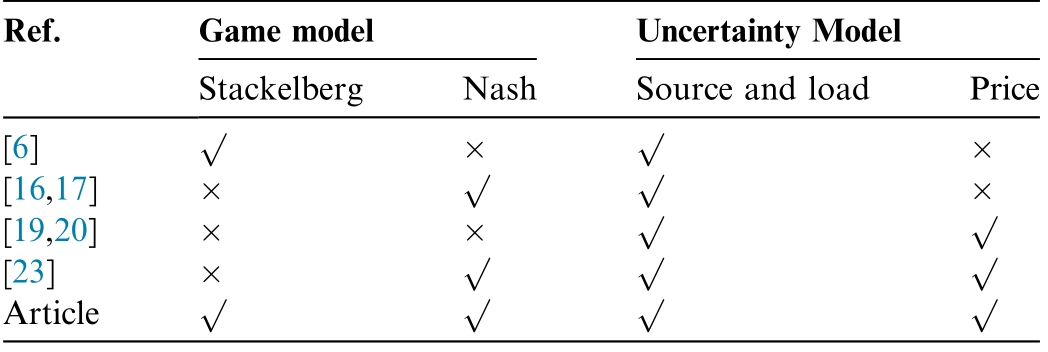
This work formulates a Nash-Stackelberg game operational optimization model to improve the collaborative operational capacity of various VPPs amidst uncertainties.The comparison between the work presented in this paper and the previous references is shown in Table 1. The primary contributions are: A Nash-Stackelberg game framework for cooperative operational optimization of many VPPs under various uncertainty is devised. This entails developing a Stackelberg game framework between virtualpower plant operator (VPPO) and photovoltaic prosumers(PVP), as well as formulating a Nash cooperative game model among various VPP entities. Instead, fuzzy chance constraints are adopted, and trapezoidal fuzzy sets are constructed to handle source-load side uncertainties.Through equivalence clarification, differentiated modeling of fuzzy events with different risk preferences is realized based on generalized believability.
Table 1 Comparison of existing literature models.
The structure of the remaining part of this article is as follows: Section 1 constructs the VPP operation framework and the main model; Section 2 conducts multiple uncertainty modeling; Section 3 establishes the Nash-Stackelberg game model; Section 4 verifies the model’s validity through multiple scene examples; Section 5 summarizes the research conclusions and looks forward to future work.
1 VPP Nash-Stackelberg game operation optimization model
1.1 VPP collaborative operation framework
The VPP system includes the VPPO and the PVP. The operation framework of the Nash-Stackelberg game is shown in Fig. 1.
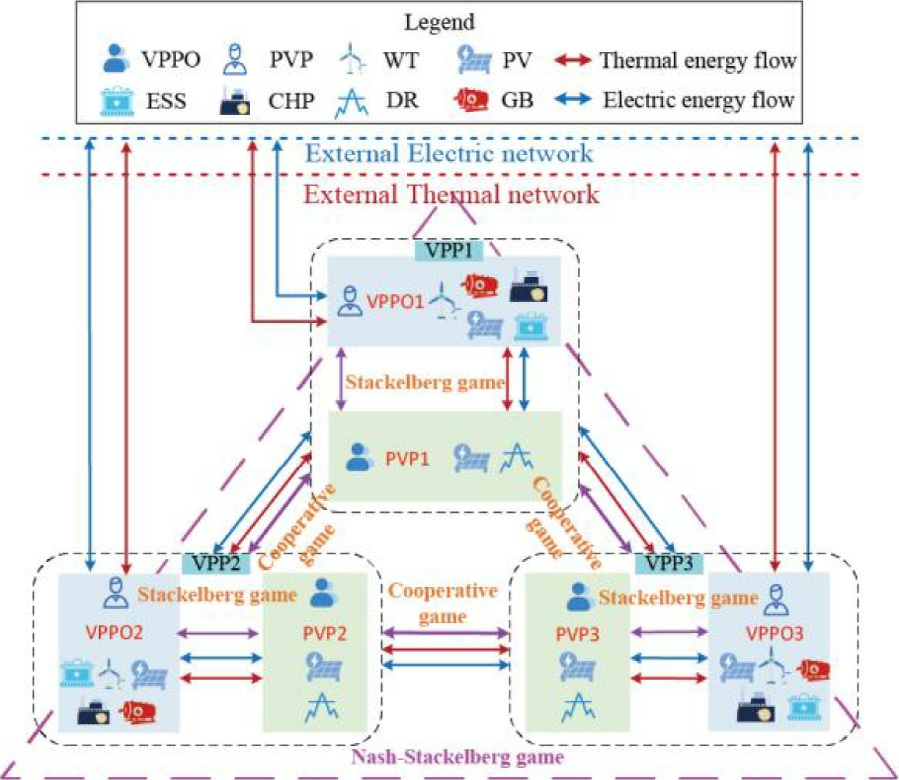
Fig. 1. The Nash-Stacke lberg game framework.
The Nash-Stackelberg game framework comprises two components: the Stackelberg game model between VPPO and PVP, and the cooperative game model among VPPs.In the primary-slave game component, the VPP operator,acting as the leader, establishes dynamic electricity and thermal pricing for the subordinate solar prosumer. Upon responding to the prices, the PVP execute demand responses and relay their energy purchase requirements to the higher-level operator. Upon receiving the energy procurement requests from the prosumer, the VPP operator modifies the output of the units to minimize its operational expenses. Preserve the system’s energy supply.In the cooperative segment of the game, each VPP engages in peer-to-peer (P2P) exchanges of electrical and thermal energy with other VPP entities, while preserving internal autonomy,so constituting a cohesive VPP cooperative alliance. The optimization of cooperative advantages and the allocation of benefits within the VPP alliance are accomplished via Nash bargaining.
1.2 VPP operator model
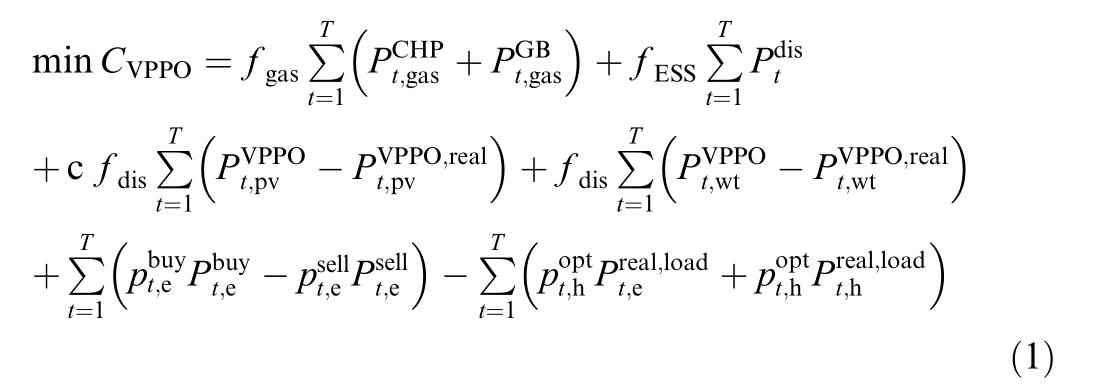
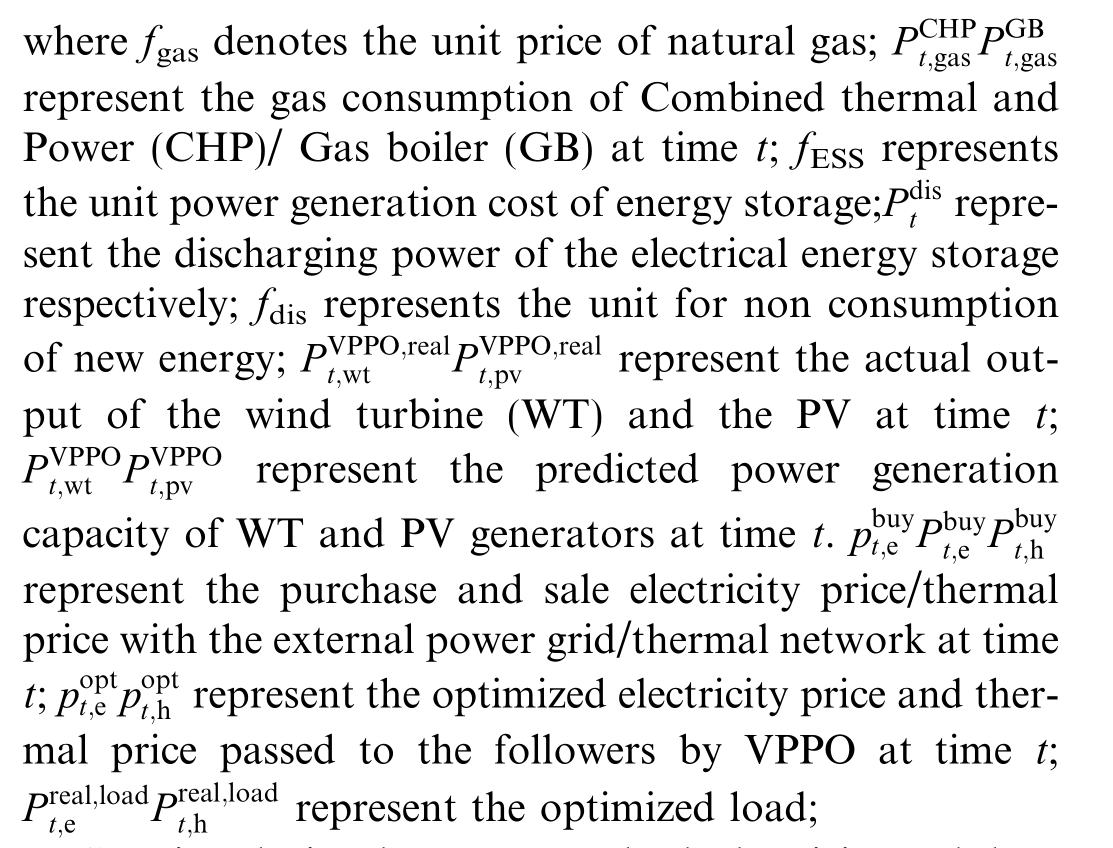
The VPPO contains combined thermal and power unit,new energy power generation units and electric energy storage devices internally. As a leader, it sells electricity and thermal energy to followe rs and prosumer by setting dynamic electricity and thermal prices to achieve optimal economic operation. Its objective function model is:
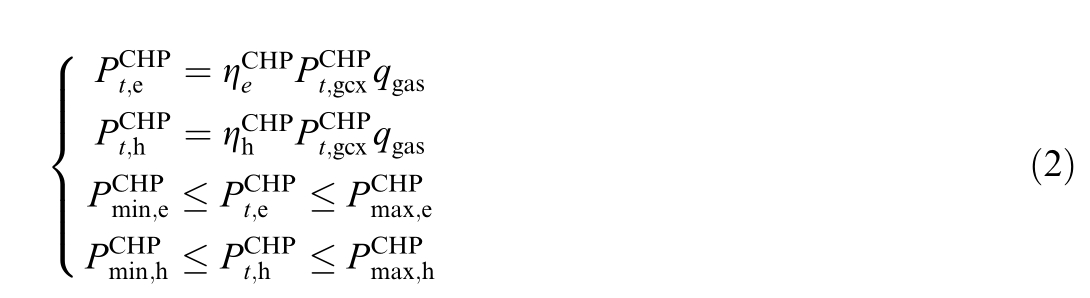
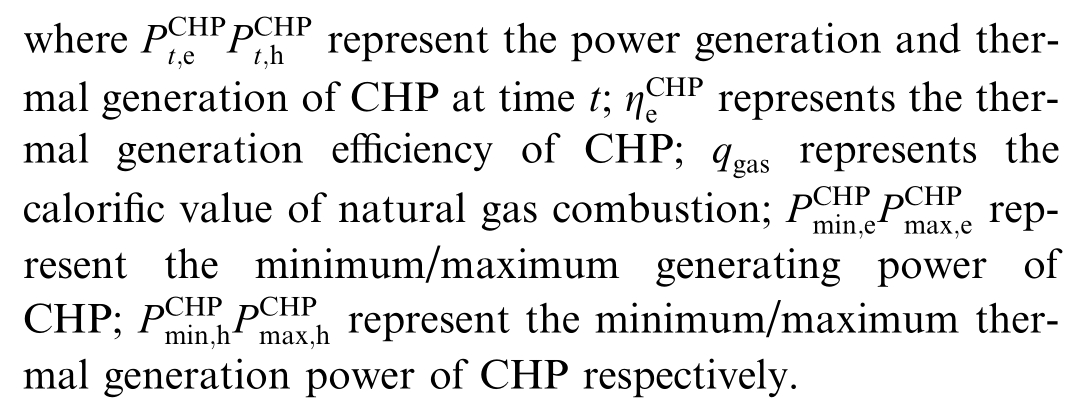
CHP is a device that generates both electricity and thermal simultaneously. The model is:
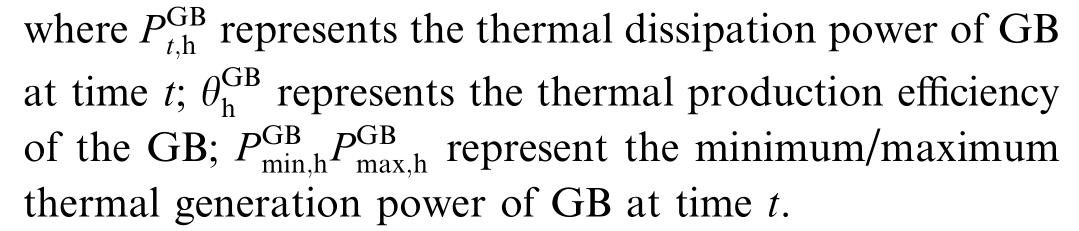
GB as the main thermal energy supply equipment in the VPP, generates thermal energy by burning natural gas.The model is as follows:

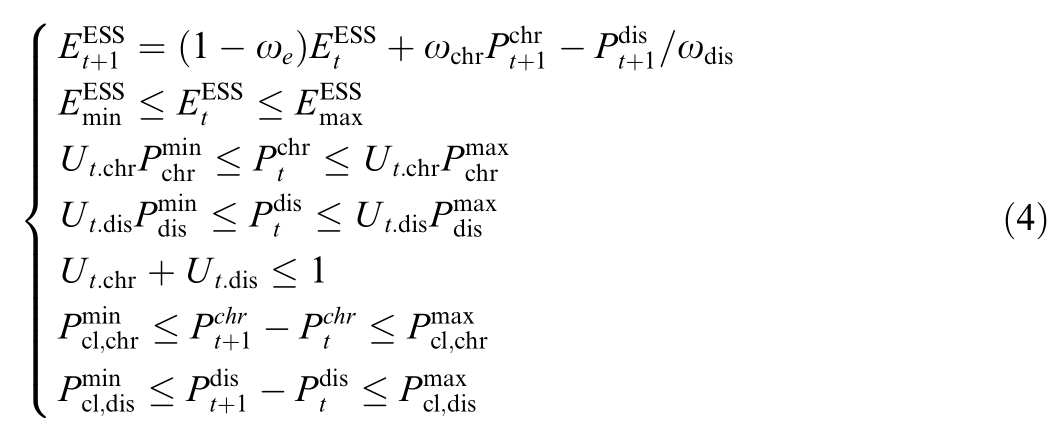
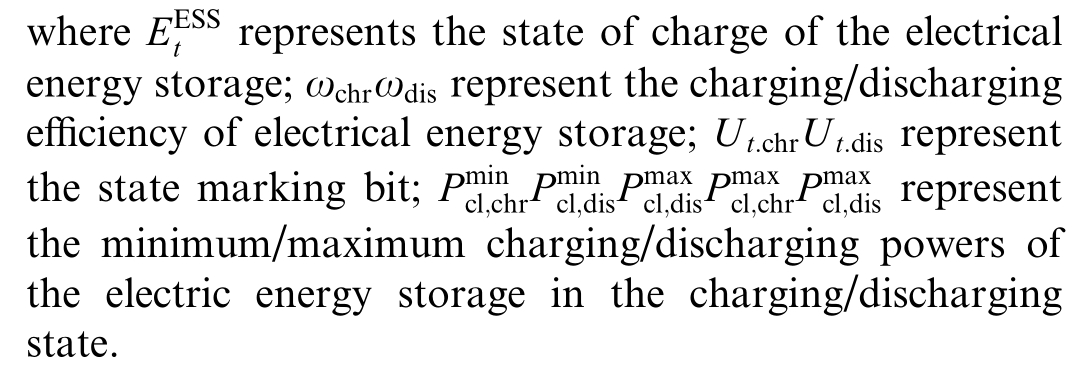
VPPO store and retrieve electricity through electric energy storage devices to balance internal power generation and the purchase and sale of electricity from the external power grid. The model is as follows:
VPPO integrate wind and photovoltaic resources for power supply. The actual power generation is within the predict ed power generation date. Therefore, the models for WT and PV are:

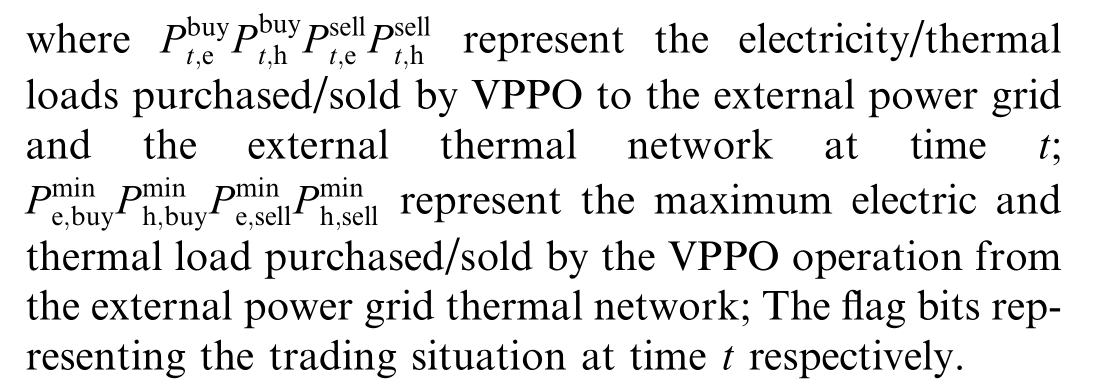
When the internal CHP and GB of VPPO fail to meet the demands of PVP, they need to purchase additional electricity and thermal from the external power grid and external thermal network. Meanwhile, when there is an excess of energy, they can also sell the energy to obtain additional benefits. The model is as follows:

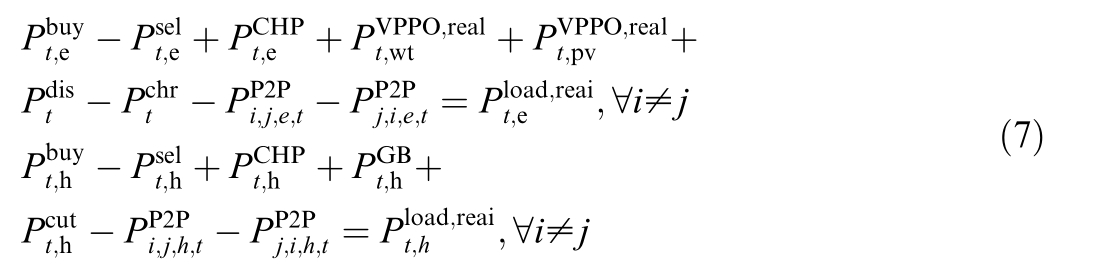
Comprehensively considering the output strategy of the VPP operator, the thermal power balance of the VPPO i at time t can be obtained as:
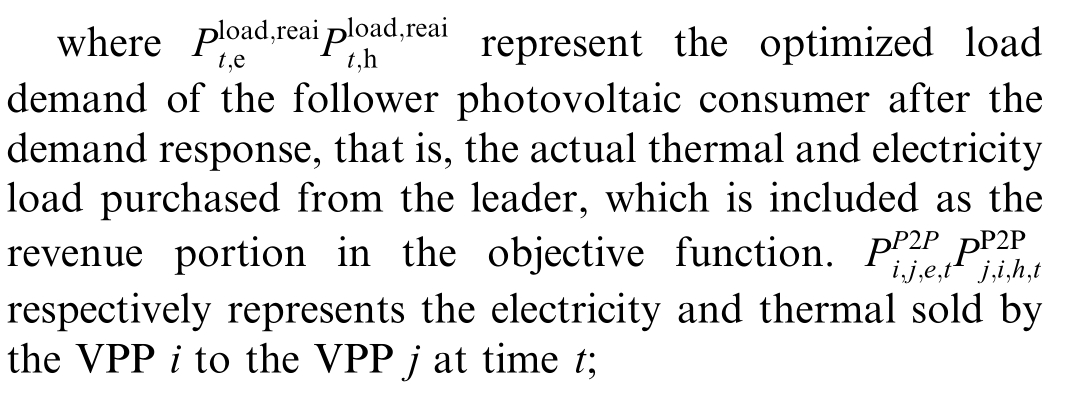
1.3 PVP model
PVP are users who possess both the capacity for photovoltaic power generation and the demand for electricity and heat energy. The cost of PVP consists of three parts:the cost of purchasing electricity and thermal from leading VPPO, the cost obtained from demand response, and the cost generated from wind and solar power curtailment.The objective function of PVP is:

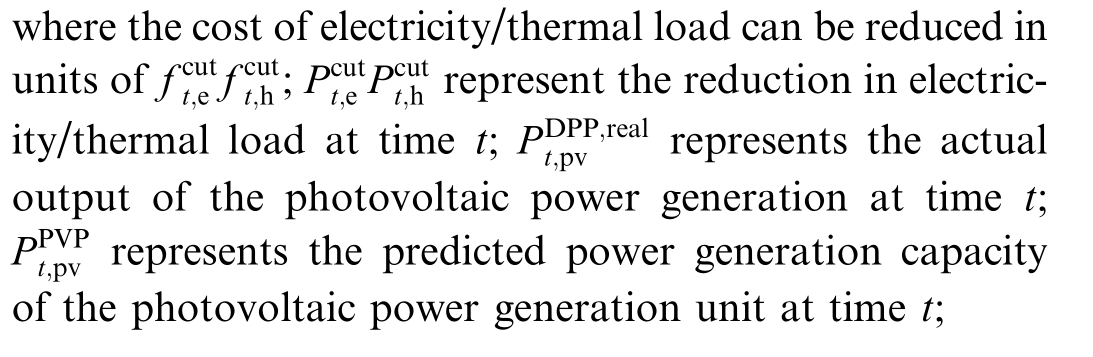
The load reducible model in deman d response is:

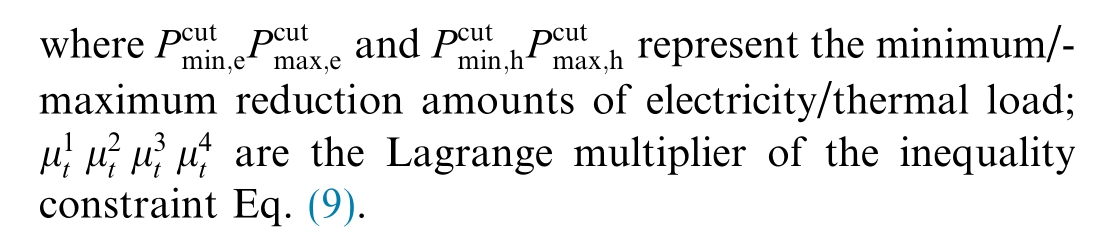
PVP only integrate photovoltaic resources for internal power supply. The model is:

where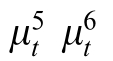 are the Lagrange multiplier of the inequality constraint Eq. (10).
Comprehensively considering the demand response of PVP, the thermal power balance at time t can be obtained as:

where are the Lagrange multipliers of the equation constraint Eq. (11).
2 Multiple uncertainty modeling of VPPs
2.1 Improved fuzzy opportunistic constraint model based on generalized credibility
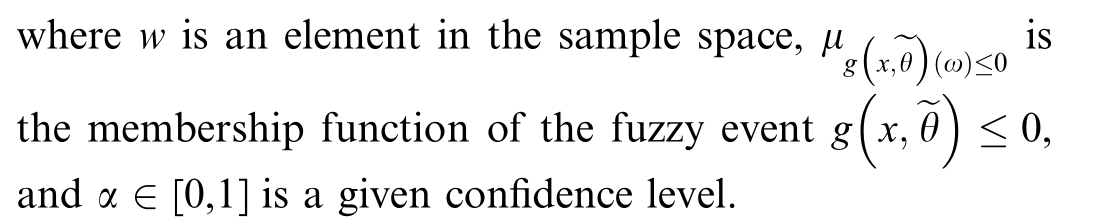
The fuzzy chance constraint method is used to model source-load uncertainty in this paper. This method allows the optimal solution to violate constraint criteria to a certain extent, but the chance of satisfying all constraints must not be lower than the pre-set confidence level[21,22]. The fuzzy chance constraint of a fuzzy constraint is:

Power fluctuations on generation and demand sides exhibit distinct risk characteristics across different temporal periods. During high-risk intervals—characterized by peak electricity and thermal consumption coinciding with volatile renewable generation and prosumer load—the VPPO prioritizes power supply and heating reliability assurance. Conversely, during low-risk periods where renewable output is sufficient and load demand is subdued.This enables the VPPO to strategically modulate control stringency over uncertainties due to increased system flexibility. Conversely, during low-risk periods, VPPO can appropriately relax the control requirements for uncertain factors because it has a higher operating margin.
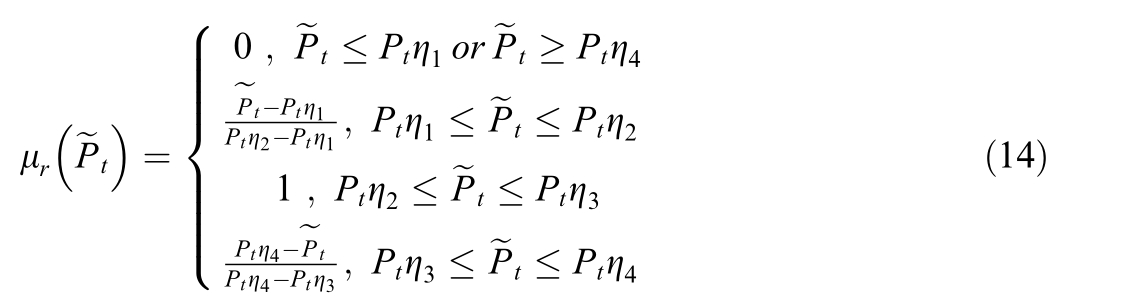
According to the above analysis, the trapezoidal fuzzy set  of the source load power in period t is:

where η1 and η4 represent the left and right endpoints of the trapezoidal fuzzy set; η2 and η3 represent the lower and upper bounds of the core interval of the trapezoidal f uzzy set, and the membership function  of its trapezoidal fuzzy set is:
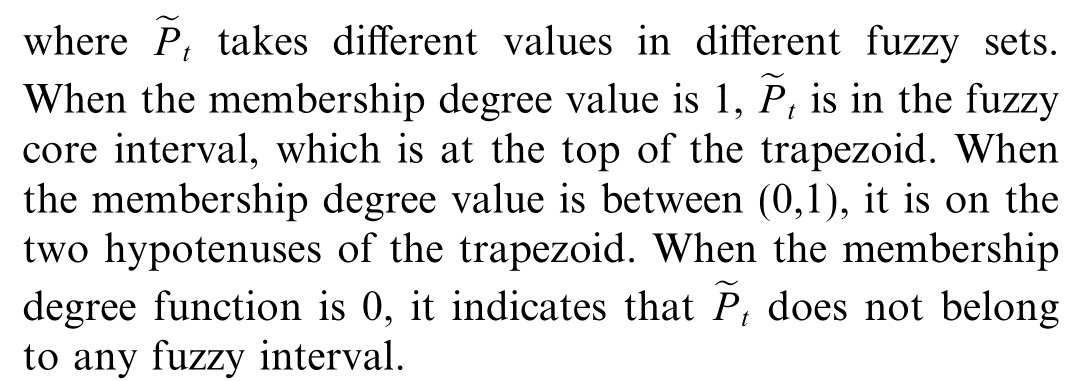
Based on the literatures[21,22], this paper improves the clear equivalence class method of the traditional trapezoidal fuzzy set. According to the traditional credibility measure, it is finally derived that the weights corresponding to the right endpoint η3 of the upper bottom and the right endpoint η4 of the lower bottom of the trapezoidal are (2-2α) and (2α-1). In this model, the confidence information in the two directions of possibility and necessity is the same. That is:

where Poss (Possibility Measure) represents the possibility measure, that is, whether an event is likely to occur; Nec(Necessity Measure) represents the measure of necessity,that is, whether an event is bound to occur.Two measures are used to describe the occurrence probability of fuzzy events.
In this paper, the traditional clear equivalence class Eq.(15) is improved by using the generalized credibility theory. Different types of risk preferences are set for the source charge data in different risk periods for classification and discussion. The risk preference coefficient βc is introduced and defined as:

where βt enables the VPP to be regulated between Poss and Nec, and βt ∊ [0,1]. When Nec is 1, it indicates that all situations must support the validity of the fuzzy event.When Poss is 1, it indicates that there exists a certain situation that supports the validity of the fuzzy event.
Therefore, by controlling the value of βt, it is possible to reflect the different risk preferences of the VPP for various uncertain events. When βt > 0.5, Nec > Poss, and more attention is paid to the situation where the fuzzy events are almost certain not to occur, which belongs to a conservative risk preference strategy. Conversely, when βt < 0.5,Nec < Poss, and more attention is paid to the maximum extent to which the event is likely to occur, which belongs to an optimistic risk preference strategy.
Taking the right descending segment of the trapezoidal fuzzy set as an example, the derivation process of the clear equivalence class after introducing βt is shown in Appendix A. Finally, the weight Settings of the clear equivalence class of the trapezoidal fuzzy set under general ized credibility and the corresponding risk preference types are presented in Table 2.
In conclusion, after considering the source loads with different risk preferences and adopting the clear equivalence class formula, the equivalent power load balance for the VPPO in Eq. (7) is:
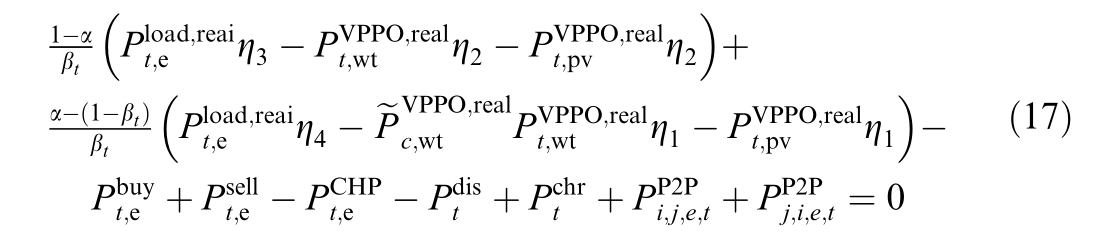
For the thermal load balance equivalence of the VPPO in Eq. (7), it is:

For the electricity load balance equival ence of PVP in Eq. (11), it is:

For the thermal load balance equ ivalence of PVP in Eq.(11), it is:

Meanwhile, this paper takes into account the uncertainty of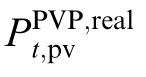 and adopts the traditional trapezoidalfuzzy chance-constrained method. The clear equ ivalent process is presented in Appendix A. The modification process of the KKT equ ilibrium condition is presented in Appendix C. After the above Eq. (18)-(21) are processed by clear equivalence classes, the commercial optimizat ion software CPLEX can be directly used to solve the model.
Table 2 Weight setting and risk preference types under generalized credibility.

2.2 Robust optimization model considering price fluctuations
During the operation of VPPs, the frequent fluctuations in electricity and thermal prices will not only increase their own operating costs, but also further affect the Nash bargaining process among multiple VPPs. By adopting the robust optimization method, the cost risk caused by price fluctuations can be effectively reduced by solving the optimal operation strategy in the worst scene [23].
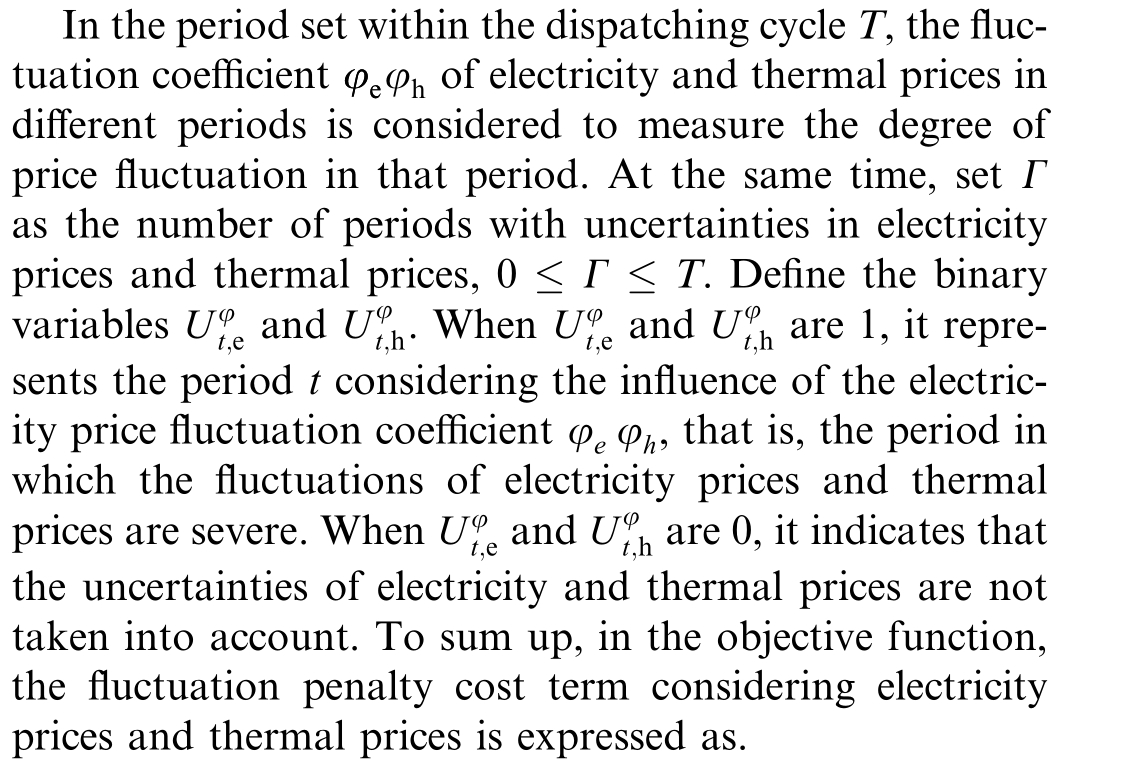
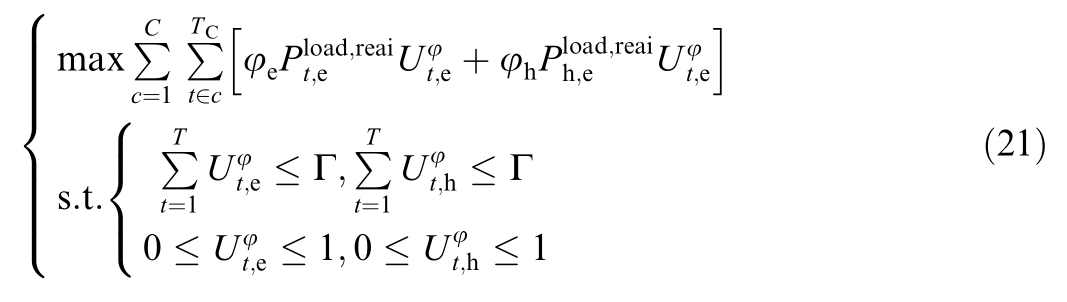
Combining Eq. (1), the running objective function of VPP is as follows:

where the max term is the price fluctuation penalty term caused by the uncertainty of electricity and thermal prices,which is introduced into the objective function. The purpose is to mitigate the impact caused by the fluctuations of electricity and thermal prices. Therefore, the optimal operating cost needs to be considered under the maximum risk. The objective function belongs to the min–max robust optimization problem. For this problem, the dual variables are set as follows:
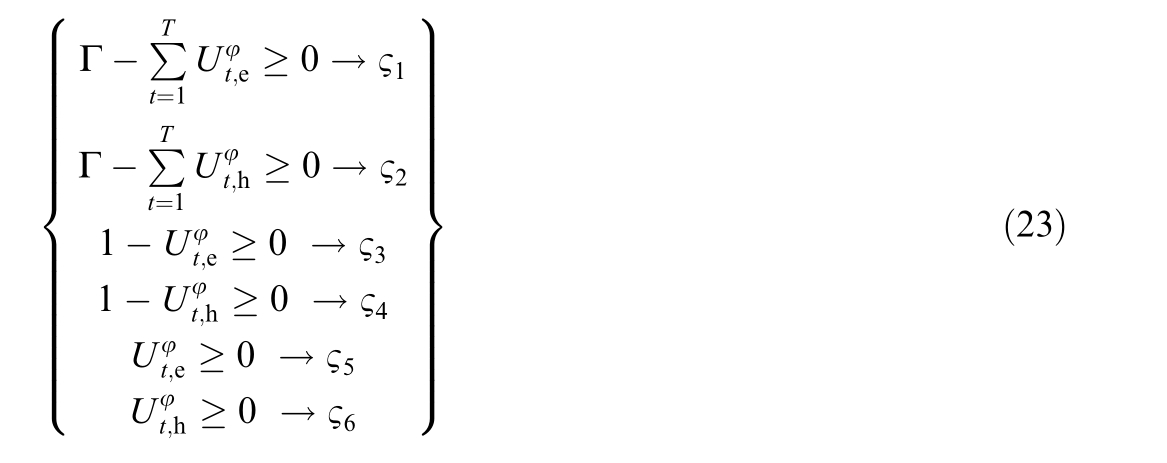
The derivation process is shown in Appendix B.Through the transformation in Appendix B, the min–max problem is equivalent to:
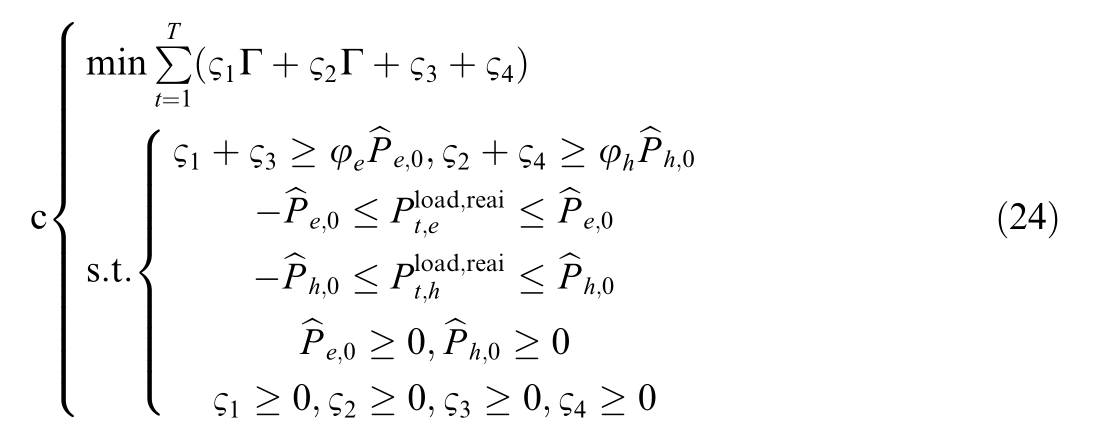
Therefore, through dual equivalent transform ation, the final Eq. (22) is transformed into:

2.3 Framework for modeling multiple uncertainties
From the perspective of uncertainty modeling. The uncertain variables involved in this paper include: the output of new energy, load demand, and market prices.Among them, the output of new energy and load demand can be obtained through statistical methods based on historical data, and their probabil ity distributions can be calculated. Therefore, the fuzzy chance-constrained method was adopted to deal with the perturbation caused by the deviation of the prediction of new energy output and user load demand. Considering that the uncertainty of market prices is affected by external factors such as policy regulation, it is difficult to obtain an accurate probability distribution. Therefore, this paper adopts the robust optimization method to deal with the uncerta inty of electricity prices. Together, these two methods address multiple uncertainties faced during the operation of VPP. The uncertainty modeling framework of this paper is shown in Fig. 2.
From the perspective of the VPP operation optimization model constructed in this paper, the uncertainty of the sources and loads mainly manifests in the constraints,while the uncertainty of the market price is mainly reflected in the objective function. Therefore, the fuzzy chance-con strained and robust optimization methods respectively model the uncertainty for different types of variables,and the two work together to achieve the overall optimization result of the VPP operation optimization model.
3 VPP Nash-Stackelberg game model
3.1 Stackelberg game model
For the Stackelberg game model composed of VPPO and PVP, this paper equivalently transforms the follower prosumer model by constructing the Lagrange function and using the KKT condition. Apply the strong duality method, which was adopted to relax the energy purchase costs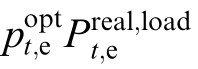 and
and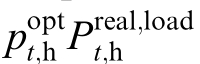 of prosumers.The specific derivation process is shown in Appendix C. Finally, it was transformed into a single-layer linear programming model as follows:

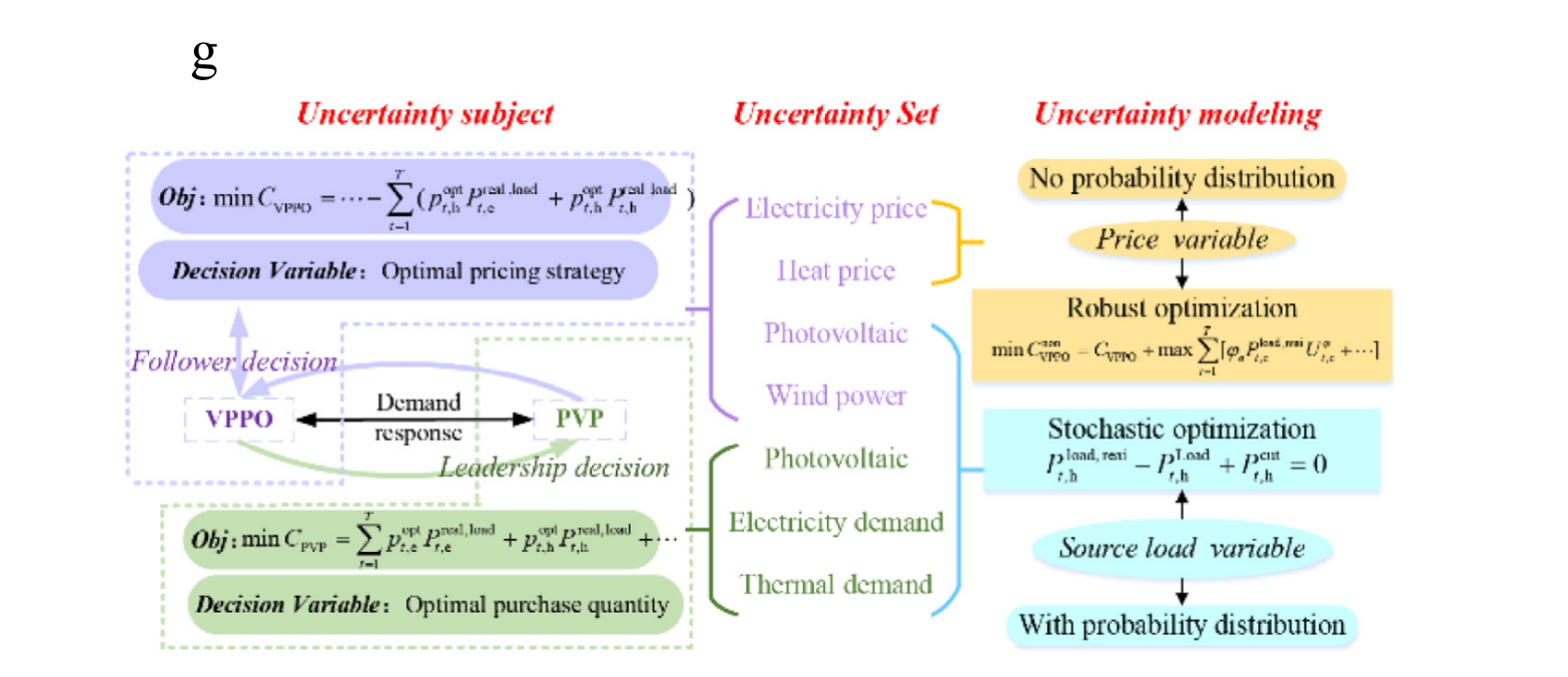
Fig. 2. Framework for Modeli ng Multiple Uncertainties.
3.2 Multi VPP cooperative game model
Under the Nash-Stackelberg game framework, the Nash bargaining model, as a cooperative game mechanism, maximizes the overall interests of the VPP alliance while completing the distribution of cooperative benefits through bargaining. This paper considers the standard Nash bargaining model, ensuring that the bargaining positions of the n VPPs participating in the Nash bargaining are the same, that is, λi is all 1. Since the cost and benefit are opposite to each other, thus there is:
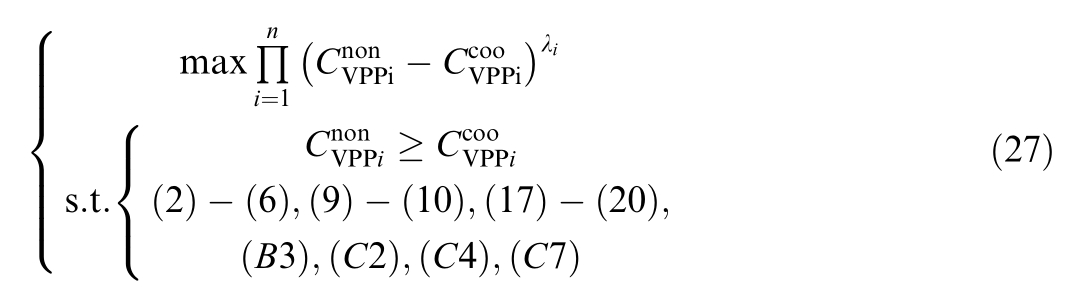
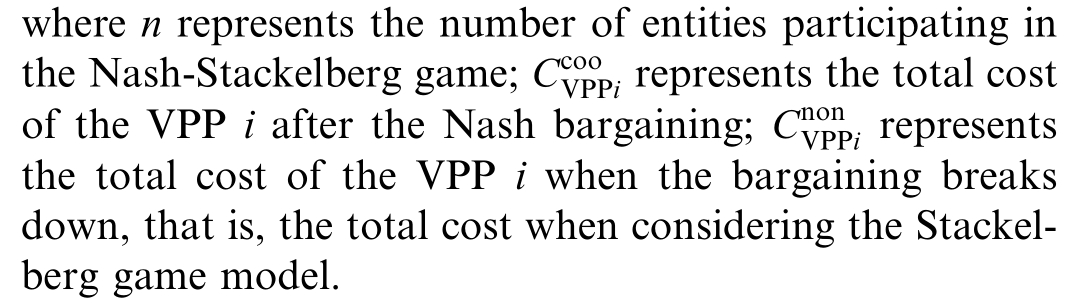
The above equation is a non-convex nonlinear problem.To further simplify the model solution, the mean value inequality method [24] is adopted to simplify it into two linearly separable subproblems. The specific model is as follows:
SP1: Minimizing the operating cost of the VPP Alliance in a multi-uncertainty environment:
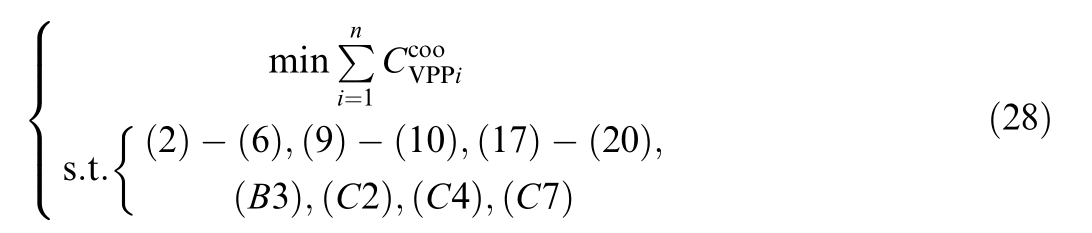
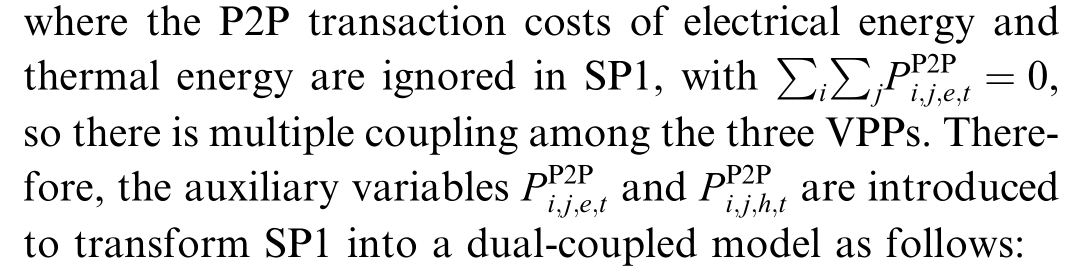

where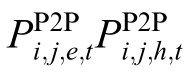 are the introduced auxiliary variables. It indicates that a consensus on the trading of electrical and thermal energy has been reached between VPP i and j.After decoupling, subsequent distributed solutions can be carried out.

SP2: VPP Alliance maximizes revenue distribution
The decoupling is the same as the processing method of SP1, with the following double coupling constraints:

where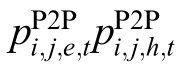 represent the expected transaction electricity price and thermal price solved in SP1. When the equation relationship is satisfied, it indicates that VPP i and j have reached a consensus on the transaction of electricity price and thermal price, and can be solved in a distributed manner in the future with SP1.
3.3 Model solving process
First, solve the Stackelberg game model to obtain the breakdown point of the Nash bargaining. Next, distributed solutions need to be carried out for SP1 and SP2. ADMM is adopted for distributed solution, and the subproblems corresponding to each VPP are decomposed by setting the coupling constraints Eqs. (29) and (31).For the VPP i, the augmented Lagrangian function of SP1 is obtained as follows:
where

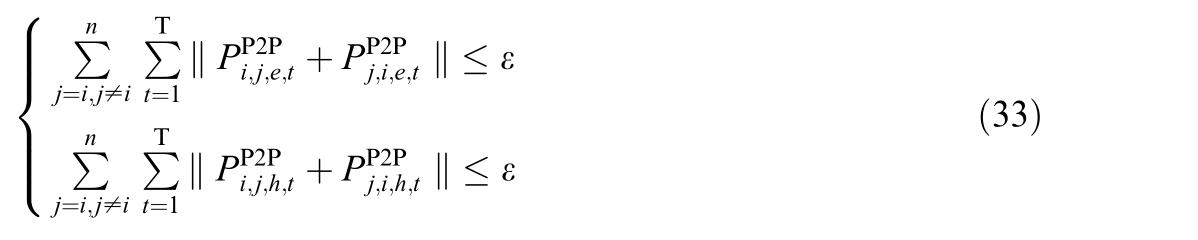
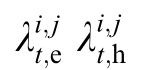 represent the Lagrange multiplier and ξe ξh represent the penalty factor. For the VPP i, the expected energy interaction of the remaining VPP j is received, and then the distributed optimization model of the VPP i is solved to obtain the expected energy interaction of the VPP i. Next,the number of iterations of the ADM M algorithm is increased by 1 and the dual variables are updated to determine the convergence of the ADMM algorithm.If it is less than the convergence accuracy ε, convergence stops:
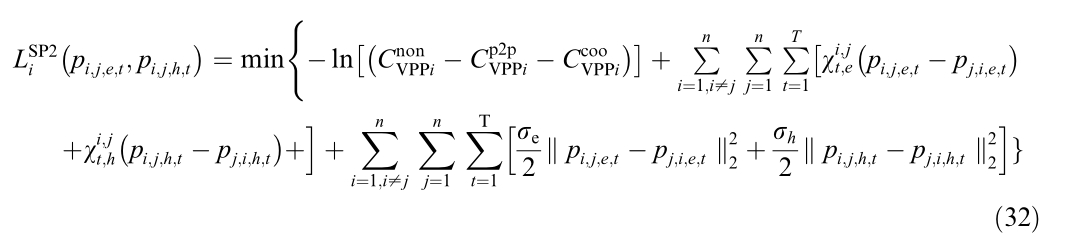
Similarly, the augmented Lagrange function for constructing the SP2 is as follows:
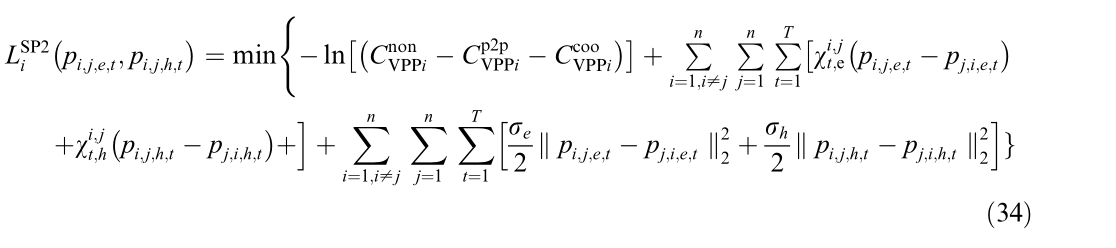
where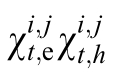 represent the Lagrange multiplier, and σe and σ h are the penalty factors.
The ADMM distributed optimization is carried out with minimizing l as the objective function. In the iterative calculation process of the same SP1,the algorithm convergent after satisfying the following formula.
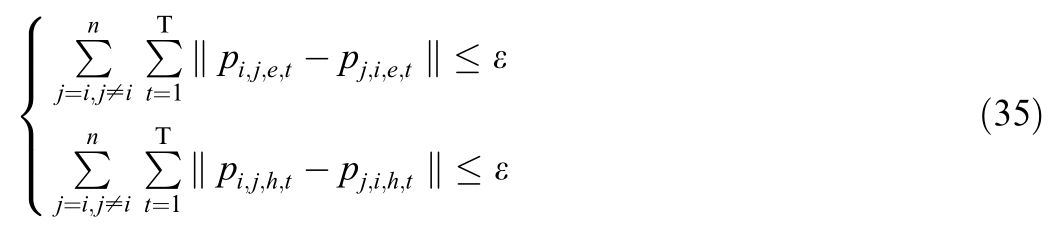
Therefore, the Nash bargaining model is decomposed into the VPP cost minimization SP1 and the VPP revenue distribution SP2. Coupling constraints are set and the augmented Lagrangian functions of each problem are established. The ADMM method is adopted for distributed solution. The specific solution process of the Nash-Stackelberg game is shown in Fig. 3.
The ADMM method can only directly handle a single interaction quantity at a time. However, in this paper,the electricity price and electricity energy interaction quantities exist in two separate solution problems (SP1 and SP2), so ADMM is used for separat e processing in each sub-problem. To sum up, the Nash-Stackelberg game model framework with multiple uncertainties proposed in this paper is divided into three parts.Solving the Stackelberg game part, that is, solving the breakdown point of the Nash bargaining, and solving the Nash bargaining SP1 and SP2. The final output is the breakdown point of the Nash bargaining, namely the independent operating cost, the interaction volume of the electric heating P2P in SP1 and the cost after participating in P2P,the transaction price of the electric thermal P2P in SP2, and the benefit of the Nash bargaining.
3.4 Nash-Stackelberg game model and convergence analysis of ADMM algorithm
To prove that the Nash-Stackelberg model in this paper has a unique optimal solution, ba sed on the four axiomatic conditions proposed by Nash [25]: Pareto efficiency, symmetry, invariance to affine transformations, and independence of irrelevant alternatives. When the Nash bargai ning solution satisfies these four conditions, it is the optimal solution [26,27]. The detailed proof process can be found in Appendix D.
For the Nash-Stackelberg game framework, this paper uses the standard ADMM for distributed solution. However, in the case of three/multi-block, its convergenc e cannot be guaranteed [28,29]. In the Nash-Stackelberg model of this paper, the three VPPs act as the game entities, and their objective functions, constraint conditions, and decision variables have the same form. From the perspective of the type of the mathematical programming model, The optimization problems of VPP operation all fall under the category of mixed-integer linear programming pr oblems,with only the parameters varying among different entities,so they belong to the one block of problem[30], and can be solved by the standard ADMM for distributed computation.
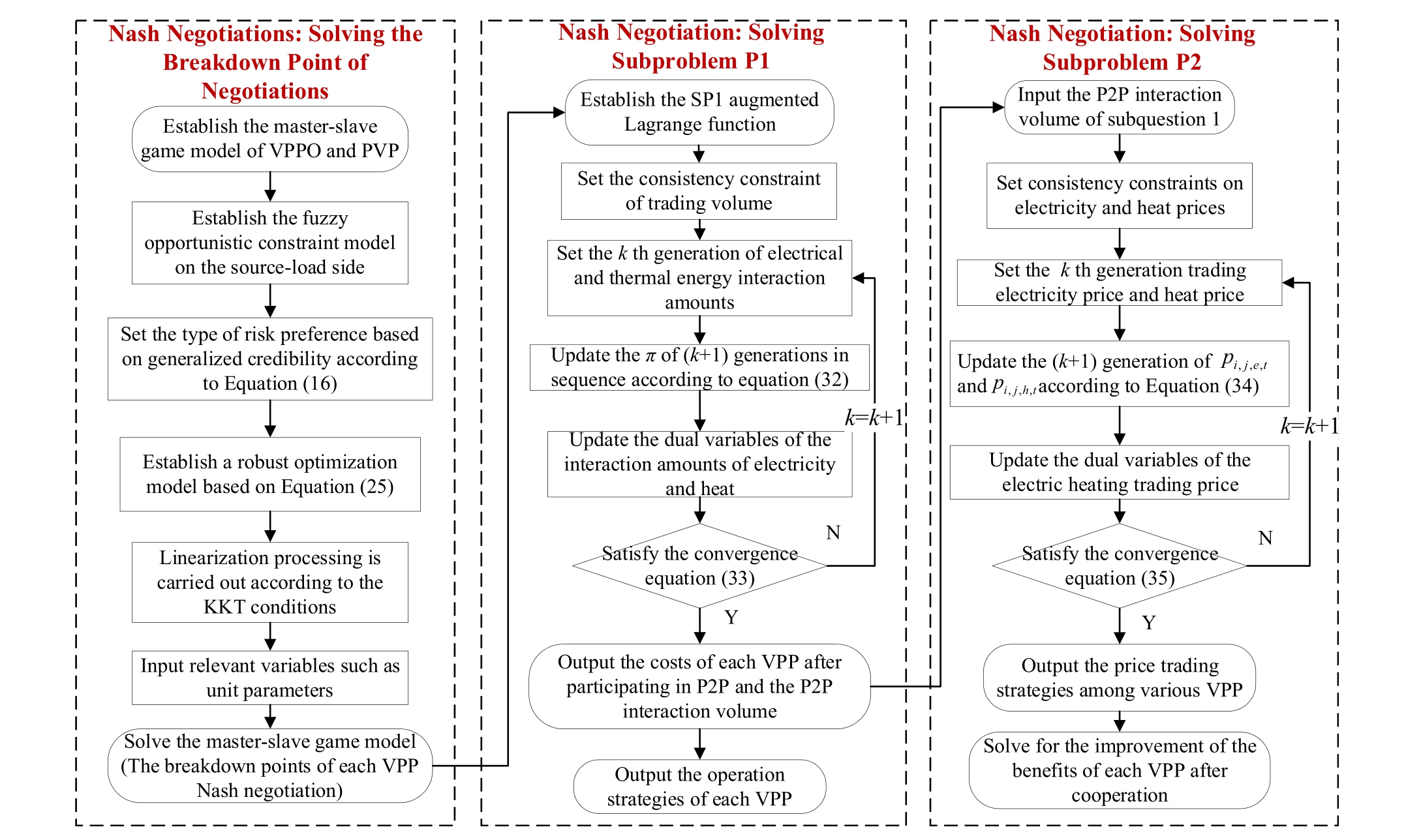
Fig. 3. The solution process of the Nash-Stackelberg game mod.
Existing literature indicates that when the dimension of integer variables is smal l, ADMM can achieve better convergence [23]. However, when a large number of integer variables are large in scale, the model shows strong nonconvexity, and the standard ADMM cannot directly converge. At this time, it is necessary to combine the Alternating Optimization and Projection(AOP) algorithm. First,continuous relaxation is performed on the integer variables to solve, and then the feasible integer solution is gradually approximated through projection and iterative methods, thereby ensuring convergence [31].
4 Case a nalysis
4.1 Parameter Settings
The numerical examples in this article are three VPP systems, The data structure of the unit is based on reference [23] and has been adjusted accordingly. The relevant parameters are shown in Appendix E. All simulations are conducted in the MATLAB 2021b in a 64-bit Windows environment with Cplex 12.7.0 solver and YALMIP toolbox on a PC with Core i7-12700 CPU @1.8 GHz and 16 GB RAM. Programming was carried out using Matlab.The convergence accuracy of the ADMM algorithm was set to 10-3 and the penalty factor was 10-3. Set the confidence level of the fuzzy chance constraint at 90%; During the high-risk period, take the time points corresponding to the 12 data with larger absolute values of source charges;during the low-risk period, take the time points corresponding to the 12 data with smaller absolute values of source charges. Set the initial βt (t ∊c, c = 1) to 0.6 and βt (t ∊c, c = 2) to 0.4; The fluctuation φeφhof electricity and thermal prices is taken as 10%[32], and the initial setting of the unc ertainty period Γ is 15.
4.2 Analysis of game economic benefits
Four different scene are set up to analyze the effectiveness of the Nash-Stackelberg game optimization operation established in this paper under multiple uncertainty scene.Among them, scene 3 is the traditional clear equivalence class. Scene 4 represents the traditional random optimization method. Consid ering the uncertainty of wind and solar power output, 1000 scenes were generated using Latin hypercube sampling, and 5 typical scenes were obtained using the backward reduction method[14]. Scene 5 is the clear equivalence class based on generalized credibility proposed in this paper. The scene Settings are shown in Table 3.
First, take Scene 5 as an example. The convergence of the algorithm before and after the Nash-Stackelberg game is shown in Fig. 4.
Fig. 4 illustrates that following the distributed solution via ADMM, SP1 converges 35 times, with convergence accuracies for electrical energy and thermal energy recorded at 4.8634×10⁻⁵ and 5.7067×10⁻¹¹ , respectively.SP2 converges 33 times, with convergence accuracies for electrical energy and thermal energy recorded at 1.8240 × 10⁻⁵ and 8.3523 ×10⁻⁵ , respectively.Both satisfy the criteria for convergence. Therefore, the proposed ADMM algorithm ensures robust convergence,model stability, privacy protection for all VPPs, and fulfillment of Nash bargaining criteria.
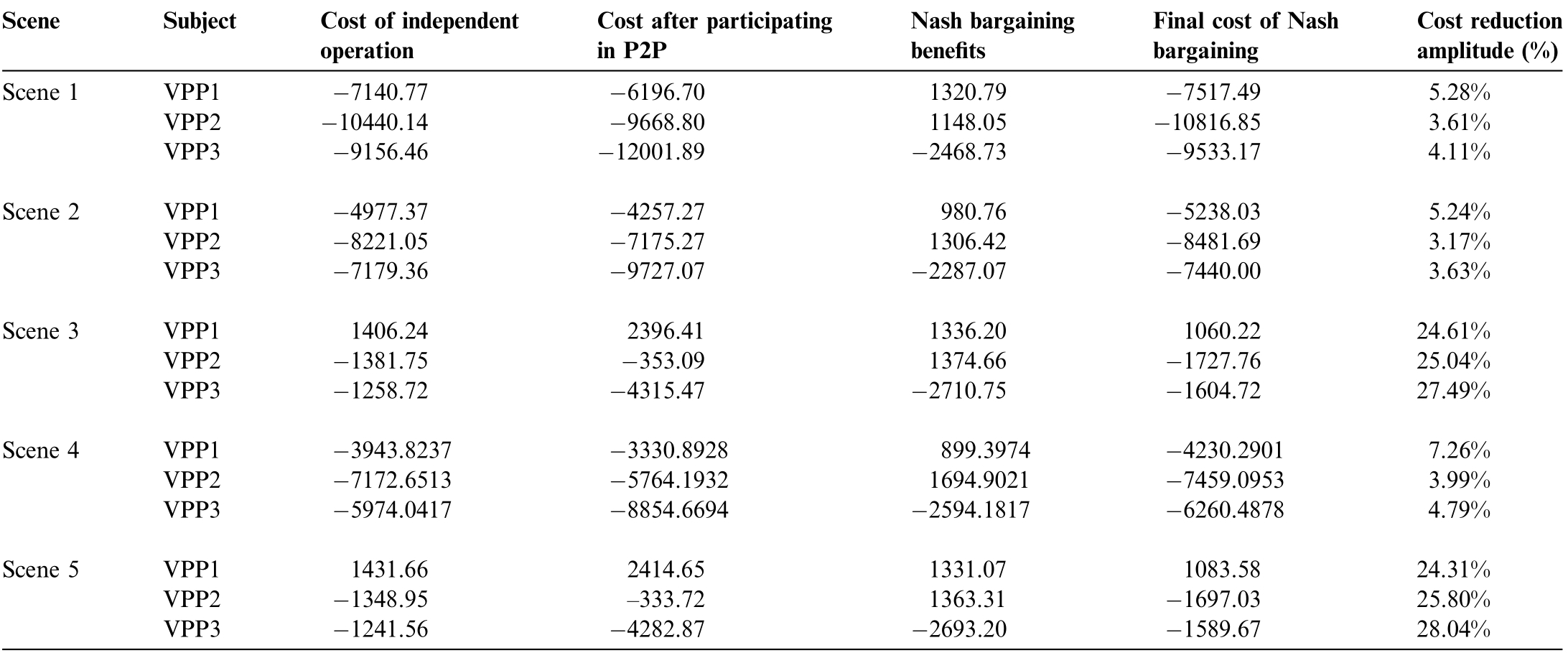
Then calculate the independent operation of each VPP and the cost after Nash bargaining in the Nash-Stackelberg game. The comparison of the benefit analysis of the Nash-Stackelberg game in scene 1 to 5 is shown in Table 4, where the cost reduction amplitude is the proportion of the cost change amount after Nash bargaining to the total cost during independent operation.
Table 4 shows that scene 2 alone compensates for pricing uncertainty due to a more conservative strategy,increasing the ultimate cost of Nash bargaining inside the VPP association by 6707.79 CNY. The VPP topic partially relaxes the fuzzy opportunity restriction, making the equivalence class predictable. This decision-making space extension increases P2P and Nash bargaining efficiency costs while reducing uncertainty losses and improving system security. In a conservative strategy with broad confidence, the conservative approach during high-risk periods handles more risk factors than the optimistic strategy during low-risk periods. So, high-risk times cost more than low-risk periods, totaling 69.15 CNY per scene under the Nash bargaining framework. VPP1′s Nash bargaining benefits grew from 1320.79 to 1331.07 CNY uncertain conditions. After compensating for their own mistakes, the VPP reduced transactions with the external grid and thermal network and traded with its own VPP. Scene4 has a total cost that is equal to the expected cost, which is slightly higher than the cost in Scene 2 of the deterministic optimization of new energy output.This is mainly because the stochastic optimization calculates different scenes ofnew energy output separately and needs to simultaneously meet the operation scheduling plans under different typical scenes. Therefore, it exchanges certain economic benefits for the robustness of the optimized scheduling strategy.Nash’s P2P trading process benefits from VPP1 and VPP2, with scene 3, 4 and 5 outperforming scenes 1 and 2. Robust optimization and stochastic optimization P2P transactions within the cooperative game, making it more suitable for multi-agent collaboration in complex and uncertain environments.
Table 3 The setting of uncertain scene in the Nash-Stackelberg game.
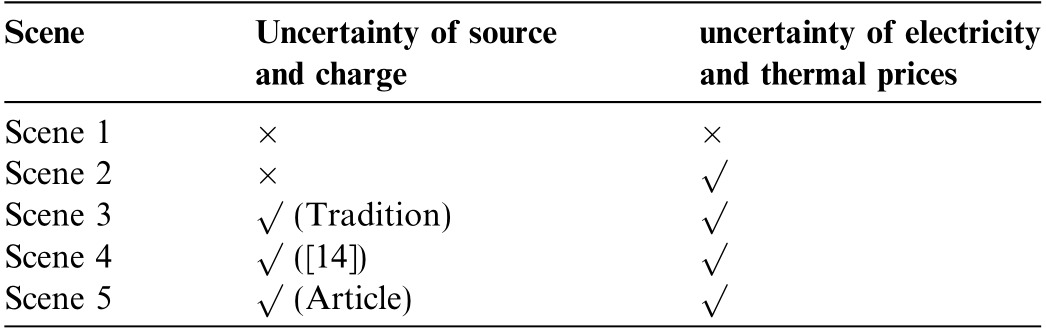
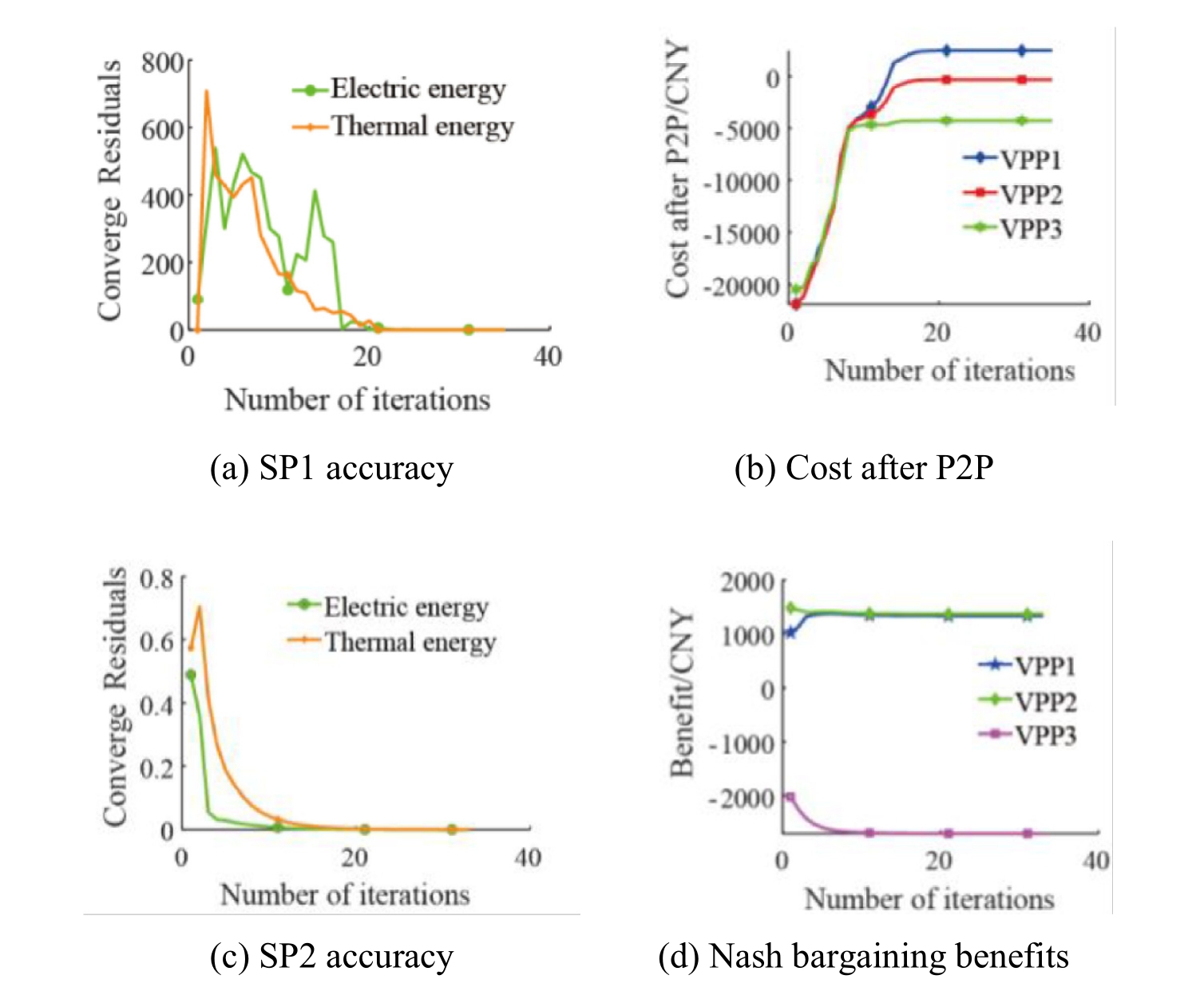
Fig. 4. Scene 4 ADMM iteration process.
Table 4 Benefit analysis of the Nash-Stackelberg game in different scenes (unit: CNY).
Furthermore, when solving Nash bargaining SP1, the computing time and power exchange amount of the solution were compared between the calculation using the centralized algorithm and the calculation using the ADMM algorithm. The results are shown in Table 5 and Fig. 5.
From Table 5 and Fig. 5, the centralized algorithm outperforms the distributed one in solution time. This is because it processes all data centrally, enabling fast acquisition of the global optimal solution—whereas the distributed algorithm requires communication and iteration across multiple nodes. In terms of power interaction, the power exchange volume solved by the centralized algorithm fluctuates significantly, while the distributed algorithm yields a smoother interaction curve. This is attributed to the distributed algorithm’s iterative optimal solution search and its allowance for each VPP to make independent decisions based on its own conditions,thereby reducing impacts on other VPPs.
In conclusion, although the centralized algorithm has certain advantages in terms of solution speed, in actual operation, the fluctuation of interaction volume can cause problems such as equipment lifespan reduction. However,the distributed algorithm results in a smaller fluctuation in the power interaction volume, which has stability and is more suitable for actual operation scenes. Moreover, each VPP can make independent decisions without sharing all the data, which can protect the privacy of the VPP.
4.3 Analysis of game operation strategies
To verify the feasibility and effectiveness of the Nash-Stackelberg game model proposed in this pap er, three game strategies were compared. The results are shown in Table 7:
Table 5 Comparison of solving time for different algorithms (unit: second).

1) Strategy 1: Takes into account both the Stackelberg game and the Nash cooperation game among each VPP, which is the scene 5 set in this paper.
2) Strategy 2: Only considers the Stackelberg game but does not consider the Nash cooperation game among VPP.
3) Strategy 3: Does not consider the Stackelberg game,and fixes the electricity and heat prices for the lowerlevel PVP. The obtained lower-level optimal response is taken as a known quantity and substituted into the upper level, while considering the cooperation game among each VPP.
As shown in Table 6, in the method of this paper, the VPP conducts a master–slave game internally. Compared with the fixed electricity price, it can ensure that the upper and lower-level entities in the game process aim to minimize their own costs, dynamically optimize the transaction price and purchase quantity between VPPO and PVP, and ultimately achieve the minimum total cost of the VPP as a whole. Further, VPPs engage in cooperative games,achieving the optimal benefit of the VPP alliance through P2P transactions of electricity and heat,resulting in a final cost that is 1044.27 CNY lower than Strategy 2 and 4357.08 CNY lower than Strategy 3.
4.4 Analysis of game operation strategies
After the Nash bargaining, each entity has more abundant resources to dispatch after joining the P2P electric thermal trading. While the leader fully consumes wind power and photovoltaic power, the VPP entities obtain additional benefits through P2P. The dispatching result of the electric heating load of VPP1 in Scene 5 is shown in Fig. 6.
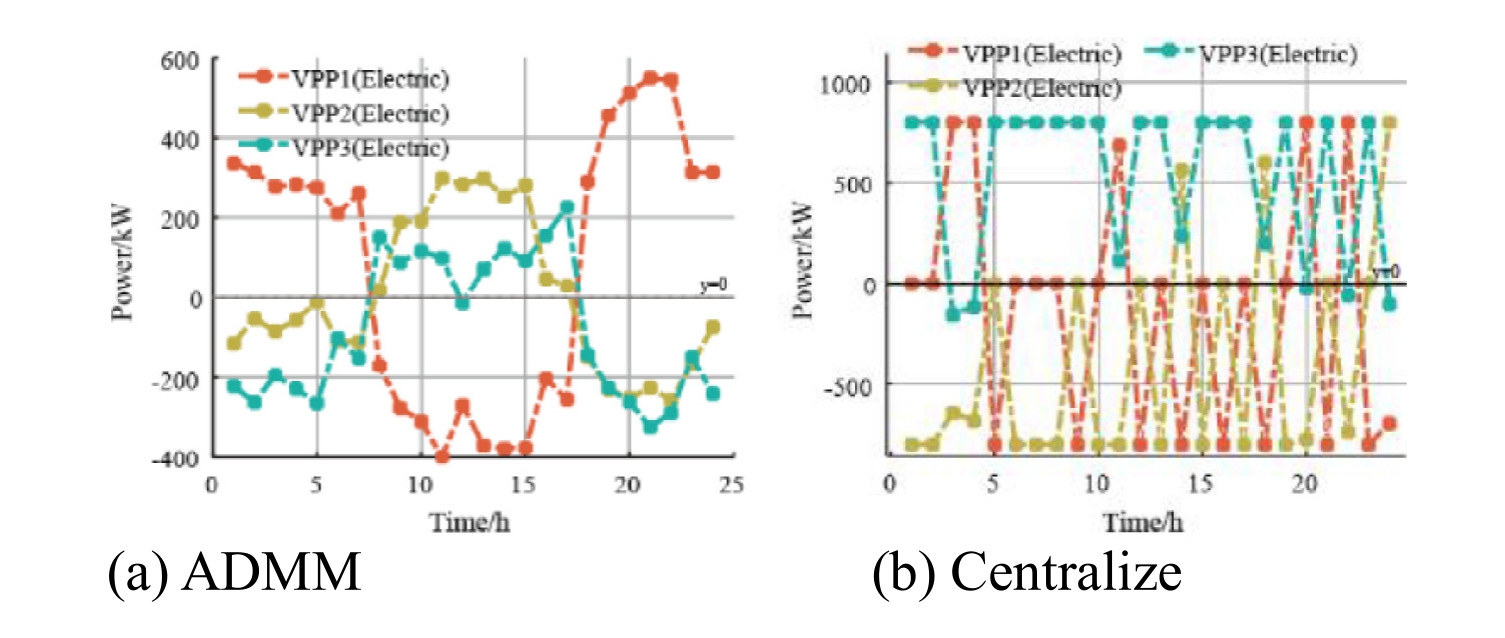
Fig. 5. Comparison of SP1 Electric interaction.
Table 6 Cost comparison under different game strategies (unit: CNY).
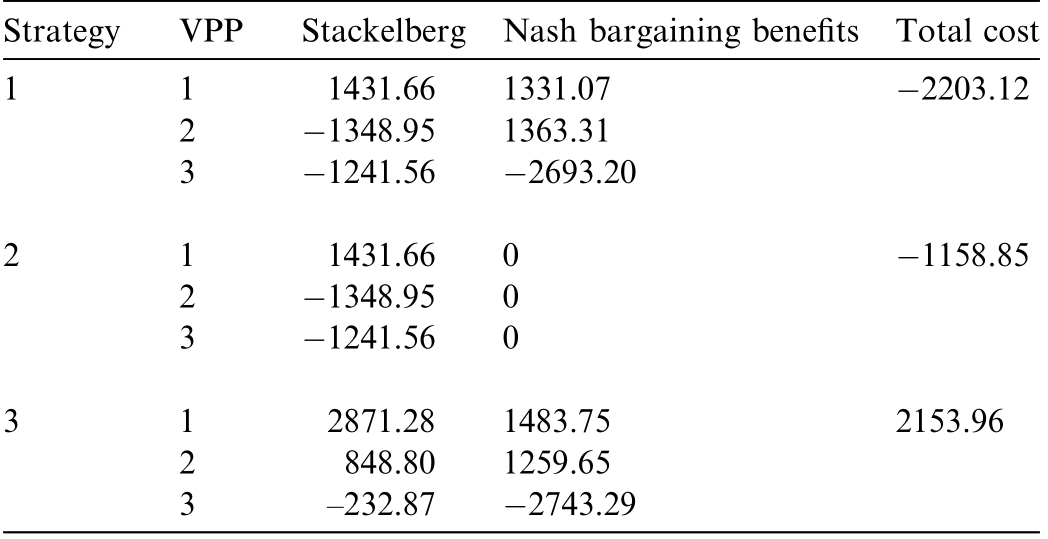
Table 7 Fuzzy parameter setting in the Nash-Stackelberg game.

Fig. 6 illustrates that, regarding the power balance of the electricity load, during peak electricity purchase price periods from the external power grid, specifically between 11:00 and 15:00, the dispatching strategy is selected to facilitate P2P transactions with VPP2 and VPP3 to reduce electricity purchase costs. When the photovoltaic power is little at night, it opts not to procure electricity directly from the external power grid to maintain its power balance. CHP units receive preferential access to power supply, and surplus electricity is marketed through P2P transactions to generate supplementary income. During the off-peak period for electricity pricing, the transaction price of P2P exceeds the cost of procuring electricity from the external power grid. Consequently, procuring electricity from the external grid is prioritized. From the standpoint of thermal load power equilibrium, the majority of thermal power is supplied by GB. From 8:00 to 12:00 in the morning, the thermal load demand is comparatively low, representing the nadir of the thermal purchase price.Concurrently, the supplementary acquired thermal energy is exchanged via P2P to capitalize on the price differential.During the peak thermal pricing time,the thermal balancing P2P transaction price and the upward heating price facilitate flexible thermal energy trading. Reduce personal operational expenses.
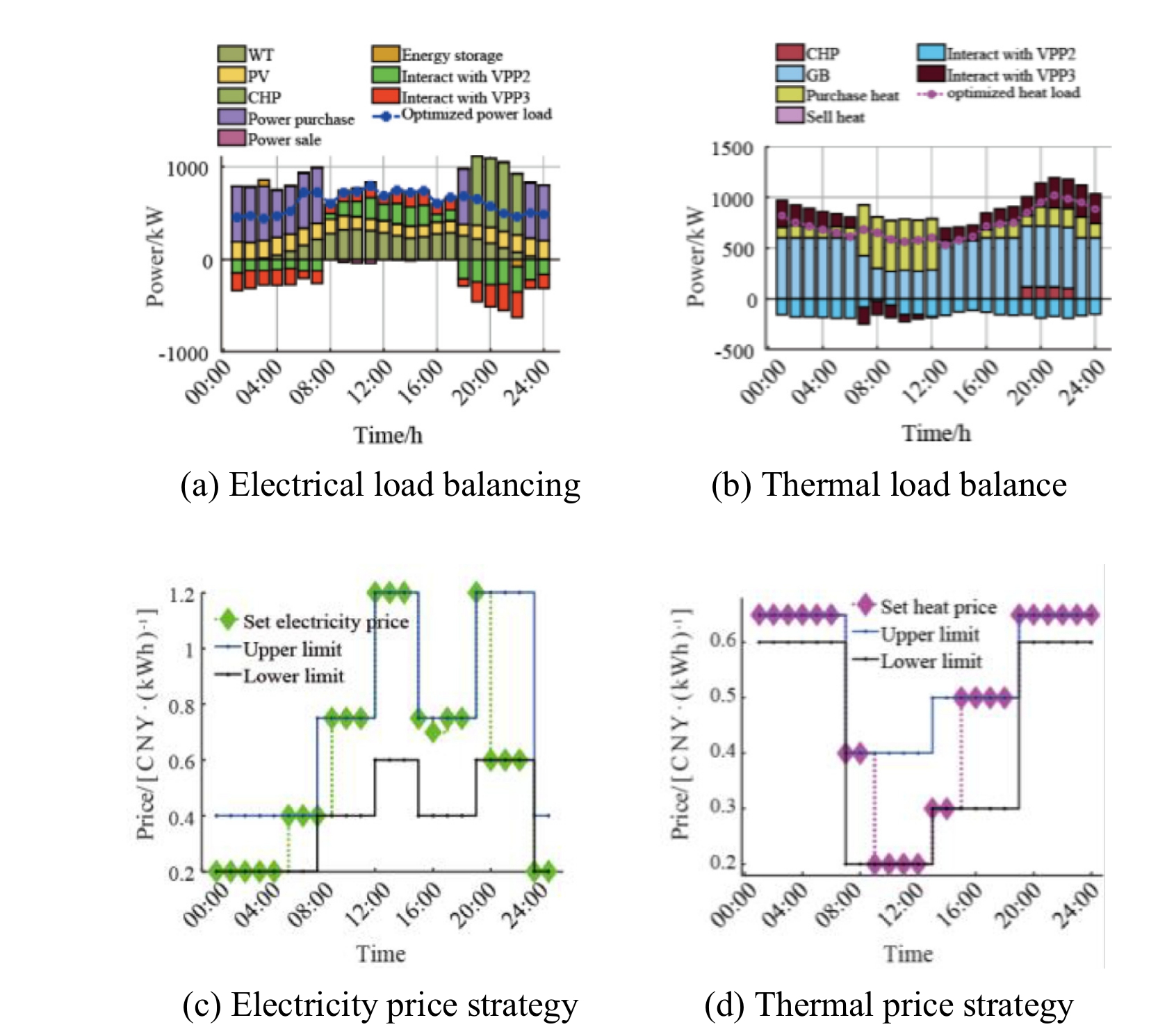
Fig. 6. Scheduling results of VPP1 electric and heating load in different scenes.
4.5 Sensitivity analysis of uncertain parameters
This section conducts a sensitivity analysis of the relevant parameters in multiple uncertainties to verify the stability of the model. Firstly, the influence of the size of the trapezoidal fuzzy set on the result of the Nash-Stackelberg game is analyzed.The Settings of the fuzzy parameters are shown in Table 7.
The comparison of the penalty cost of price fluctuations and the final cost of Nash bargaining within different confidence intervals (α = 90%, α = 85%, α = 80%) under different fuzzy parameter Settings in Table 3 is shown in Fig. 7. fuzzy levels 1 takes into account the fluctuation range of 85–115% of the source charge, while fuzzy levels 2 further relaxes the trapezoidal ambiguity set,with a fluctuation range between 80% and 120%.
Fig. 7 demonstrates that although fuzzy level 2 incorporates additional risks, penalty costs for price fluctuations remain relatively stable across ambiguity levels. The Nash-Stackelberg framework effectively mitigates price fluctuation penalties induced by heightened uncertainty.By consolidating resources and benefits across VPPs, the system tolerates a broader range of source charge uncertainty parameters without substantially increasing price fluctuation penalties. As α increases, the VPP system accommodates more uncertainty variables, relaxing source-load constraints and requiring additional thermal/-electrical loads to maintain power balance. This consequently degrades economic performance. When ambiguity escalates (trapezoidal uncertainty parameter:80–120%), VPP risk exposure increases, reducing the final Nash bargaining cost. Therefore, optimal confidence levels should be carefully selected through comprehensive riskeconomic trade offanalysis according to system-specific requirements.
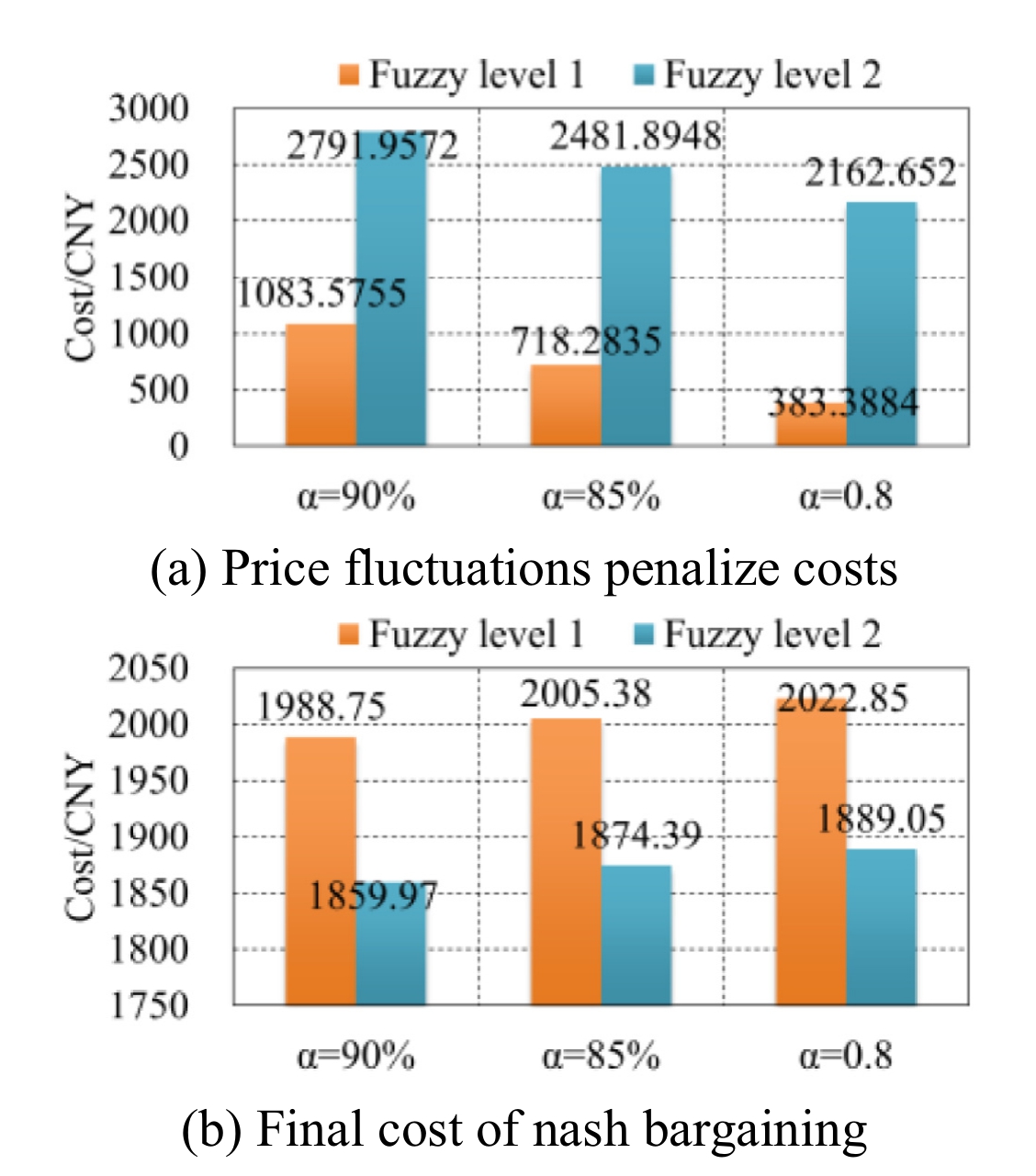
Fig. 7. Comparison under different fuzzy levels.
To further explore the influence on the economic benefits of the Nash-Stackelberg game under different types of risk preference, the Settings of different risk preference types are shown in Table 8. Taking the VPP1 system as an example, the comparison results are shown in Fig. 8.
Fig. 8 demonstrates that source-load risk preferences during high-risk and low-risk periods influence the optimization method. This study classifies high-risk data as conservative and low-risk data as optimistic, reflecting operational aspects of the VPP in response to temporal varia tions in source-load risk sensitivity. During the high-risk phase, analysis of the conservative type reveals an increase in source-load risk variables, as indicated in Table 9. Under these conditions, the upper-right endpoint weight [α-(1-βc)/ βc] exceeds (2α-1). Consequently, the upper-limit risk of the trapezoidal fuzzy parameter is considered. For the optimistic risk preference (type 3), the independent operational cost and Nash bargaining cost exceed 1214.54 CNY and 872.39 CNY, respectively, during high-risk and low-risk periods. The optimistic type’s preference for source-load risk may stem from a lower perceived risk,as the associated cost reduction is minimized at28.17%. This strategy reduces costs and benefits the partnership. During the high-risk phase, risk preference type 2 exhibits a higher βc than type 1, resulting in an overall cost increase of 104.5 CNY before and 106.05 CNY after the final Nash bargaining. Similarly, in the high-risk period, risk preference type 5 has a higher βc than type 4.This leads to increases in the final Nash bargaining costs of 207.51 CNY and 204.32 CNY, respectively. Relative to type 1, this heightened risk during low-risk periods increases independent operation costs by 7.04% and Nash bargaining costs by 9.25%.
Table 8 Parameter settings for differen t risk preference types.
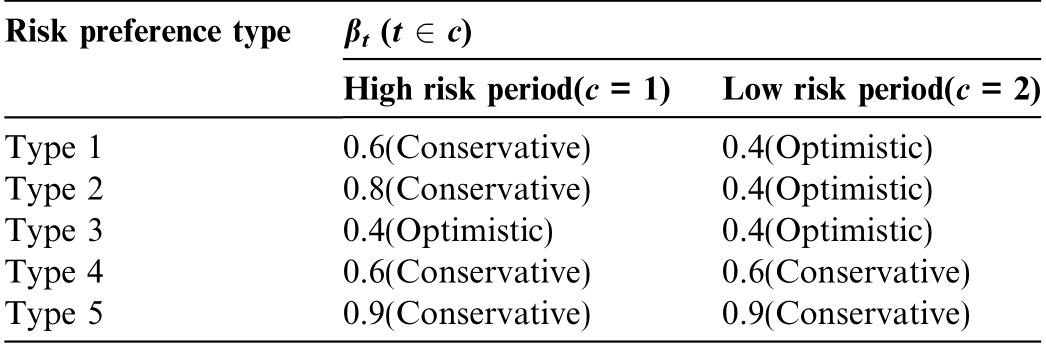
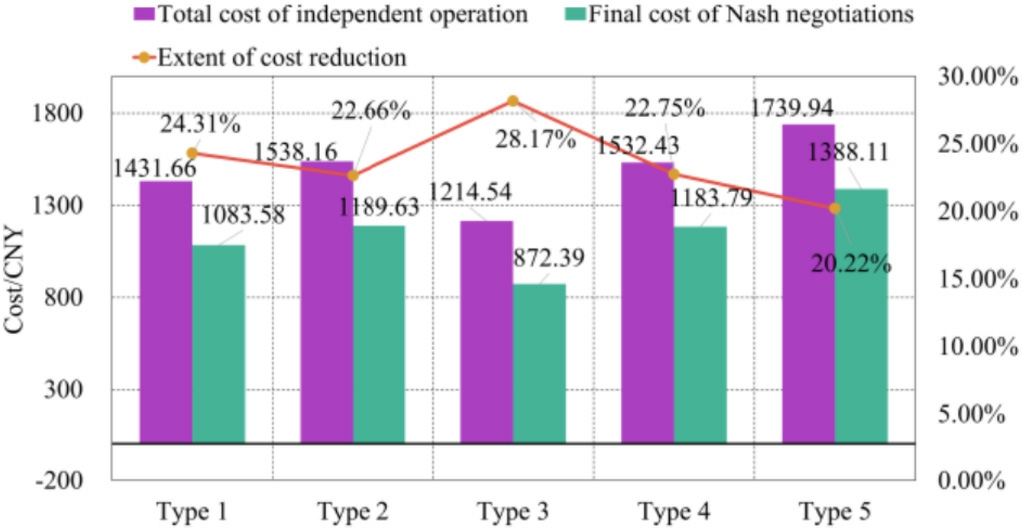
Fig. 8. Comparison under different levels of risk preference.
Table 9 Analysis of model optimization results under different scale VPPs.
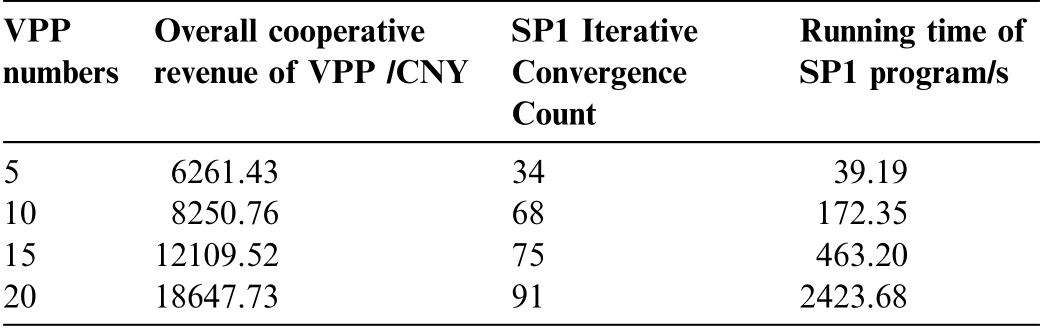
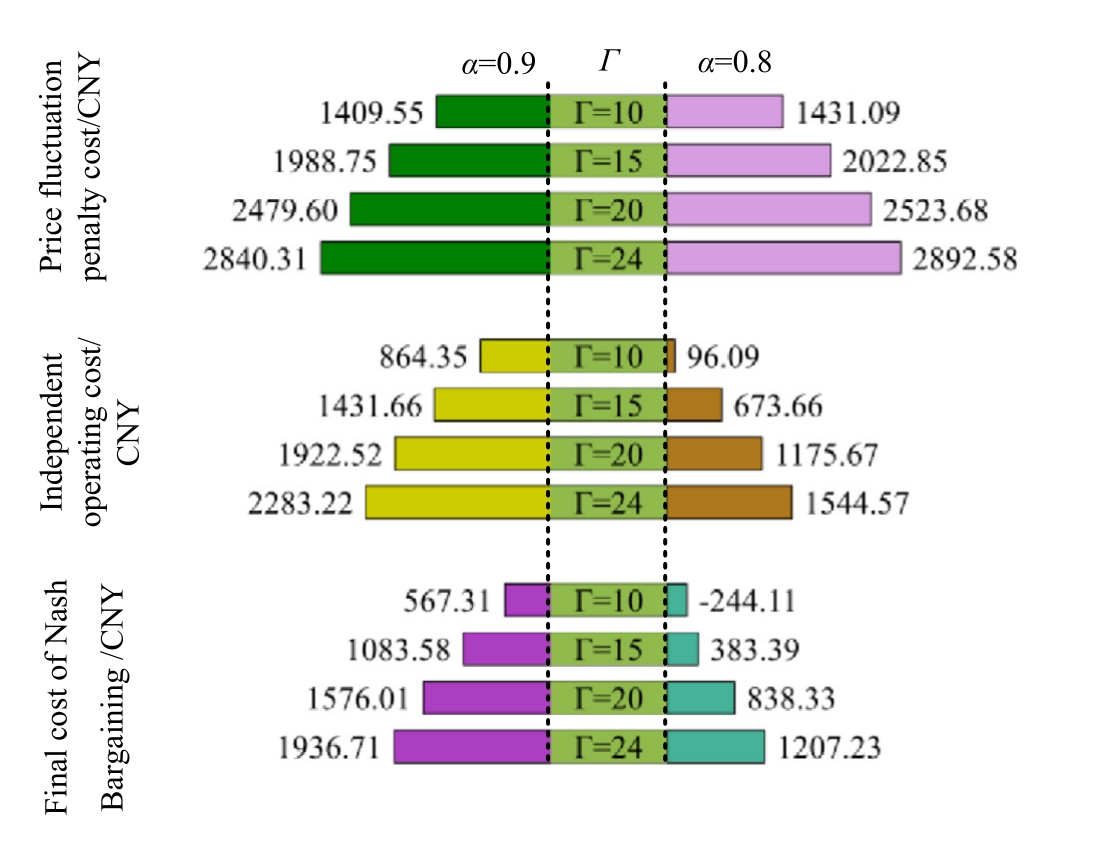
Fig. 9. Cost comparison during uncertain periods.
The comparison results of the model’s price fluctuation penalty cost and the various costs of the Nash-Stackelberg game at different confidence intervals (α = 0.9 and α=0.8)under different uncertainty periods(Γ=10,15,20,24)are shown in Fig. 9.
Fig. 9 demonstrates that decreasing α increases the probability of constraint violations. Under these conditions, greater weights should be assigned to the left and right endpoints of the trapezoidal fuzzy parameter’s upper base (closer to the central value), thereby permitting more frequent constraint violations. Reserves for excessive price fluctuation penalties are required to improve constraint satisfaction probability. Consequently, both price fluctuation penalty costs and post-P2P transaction costs increase.As the uncertainty period Γ extends, more time intervals incorporate thermal fluctuation-induced uncertainty costs,resulting in persistent increases to both the model’s price fluctuation penalty costs and the final Nash bargaining cost. The latter also exhibits heightened uncertainty risks due to increasing Γ and decreasing α. When Γ = 24 (accounting for power and heat cost variations across all dispatching cycles), the final Nash bargaining cost reaches its maximum. Furthermore, reducing α signifies that in higher-uncertainty environments, the model prioritizes source charge sensitivity across time intervals:augmenting weight η3 for high-risk periods and η2 for low-risk periods,while addressing fuzzy parameter risks in sensitive intervals.
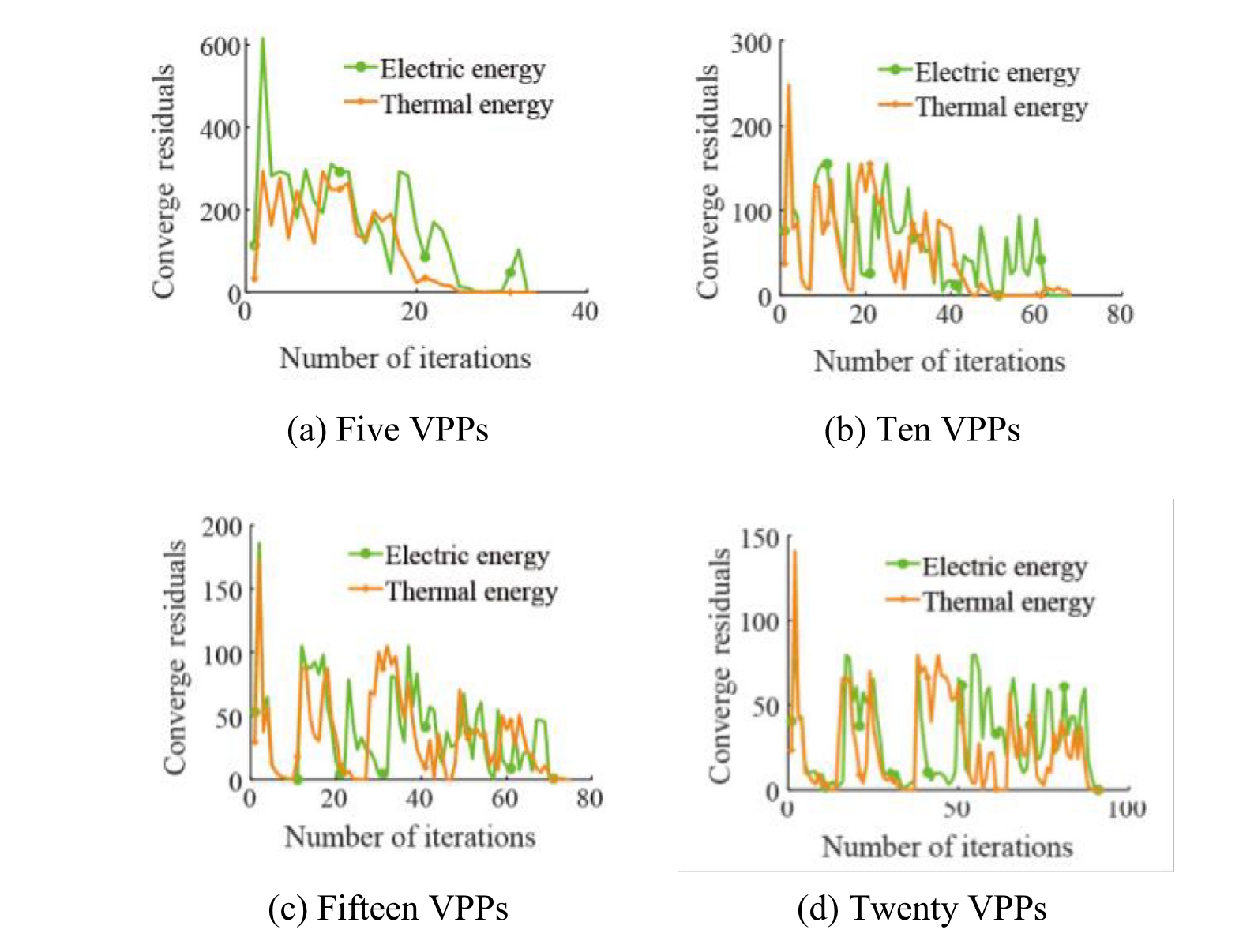
Fig. 10. Convergence residuals of ADMM under different scale VPPs.
4.6 Research on the main computational bottleneck of large-scale VPP
To further evaluate the effectiveness of the proposed method in a large-scale environment, we conducted verification analys es on test systems with 5,10,15,and 20 multiple VPP entities [24,33]. The example results are as follows.
From Table 9, it can be seen that for the examples of different VPP entities, the method proposed in this paper can achieve e ffective convergence within a limited number of iterations. The specific residual convergence curves are shown in Fig. 10. Moreover, the program running time of the proposed method can also meet the actual requirements of real-time operation scheduling. It should be particularly noted that the simulation platform constructed in this paper is a single-computer environment, while ADMM itself has the characteristic of distributed optimization. If it is deployed in a parallel computing environment, the overall program running time can be significantly shortened. At the same time, as the number of VPP participating entities increases, the overall cooperative revenue of the VPP alliance shows an increasing trend,which indicates the feasibility of the proposed model in large-scale test systems.
5 Conc lusion
This paper addresses collaborative optimization of VPPs under uncertainty through a multi-faceted uncertainty modeling framework integrating enhanced fuzzy chance constraints with robust optimization. A Nash-Stackelberg game-theoretic model is developed to facilitate VPP coalition operations and maximize alliance benefits.Results demonstrate that the proposed framework significantly reduces operating costs for both VPPO and PVP while minimizing total alliance expenditures and optimizing benefit distribution. The enhanced fuzzy chance constraint model—based on generalized credibility—generates risk-preferential operational strategies across high/low-risk periods, overcoming traditional methods’limitations in temporal risk differentiation. Concurrently,the robust optimization component enhances VPPs’ resilience against electricity price volatility during collaboration, adaptively regulating risk exposure according to price fluctuation frequency. Future research directions could further consider using joint probability distributions or distributionally robust optimization to describe the correlation between sources, loads and prices, and constru ct a joint uncertainty set to provide more refined risk control strategies for practical engineering.At the same time,when dealing with the three/multi-block problem, it is also necessary to design an innovative distributed solution algorithm.
It should be noted that the Nash-Stackelberg hybrid game model proposed in this paper is not merely at the theoretical level; instead, it directly addresses the actual needs of more than ten VPPs and operators that have been in operation in places like Suqian and Nanjing. Currently,these operators generally adopt a simplified model of hierarchical game, and the current day-ahead contract electricity volume and price mainly rely on manual experience,lacking quantitative bargaining tools. In future research,the implementation of dynamic pricing strategies and Nash bargaining strategies can be further explored.
CRediT authorship contribution statement
Lei Dong: Methodology, Funding acquisition. Shuaibo Zhang: Writing – original draft, Software, Data curation.Yang Li: Project administration, Methodology. Zibo Wang: Writing – review & editing, Concept ualization.Binwen Zhang:Data curation.Hong Zhu: Writing – review &editing, Funding acquisition. Wenlu Ji: Resources,Methodology.
Declaration of competing interest
The authors declare the following financial interests/personal relationships which may be considered as potential competing interests: Yang LI, Zibo WANG and Binwen ZHANG are currently employed by Chi na Electric Power Research Institute; Hong ZHU and Wenlu JI are currently employed by State Grid Jiangsu Electric Power Co., Ltd.
Acknowledgments
This work was supported by Science and Technology Project of SGCC (Research on Distributed Cooperative Control of Virtual Power Plants Based on Hybrid Game)(5700-202418337A-2-1-ZX).
Appendix A
Theorem 1. The credibility of the fuzzy event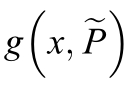 is defined as:

where Poss { A}=supμ~P(x) represents the maximum possibility of the event occurring, and Nec{ A}=1-Poss{A} r epresents the minimum possibility of the event not occurring.
Theorem 2. When α ≥0.5, there is a clear equivalence class formula for symmetrical trapezoids:
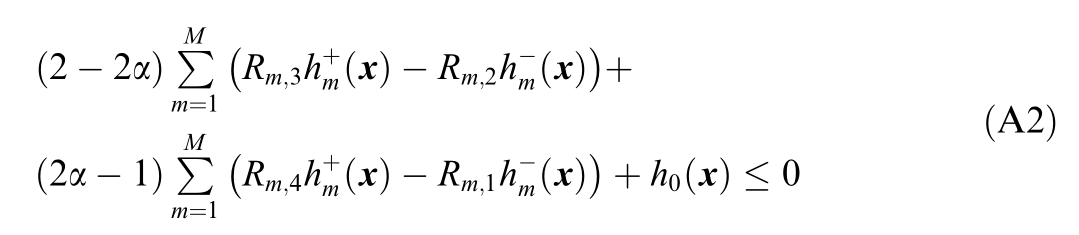
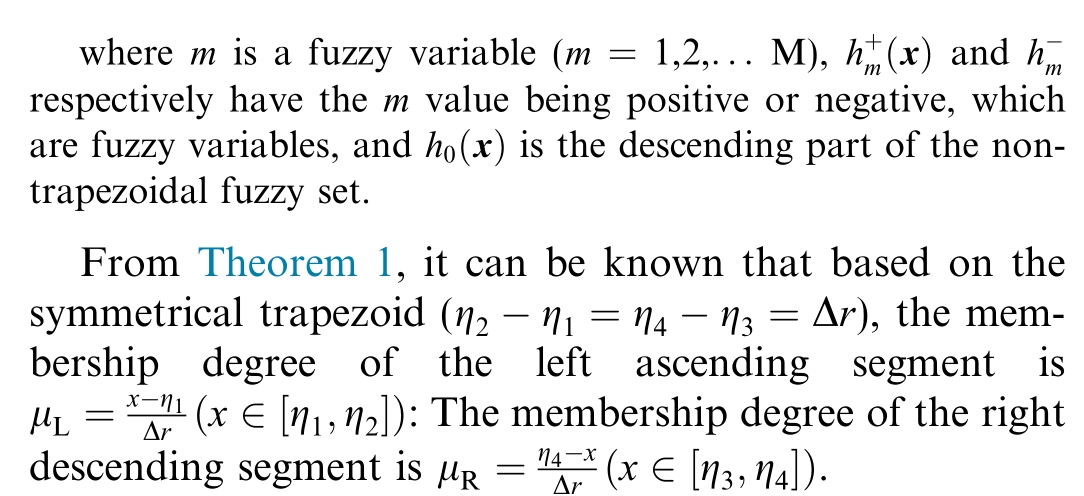
According to the credibility requirement that Cr ≥α, in order to convert the nonlinear membership degree into linear constraints, the weights wL and wR are defined to amplify the influence of the left and right segments respectively, making them satisfy wL ∙μL+wR ∙μR ≥α.Combined with the normalization condition of the symmetrical trapezoid, it is finally derived that wL= (2-2α) and wR = (2α-1). On this basis, based on generalized credibility, there are:

where, βt ∊ [0,1] is the risk preference parameter.
In the right descending segment, the credibility of the trapezoidal fuzzy set is:
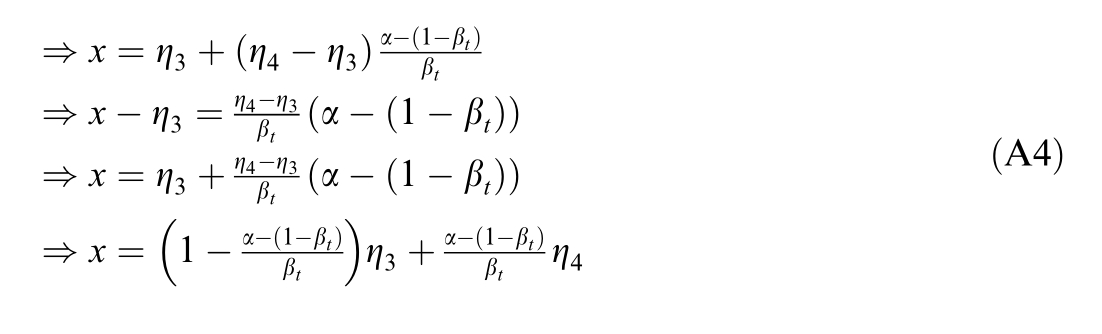

The independence of different risk levels is reflected in the fact that the sets of time periods they cover have no intersections (are mutually exclusive), and their respective parameters are independently set.
Appendix B
The Lagrange function constructed based on dual variables is:
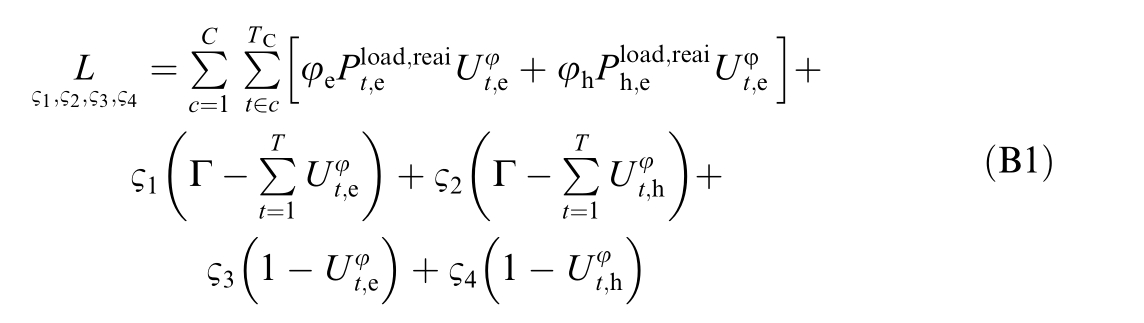
Final translation: Organized as follows:
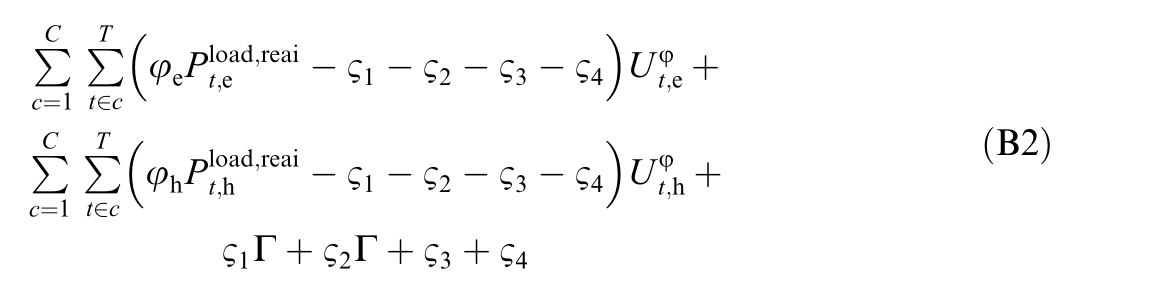
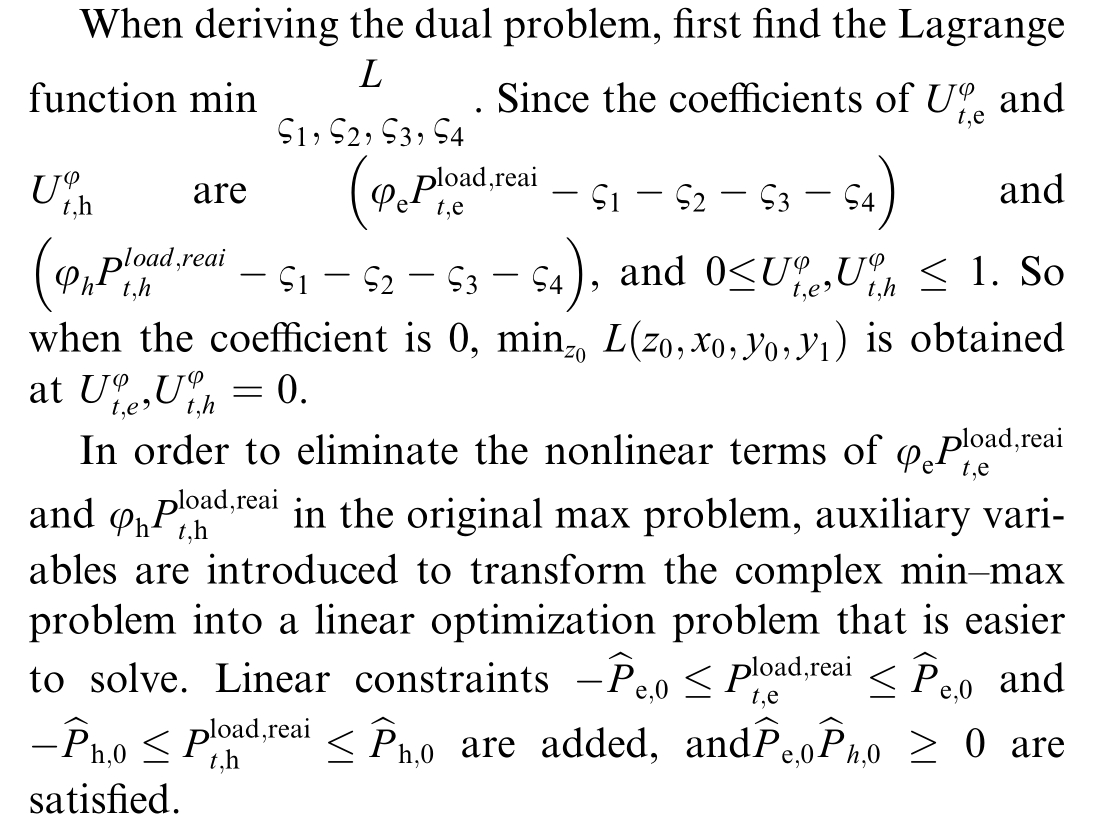
Meanwhile, to ensure the equivalent transformation,the dual prob lem is finally sorted out as:
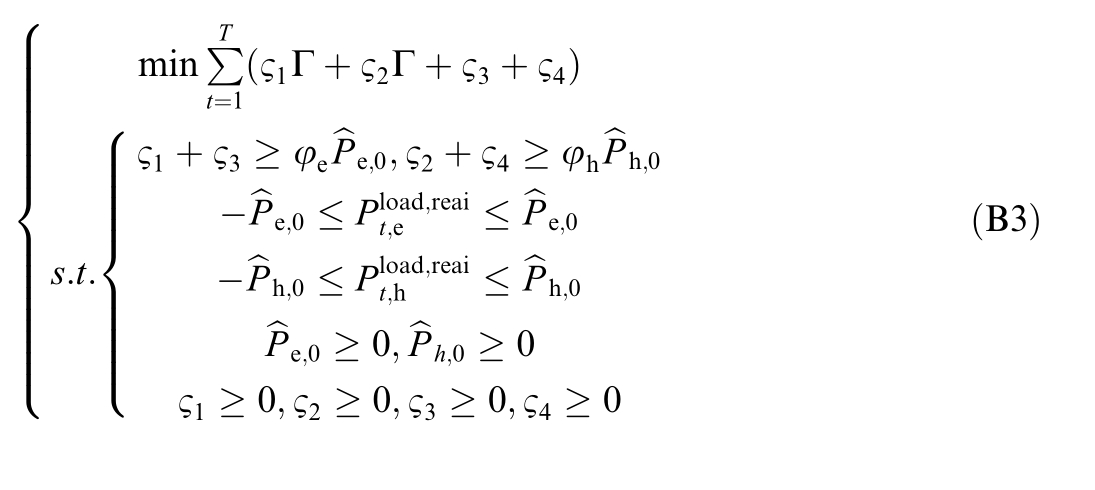
Appendix C
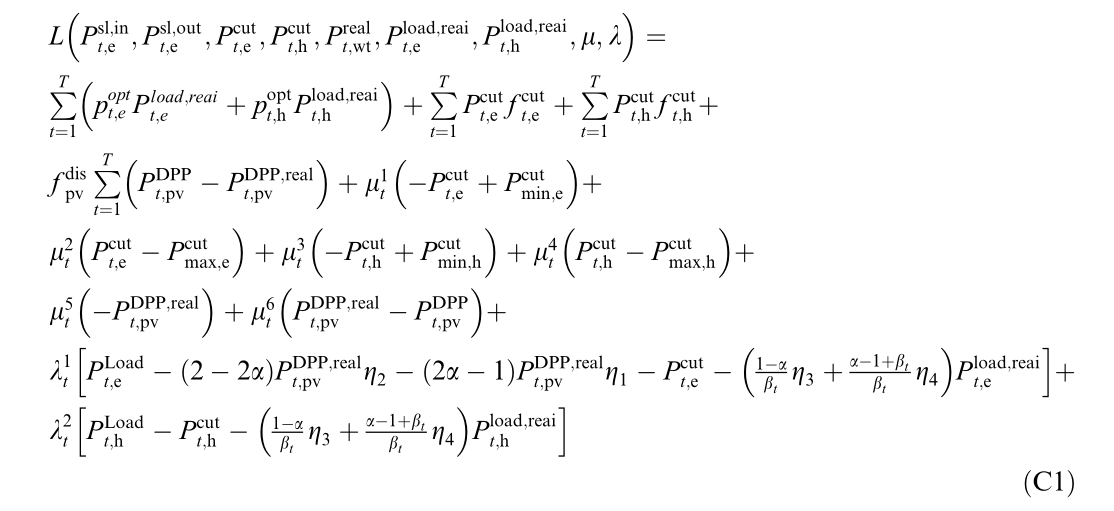
The Lagrangian function of the followe r PVP model is:
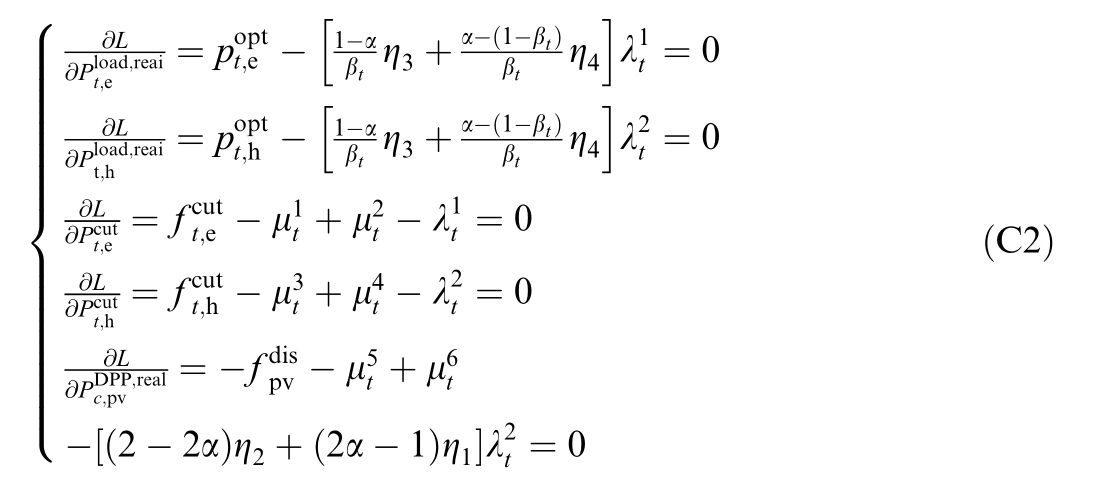
The stationarity condition in KKT is:
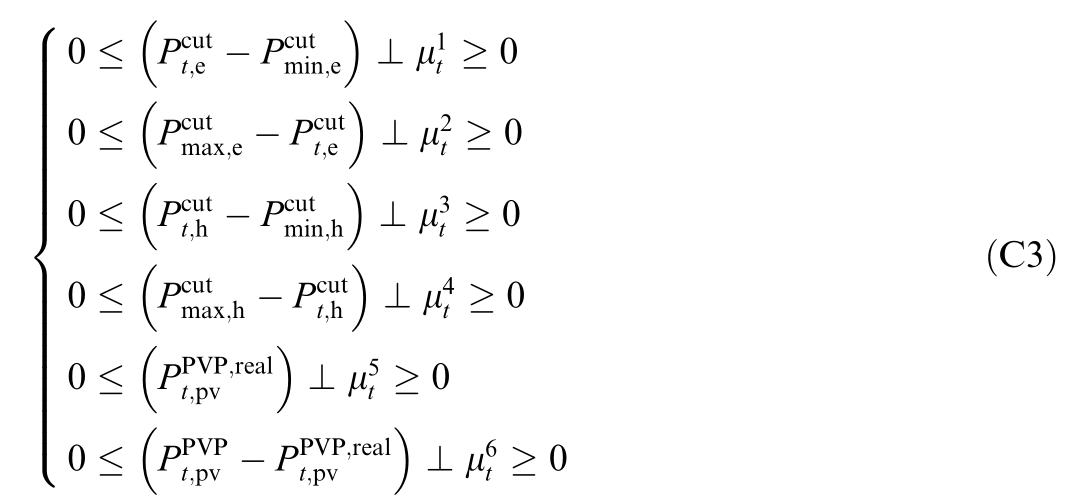
The complementary relaxation co ndition is:
The complementary relaxation conditions are linearized by using the large M method.
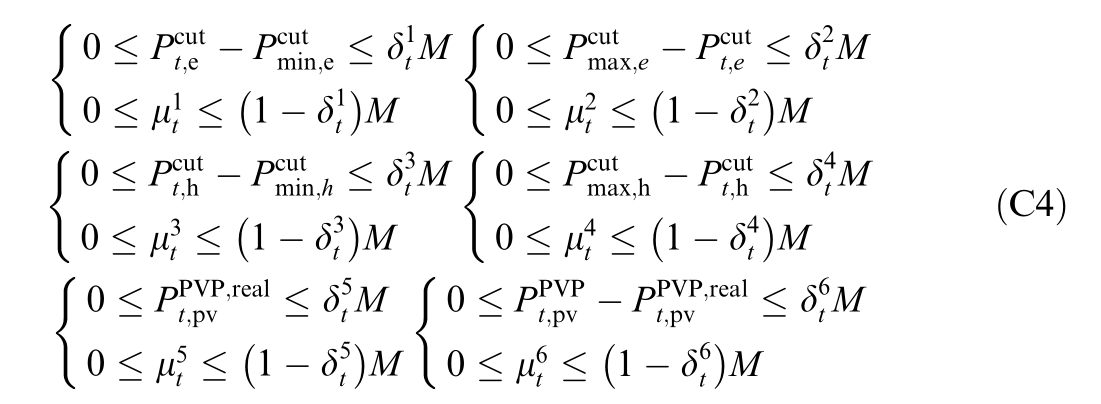

Through the above derivation, by replacing the original follower problem with Eqs. (C1) and (C 2), the equivalent single-layer form of the double-layer optimization can be obtained.
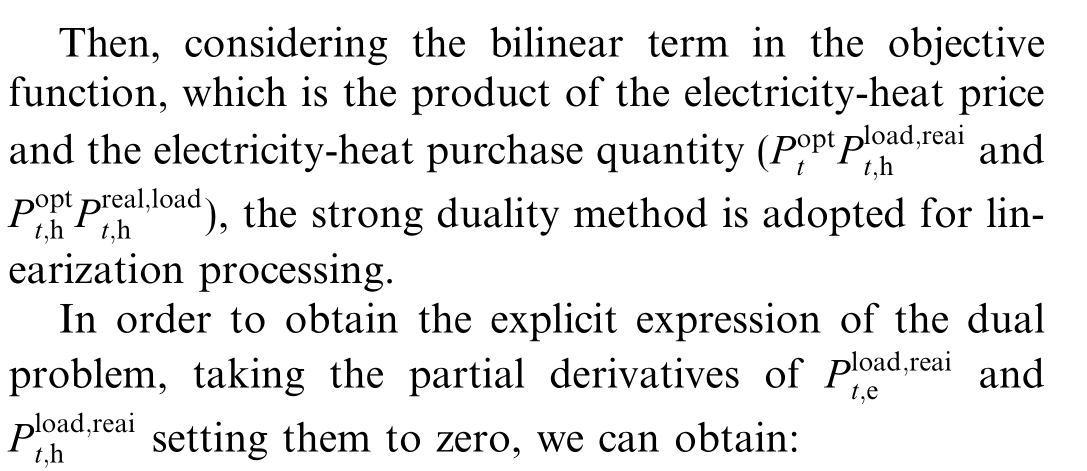
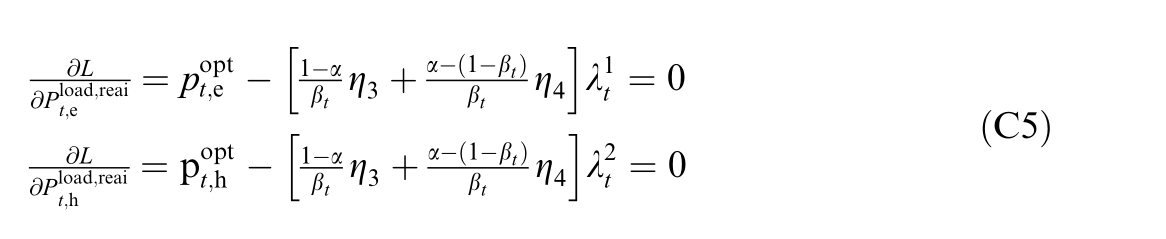
After simplification, we obtain:

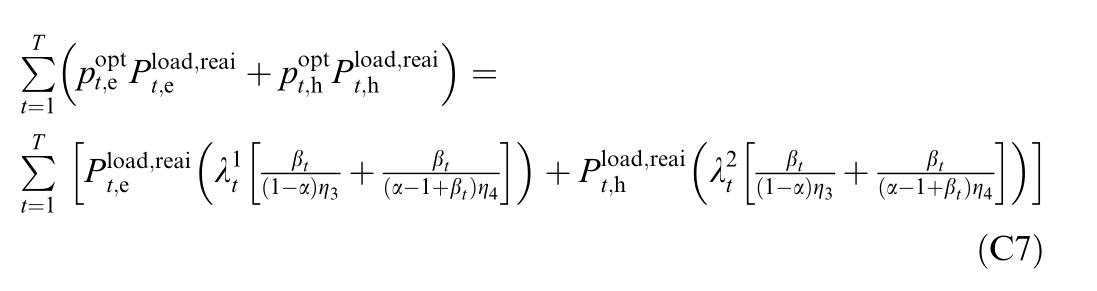
According to the strong duality theory, the optimal value of the original problem is equal to that of the dual problem , and the optimization direction remains unchanged.Therefore,the bilinear variables are equivalent to:
In conclusion, the objective function and constraints of the single-layer model obtained after the equivalence of the double-layer model of VPPO and UA can be rewritten as:
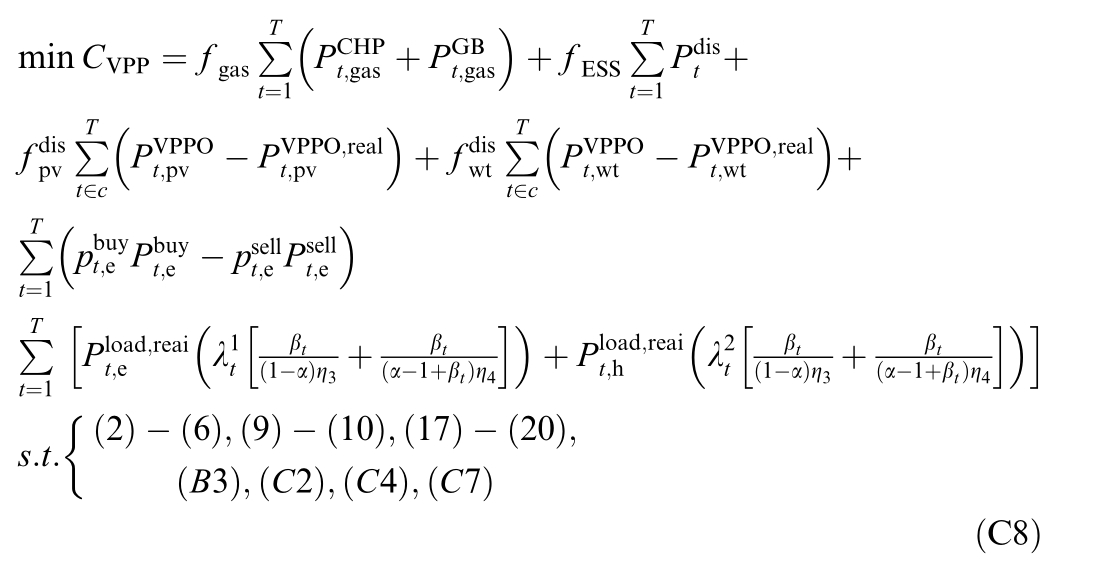
At this point, by applying the strong duality principle and eliminating the nonlinear term of the bilinear product through the KKT conditions, the Nash-Stackelberg model has been transformed into a single-layer mixed integer linear programming problem with the objective function(C8), which can be directly solved using a commercial solver such as Cplex.
Appendix D
When the Nash bargaining solution satisfies the four axiomatic conditions of Nash, it can be proved to be the optimal solution [25–27]. The specific proof process is as follows:
1 Pareto efficiency
Axiom requirement: The outcome of the bargaining must be at the Pareto frontier, meaning that there is no other feasible option that can increase the benefits of at least one party without harming the interests of any other party.
Proof. It is known that the local optimal solution of a singleobjective convex optimization problem is the global optimal solution. The Nash bargaining model in this paper decomposes the cooperative game of multiple VPPs into two single-objective convex optimization problems through equivalent transformation:
SP1: The objective function is to minimize the total cost of the VPP alliance:

where, the objective function in the ADMM algorithm is decomposed into three independent linear functions. The linear functions are special convex functions, so SP1 belongs to single-obj ective convex optimization, and its optimal solution must fall on the Pareto front, with no Pareto improvement space.
SP2: With the objective of maximizing the revenue distribution of the VPP alliance

where, the objective function in the ADMM algorithm is decomposed into three independent natural logarithms.Since the natural logarithm is a strictly monotonically increasing convex function, its optimal solution has a higher ben efit after the cooperation of all VPPs than the benefit of independent operation. It cannot be improved by Pareto and ultimately falls on the Pareto frontier.
Therefore, it can be proved that the optimal solutions of SP1 and SP2 in this paper satisfy Pareto optimality, and thus the results of the entire Nash bargaining model comply with the requirements of Pareto optimality.
2 Symmetry
Axiom requirement: If the positions of all the negotiating parties are completely symmetri cal, then the bargaining outcome should also be symmetrical.
Proof. This paper considers the standard Nash bargaining model, where it is assumed that all VPPs have the same bargaining position, that is, λi are all equal to 1, and the objective function is:

On the other hand, the ADMM distributed solution process in Section 3.2 shows that the interaction power among the entities is inversely proportional, as shown in Eq. (29); the interaction prices are the same, as shown in Eq. (31). This further verifies the requirement for symmetry. Therefore, the information exchange rules among all VPPs and the update formulas for Lagrange multipliers are unified for all VPPs,and the bargaining positions of each VPP are the same.
3 Invariance to affine transformations
Axiom requirement: Applying a positive affine transformation to the utility increment of any VPP will not change the bargaining outcome.
Proof. This paper considers the standard Nash bargaining model, and the objective function to be optimized is:

Let k be the positive affine transformation coefficient (k > 0),and the transformed Nash bargaining objective is to maximize the product of the transformed utility increments:
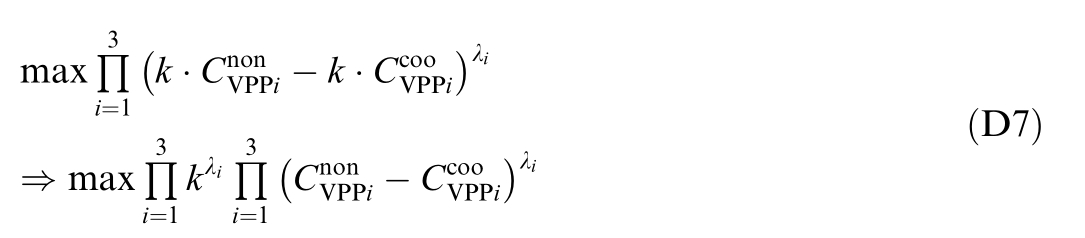
where, since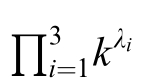 is a constant, the transformed Nash bargaining objective function is exactly in the same optimization direction as the original bargaining objective function. That is, maximizing the original function is equival ent to maximizing the transformed function.Therefore, the optimal solution satisfies the affine transformation invariance.
4 Independence of irrelevant alternatives
Axiom requirement: If certain unselected allocation schemes are removed from the feasible set, the bargaining solution should not change.
Proof. In this model, the bargaining solution is calculated by maximizing the cooperative benefits. This solution only depends on the boundary of the feasible set, namely the Pareto front.Removing internal points will not affect the optimality of the solution.
In conclusion, the optimal solution of the Nash bargaining model in this paper strictly satisfies the four axioms of Nash bargaining: Pareto efficiency, Symmetry, Invariance to affine transformations, and Independence of irrelevant alternatives.
Appendix E
The demand for electric heating load and the prediction of wind and solar power are shown in Fig. E1-E4.
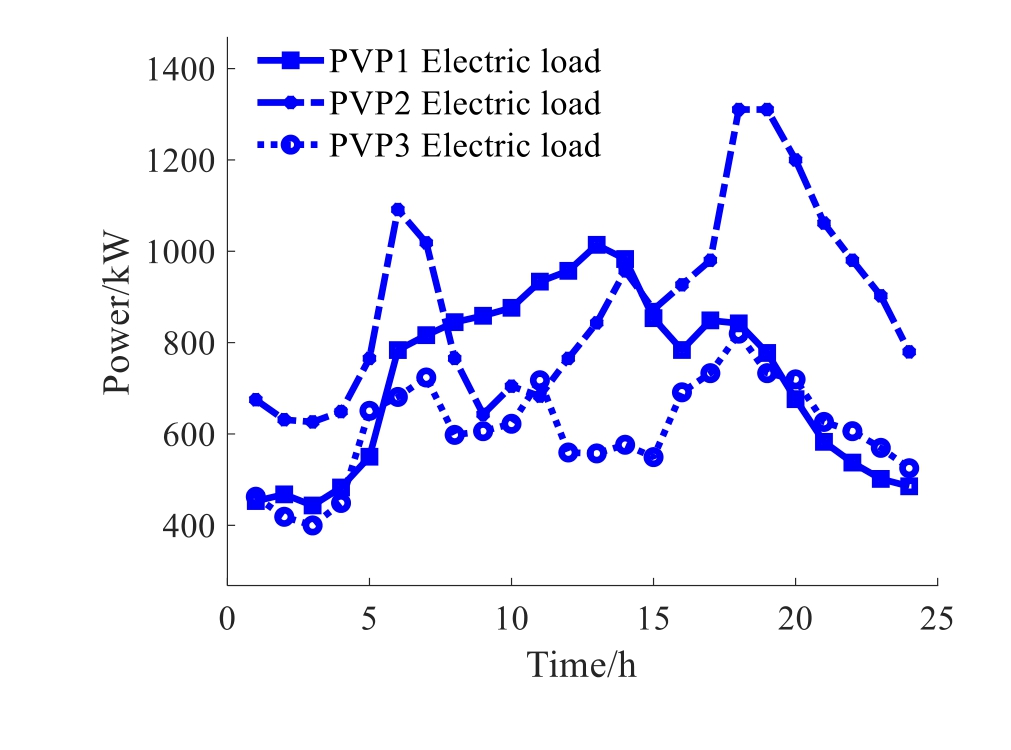
Fig. E1. PVP electric load requirements
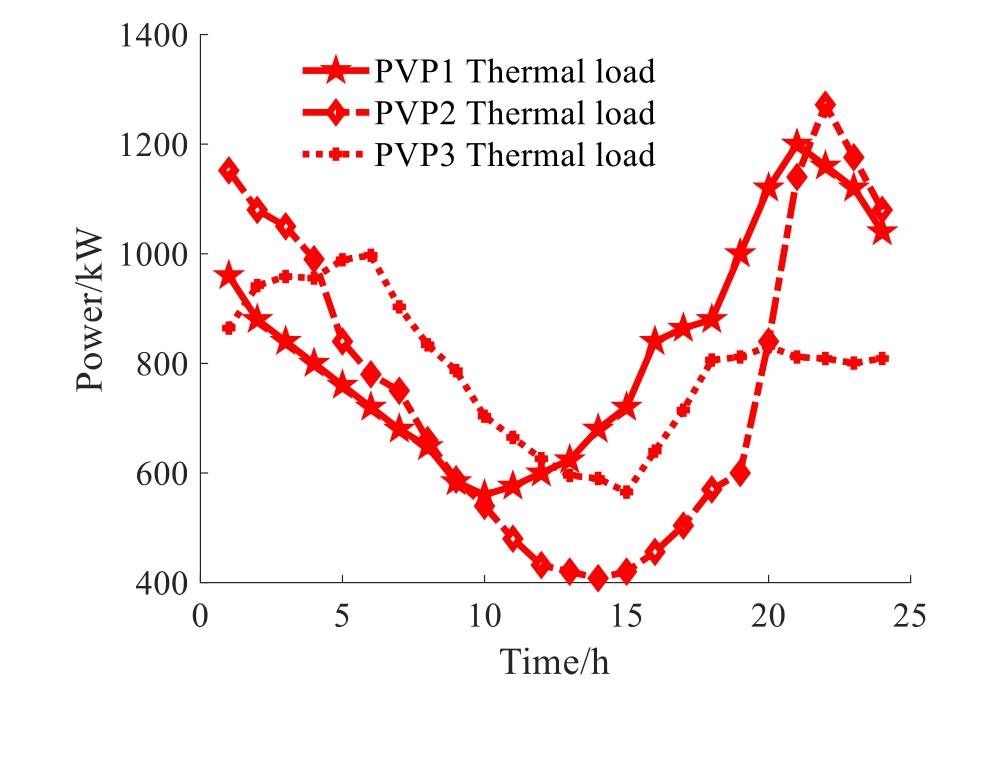
Fig. E2. PVP heating load requirements
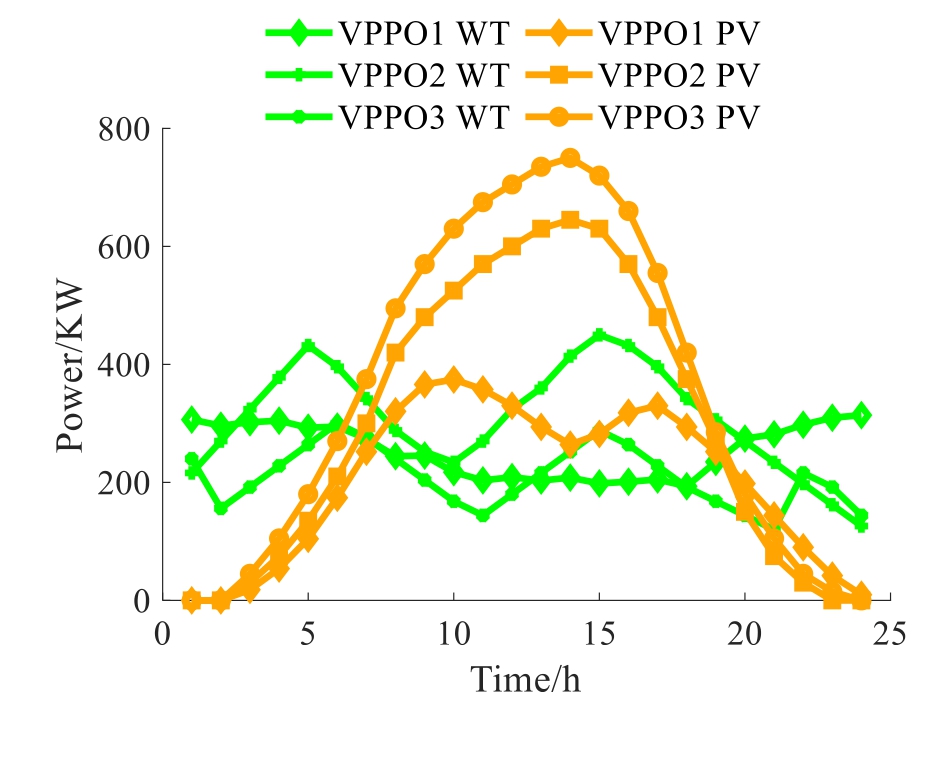
Fig. E3. Wind and Solar power Prediction of VPPO
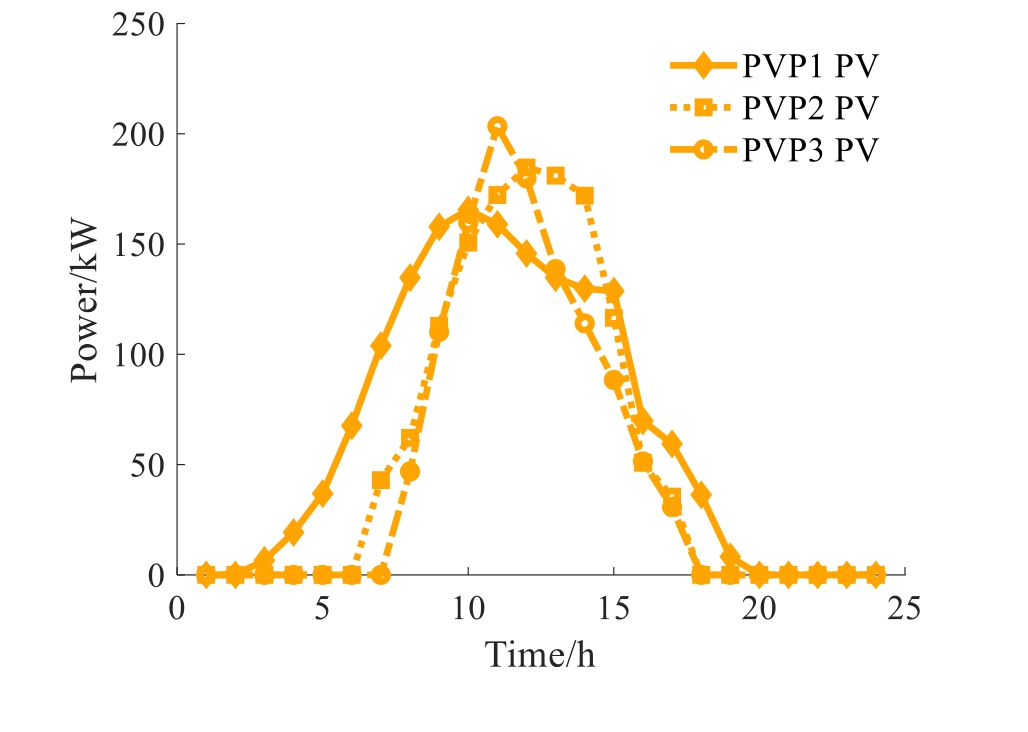
Fig. E4. PVP Photovoltaic Power Prediction
The time-of-use electricity price and time-of-use heat price for external transactions are shown in Fig. E5-E6.
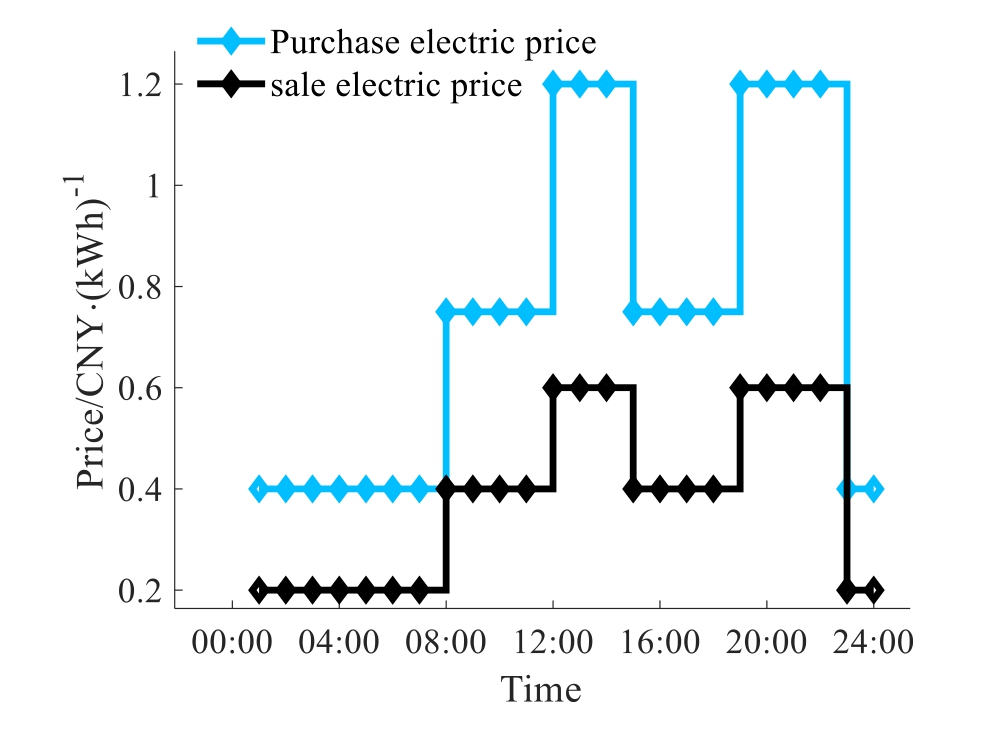
Fig. E5. Time-of-use Electr icity Price
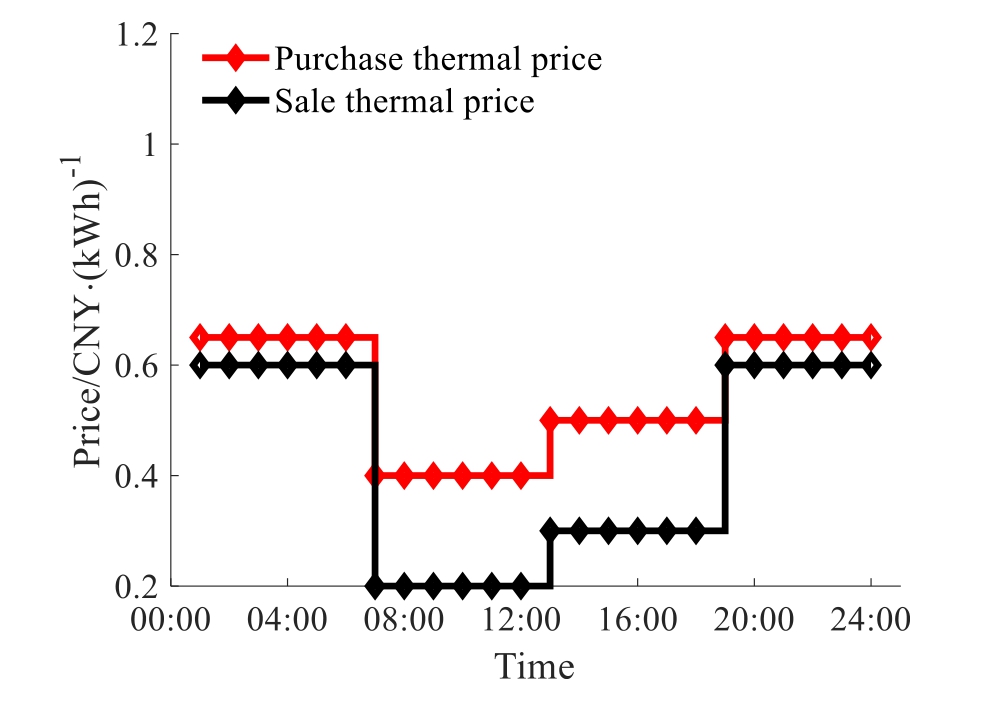
Fig. E6. Time-of-use thermal Price
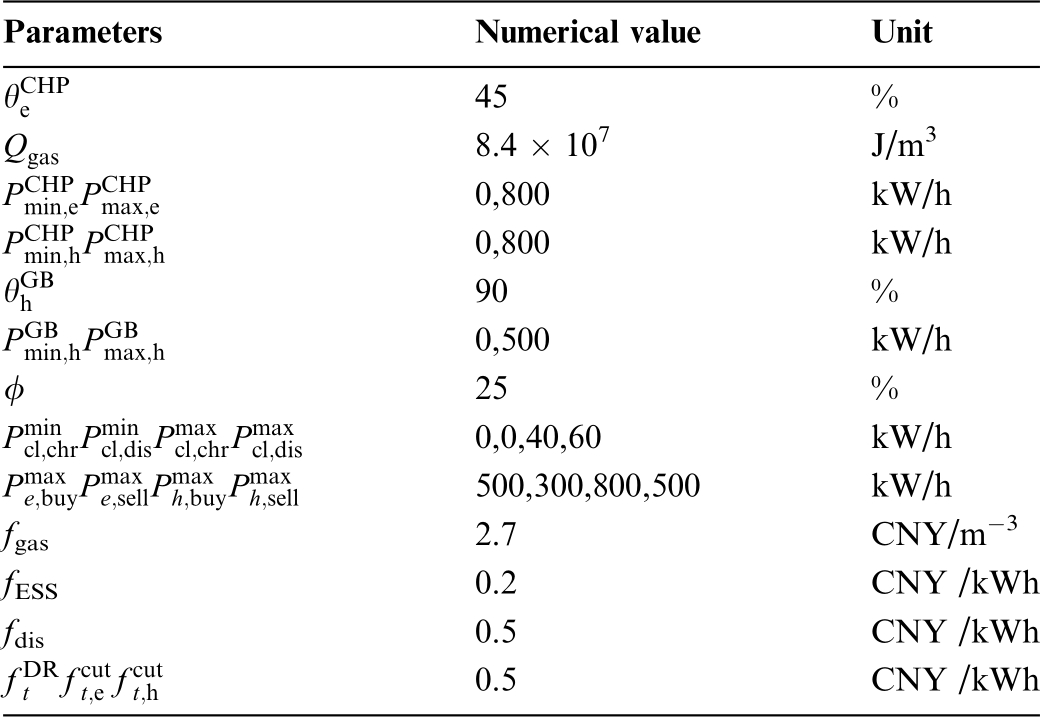
The Settings of operation parameters and cost pa rameters are shown in Table E1.
Table E1 Parameter settings.
References
[1]C. Tan, Z. Tan, G. Wang, et al., Business model of virtual power plant considering uncertainty and different levels of market maturity[J], J. Clean. Prod. 362 (2022) 131433.
[2]S. Feng, H. Ren, W. Zhou, A review of uncertain factors and analytic methods in long-term energy system optimization models[J], Global Energy Interconnect. 6 (04) (2023) 450–466.
[3]Q. Lu, L. Chen, S. Mei, Typical applications and prospects of game theory in power system [J], Proc. CSEE 34 (29) (2014) 5009–5017.
[4]L. Dong, S. Tu, L.I. Ye, et al., A stackelberg game model for dynamic pricing and energy management of multiple virtual power plants using metamodel-based optimization method [J], Power Syst. Technol. 44 (03) (2020) 973–983.
[5]J. Zhong, Y. Zhao, Y. Li, et al., Synergistic operation framework for the energy hub merging stochastic distributionally robust chance-constrained optimization and Stackelberg game[J], IEEE Trans. Smart Grid 16 (2) (2024) 1037–1050.
[6]J. Wang, X. Jin, H. Jia, et al., Joint electricity and carbon sharing with PV and energy storage: a low-carbon DR-based game theoretic approach [J], IEEE Trans. Sustainab le Energy 15 (4)(2024) 2703–2717.
[7]W. Huo, Y. Zhang, H. Zhao, et al., Wind power data pricing method based on an alliance cooperation game [J], Power Syst.Protect. Contr. 52 (19) (2024) 97–107.
[8]J. Wu, P. Lou, M. Guan, et al.,Operation optimization strategy of multi-microgrids energy sharing based on asymmetric nash bargaining[J], Power Syst. Technol. 46 (07) (2022) 2711–2723.
[9]H. Rong, H. Kuang, A cooperative model of photovoltaic and electricity-to-hydrogen including green certificate trading under the conditional value at risk[J], Global Energ. Int. 6 (04) (2023) 403–417.
[10]X. Liu, Bi-layer game method for scheduling of virtual power plant with multiple regional integrated energy systems [J], Int. J. Electr.Power Energy Syst. 149 (2023) 109063.
[11]Y. Cao, D. Wang, H. Jia, et al., Bilevel Nash-Stackelberg game expansion planning of regional integrated energy system considering multi-energy carbon flow constraints [J], Automat.Electr. Power Syst. 47 (07) (2023) 12–22.
[12]J. Tan, Y. Li, X. Zhang, et al., Operation of a commercial district integrated energy system considering dynamic integrated demand response: a Stackelberg game approach [J], Energy 274 (2023)126888.
[13]Y. Zhu, Y. Xiao, X. Wang, et al., Enhancing distribution system resilience with peer-to-peer transactions [J], IEEE Trans. Power Syst. 40 (1) (2025) 907–919.
[14]Y. Shi, H. Wang, C. Li, et al., Stochastic optimization of system configurations and operation of hybrid cascade hydro-windphotovoltaic with battery for uncertain medium-and long-term load growth [J], Appl. Energy 364 (2024) 123127.
[15]F. Fang, S. Yu, X. Xin, name="ref16" style="font-size: 1em; text-align: justify; text-indent: 2em; line-height: 1.8em; margin: 0.5em 0em;">[16]S. Wu, X. Qi, X. Li, et al., Collaborative robust dispatch of electricity and carbon under carbon allowance trading market [J],Global Energy Interconnect. 7 (04) (2024) 391–401.
[17]S. Liu, Q. Ai, J. Zheng, et al.,Bi-level coordination mechanism and operation strategy of multi-time scale multiple virtual power plants[J], Proc. CSEE 38 (03) (2018) 753–761.
[18]Y. Lin, S. Miao, W. Yang, et al., J.Global Energ.Interconn.[J].5(02) (2022) 127–137.
[19]Y. Lin, S. Miao, W. Yang, et al., Day-ahead optimal scheduling strategy of virtual power plant for environment with multiple uncertainties [J], Electr. Power Automat. Equip. 41 (12) (2021)143–150.
[20]W. Zhong, S. Huang, C.U.I. Yang, et al., W-S-C capture coordination in virtual power plant considering source-load uncertainty [J], Power Syst. Technol. 44 (09) (2020) 3424–3432.
[21]R. Liu, Y. Liu, Z. Jing, Impact of industrial virtual power plant on renewable energy integration [J], Global Energy Interconnect. 3(06) (2020) 545–552.
[22]M. Song, G. Lin, G.A.O. Ci, et al., A generalized shared energy storage optimization configuration method considering multiple uncertainties [J], Trans. China Electrotechn. Soc. 40 (05) (2025)1521–1539.
[23]L. Dong, Y. Li, S. Chen, et al., Multi-microgrid cooperative game optimization scheduling considering multiple uncertainties and coupled electricity-carbon transactions[J], Trans. China Electrotechn. Soc. 39 (09) (2024) 2635–2651.
[24]Z. Wang, H. Hou, B. Zhao, et al., Risk-averse stochastic capacity planning and P2P trading collaborative optimization for multienergy microgrids considering carbon emission limitations: an asymmetric Nash bargaining approach [J], Appl.Energy 357(2024)122505.
[25]Y. Jia, C. Wan, W. Cui, et al., Peer-to-peer energy trading using prediction intervals of renewable energy generation[J],IEEE Trans.Sustain. Smart Grid 14 (2) (2023) 1454–1465.
[26]H.K. Nguyen, A. Khodaei, Z. Han, Incentive mechanism design for integrated microgrids in peak ramp minimization problem, [J],IEEE Trans. Sustain. Smart Grid 9 (6) (2018) 5774–5785.
[27]S. Fan, Q. Ai, L. Piao, Bargaining-based cooperative energy trading for distribution company and demand response [J], Appl.Energy 226 (2018) 469–482.
[28]B. He, X. Yuan, A class of admm-based algorithms for three-block separable convex programming [J], Comput. Optim. Appl. 70 (3)(2018) 791–826.
[29]J. Zhang, L. Che, X. Wan, et al., Distributed hierarchical coordination of networked charging stations based on peer-topeer trading and EV charging fl exibility quantification [J], IEEE Trans. Power Syst. 37 (4) (2021) 2961–2975.
[30]D. Yan, Y. Chen, Distributed coordination of charging s tations with shared energy storage in a distribution network [J], IEEE Trans. Smart Grid 14 (6) (2023) 4666–4682.
[31]T. Zhang, T. Pu, L. Dong, et al., Distributed reactive power optimization for flexible distribution networks with successive relaxation iteration method [J], IEEE Trans. Sustain.Energy 16(1)(2024) 452–468.
[32]A. Mansour-Saatloo, Y. Pezhmani, M.A. Mirzaei, et al., Robust decentralized optimization of multi-microgr ids integrated with power-to-X technologies [J], Appl. Energy 304 (2021) 117635.
[33]L. Chen, S. He, X. Fan, Cooperat ive optimization of shared energy storage in integrated energy systems using adaptive ADMM and Nash bargaining [J], J. Storage Mater. 134 (2025) 118148.
Received 15 June 2025;revised 22 October 2025; accepted 27 October 2025
Peer review under the responsibility of Global Energy Interconnection Group Co. Ltd.
* Corresponding author.
E-mail address: donglei@ncepu.edu.cn (L. Dong).
https://doi.org/10.1016/j.gloei.2025.10.005
2096-5117/© 2025 Publishing services by Elsevier B.V. on behalf of KeAi Communications Co. Ltd.
This is an open access article under the CC BY-NC-ND license(http://creativecommons.org/licenses/by-nc-nd/4.0/).

Lei Dong, professor of North China Electric Power University, doctoral supervisor. Her research directions include optimal dispatching and operation control of power grids, optimization of integrated energy systems, and the application of artificial intelligence in power systems, etc.